

Standing as a silent sentinel in the heart of Nagano Prefecture, Zenkoji Temple is far more than a mere historical monument. It is a profound testament to the resilience of Japanese faith, an architectural marvel, and a cultural touchstone that has transcended the boundaries of time, war, and sectarian division. With a legacy spanning nearly 1,400 years, Zenkoji remains one of the most significant pilgrimage sites in Japan, embodying the spirit of inclusivity and the pursuit of enlightenment.
Main Facts: The Pillars of Faith
Founded in 642 AD, Zenkoji occupies a unique position in the landscape of Japanese Buddhism. Unlike many temples that are tied to a specific sect, Zenkoji is famously non-sectarian, functioning as an open sanctuary for all who seek spiritual solace. The temple’s primary objects of veneration are the members of the "Zenkoji Amida Triad"—Amida Tathagata, Kannon Bodhisattva, and Mahasthamaprapta Bodhisattva.

The central figure, the Amida Tathagata, is widely regarded as the first Buddha image to arrive in Japan, reportedly brought from the Korean Kingdom of Kudara in the 6th century. This statue is a Hibutsu (Hidden Buddha); it is never displayed to the public and is permanently housed within a sealed box behind the main altar. This air of mystery, coupled with the temple’s commitment to welcoming all, including those historically marginalized by other religious institutions, has solidified its status as a must-visit destination. A famous Japanese proverb, "Even if it is far, you must visit Zenkoji at least once," underscores the deep-seated cultural imperative to make the journey to Nagano.
A Chronology of Survival and Devotion
The history of Zenkoji is a narrative of survival against the backdrop of Japan’s turbulent transition into Buddhism.
- 522–552 AD: The original Buddha statue arrives in Japan from Kudara. Its arrival sparks intense political and religious conflict between clans, eventually leading to the statue being discarded into the Naniwa Canal.
- 642 AD: Yoshimitsu Honda, a regional official from Shinano Province, retrieves the statue and enshrines it in his private home. The name "Zenkoji" is derived from the Chinese reading of his given name, Zenko.
- Early History: The temple is moved to its current location in Nagano City. The city itself evolves as a monzen-machi—a "temple town"—growing organically to accommodate the rising tide of pilgrims.
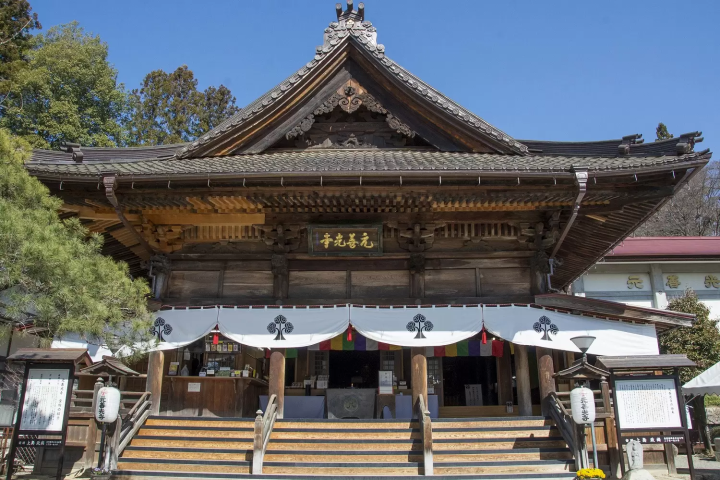
- 1707: Following numerous fires that destroyed earlier structures, the current Main Hall (Honden) is reconstructed. This massive wooden edifice is later designated a National Treasure.
- 1897: Nagano officially achieves city status, formalizing the development that began centuries prior around the temple gates.
- Modern Era: The temple continues to attract approximately 8 million visitors annually, maintaining its role as a spiritual center and a guardian of cultural heritage.
Supporting Data and Architectural Ingenuity
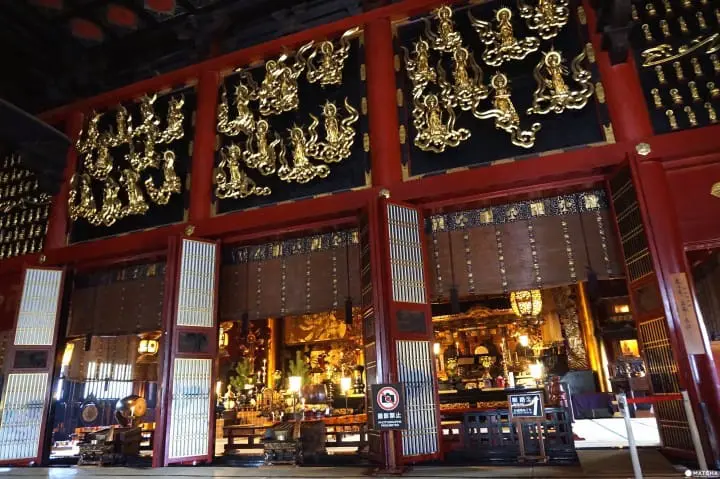
The architectural majesty of Zenkoji is defined by its ability to endure. The Main Hall, rebuilt in 1707, is a prime example of the shumakutsu-zukuri style, characterized by a distinctive T-shaped, double-layered roof. This design is not merely aesthetic; it is a structural necessity engineered to withstand the punishing snowfalls of the Nagano winter.
The temple complex is expansive, incorporating over twenty sub-temples that line the approach to the main gates. This density of religious infrastructure is a byproduct of the temple’s non-sectarian nature, allowing it to serve as a hub for various branches of Buddhist practice.
The Significance of the "Hidden Buddha"
The concept of the Hibutsu is central to the temple’s mystique. Because the original triad is hidden, the temple utilizes a replica known as the Maedachi Honzon. Every seven years, the temple hosts the Gokaicho Festival, a monumental event where the replica is brought out for public viewing. Millions of pilgrims converge on Nagano during this time, often waiting for hours to touch a sacred wooden pillar connected to the statue, a ritual believed to create a direct karmic link to the Buddha.
Official Perspectives and Inclusive Governance
Zenkoji’s historical refusal to exclude women remains one of its most progressive achievements. During the Edo period, when many major Buddhist centers—most notably those on Mount Koya or Mount Hiei—enforced strict bans on female entry, Zenkoji served as a sanctuary for women seeking salvation.
This spirit of inclusivity is institutionalized in the temple’s modern leadership. The temple is governed by two head priests: the Jushoku (male head priest) and the Monshu (female head priestess), who represents the imperial lineage. This unique, dual-leadership structure ensures that the temple honors its history while maintaining a balanced, representative approach to its administration.
The Sensory Pilgrimage: Rituals and Traditions
The experience of visiting Zenkoji is deeply visceral, involving rituals that engage the senses and challenge the ego.
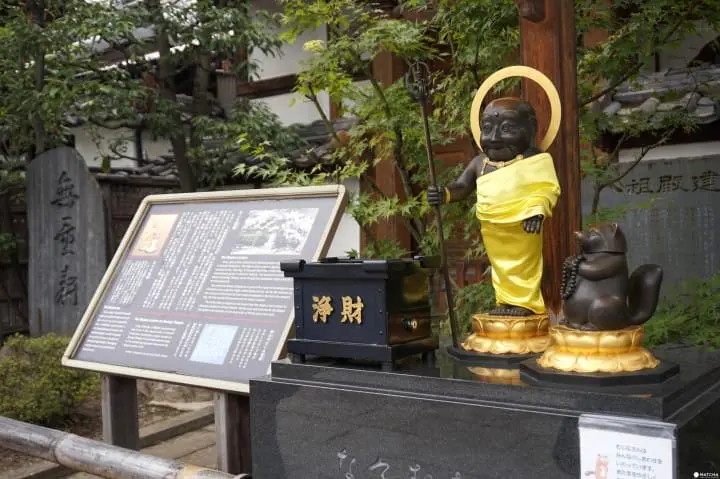
The Healing Touch of Binzuru
Within the Main Hall, visitors encounter a wooden statue of Binzuru, a physician disciple of the Buddha. Folklore dictates that the statue possesses healing powers. Visitors suffering from ailments rub the corresponding part of the statue’s body and then rub their own, a ritual so popular that the statue’s features have been worn completely smooth over the centuries.
The Darkness of the Okaidan Meguri
Perhaps the most transformative experience at the temple is the Okaidan Meguri. This is a subterranean, pitch-black corridor walk situated directly beneath the hidden Buddha. In the absolute darkness, visitors must navigate by touch, trailing their hands along the wall. The objective is to locate the "Key to the Pure Land," a metal lock fixed to the wall. Finding this key is said to represent the achievement of salvation and the silencing of the mind. It is a meditative exercise that strips away the distractions of the modern world, leaving the pilgrim in a state of sensory clarity.
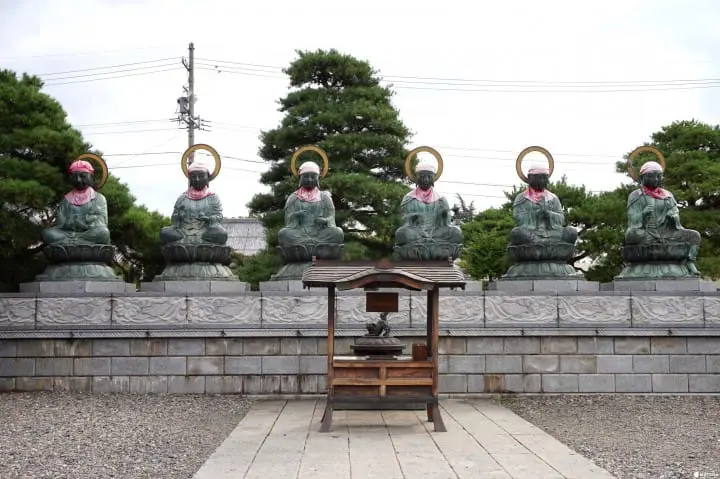
The Six Realms and the Guardian Tanuki
Outside the main structures, six Jizo statues represent the Six Realms of Reincarnation. Their presence serves as a reminder of the temple’s mission to guide all sentient beings—from the hungry ghosts to the heavenly beings—toward enlightenment. Additionally, the presence of a tanuki statue, based on the legend of a shape-shifting raccoon dog who sought to worship at the temple, highlights the site’s openness to all living things.
Implications for the Modern Visitor
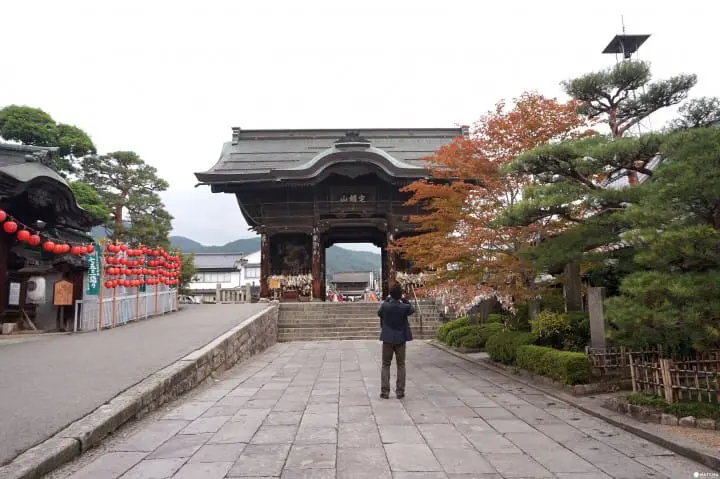
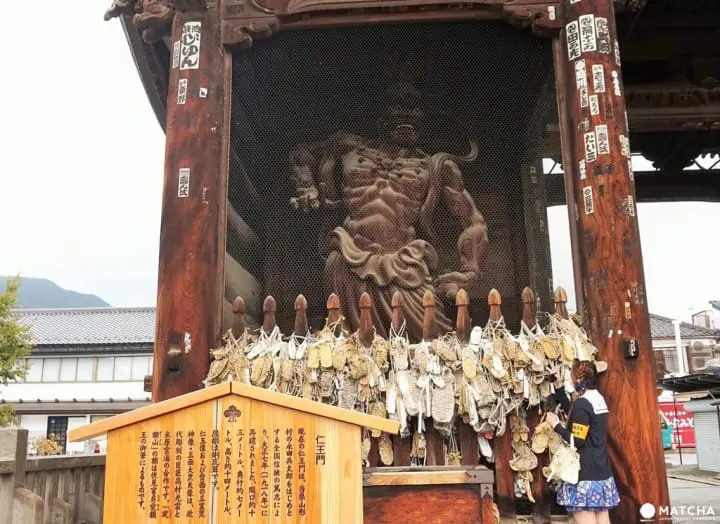
Zenkoji Temple is a bridge between the ancient and the contemporary. It has successfully adapted to the 21st century without sacrificing its gravitas. The practice of hanging waraji (straw sandals) and even ballet shoes at the Niomon Gate illustrates how individual devotion evolves alongside society. Whether one is praying for the healing of a physical injury, the success of a performance, or the clearing of a life path, the temple provides a canvas upon which visitors can project their most sincere aspirations.
For the modern traveler, the temple offers a respite from the fast-paced nature of contemporary life. As visitors waft the smoke of the central incense burner toward their heads—a gesture intended to enhance wisdom—they are participating in a tradition that has remained largely unchanged for over a millennium.
The souvenirs available at the temple, such as the Shiawase Ushimori (Happy Ox Amulet), serve as tangible reminders of this experience. The legend of the ox, which led a stubborn, angry woman to the temple and eventually to enlightenment, serves as a poignant reminder that even the most unexpected or chaotic circumstances can lead one to a place of peace.
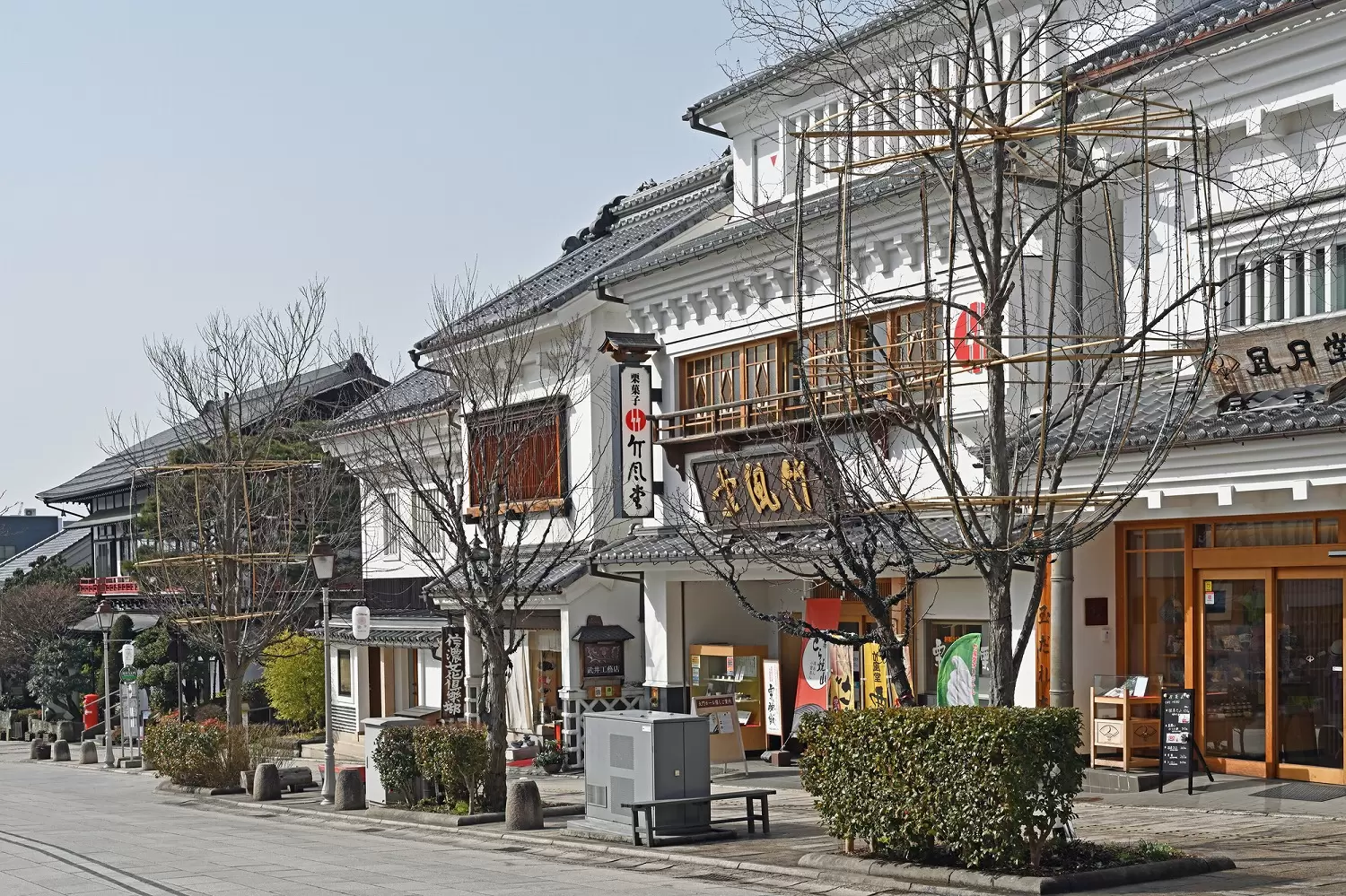
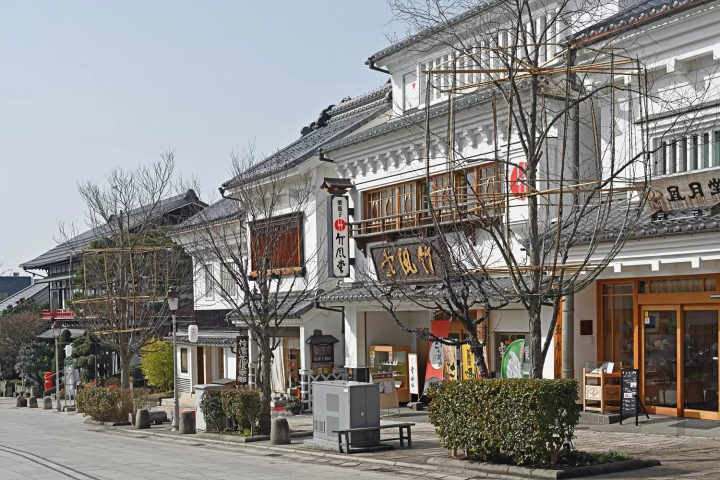
Ultimately, Zenkoji is a destination that demands presence. In an era of digital distractions and fleeting connections, the temple offers something enduring: the opportunity to stand in the dark, reach out, and find a connection to something greater than oneself. As one walks down the historic shopping street leading away from the temple, surrounded by the scents of miso and the sounds of the bustling city, the serenity of the temple remains, a lingering reminder that the journey to Zenkoji is, in every sense, a journey home.











