

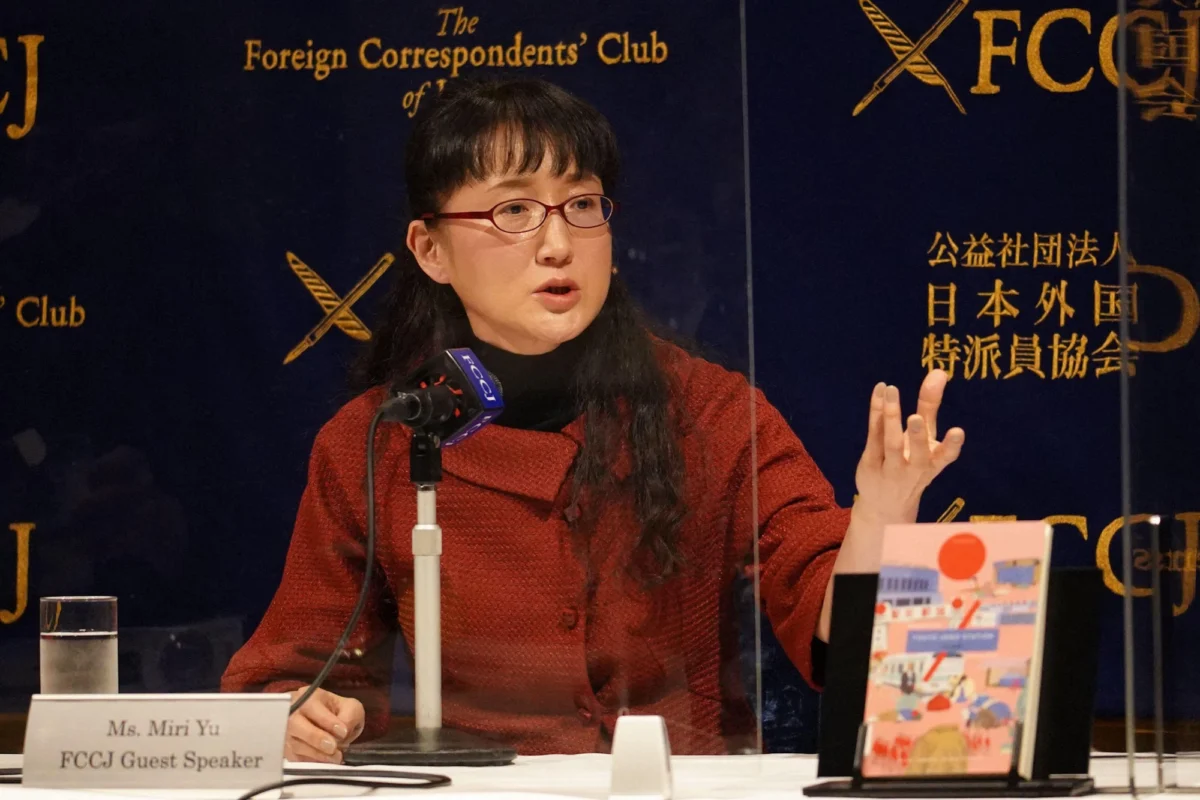
In the landscape of modern Japan, the intersection of national identity, historical memory, and the digital public square has become a volatile front line. Recently, one of the nation’s most acclaimed literary voices, Yu Miri, found herself at the center of a vitriolic national debate. Her decision to speak out against the rising tide of exclusionary political rhetoric triggered a cascade of abuse, revealing deep-seated anxieties about who holds the "right" to participate in Japanese democratic discourse.
The incident has transcended the typical boundaries of a social media spat, evolving into a profound inquiry into the definition of "Japaneseness" and the limits of belonging in an increasingly fragmented society.
The Trigger: A Critique of Exclusion
The controversy began on X (formerly Twitter), where Yu Miri, an award-winning novelist of Zainichi Korean heritage, addressed the growing visibility of anti-foreigner sentiment in Japanese politics. Following the previous year’s Upper House election—a cycle characterized by the success of fringe parties like Sanseito, which campaigned on a platform of "Japan First"—activists and sociologists have noted a tangible shift in public discourse.
Yu, whose literary works frequently explore the margins of Japanese society, warned that these exclusionary attitudes were being normalized. Her critique was not merely a political opinion; it was a challenge to the xenophobic undertones gaining traction in the national dialogue. The response was immediate and vicious. Instead of engaging with her arguments, a segment of the online population attacked her identity, asserting that as a person of Korean descent, she possessed no moral or legal standing to comment on the internal affairs of the Japanese state.
Chronology of the Backlash
The timeline of the harassment highlights the swift, weaponized nature of modern online discourse:
- The Initial Commentary: Yu Miri publishes her critique regarding the "Japan First" rhetoric, warning that the country is sliding toward a normalized culture of exclusion.
- The Reaction: Within hours, her mentions are flooded with nationalist abuse. Common themes include the demand that she "return" to her ancestral homeland and the assertion that her heritage disqualifies her from political participation.
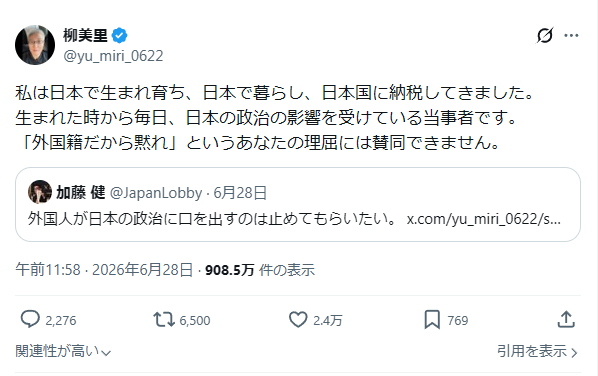
- The Retort: Yu issues a powerful rebuttal, stating: "I was born and raised in Japan, I live in Japan, I pay taxes in Japan. Every day since I was born, I’ve been under the influence of Japan’s government. I can’t get on board with your sophistry arguing that I should shut up because I’m a foreign national."
- The Institutional Defense: The intensity of the abuse draws the attention of Hatori Ryo, an editor at the influential Weekly Gendai. In a rare move for a prominent media figure, Hatori publicly defends the author, declaring that he "cannot turn a blind eye to discrimination."
- The Counter-Movement: A digital wave of support begins to form, with thousands of users adopting hashtags to condemn the harassment and reassert the rights of ethnic minorities in Japan.
Who is Yu Miri?
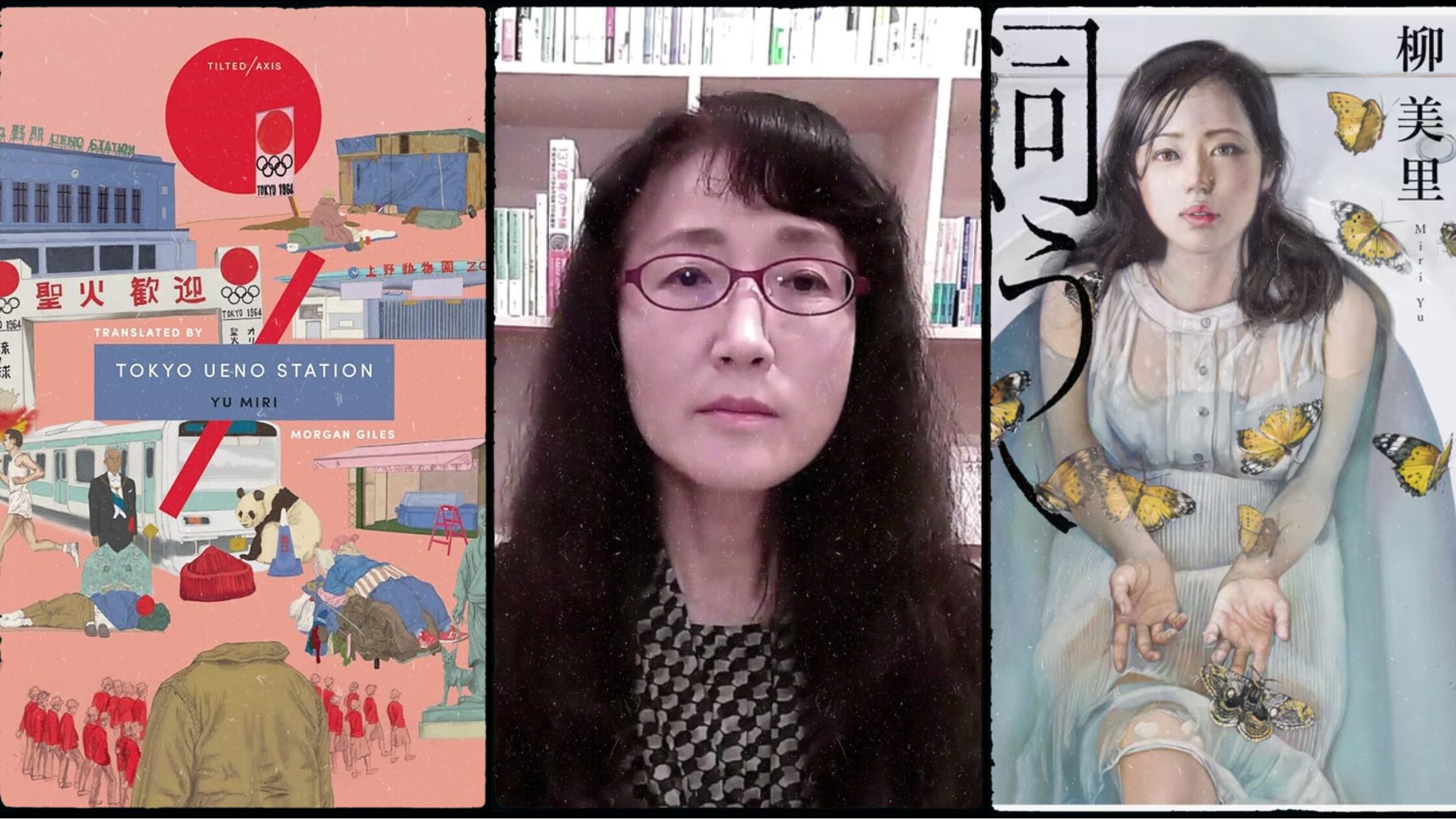
To understand the gravity of this incident, one must understand the subject of the attack. Yu Miri is not an outsider. Born in Ibaraki Prefecture in 1968 and raised in Yokohama, she is a titan of contemporary Japanese literature. Her work, characterized by its haunting, lyrical, and often brutal examination of the Japanese experience, has earned her the prestigious Akutagawa Prize—one of the nation’s highest literary honors.
Yu is a member of the Zainichi Korean community, a demographic comprising ethnic Koreans with deep-seated roots in Japan, often tracing their history back to Japan’s 1910–1945 colonial rule over the Korean Peninsula. While many have integrated into Japanese society—some through naturalization and others through long-term residency—they have historically faced systemic barriers in housing, employment, and political recognition.
For decades, the Zainichi community has been a lightning rod for nationalist sentiment. The transition from physical protests—which were common in the 2000s—to the digital arena has made this discrimination more persistent, more diffuse, and, in many ways, more difficult to regulate.
The Shift to Digital Hostility
The harassment directed at Yu Miri is symptomatic of a broader trend: the migration of hate speech from the streets to social media. Following the 2016 enactment of the Hate Speech Elimination Act, public, organized hate rallies saw a decline, yet the underlying sentiment did not evaporate.
Researchers point out that social media algorithms often amplify the "us vs. them" narratives, creating echo chambers where exclusionary rhetoric is not only tolerated but rewarded with engagement. The incident with Yu Miri confirms that the focus has shifted from specific policy critiques to the fundamental "othering" of individuals based on their ethnic or national background.
Official Responses and Institutional Recognition
The gravity of the situation has prompted action from the highest levels of government. The Japanese Ministry of Justice, recognizing the evolution of hate speech, has announced its intention to conduct a nationwide survey on online discrimination. This move signifies an official acknowledgment that the digital landscape has become a critical site for the enforcement of national identity.
Furthermore, the public intervention of media professionals like Hatori Ryo suggests a growing divide in Japanese society. On one side are those who view Japan as a strictly ethnic nation, where citizenship and belonging are tied to ancestry. On the other are those—represented by the growing chorus of support for Yu—who advocate for a civic definition of Japan, where one’s contribution, taxation, and residency grant them a legitimate seat at the table of national discourse.
Implications for Japanese Democracy
The backlash against Yu Miri raises a disturbing question: Who gets to be part of Japan?
As the nation faces a severe demographic crisis—defined by a shrinking workforce and an aging population—the government is paradoxically looking toward immigration as a necessary solution. Yet, the social climate remains fraught with resistance to the concept of a multi-ethnic or pluralistic society. By attacking one of the country’s most celebrated cultural figures for having the "wrong" background, critics are sending a chilling signal to any individual who does not fit the traditional, mono-ethnic archetype of a "Japanese citizen."
If a world-renowned novelist, who has contributed extensively to the country’s intellectual and cultural heritage, can be told to "shut up" because of her ethnicity, it sets a dangerous precedent for the millions of foreign residents and naturalized citizens currently living in the country.
Conclusion: The Boundary of Belonging
The struggle surrounding Yu Miri is a microcosm of a much larger existential battle. Japan is at a crossroads. It can continue to cling to an idealized, ethnocentric past, or it can evolve to recognize the reality of its modern, diverse society.
The defense of Yu Miri by her peers and the public shows that there is a significant portion of the Japanese population that rejects the exclusionary rhetoric of the nationalists. However, the persistence of the abuse indicates that the work of fostering an inclusive society is far from complete. As the Ministry of Justice prepares to study the impact of online hate, the nation waits to see whether these measures will be enough to stem the tide of exclusion, or if the digital vitriol will continue to erode the foundations of democratic participation in Japan.
For now, the message from those like Yu Miri remains clear: they are here, they are part of the fabric of the nation, and they refuse to be silenced by the sophistry of those who seek to define Japan by who it can exclude, rather than who it can include.











