Jia Lissa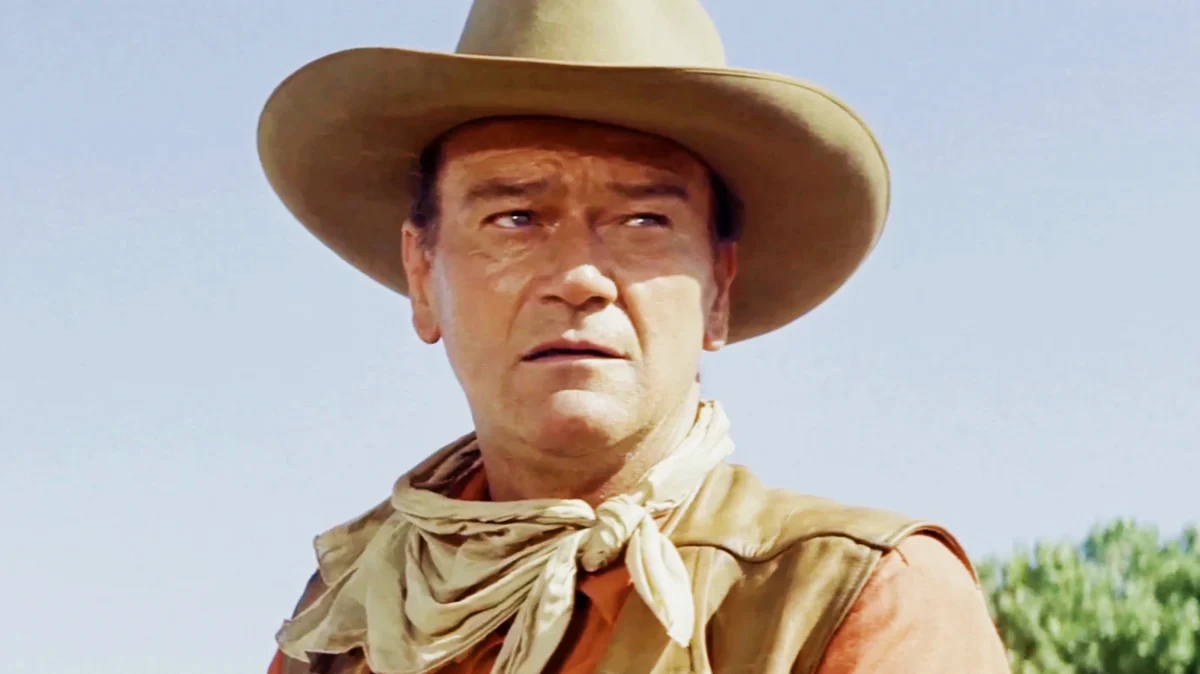
In the annals of Hollywood history, few films carry the weight of legacy and ambition quite like the 1962 MGM epic, How the West Was Won. Before the modern era of streaming television redefined the frontier genre with the multi-generational grit of Yellowstone, the collaborative vision of directors John Ford, George Marshall, and Henry Hathaway attempted to capture the entirety of the American manifest destiny in a single, massive cinematic sweep.
The film remains a towering monument to mid-century studio excess, boasting an ensemble cast that reads like a "Who’s Who" of the Golden Age of cinema: John Wayne, James Stewart, Henry Fonda, Gregory Peck, and Debbie Reynolds, among many others. Yet, despite the star power, one of the production’s most significant—and most surprising—protagonists was not an actor at all, but a collection of wooden, horse-drawn vehicles. As the production sought to achieve unprecedented realism, it found itself caught in a logistical nightmare that saw over $1 million—a staggering sum in 1962—poured exclusively into the transport of covered wagons.
The Chronology of an Epic Production
Filming for How the West Was Won began in May 1961. The production was not merely a movie; it was a technological undertaking. Captured in the proprietary Cinerama format, the film required a sophisticated array of three synchronized cameras to record imagery intended for a 146-degree curved screen. This technical complexity was mirrored by the narrative structure, which spanned five distinct segments covering the American frontier experience from the 1830s to the 1880s.
The producers’ desire for historical authenticity led them to abandon the comfort of studio backlots. Instead, the crew traversed the North American continent, filming on-location in Kentucky, the High Sierras, Jasper National Park, Arizona, Utah, South Dakota, Oregon, and the Colorado Rockies. However, this commitment to geography created a fatal disconnect between the filming locations and the availability of period-accurate equipment.
By the time the crew reached the Colorado Rockies for a critical sequence, they faced a stark reality: the only authentic, period-appropriate covered wagons available in the United States were located in Los Angeles. To capture the majesty of the wagon train moving through the rugged terrain, the studio had no choice but to initiate a massive, cross-country logistics operation.
Supporting Data: The Anatomy of a $14.4 Million Budget
When evaluating the financial structure of How the West Was Won, the figures provided by producer Bernard Smith reveal a fascinating breakdown of how the $14.4 million budget was consumed. At the time, the film was among the most expensive projects ever undertaken by MGM.
The Budget Breakdown
- Star Salaries: $2,204,000
- Studio Overhead: $1,590,000
- Location Costs: $1,228,000
- Transportation: Over $1,000,000
The transportation costs, which occupied the fourth-highest expenditure slot, were primarily driven by the "wagon problem." To facilitate the Montrose, Colorado, sequences, the studio had to load dozens of wagons onto flat-bed trucks and transport them over 1,100 miles from Hollywood. In some instances, the production had to go as far as building custom, temporary roads from the town of Montrose to the remote filming sites just to ensure the equipment could reach the cameras.
While the film was initially budgeted at $12 million, it eventually ballooned to approximately $14.4 million, with critics and financial analysts at the time suggesting that the logistical "wagon woes" were a primary driver of the $2.4 million overage.
The John Wayne Paradox
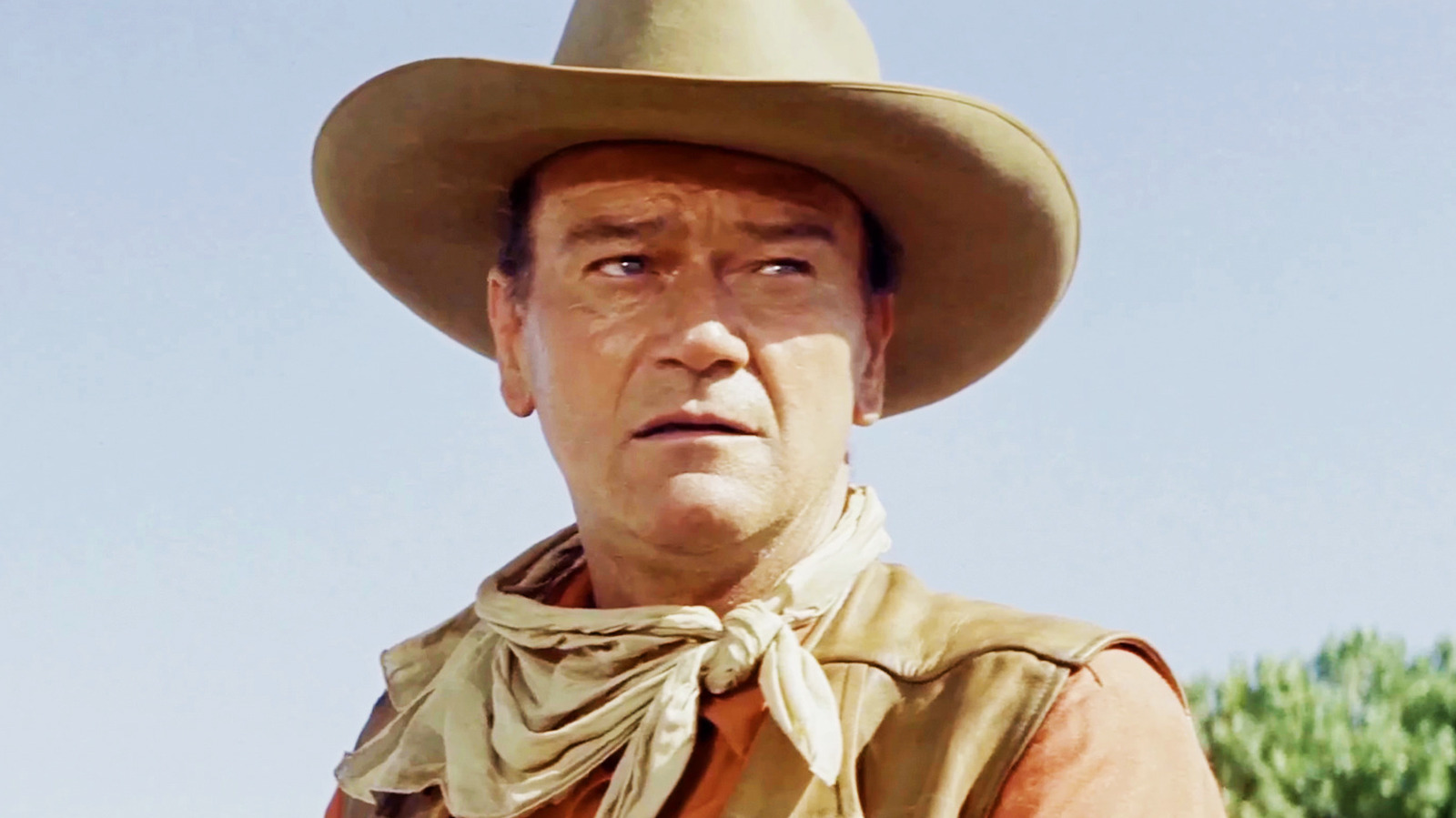
For many, How the West Was Won is viewed as a "John Wayne movie." However, the reality of his participation is more nuanced. The Duke appears as General William Tecumseh Sherman, but his total screen time barely exceeds three minutes.
The casting of Wayne was a strategic move by the studio to add gravitas to the Civil War segment, directed by his longtime mentor and collaborator, John Ford. It was Ford who had launched Wayne’s career decades earlier with Stagecoach (1939). Despite the brevity of his role, the prestige associated with his name helped ground the film’s massive scale.
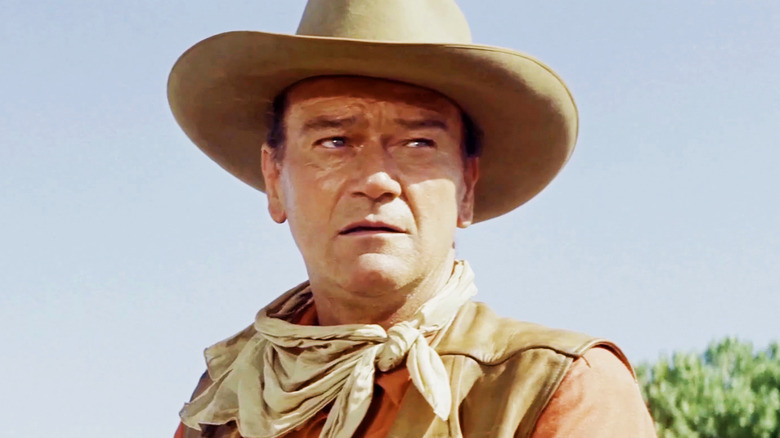
However, the film’s box office success—grossing $50 million globally—often leads to the misclassification of it as Wayne’s "biggest hit." While it was a massive commercial success, the film was an ensemble piece, not a vehicle for Wayne in the traditional sense. When looking at his true commercial juggernauts, one must look toward 1969’s True Grit, which garnered $37.6 million and earned Wayne his only Academy Award for Best Actor, a role he famously considered his first truly "decent" part in two decades.
Official Responses and Industry Implications
The production of How the West Was Won serves as a case study in the risks of mid-century "prestige filmmaking." In a 1963 report from The New York Times, producer Bernard Smith defended these costs as necessary sacrifices for the sake of the Cinerama experience. The industry response at the time was mixed; while executives were alarmed by the budget overruns, the critical and commercial success eventually silenced the dissent.
The film earned eight Academy Award nominations, taking home trophies for Best Story and Screenplay, Best Sound, and Best Film Editing. The "commitment to transportation," however, went unrewarded by the Academy.
From a historical perspective, the production highlights the transition point in Hollywood between the old studio system—which relied heavily on internal assets and controlled backlots—and the modern era of global location shooting. The struggle to move wagons across the Rockies demonstrated that as directors moved away from the controlled environment of the soundstage, the cost of "authenticity" would rise exponentially.
Implications for Modern Filmmaking
The legacy of How the West Was Won persists not only in its influence on the Western genre but in how it changed the economics of production. Today, the logistics of moving equipment are handled with computer-aided precision, but the fundamental challenge remains: the cost of physical reality in a digital world.
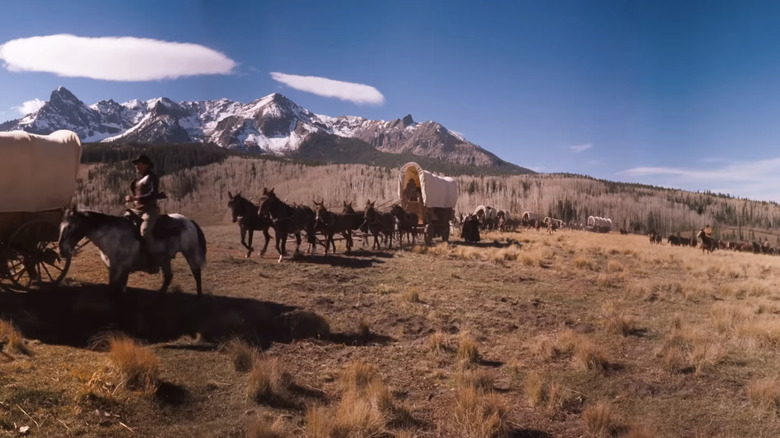
Looking back, the $1 million spent on wagons represents a pivotal moment where Hollywood realized that the scale of a production is not just defined by its stars, but by its infrastructure. By investing heavily in the literal movement of the film’s "tools," MGM set a precedent that high-budget epics require a commitment to logistics that is just as robust as their commitment to performance.
Ultimately, How the West Was Won remains a testament to a time when cinema was truly "large." While audiences today might be captivated by CGI vistas, the story of the million-dollar wagon train serves as a reminder that some of the most impressive feats in film history didn’t happen in front of the camera, but on the long, dusty roads leading to the set. The film may not have been John Wayne’s greatest performance, but it was certainly one of the most expensive logistical puzzles ever solved by a major studio, ensuring that the legend of the American West was captured with a level of detail that remains, to this day, a standard of the genre.


 Nana
Nana