Laily UPN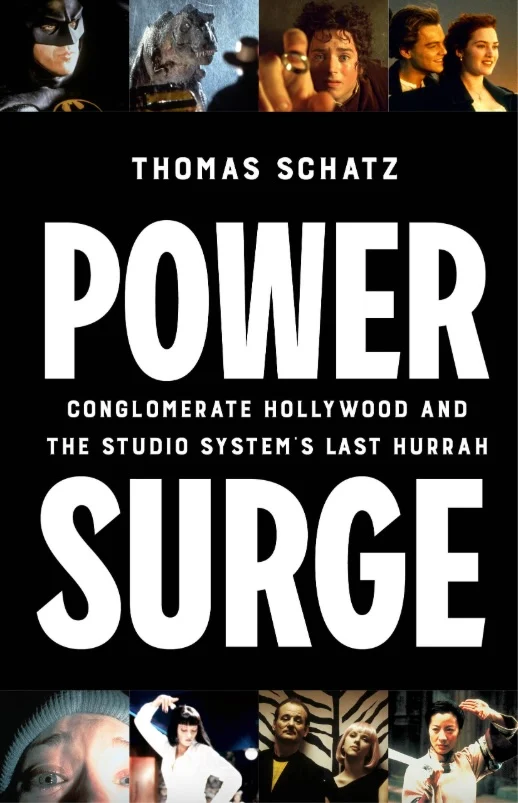
While the recent wave of high-profile mergers between industry titans like Warner Bros. and Paramount has dominated the trade headlines, media consolidation is far from a new phenomenon. In the grand tapestry of Hollywood history, the current frenzy is merely the latest chapter in a cyclical narrative. To understand the modern entertainment landscape, one must look back to the “Conglomerate Era”—a transformative period between 1989 and 2004 that fundamentally altered how films were financed, produced, and consumed.
In his comprehensive new book, Power Surge: Conglomerate Hollywood and the Studio System’s Last Hurrah, Professor Emeritus Thomas Schatz of the University of Texas at Austin provides a definitive autopsy of this era. Schatz, widely respected for his seminal work The Genius of the System, chronicles the rise of six global media giants that seized control of the American film and television industries, creating a corporate ecosystem that favored scale, synergy, and the rise of a paradoxical sub-sector: "Indiewood."
The Genesis of the Conglomerate Era (1989–2004)
The "Conglomerate Era" was defined by the transition of legendary studios—once standalone entities or independent operations—into the portfolios of diversified, multi-billion-dollar corporations. This shift was not merely administrative; it was a revolution in capital flow. As studios were swallowed by behemoths, the infusion of massive, diversified capital accelerated the digital revolution, forever changing the aesthetic and technical possibilities of the medium.
Schatz notes that this period produced a "new breed of blockbusters." Titles that defined the cultural zeitgeist—from Batman and Titanic to Toy Story and The Lord of the Rings—were the direct results of this high-stakes, high-budget corporate strategy. However, the period also saw the rise of an "indie ethos" that operated within these corporate structures. This friction between mass-market commodification and auteur-driven vision allowed directors like Steven Soderbergh, Quentin Tarantino, Sofia Coppola, and Ang Lee to become household names, effectively bridging the gap between art-house sensibilities and corporate commercialism.

Indiewood: The Rise of the Mini-Majors
By the early 2000s, the "Indiewood" sector had reached a critical mass. Nearly a dozen independent film outfits were now owned by major conglomerates, with Fox Searchlight and Focus Features rising as the undisputed heavyweights of the sector.
The success of these labels was no accident. The industry was experiencing a vacuum at the high end of the indie food chain as early pioneers like Miramax and New Line Cinema began to transition toward a "mini-major" status. Recognizing the potential for prestige and profit, corporate parents provided the necessary financing to allow labels like Searchlight and Focus to operate with autonomy. This era was defined by visionary executives like Peter Rice at Searchlight and the powerhouse team of James Schamus and David Linde at Focus, who proved that one could satisfy the bottom line while maintaining a high-brow creative output.
Case Study: The Radical Innovation of 28 Days Later
Perhaps no project better encapsulates the intersection of corporate support, digital innovation, and creative grit than Danny Boyle’s 2002 genre-defying hit, 28 Days Later.
Boyle, already a filmmaker of note thanks to Trainspotting, found himself at a crossroads after the high-budget disappointment of The Beach (2000). Disillusioned with the star-driven, bloated studio model, Boyle sought a more authentic, visceral experience. Partnering with producer Andrew Macdonald and writer Alex Garland, Boyle began developing a post-apocalyptic concept that tapped into the zeitgeist of global anxiety—specifically the fears surrounding emerging viral threats like Ebola and HIV.

The Technological Pivot
The production’s reliance on digital video (DV) was its most profound departure from tradition. Budgeted at a lean $8 million, the film utilized consumer-grade Canon XL1 camcorders. This choice was not just a cost-saving measure; it was a creative decision that allowed Boyle to capture a "staccato" visual style, rendering the rampaging "infected" with an unsettling, raw kinetic energy that traditional film cameras could not replicate. The agility of the handheld cameras allowed the production to film in the heart of London during the early morning hours, creating the haunting image of a deserted metropolis that would have been financially impossible with a standard 35mm setup.
The Searchlight Mandate
When Andrew Macdonald pitched the film to Peter Rice at Fox Searchlight in May 2001, the alignment was immediate. Rice, who had previously supervised The Beach, understood the value of Boyle’s vision. He agreed to co-finance and distribute the project, giving Boyle the freedom to cast relative unknowns—Cillian Murphy and Naomie Harris—to maintain the film’s grounded, realistic tone.
The Chronology of a Cultural Phenomenon
- September 2001: Principal photography begins just days before the 9/11 attacks, a temporal coincidence that imbued the film’s themes of civil collapse with an unintended, harrowing real-world resonance.
- Summer 2002: The film releases in the UK to strong audience reception, despite lukewarm initial critical reviews.
- January 2003: 28 Days Later makes its U.S. debut at the Sundance Film Festival, garnering immense buzz.
- June 2003: Wide release in the United States. The film quickly grosses over $30 million in its first four weeks, cementing itself as the year’s premier indie breakout.
- July 2003: In a stroke of marketing genius, Peter Rice authorizes an "outrageous stunt": replacing the film’s optimistic ending with an alternate, darker version (the death of the protagonist, Jim) in 1,400 theaters nationwide, 28 days after its initial release. This gambit drove the box office to $45 million, making it a historic success for the indie model.
Supporting Data and Industry Implications
The success of 28 Days Later underscored a fundamental truth of the Conglomerate Era: there was a massive, untapped appetite for "prestige genre" films. By providing a platform for unconventional narratives, conglomerates were able to diversify their risk profiles.
Schatz’s analysis suggests that the industry’s reliance on these mid-budget, high-concept films was a necessary bridge between the old studio system and the modern era of streaming-dominated, intellectual-property-focused filmmaking. The "indie" labels were effectively acting as R&D departments for the major studios, discovering new talent and testing new visual languages—like the widespread adoption of digital cinematography—that would eventually become the industry standard.

Official Responses and Contemporary Reflections
While the critical community was largely laudatory, the film’s ending remained a point of contention. Renowned critic Roger Ebert famously noted that he wished the rescue helicopter in the film’s climax had "circled back and opened fire," highlighting the tension between the audience’s desire for a conventional, hopeful resolution and the film’s grim, nihilistic premise.
This reaction perfectly captures the ethos of the time: the studios were trying to push the boundaries of narrative and tone, yet they were still ultimately beholden to the expectations of a mass audience. The decision to cycle through multiple endings was a direct response to this tension, proving that even "indie" films under the corporate umbrella were subject to the whims of focus groups and marketing departments.
Conclusion: The Legacy of the Conglomerate Era
Power Surge serves as a sobering reminder that the current wave of industry consolidation is part of a much longer arc. The era of the Conglomerate, while responsible for a renaissance of auteur cinema and technological advancement, also set the stage for the hyper-commercialized environment we navigate today.
As Thomas Schatz illustrates, the story of 28 Days Later is not just about a zombie movie; it is about the structural realities of Hollywood. It is a story of how a small, $8 million production, fueled by digital innovation and corporate risk-taking, managed to capture the cultural anxiety of the post-9/11 world. As we look toward the future of media, the lessons of this era—that true innovation often happens at the margins of a massive system—remain as relevant as ever.

Power Surge: Conglomerate Hollywood and the Studio System’s Last Hurrah is set for release on July 7 by the University of California Press. It is an essential read for anyone looking to understand how the architecture of today’s media industry was built, brick by corporate brick.


 Suro Senen
 Nana
Nana