Ammar Sabilarrohman
In the ever-expanding genre of management simulation games, the hook is usually found in the satisfaction of an efficient workflow. Whether you are managing a hospital, a supermarket, or a high-end restaurant, the "loop" is king. In Trusted Hands, the latest title to grace consoles and PC, attempts to marry this satisfying logistical loop with a more sinister, morally ambiguous narrative. You aren’t just a technician; you are the gatekeeper of the digital lives of your neighborhood. But does this repair shop sim deliver a lasting experience, or does it suffer from the same fragility as the devices on your workbench?
The Core Gameplay: A Simple Business Model
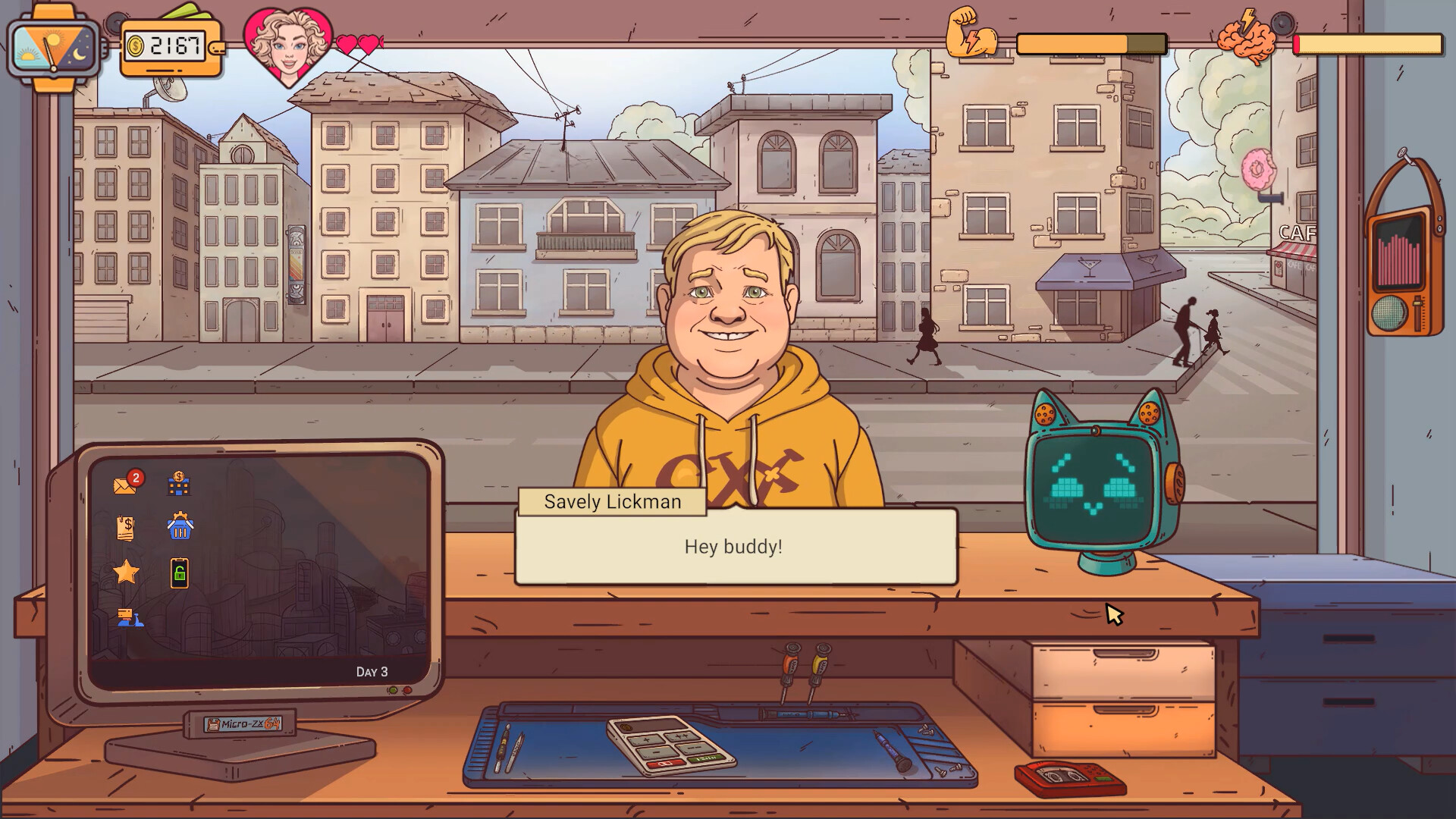
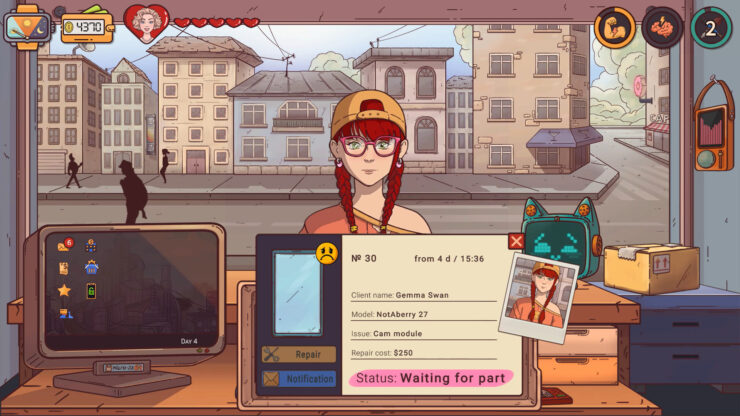
At its surface, In Trusted Hands is a straightforward management title. You operate a modest, unassuming phone repair shop where the daily grind is predictable and, at times, soothing. Customers trickle in with broken screens, water-damaged motherboards, and battery issues. Your process is systematic: scan the device to diagnose the fault, provide a quote, order the necessary parts, perform the repair, and return the device to the client.
The economic engine of the game revolves around these interactions. Once a device is scanned, the game provides a baseline price. However, the developer has implemented a negotiation mechanic that allows you to haggle. Some customers are bargain hunters looking for the cheapest fix, while others are willing to pay a premium for expedited service. This adds a light layer of strategy, though it never feels truly punishing.
One of the most satisfying "business moves" I discovered early on was the efficiency of bulk-ordering. Because the delivery fee is static regardless of whether you order one screen or twenty, the game encourages you to manage your inventory foresightfully. When parts arrive, the repair mini-game is simple: click the mouse or press the button when a moving line crosses a green indicator bar. While the PC version reportedly offers a more complex, multi-layered repair process, the console iteration—specifically on the Xbox—is incredibly accessible, perhaps to a fault.
Chronology of the Business Life-Cycle
The progression of In Trusted Hands is rapid. If you follow a standard path of operation, you will find yourself fully optimized by the end of your first week.
- Days 1–3 (The Learning Curve): You are introduced to the basic diagnostic tools and the fundamental repair mini-game. Money is tight, and you are learning the ropes of VAT payments and utility overheads.
- Days 4–7 (Optimization): You begin to master the inventory system. By bulk-ordering parts, you drastically reduce your overhead costs. Your reputation grows, and your bank balance begins to tick upward with regularity.
- Days 8–12 (The Plateau): This is where the game begins to show its limitations. By the end of this period, I had accumulated over 10,000 in-game currency, possessed a surplus of every spare part, and had largely automated the "challenge" out of the game.
Once you hit this plateau, the game transforms from a management sim into a repetitive cycle. The initial thrill of balancing the books or upgrading your shop is replaced by the feeling that you are simply going through the motions.
Ethical Quandaries: The "Hacking" Mechanic
The most intriguing aspect of In Trusted Hands—and the one that separates it from standard "Job Simulator" clones—is the inclusion of intrusive moral choices. Occasionally, "people of interest" will enter your shop, indicated by a green glow around their chat box. These individuals offer you the chance to look into the data contained on their phones.
The game gives you total agency here: you can hack the device, extract private information, and sell it to a journalist, forward it to the police, or send illicit images to unscrupulous parties. The game frames these as "extra activities," essentially side-quests that provide additional income.
However, there is a distinct lack of consequence. You can engage in rampant tax evasion by failing to issue VAT receipts or pocketing the cash, yet the game’s world remains largely static. Your customers don’t seem to notice if their private data has been leaked, and there is no "wanted" level or legal repercussion for your questionable business ethics. The lack of narrative weight makes these choices feel like simple math problems: Is the payout for this hack worth the time it takes to click the menu? rather than a difficult moral decision.
Supporting Data: Balancing and Difficulty
In analyzing the game’s difficulty curve, it becomes clear that the developer struggled to maintain a balance between "accessible" and "engaging." The game is designed to be a relaxing experience, but it overcorrects toward simplicity.
Energy management, for example, is a mechanic that theoretically limits how much you can do in a day. However, in practice, it is incredibly easy to manage, meaning you almost never feel the pressure of burnout or the need to prioritize one task over another. The dating/social element, which introduces characters you can hang out with, is similarly shallow. The dialogue options are binary and transparent, requiring no real investment or thought to achieve the "desired" outcome.
For a game that sets up a premise—running a small business in a world of secrets—the gameplay loop is surprisingly detached from that premise. When the financial success of the shop becomes trivial, the player loses the primary incentive to continue participating in the "dirty" side of the business.
Implications and Future Potential
In Trusted Hands feels like a title with strong bones that lacks the connective tissue to make it a masterpiece. The concept—a phone repair shop that acts as a hub for local espionage—is brilliant. It taps into the modern anxiety surrounding privacy and the "black box" nature of our personal technology.
However, the implications of the current design are clear:
- Narrative Stagnation: Without a branching storyline or reactive world-building, the "choices" you make feel inconsequential.
- Lack of Scaling: As your business grows, the game does not introduce new, more complex challenges. It simply asks you to do the same simple tasks more often.
- Untapped Potential: The game succeeds as a relaxing, short-term experience, but it fails to provide the "hook" necessary to keep a player engaged beyond the first dozen hours.
A Final Verdict on the Experience
For players looking for a "chill" game to play for a few hours, In Trusted Hands offers a pleasant aesthetic and a very intuitive interface. Its availability across all major platforms—PlayStation, Xbox, PC, and Nintendo Switch—makes it highly accessible for a wide audience.
However, those looking for a deep management simulation or a branching narrative RPG will likely find themselves wanting more. The game functions perfectly as a technical product, but as a narrative experience, it is missing the tension that its premise demands.
If you are a fan of low-stress, simulation-style games and want to spend a weekend as a digital voyeur, you will find plenty to like here. But if you are seeking a game where your choices carry the weight of real-world consequences, you may find the experience a bit too light. In Trusted Hands is a solid foundation, but it is currently a house waiting for more furniture to make it feel like a home.
Availability
- PlayStation: Link to Store
- Xbox: Link to Store
- PC: Link to Store
- Nintendo Switch: Link to Store
About the Author:
Jupiter Hadley is a seasoned indie game journalist with a career spanning over a decade. Having contributed to major outlets like Metro UK and Big Boss Battle, she is a dedicated advocate for the indie development scene. Beyond her writing, Jupiter is a pillar of the community, running indiegamejams.com and managing a YouTube channel that serves as a vital platform for developers looking to get their work into the spotlight.


 Neng Nana
 Pevita Pearce