

By Chase DiBenedetto | June 9, 2026
The city of New York has been gripped by an unprecedented wave of “orange and blue” fever. For the first time in 27 years, the New York Knicks have fought their way to the NBA Finals, transforming the five boroughs into a sensory explosion of hometown pride. From the concrete labyrinth of the subway system to the historic rafters of Madison Square Garden (MSG), the atmosphere has been electric, marked by impromptu street parties, fans scaling taxis, and a collective city-wide exhale of anticipation.
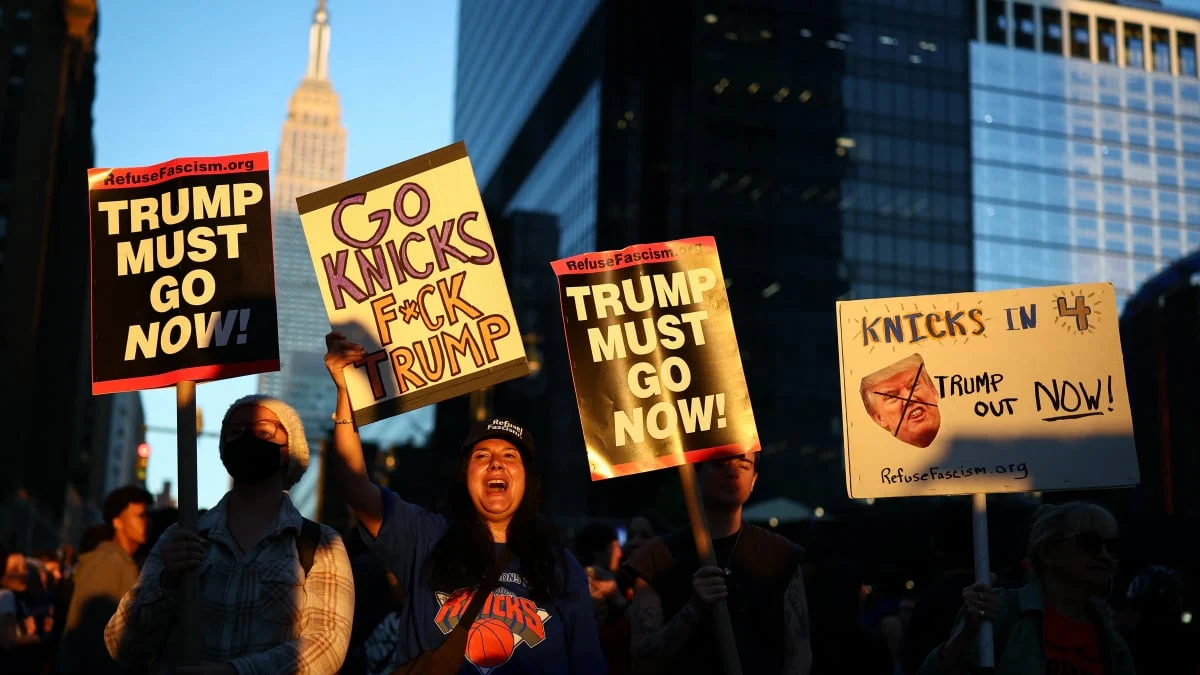
However, the euphoria of this historic run hit a stark, cold reality on the night of Game 3. In a move that polarized the city and dominated the digital discourse, President Donald Trump made an appearance at Madison Square Garden. What was intended to be a high-profile display of presidential support for a premier American sporting event instead transformed into a spectacle of vocal dissent, political tension, and lingering questions about the intersection of national leadership and sports culture.
The Chronology of a Controversial Visit
The timeline of the evening began long before the tip-off. Following the Knicks’ victory in Game 2, the White House announced that the President would attend Game 3. The announcement immediately sent ripples through New York’s political and social landscape.
Pre-Game Friction
As news of the President’s attendance spread, local security measures tightened significantly. The U.S. Secret Service, citing the necessity for a secure perimeter, effectively shuttered the area surrounding the arena. This resulted in the abrupt cancellation of a long-planned public watch party outside the Garden, a decision that left thousands of fans displaced.
In a move of swift political mobilization, New York Mayor Zohran Mamdani stepped in to mitigate the frustration of the displaced fans. Mamdani coordinated an alternative viewing event at Bryant Park, which quickly became a hub for the displaced energy of the Knicks faithful. Online, the mood shifted from festive to combative. Social media platforms—particularly TikTok and X (formerly Twitter)—became staging grounds for a pre-game ritual: tutorials on how to effectively voice disapproval. One viral clip, captioned "How to ward off the curse coming for the Knicks in game 3 of the finals," encapsulated the sentiment of a fan base that felt their team’s historic run was being co-opted by a polarizing political figure.
The Arrival and the Chorus
As the national anthem concluded, the focus of the stadium—and the millions watching at home—shifted to the luxury box where the President was seated. The reaction was instantaneous. A resounding, sustained chorus of boos filled the arena. The sound was not merely a localized protest; it was a cacophony that ricocheted from the rafters of MSG to the massive screen at the Bryant Park watch party.
The game itself, a high-stakes, nail-biting affair, unfolded against this backdrop of palpable tension. While the Knicks played with the desperation of a team looking to seize a championship lead, they ultimately fell to the San Antonio Spurs in a devastating loss. For many, the result felt like a fulfillment of the "curse" that had been whispered about on social media since the President’s visit was confirmed.
The Political Implications: A Divided Arena
The presence of a sitting president at a major sporting event is traditionally a moment of national unity. In this instance, it served as a microcosm of the current American political climate.
The "Left-Wing" League Narrative
President Trump’s history with the NBA is well-documented and inherently adversarial. The President has frequently criticized the league, characterizing its players, coaches, and administrators as being overly focused on "liberal" social issues and political activism.
Speaking to reporters on the tarmac near Air Force One following the game, the President dismissed the intense negative reception he received at the arena. "I mean, I thought it was amazing, actually," he remarked. "You mean when they had the camera on me? I thought it was very good. Yeah. It was certainly amazing. It was, I think, mostly cheers. It was loud and it was very enthusiastic."

When pressed on his perception of the NBA as an institution, he remained consistent with his past critiques. "It tends to be a little left-wing, but it’s great entertainment. It’s great."
Fan Superstition vs. Political Reality
The narrative of the "Trump Curse" is perhaps the most unique aspect of the evening. In the world of sports, fans are notorious for their reliance on superstition—lucky socks, specific seating arrangements, and rituals to appease the sports gods. By framing the President’s arrival as an unwanted disruption to the "fever" of the city, Knicks fans effectively turned the political protest into a sports narrative. This allowed a wide cross-section of the public to express their political grievances through the lens of a sports fan, bypassing traditional political discourse for something more visceral and immediate.
Supporting Data and Social Sentiment
While the President characterized the reaction as "mostly cheers," the audio-visual evidence from the night suggests a different reality. Analysts tracking the event noted that the decibel level of the boos was among the highest recorded for a public figure attending an MSG event in recent memory.
Digital Mobilization
The speed at which the protest was organized speaks to the power of modern digital activism. Platforms that allowed for the dissemination of "booing tutorials" demonstrate how modern fans use social media to organize collective action in real-time. This was not a protest organized by formal political entities, but a decentralized, grassroots effort driven by the fan base of a sports team.
The Economic and Security Cost
The cancellation of the public watch party outside MSG carried significant economic and social weight. Local businesses surrounding the arena—which rely heavily on the revenue generated by massive crowds during the playoffs—faced a sudden, unplanned loss of income. The logistical burden placed on New York City police and the Secret Service further highlights the friction created when high-level politics intersects with the high-traffic, high-emotion world of professional sports.
Looking Ahead: The Future of Sports and Politics
The incident at Madison Square Garden raises critical questions about the future of presidential attendance at sporting events. Historically, the "Bully Pulpit" has been used to champion American institutions. However, when those institutions—such as the NBA—have their own established cultural values that clash with the administration’s platform, the stadium becomes a battleground rather than a neutral space.
The Normalization of Dissent
The fact that a major American city, currently enjoying one of its most festive moments in decades, paused its celebration to express such intense hostility toward a leader suggests a deepening divide. The "booing" at MSG was not just a rejection of a specific policy or a political party; it was an assertion of identity. For the Knicks fans, the arena is a "sacred space," and the intrusion of national political friction felt like a violation of that sanctuary.
Lessons for Future Administrations
The takeaway for political strategists is clear: sports arenas, while massive in scale, are highly sensitive environments. Attempts to engage in "photo-op" diplomacy or displays of support within these venues carry a high risk of backfiring. If the intention of the visit was to bridge a gap or show a common bond with the American public, the outcome in New York suggests that the divide remains as wide as ever.
As the Knicks head toward the next games in the series, the focus will undoubtedly return to the hardwood. However, the events of Game 3 will remain a significant footnote in the 2026 NBA Finals. It was a night where the cheers for a basket and the boos for a president collided, proving that in modern America, there is no such thing as a "neutral" space—not even under the bright lights of Madison Square Garden.
The "orange and blue fever" continues, but it is now tempered by the memory of a night where the city reminded the world that, in New York, the crowd is always the final arbiter of who is welcome in their house.











