

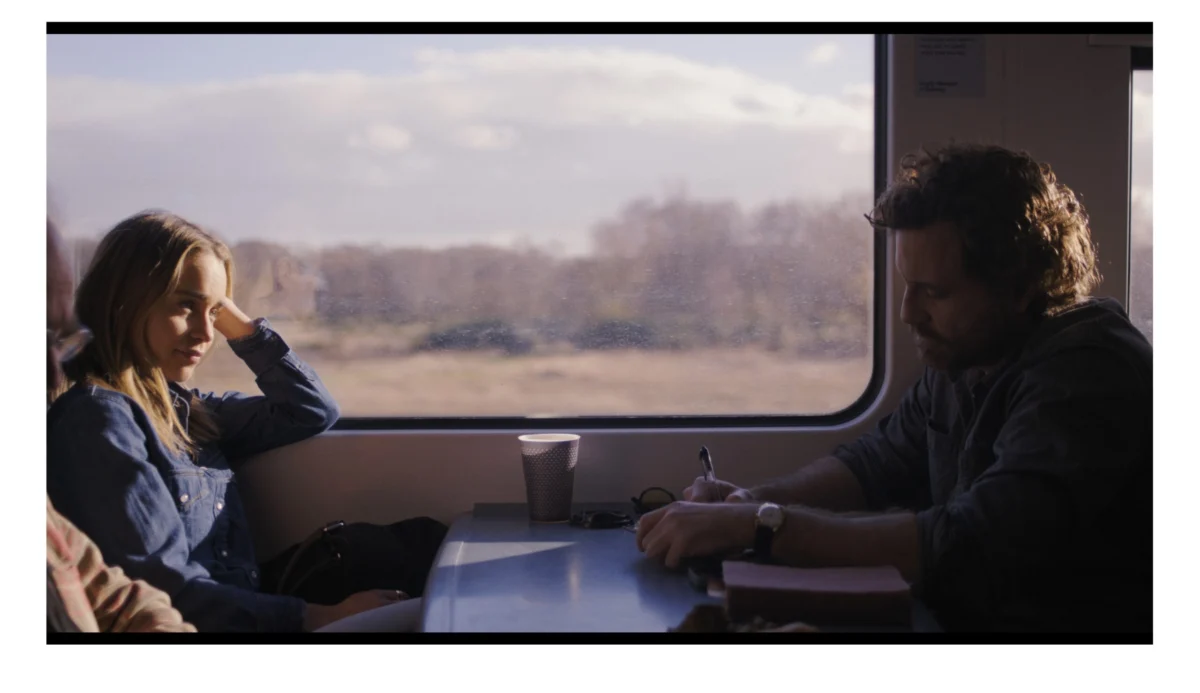
The pandemic era was, for many, a period of forced introspection and radical life shifts. For filmmaker Drake Doremus, the isolation of the last few years served as a catalyst for a profound personal evolution—one that has finally manifested on screen. Seven years after his last feature, Endings, Beginnings (2019), Doremus returns to the cinematic landscape with Next Life, a film that serves as a poignant, lyrical, and deeply personal exploration of the paths we choose and the lives we leave behind.
Premiering at the Tribeca Festival, Next Life represents a creative rebirth for the director. Having navigated his own series of personal endings and new beginnings—including a chance encounter in Madrid that led to his marriage—Doremus has crafted a narrative that, while not strictly autobiographical, pulses with the authentic heartbeat of a man who has learned to appreciate the fragility of fate.
The Architecture of Choice: A Narrative Synopsis
At the center of Next Life is Ivy, portrayed with luminous vulnerability by Emilia Clarke. The film introduces us to Ivy during a pivotal, transformative moment on a London train. Through a structural device that echoes the philosophical weight of Robert Frost’s "The Road Not Taken," Doremus presents the audience with a bifurcation of reality.
In one timeline, a clumsy, coffee-spilling encounter with a charming jazz musician named Diego (Edgar Ramírez) sets Ivy on a trajectory of self-discovery. Diego becomes not just a romantic interest, but a catalyst for Ivy to reclaim the musical ambitions she had long suppressed. In this version of her life, she balances a burgeoning career in music with the complexities of step-parenting and the untethered freedom of the London jazz scene.
In the alternate reality—a timeline triggered by a mere moment of grace where the coffee does not spill—Ivy remains on her current path. She returns to her life with Noah (Jack Farthing), her boss at a successful London firm. This life is marked by stability, professional predictability, and a traditional, if somewhat stifling, domesticity.
Doremus eschews the tropes of the conventional romantic comedy. He refuses to paint Noah as a villain or Diego as a perfect savior. Both realities are treated as valid, both are filled with moments of profound joy, and both are marred by the inevitable melancholy of compromise.
A Chronology of Artistic Evolution
Drake Doremus has long been a chronicler of the intricacies of modern love. His breakout 2011 film, Like Crazy, remains a touchstone for audiences who value raw, improvised, and deeply felt depictions of long-distance relationships.
- 2011: Like Crazy gains critical acclaim at Sundance, establishing Doremus as a master of the "intimate epic."
- 2019: Endings, Beginnings is released. The title proves prophetic, as the director undergoes significant personal changes during the subsequent global pandemic.
- 2020–2023: Doremus enters a period of creative gestation. The "chance encounter" in Madrid serves as the spiritual blueprint for the script of Next Life.
- 2024: Next Life premieres at the Tribeca Festival, marking the director’s return to the spotlight after a seven-year hiatus.
The transition from his earlier work to Next Life demonstrates a clear maturation. While his previous films were characterized by a certain youthful yearning, Next Life possesses a measured, meditative quality that suggests a director who has moved past the question of "if" love can survive, to the more complex question of "which" life one is meant to lead.
Supporting Data and Production Details
The technical execution of Next Life is as ambitious as its premise. The film relies heavily on the sonic landscape of London’s jazz scene to distinguish the two realities. The music is not merely background; it is an active participant in Ivy’s emotional journey.

- Cast: Emilia Clarke (Ivy), Edgar Ramírez (Diego), Jack Farthing (Noah).
- Director/Screenplay: Drake Doremus.
- Producers: Drake Doremus, Elika Portnoy, Gleb Fetisov, Ben Pugh, and Emilia Clarke.
- Running Time: 112 minutes.
- Sales Agents: CAA (Domestic); Rocket Science (International).
The film features a notable performance from Clarke, who handles the dual-role requirements with subtle shifts in physicality and temperament. Her rendition of the WWII-era standard "I’ll Be Seeing You" serves as the emotional anchor for the film, bridging the gap between her two possible futures.
Comparative Analysis: The "Sliding Doors" Legacy
It is impossible to discuss Next Life without addressing the inevitable comparisons to Peter Howitt’s 1998 film, Sliding Doors. Both films utilize the "train-ride divergence" trope to explore the butterfly effect of a single, seemingly inconsequential decision.
However, where Sliding Doors leaned into the genre constraints of the late-90s rom-com, Next Life functions more as a character study. Doremus does not rely on the irony of missed connections to drive the plot; instead, he uses the dual-reality structure as a prism through which to view the multifaceted nature of human desire. By avoiding a clear "right" or "wrong" choice, Doremus forces the audience to confront their own "what ifs." The film suggests that the tragedy of life is not that we make the wrong choice, but that we cannot live all of them.
The Director’s Perspective: A Re-energized Vision
In recent discussions regarding the film’s production, Doremus has been candid about his own shift in perspective. He speaks of the film as a "re-entry" into his own creative voice. By centering the story on the professional and personal stakes of a woman in her prime, Doremus has tapped into a more mature sensibility.
The inclusion of Emilia Clarke as both lead and producer indicates a collaborative environment that allowed for deeper character development. Clarke’s performance is being hailed by critics for its balance of strength and vulnerability, marking a significant departure from the roles that brought her global fame. For Doremus, this collaboration was essential to grounding the "high-concept" nature of the film in a reality that feels tangible and earned.
Implications for the Genre
Next Life arrives at a time when the romantic drama is seeing a resurgence, yet it stands apart for its refusal to provide easy closure. By presenting two equally "viable" lives, Doremus challenges the audience’s desire for a traditional resolution.
This creates several implications for the future of the genre:
- Narrative Flexibility: Doremus proves that non-linear, dual-timeline narratives can be used for emotional resonance rather than just stylistic flair.
- Ambiguity as a Virtue: In an era of cinematic "universes" that strive for total resolution, Next Life suggests that leaving questions unanswered can be a more satisfying narrative choice.
- The "Mature" Romance: The film signals a shift toward dramas that explore the middle-life crisis of identity—the realization that our careers and relationships are not fixed, but are constantly subject to the "sliding doors" of our own making.
Conclusion: A Path Toward the Future
Ultimately, Next Life is a testament to the idea that our lives are defined by the paths we take, but perhaps even more so by the parts of ourselves we choose to nurture. Whether Ivy chooses the stability of the office or the unpredictable harmony of the jazz club, the film’s message is one of agency.
Drake Doremus has crafted a work that feels like a conversation with his own past, present, and future. For audiences, it serves as a gentle reminder that while we can only live one life at a time, we are the sum of all the possibilities we have dared to imagine. As the credits roll, one is left not with the frustration of the "what if," but with a sense of peace regarding the "what is." Next Life is more than just a film about choices; it is a film about the courage required to live with them.










