
 Nana Wu
The history of the video game industry is often written by the victors, but as any seasoned developer will tell you, the truth is rarely as black and white as quarterly earnings reports. This week, a long-simmering debate regarding the "piracy epidemic" of the 1990s has resurfaced, pitting two of id Software’s most influential figures against one another.
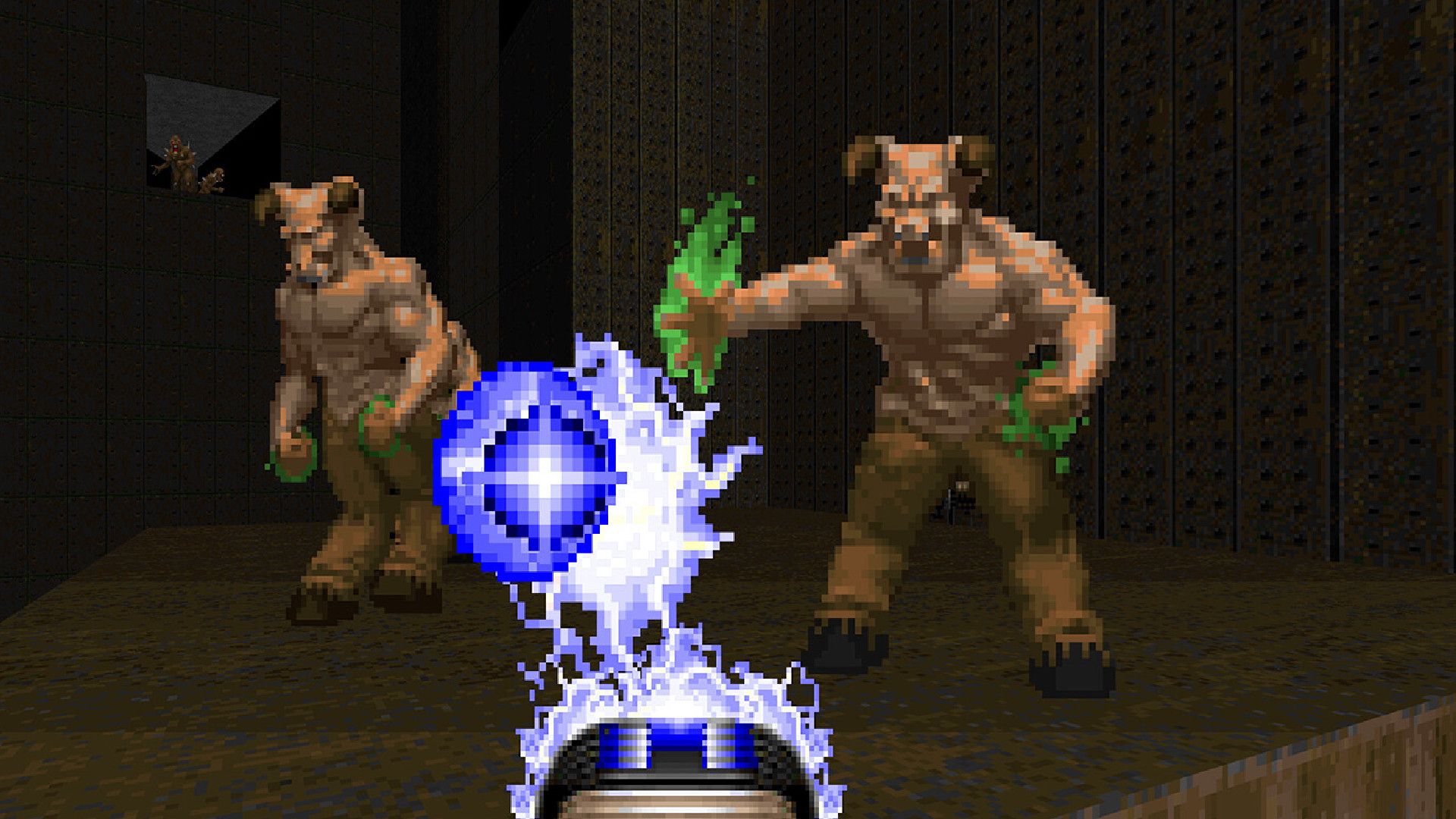
At the center of the controversy is the legacy of Doom, the seminal first-person shooter that defined a generation of gaming. While Sandy Petersen, a key designer on the original title, has publicly blamed piracy for the downfall of legendary studios, his former colleague John Romero has stepped in to provide a necessary, fact-based correction. The debate serves as a masterclass in how we perceive the transition from the "Wild West" of early digital distribution to the modern era of Steam and subscription services.
The Catalyst: Petersen’s Allegations
The spark for this latest debate was a series of posts on X (formerly Twitter) by Sandy Petersen, who argued that piracy was the singular force that gutted the foundations of the 1990s gaming landscape. Petersen posited that between 70% and 90% of Doom players were, in his estimation, pirates.
"We would literally have had so much more for our workspace and upcoming projects," Petersen claimed, suggesting that if those lost sales had materialized, the financial pressures that eventually led to the internal restructuring at id Software—specifically during the turbulent development of Quake—would have been mitigated. He went on to blame the "damn pirates" for the collapse of historic companies like the original Amiga developers and 3D Realms, the studio behind the Duke Nukem franchise.
A History of Shareware: The "Free" Paradox
To understand why Petersen’s numbers feel skewed to modern observers, one must understand the specific business model that propelled Doom to global superstardom: the shareware model.
In the early 1990s, id Software utilized a "try-before-you-buy" strategy. The first episode of Doom was distributed for free, designed specifically to be copied, uploaded to Bulletin Board Systems (BBS), and passed around on floppy disks. This was not theft; it was a deliberate marketing strategy. The goal was to lower the barrier to entry so that millions of players could experience the visceral, fast-paced action of the game, with the hope that they would eventually register their copy to unlock the subsequent episodes.
This creates a critical distinction in the data. When Petersen cites a 70–90% non-payment rate, he is conflating millions of legitimate shareware users—those who played the game exactly as id Software intended—with individuals who cracked the registered versions of the game.
The Romero Correction
John Romero, a co-founder of id Software, responded to Petersen’s claims with the characteristic measured tone of a man who has spent the last half-decade correcting the historical record of his own career.
"By the mid-90s, DOOM had something like 20 million shareware installs and more than 2 million paid copies sold," Romero noted. He pointed out that the millions of users who played the free episode were not pirates; they were the fuel for the game’s viral success. Romero argued that the free distribution was, in fact, the engine that made Doom impossible to ignore, effectively creating a cultural phenomenon that no paid marketing campaign could have replicated.
Romero’s intervention challenges the "one copy, one sale" fallacy that has plagued the industry for decades. He posits that even if piracy did exist, it was not the fundamental cause of the organizational shifts at id Software. "Piracy may have cost money," Romero acknowledged, "but it wasn’t the reason Quake was hard or why people eventually went different ways."
The Economics of Piracy: Then and Now
The debate between Romero and Petersen touches on a fundamental shift in economic theory within the tech sector. For years, the gaming industry operated under the assumption that every pirated copy represented a "lost sale"—a dollar that was stolen from the developer’s pocket.
However, industry experts and figures like Valve’s Gabe Newell have long argued that piracy is often a service problem, not a pricing problem. In a famous 2009 observation, Newell argued that customers are more than happy to pay for a great product if it is delivered on their terms. If a game is easily accessible, regularly updated, and integrated into a convenient platform, the desire to pirate it drops significantly.
The enduring success of Doom serves as the perfect case study. Even today, with the game available for free or through various unofficial channels, the title continues to sell on modern platforms like Steam. This suggests that the value of the "official" product—including ease of use, mod support, and community connectivity—far outweighs the convenience of a pirated file.
Why the Narrative Persists
Why do developers like Petersen still lean into the "pirates killed the industry" narrative? It is a sentiment rooted in the immense stress of the era. Developing games in the 1990s was a grueling, high-stakes endeavor. When a studio like 3D Realms struggled or an ambitious project like Quake faced developmental hell, it was natural for those on the inside to look for a culprit. Piracy provided a convenient, externalized enemy that made the volatile nature of the software business feel more understandable.
However, as Romero points out, the reality is far more complex. The "death" of the 90s-era studios was often due to changing technical landscapes, rising development costs, management disputes, and the transition from 2D to 3D graphics, rather than a malicious wave of software piracy.
The Implications for Today
The discourse between these two legends highlights three major truths about the industry:
- Distribution as Marketing: In the digital age, exposure is often more valuable than the initial sale. The shareware model of the 90s was the precursor to modern "free-to-play" and "early access" models, where giving the user a taste of the experience is the primary driver of revenue.
- Data Nuance: When analyzing industry health, developers and analysts must distinguish between non-paying users who act as brand ambassadors (the shareware crowd) and genuine software theft.
- The Evolution of the User: The modern gamer is willing to pay for convenience and support. The continued commercial viability of Doom decades after its release proves that quality and accessibility are the best defenses against piracy.
Conclusion: A More Nuanced Legacy
As the dust settles on this latest Twitter exchange, the takeaway is clear: the history of Doom is not a story of a company brought to its knees by thieves. It is a story of a pioneering team that leveraged the technological limitations of the era—the inability to easily distribute large files—into a brilliant, viral marketing strategy.
While it is entirely valid to advocate for developers to be paid for their work, the legacy of id Software is best served by acknowledging the truth. Doom did not suffer because of its fans; it succeeded because of them. By allowing the game to spread freely, Romero and his colleagues turned a small studio into a global giant. The "pirates," it seems, were actually the fans who eventually turned Doom into the most enduring franchise in the first-person shooter genre.
History is, as Romero says, "messier than ‘pirates killed the companies.’" It is a story of innovation, risk-taking, and the accidental genius of the shareware era. Perhaps the best way to honor the work of both Petersen and Romero is to recognize that without the massive, often unpaid reach of the 90s, the world of gaming would be significantly smaller today.


 Pevita Pearce
 Asep Darmawan




