

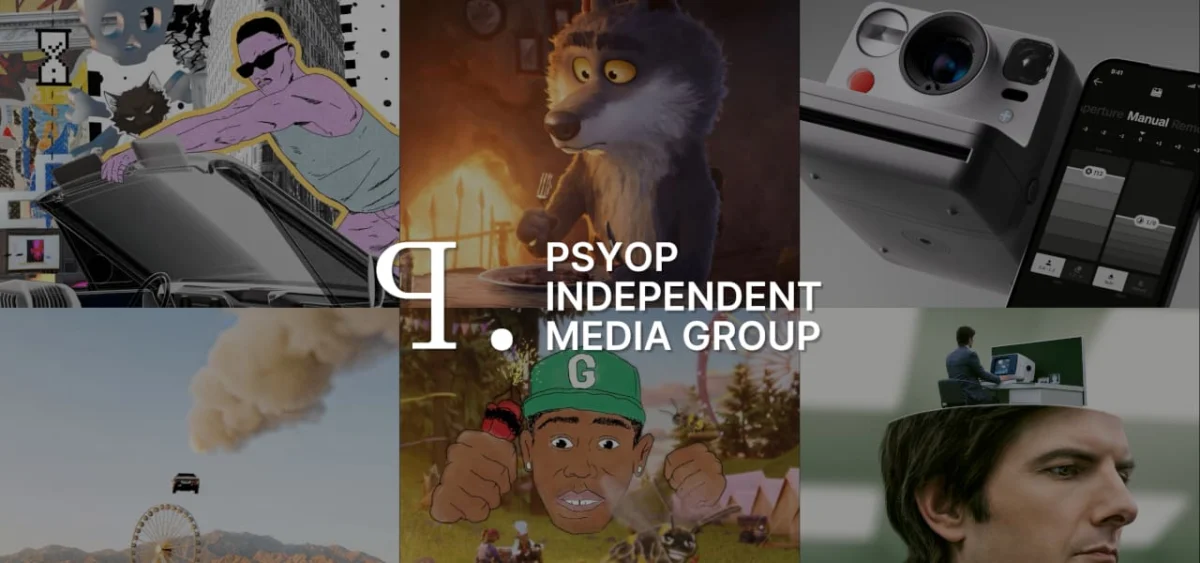
In a bold move that signals a significant shift in the landscape of commercial production and animation, Psyop—the global powerhouse known for its high-end animation and mixed-media work—has announced the launch of the Psyop Independent Media Group (PIMG). This new venture consolidates 20 independent creative studios into a single, cohesive network, aiming to redefine how brands and agencies approach large-scale, multi-disciplinary projects.
By bridging the gap between boutique creative agility and the operational scale of large holding companies, Psyop is positioning its new collective as a "next-generation" solution for an industry grappling with the rapid integration of AI, shifting media consumption habits, and the increasing complexity of global brand campaigns.
The Genesis of the Network: A New Production Model
For decades, the commercial production industry has functioned through a fragmented ecosystem. Agencies and brands typically navigate a complex maze of freelance talent, specialized boutique vendors, and massive, often slow-moving, holding companies. Psyop’s initiative seeks to bypass these inefficiencies by creating a "centralized production network."
The PIMG operates as a federation. At its core, it maintains the distinct creative identities of 20 independent studios, while providing a centralized layer of business infrastructure, client management, and strategic oversight. This model allows clients to engage with a single point of contact who can then tap into the specific expertise of the network’s member studios, ranging from animation and live-action to experimental AI workflows and character design.
The Initial Partner Roster
The strength of the PIMG lies in its diversity. The founding members include a mix of global creative powerhouses and specialized craft-focused boutiques:
- Animation & Design: CRCR, Illogic, Le Cube, Meat Dept., and Sun Creature.
- Mixed Media & Experimental: Baillat, Daisy Chain, Extraweg, and Hyperculture.
- Strategic & Creative Boutiques: Igor + Valentine, Patagraph, Remus + Kiki, Shotopop, someform, Studio Showoff, Take Your Medicine, Temple Caché, and Vallée Duhamel.
With operations spanning major creative hubs—including New York, Los Angeles, Mexico City, Montreal, Berlin, London, Paris, Madrid, São Paulo, Buenos Aires, and Melbourne—the group possesses a truly global footprint that allows for "follow-the-sun" production cycles.
Chronology: From Boutique Studio to Global Network
Psyop’s evolution from a celebrated animation house to a network architect didn’t happen overnight.
- Foundational Years: Psyop established its reputation as a leader in high-end commercial animation and mixed-media storytelling, working with global brands like Coca-Cola, Nike, and Apple.
- Strategic Expansion: Recognizing the limitations of a single-studio model, the company began building out its internal capabilities, investing heavily in talent and technology.
- The Paradigm Shift (2025-2026): As the industry began to lean heavily into AI-augmented workflows and complex, multi-channel media campaigns, Psyop identified a gap: clients wanted the craft of a boutique studio but the reliability and scale of an agency.
- Launch (June 2026): The formal unveiling of the Psyop Independent Media Group marks the transition from a single entity to a collective network, formalizing long-standing relationships with 20 of the world’s most respected creative studios.
Supporting Data: Why the Industry Needs a Change
The rise of the PIMG comes at a time of unprecedented disruption in the creative sector. Industry data suggests several key drivers behind this consolidation:
- Complexity of Deliverables: Modern brand campaigns are no longer limited to a 30-second spot. They require social media assets, interactive experiences, AI-driven personalization, and high-fidelity animation. Managing five different vendors to achieve this creates massive project friction.
- The AI Integration Gap: Many brands are eager to adopt AI-driven character agents and automated production pipelines but lack the expertise to vet which studios are truly innovating in this space versus those merely using off-the-shelf tools.
- The "Holding Company" Fatigue: Many clients have expressed frustration with traditional advertising holding companies, which often prioritize cost-cutting and administrative layering over the actual creative output. By contrast, PIMG promises to keep the "authorial" voice of the artist at the center of the process.
The leadership team backing this initiative brings a wealth of institutional knowledge from companies that have defined the modern creative era: Wieden+Kennedy, Nike, Meta, Google, Squarespace, and Tribeca. This cross-pollination of agency, tech, and production-side experience is designed to ensure that the PIMG speaks the language of both the creative director and the corporate CMO.
Official Responses: The Vision of Leadership
In the official announcement, Psyop CEO Matt Hunnicutt emphasized that the motivation behind the network is rooted in the preservation of creative passion.
"In a world of holding companies and private equity, we want to support and celebrate the passion of independent talent," Hunnicutt stated. "The industry is changing rapidly, and the need for new creative production models has never been greater. We are forming a first-of-its-kind global network of independent craft experts able to collaborate across mixed media arts."
For the client-side, the value proposition is one of efficiency and depth. Hunnicutt added, "For our clients, the ability to plug into an interconnected studio system with an upstream architecture represents incredible value. Whether it’s artful live action, brand design, or artist-authored AI pipelines, it’s one call, a world of talent."
.png)
Implications: What This Means for the Future of Production
The formation of the Psyop Independent Media Group carries several implications for the future of the animation and production industries:
1. The Rise of the "Super-Boutique"
The PIMG model suggests that the future of production is not in the massive, monolithic agency, but in the "super-boutique"—a collection of highly specialized, nimble teams that operate under a shared umbrella. This allows studios to remain small enough to retain their unique aesthetic and creative spirit while benefiting from the legal, financial, and strategic stability of a larger entity.
2. Standardizing AI Workflows
One of the most interesting aspects of the PIMG is its focus on "artist-authored AI pipelines." By centralizing these tools, the network can create a shared standard for how AI is used in production. This move protects the creative integrity of the studios involved, ensuring that technology serves the art, rather than replacing it.
3. A Challenge to Traditional Agency Models
Traditional advertising agencies often act as the "middle-man," subcontracting work to studios like those in the PIMG. By offering a direct-to-client, end-to-end production network, Psyop is potentially disrupting the traditional agency-vendor relationship. Brands may increasingly look to bypass the agency layer for high-end production, opting instead to work directly with the creative experts who are actually executing the work.
4. Global Talent Retention
By providing a formal network, PIMG creates a career path for independent artists and studios that might otherwise struggle to sustain themselves in a volatile economy. This creates a sustainable ecosystem where the "best artists" can collaborate across borders, ensuring that the industry’s top talent stays engaged and supported.
Final Thoughts
As the dust settles on the launch, the industry will be watching closely to see if the PIMG can maintain its creative agility while scaling its operations. If successful, the model could serve as the blueprint for a new era of creative production—one that balances the cold, hard logic of efficiency with the chaotic, vibrant spark of artistic independence. For now, Psyop has placed its bet: the future belongs to the collective.









No comments yet. Be the first to join the conversation!