Lina Hope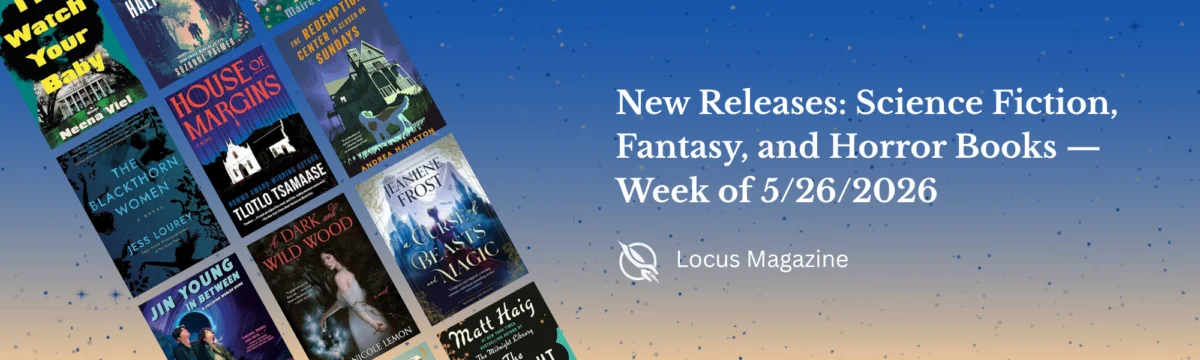
The landscape of speculative fiction is undergoing a profound transformation as we approach the mid-year point of 2026. This week’s release cycle—spanning May 26, 2026—highlights a fascinating shift in the genre, moving away from purely escapist narratives toward stories that grapple with ideological architectures, the intersection of technology and trauma, and the haunting persistence of folklore in modern settings.

From the academic rigor of MIT Press’s latest discourse on "reactionary worldbuilding" to a slate of debut novels that challenge the boundaries of horror and fantasy, this week’s literary output offers a rigorous examination of the human condition through the lens of the impossible.

Main Facts: The Intersection of Ideology and Imagination
The standout publication of this week is undoubtedly Reactionary Worldbuilding by Anindita Banerjee and Sherryl Vint. Published by MIT Press, this 434-page non-fiction collection serves as a critical bridge between academic inquiry and fan-driven creative processes. The book posits that worldbuilding—the creation of internal logic, history, and physical laws within a fictional universe—is never a neutral act. Instead, it is an inherently ideological process.

Banerjee and Vint explore how contemporary creators utilize apocalyptic reenactments and alternative histories not just as plot devices, but as tools to construct or critique power structures. By analyzing the prevalence of conspiracy theories within modern speculative media, the authors argue that the way we build worlds reflects the deep-seated anxieties of our own reality.

While the non-fiction sector is pushing boundaries, the fiction releases are equally ambitious. Notable titles include Andrea Hairston’s The Redemption Center Is Closed on Sundays and the genre-bending Teddy Bears Never Die by Cho Yeeun and Sung Ryu. These works signal a move toward "weird fiction" that refuses to stay within the confines of traditional genre tropes, blending mystery, noir, and surrealist horror.

Chronology of Releases (Week of May 26, 2026)
The following list encapsulates the diverse range of titles hitting shelves this week:

- May 26: Reactionary Worldbuilding by Anindita Banerjee & Sherryl Vint (MIT Press)
- May 26: A Curse of Beasts and Magic by Jeaniene Frost (Tor/Bramble)
- May 26: The Midnight Train by Matt Haig (Viking)
- May 26: The Redemption Center Is Closed on Sundays by Andrea Hairston (Tor)
- May 26: The Rainshadow Orphans by Naomi Ishiguro (Saga Press)
- May 26: Dead Weight by Hildur Knútsdóttir & Mary Robinette Kowal (Tor/Nightfire)
- May 26: The Blackthorn Women by Jess Lourey (Thomas & Mercer)
- May 26: The Last Best Quest Ever by F.T. Lukens (McElderry)
- May 26: A Queen Crowned in Flames by Hazel McBride (Delacorte)
- May 26: Jin Young, In Between by Ellen Oh (Crown)
- May 26: Curses, Keys, and Secret Societies by Breanne Randall (Dell)
- May 26: Bromantasy by Máire Roche (Putnam)
- May 26: House of Margins by Tlotlo Tsamaase (Erewhon)
- May 26: A Kiss of Crimson Ash by Anuja Varghese (Orbit US)
- May 26: I’ll Watch Your Baby by Neena Viel (St. Martin’s Griffin)
- May 26: Teddy Bears Never Die by Cho Yeeun & Sung Ryu (Orbit US/Run For It)
- May 26: That Which Feeds Us by Keala Kendall (Random House)
- May 26: Wonders Never Cease by Lexy Hudson (Titan Books UK)
- May 26: Transmentation | Transgression by Darkly Lem (Blackstone)
- May 26: A Dark and Wild Wood by Sarah Nicole Lemon (Harper Voyager)
- May 26: Ode to the Half-Broken by Suzanne Palmer (DAW)
Supporting Data: Genre Trends and Market Shifts
The current market is seeing a massive surge in "Romantasy"—fantasy novels with a heavy emphasis on romantic subplots—as evidenced by titles like Jeaniene Frost’s A Curse of Beasts and Magic and F.T. Lukens’s The Last Best Quest Ever. However, these are not mere recycled tropes. Authors are increasingly using these romantic structures to explore heavier themes, such as the survival of trauma (Frost) or the performative nature of heroism (Lukens).

Debut Authors and Translation
A significant portion of this week’s high-profile releases comes from debut authors or translated works. For instance, the horror novella Dead Weight, translated from Icelandic by Hugo Award-winning author Mary Robinette Kowal, highlights a growing interest in international voices. Similarly, Teddy Bears Never Die brings Korean speculative fiction to a wider global audience, demonstrating that the appetite for non-Western perspectives in the SFF (Science Fiction and Fantasy) market is at an all-time high.

Page Count and Format Diversity
Average page counts for this week’s releases sit in the 350–450 page range, suggesting that readers are currently favoring medium-to-long-form narratives. The prevalence of simultaneous releases in hardback, paperback, ebook, and audiobook formats points to a sophisticated supply chain that caters to the "omni-consumer," who may switch between reading and listening formats throughout the week.

Implications: The Future of Speculative Fiction
The implications of this week’s releases are twofold. First, the industry is clearly pivoting toward a more critical, meta-narrative approach. When academic texts like Reactionary Worldbuilding are released alongside mainstream fiction, it suggests that the readership is becoming more literate in the how and why of the genre. Readers are no longer satisfied with simple world-building; they are interested in the ethical underpinnings of the stories they consume.

Second, the rise of "Gothic" and "Horror" elements—specifically those that tackle systemic issues like colonialism in Keala Kendall’s That Which Feeds Us or mass-trauma in Teddy Bears Never Die—indicates that speculative fiction is serving as a primary vehicle for societal processing. By transposing real-world grievances into supernatural or futuristic settings, these authors provide a safe distance from which to analyze painful truths.

Call to Action: Supporting the Ecosystem
It is important to remember that the vitality of the science fiction and fantasy genre depends on the health of the entire ecosystem. Independent bookstores remain the lifeblood of this community, acting as hubs for discovery.

As we continue to track these releases, we invite our readers to visit Bookshop.org to purchase these titles. By doing so, you are not only supporting the authors who craft these intricate worlds but also the local booksellers who curate the spaces where we find our next favorite story.

Furthermore, Locus Magazine remains committed to providing in-depth, paywall-free coverage of the SFF field. We rely entirely on the generosity of our readers to maintain our operations. If you value our commitment to detailed, high-quality literary journalism, please consider a donation via our official donation portal. Your contributions ensure that we can continue to document the evolving landscape of speculative fiction, providing you with the insights, reviews, and news you have come to rely on throughout the years.

Whether it is an exploration of the multiverse in the Formation Saga or a haunting mystery in the African literary landscape of House of Margins, the stories released this week are a testament to the enduring power of the imagination. Keep reading, keep exploring, and keep questioning the worlds that authors build for us.


 Nana Muazin
 Raul Delapena Setiawan