

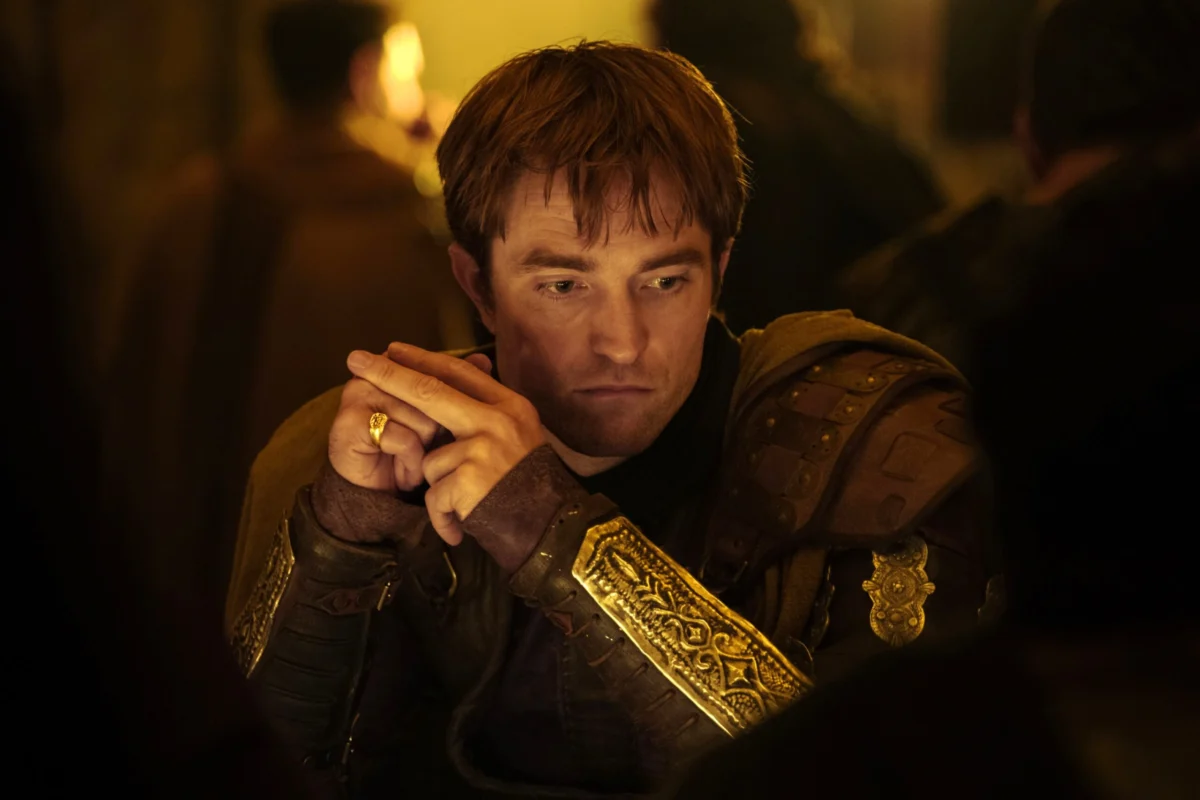
Christopher Nolan’s latest magnum opus, The Odyssey, has firmly cemented itself as the most critically acclaimed film of the year thus far. A sweeping, ambitious re-imagining of Homer’s foundational epic, the film has drawn universal praise for its technical mastery and thematic density. However, the cultural phenomenon surrounding the film has been punctuated by a logistical crisis: a massive, ongoing struggle for moviegoers attempting to secure tickets for the limited, high-demand IMAX 70mm screenings.
For those lucky enough to have obtained seats—some of which were purchased nearly a year in advance—the experience is being hailed as a transformative moment in modern cinema. To dissect the complexities of this release, the latest episode of IndieWire’s Screen Talk podcast offers an in-depth analysis of what makes The Odyssey a defining work of the decade, even as it navigates the friction of a modern theatrical landscape.
The Vision: Nolan’s Reinterpretation of Homer
In the latest episode of Screen Talk, hosts Anne Thompson and Ryan Lattanzio, joined by IndieWire Craft Editor Sarah Shachat, peel back the layers of Nolan’s directorial choices. The conversation centers on a fundamental question: How does one adapt an ancient text without losing its soul?
Nolan has opted to frame his Odyssey through the lens of a crumbling civilization. While the film retains the core beats of the epic, it notably pivots away from the raw, visceral brutality found in the original Homeric text. Instead, Nolan’s Odysseus, portrayed with a weary, grounded gravitas by Matt Damon, is reimagined as a flawed, hubristic problem-solver. He is a man struggling against the inevitable decline of the world he once fought to defend.
The panel notes that while purists may take issue with the "sanding down" of the poem’s more savage elements, the sheer scale of Nolan’s filmmaking renders such critiques secondary. The craft on display—from the sweeping, immersive cinematography to the sound design that echoes the isolation of the sea—positions the film as a testament to the power of the theatrical experience.
Chronology of a Cultural Event
The road to The Odyssey’s release has been anything but conventional.

- Early Development (2024): Rumors of Nolan’s next project following his historical success with Oppenheimer began to circulate, with reports confirming his interest in a "large-scale classical adaptation."
- Production Phase (2025): Principal photography spanned several continents, utilizing practical effects and the director’s signature IMAX 70mm film format, which has become a hallmark of his recent career.
- The Advance Ticket Frenzy (Mid-2025): Recognizing the limited availability of 70mm IMAX theaters, studios initiated an aggressive, year-long advance ticketing strategy. This led to a surge of demand that crashed several major ticketing platforms.
- Release Window (Summer 2026): The film opened to record-breaking critical acclaim, simultaneously triggering a secondary market boom and a wave of frustration among fans unable to access the premium-format screenings.
Deep Dive: Craft, Casting, and the Online Discourse
A significant portion of the Screen Talk discussion focuses on the granular details that make this film a dense, multi-faceted experience. Sarah Shachat highlights the mysterious "sea peoples"—a group mentioned throughout the film by Odysseus and his wife, Penelope (Anne Hathaway), yet never visually represented. This narrative choice forces the audience to project their own fears onto the unknown, a classic Nolan technique for building dread.
The film has also become a lightning rod for online discourse, particularly regarding its casting. The inclusion of Lupita Nyong’o as both Helen of Troy and her "twin" sister, Clytemnestra, represents a creative departure from traditional interpretations. Nolan uses this artistic flourish to explore themes of duality and fate. Similarly, the casting of Elliot Page as the Greek soldier Sinon—the architect of the Trojan Horse deception—has spurred heated debate.
The panel argues that much of this "culture war" rhetoric ignores the director’s stated intent: to create a mythic, timeless quality that transcends historical accuracy. By bending the source material, Nolan forces the audience to engage with the text on a thematic level rather than as a museum piece.
Industry Implications: Festivals and Mergers
Beyond the orbit of The Odyssey, the landscape of the film industry is shifting rapidly. The podcast explores the upcoming slate of film festivals, which promise to set the tone for the remainder of the awards season.
Venice is set to open with Danny Boyle’s highly anticipated Rupert Murdoch bio-drama, Ink, a film already generating significant buzz for its bold stylistic approach. Meanwhile, the New York Film Festival is anchored by James Gray’s Paper Tiger. Early screenings of Paper Tiger have already led critics to categorize it as a surefire Oscar contender, further cementing Gray’s status as one of the most consistent directors in the industry.
However, the industry is also facing structural instability. The ongoing 12-state antitrust lawsuit aiming to block the merger between Paramount and Warner Bros. Discovery continues to loom over the studio system. While the panel adopts a cynical tone regarding the outcome—predicting that the merger will likely proceed despite legal challenges—the potential impact on creative output and theater distribution remains a critical concern for the future of cinema.

Supporting Data: The Value of the Theatrical Experience
The scarcity of 70mm IMAX screens is not merely a marketing tactic; it is an assertion of the value of celluloid. Data from the summer box office confirms that audiences are increasingly prioritizing "event cinema." Films that offer a distinct visual identity—one that cannot be replicated on a home television—are consistently outperforming, even in a fragmented streaming market.
- Premium Large Format (PLF) Performance: IMAX and Dolby Cinema screens continue to see occupancy rates exceeding 90% for tentpole films like The Odyssey.
- Audience Demographics: Surveys indicate that younger audiences are increasingly seeking out high-fidelity, non-digital viewing experiences, signaling a generational shift in how film is consumed.
- The "Long Tail" of Success: The year-long advance ticket strategy for The Odyssey has proven that long-term theatrical engagement is possible, provided the film is marketed as a rare, time-sensitive event.
Official Responses and Future Outlook
While representatives for the studios involved in the Paramount/Warner Bros. Discovery merger have declined to provide detailed commentary on the pending litigation, industry analysts suggest that the lawsuit marks a turning point in federal oversight of media conglomerates.
For the average moviegoer, the immediate concern remains access. With the film’s run continuing through the autumn, theater chains are reportedly looking into extending 70mm runs, though the limitations of physical film projection hardware remain a bottleneck.
As The Odyssey continues its march through the cultural consciousness, it serves as a reminder that cinema, at its best, is a communal act of imagination. Whether one views the casting choices as visionary or distracting, or whether one views the distribution hurdles as a failure of planning or a success of marketing, the result is undeniable: people are talking about movies again.
For those interested in the full, detailed analysis, the latest episode of Screen Talk is available now on all major podcast platforms. It is an essential companion piece for anyone attempting to navigate the complexities of one of the most discussed films of the decade.










