

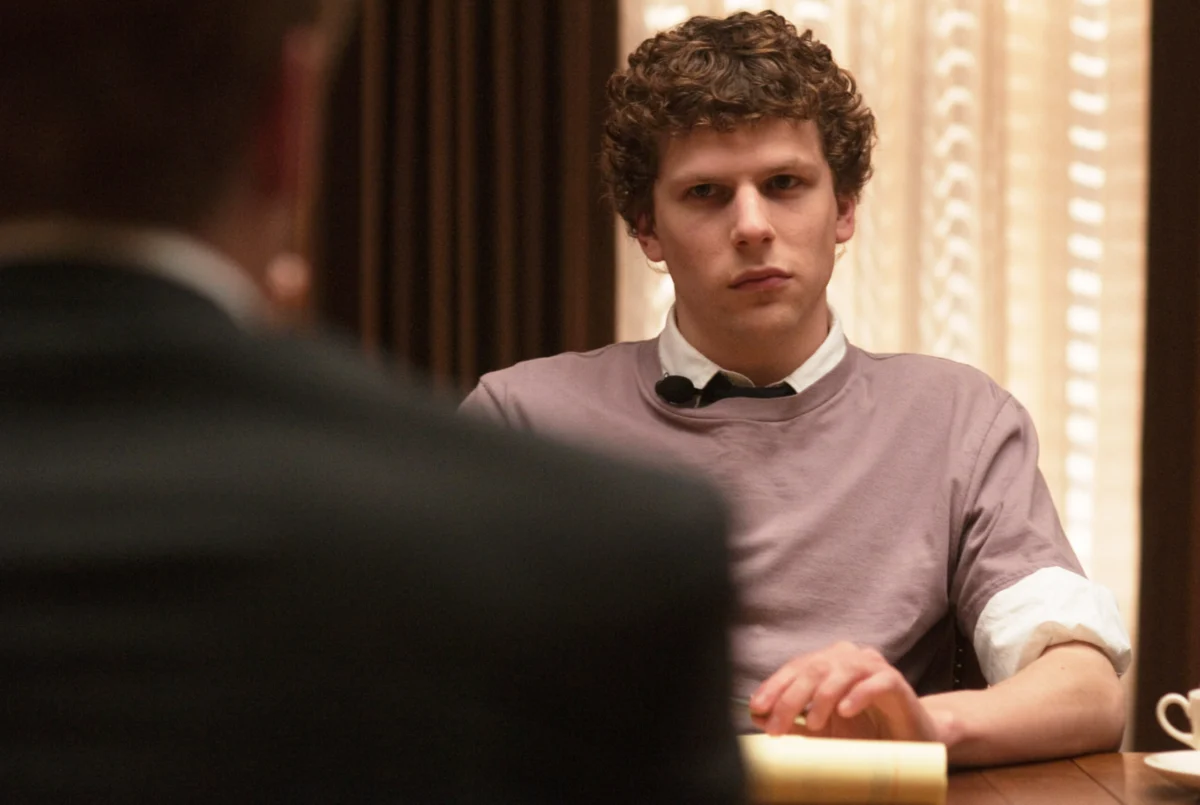
In the pantheon of modern cinematic portrayals, few performances have been as defining—or as haunting—as Jesse Eisenberg’s turn as Mark Zuckerberg in David Fincher’s 2010 masterpiece, The Social Network. The film, penned by Aaron Sorkin, became a cultural touchstone, etching the image of the Facebook founder into the global consciousness through Eisenberg’s sharp, anxious, and calculated delivery. However, as production gears up for the long-awaited sequel, The Social Reckoning, it has been confirmed that Eisenberg will not be reprising his iconic role.
Speaking exclusively to Variety at the Los Angeles premiere of Minions & Monsters, Eisenberg opened up about the arduous process of turning down an offer that most actors would consider a career pinnacle. His departure marks a significant shift in the legacy of the franchise, signaling that while the narrative of Silicon Valley’s evolution continues, the actor behind its primary architect is ready to close that chapter permanently.
A Legacy of Ambivalence: The Actor’s Perspective
The decision was not made lightly. Eisenberg revealed that he and Sorkin engaged in several days of intense deliberation before ultimately deciding to part ways regarding the project. For Eisenberg, the challenge was not a lack of respect for the material or his collaborator, but rather an existential fatigue regarding his own public identity.
“It’s an honor to speak to Aaron in any capacity, because he’s so articulate and charming and so bright,” Eisenberg noted, his tone reflecting a genuine reverence for the screenwriter. “We talked about doing the movie for several days. The way Aaron speaks, he speaks so wonderfully, as he writes that, in a way, if you’re not going to do something with him, it feels almost like you’re letting down America.”
Despite the allure of the script and the pedigree of the production, Eisenberg felt a profound need to distance himself from the persona of Mark Zuckerberg. Having played the character during the meteoric rise of the platform, Eisenberg found that the lines between the actor and the tech titan had become dangerously blurred in the eyes of the public.
“I just told him I’m moving in different directions in my life,” Eisenberg explained. “I don’t want to be associated with that character. But all of my reasons for not wanting to do the movie have nothing to do with how wonderful the movie is, and will be, and I’m sure is already.”
Chronology of a Casting Crisis
The journey to this realization began months before the public announcement. Aaron Sorkin, who has long been vocal about his desire to revisit the world of The Social Network, spent significant time trying to convince his original star to return.
The Sorkin Pitch
Earlier in June, Sorkin provided context to Vanity Fair regarding the negotiations. He revealed that he had spent three days in direct communication with Eisenberg, attempting to persuade him that the sequel required the continuity of the original cast. Sorkin acknowledged that he ultimately hit a wall where he realized the "conflation" between Eisenberg and Zuckerberg had become a genuine burden for the actor.
“I felt like it belonged to him, and he was certainly battle-tested,” Sorkin said. “He simply did not want to be conflated with Mark Zuckerberg anymore. He has his problems with the guy. He doesn’t like kids coming up to him in airports with business cards that say ‘I’m CEO, bitch’ for him to sign.”
The Transition to Jeremy Strong
With Eisenberg’s refusal, the production faced a crossroads. Rather than recasting a younger actor to mimic the 2010 version of Zuckerberg, Sorkin opted for a thematic pivot. Jeremy Strong, known for his transformative work in Succession, has been tapped to step into the role. This shift suggests that The Social Reckoning will focus on a more mature, perhaps more volatile, iteration of the Facebook CEO—a decision that aligns with the darker, more investigative tone of the sequel.
Supporting Data: The Shift in Narrative
The Social Reckoning is not a direct continuation of the founding of Facebook, but rather a thematic exploration of its consequences. While the original film examined the inception of the platform, the sequel is poised to dissect its impact on the fabric of democracy and public health.

The film focuses on two key figures: Facebook engineer Frances Haugen, played by Mikey Madison, and Wall Street Journal reporter Jeff Horwitz, portrayed by Jeremy Allen White. This narrative structure is rooted in the explosive 2021 investigative series that exposed Facebook’s internal machinations. The report provided irrefutable evidence of the platform’s damaging effects on teenage mental health and its role in the amplification of misinformation that led to significant political unrest.
By centering the narrative on Haugen and Horwitz, Sorkin is moving the lens away from the internal power struggles of Harvard dorm rooms and toward the systemic, real-world failures of a global conglomerate. This shift justifies the casting of Jeremy Strong, whose ability to portray complex, conflicted, and intense power-brokers is well-documented.
Official Responses and Industry Impact
The industry reaction to Eisenberg’s exit has been one of tempered understanding. In the age of "Method" acting and the increasing scrutiny of celebrity personal lives, the desire to escape a controversial character is increasingly common.
Sorkin’s willingness to discuss the rejection openly suggests that there is no bad blood between the two. In fact, the professional respect remains intact. Sorkin’s comments indicate that he understands the "burden of the mask"—the reality that an actor, by inhabiting a polarizing figure, often becomes a proxy for that person’s controversies.
For the production team, the challenge is now to establish Jeremy Strong as a new iteration of the Zuckerberg mythos. Critics argue that this transition could either reinvigorate the franchise or alienate those who viewed the original film as a singular, indivisible piece of art. However, given the subject matter—the reckoning of a tech giant—the choice of a more "serious" or "heavy" dramatic actor like Strong may be exactly what the script requires to shift the audience’s perception from the "nerd-hero" trope of 2010 to the "corporate-titan" reality of 2026.
Implications: The Death of the "Tech Icon"
The implications of this casting change extend beyond the screen. It represents a broader cultural movement in how we treat the "Founding Fathers" of the internet. In 2010, the The Social Network presented Zuckerberg as a flawed genius, a misunderstood architect of a new world. Today, the public discourse around social media has soured, characterized by concerns over data privacy, algorithmic radicalization, and corporate accountability.
By walking away, Jesse Eisenberg is effectively acknowledging that the era of romanticizing the Facebook founder is over. His refusal to return is a form of narrative critique—a signal that the story of Zuckerberg has moved into a territory that he, as an actor, no longer wishes to humanize.
The Future of the Franchise
As The Social Reckoning moves into its next phase of production, the focus will inevitably shift toward the interplay between Strong’s Zuckerberg and the whistleblowers portrayed by Madison and White. The film will act as a historical document, synthesizing the investigative journalism of the 2020s into a coherent dramatic arc.
Whether the film will succeed without its original lead remains a subject of intense speculation. However, one thing is clear: the dialogue between Sorkin and Eisenberg has revealed that the "Social" saga is no longer just about the technology. It is about the people left behind in the wake of its expansion.
Jesse Eisenberg’s departure is more than just a casting note; it is a reflection of a society that has reached its own turning point regarding the platforms we use every day. As the film industry continues to grapple with the ethics of storytelling in the digital age, the "Social" franchise stands as a testament to the fact that, eventually, every narrative must answer for its own history.
For now, the audience is left to wonder: if the man who defined the character is walking away, what does that say about the character himself? The answer will likely be found in the halls of The Social Reckoning.










