Laily UPN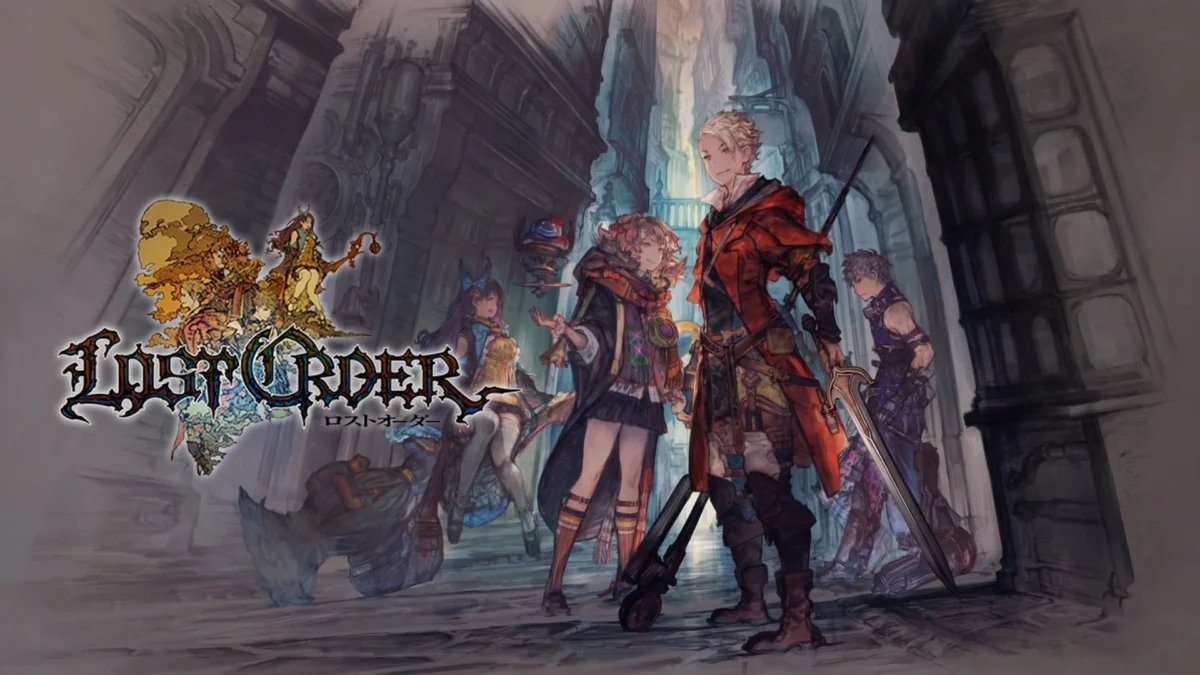
TOKYO, Japan – May 15, 2024 – In the often-turbulent world of video game development, where projects are frequently announced with great fanfare only to vanish into the ether, the reappearance of a long-dormant title can ignite a unique blend of curiosity and cautious optimism. Such is the case with Lost Order, the real-time tactics (RTT) game co-developed by industry giants Cygames and PlatinumGames, which was initially unveiled with considerable anticipation in 2016. After years of silence that led many to presume its cancellation, recent trademark filings and a clarifying statement from Cygames’ parent company, CyberAgent, strongly suggest that Lost Order may be poised for a dramatic return from what seemed like an irreversible development hiatus.
The prospect of Lost Order re-emerging has sent ripples of excitement through the gaming community, particularly among fans of both Cygames’ expansive narrative-driven experiences and PlatinumGames’ renowned action-oriented design philosophy. The initial collaboration between these two studios was a significant event, promising a unique blend of strategic depth and high-production value for mobile platforms. Now, nearly seven years after its last public update, the game once thought lost to time appears to be asserting its continued existence, fueling speculation about its potential evolution, a grand re-reveal, and what its ultimate release could mean for the mobile and broader gaming landscape.
Main Facts
The Trademark Filings: A Signal from the Silence
The most concrete evidence of Lost Order‘s continued relevance arrived in April 2024, when Cygames, the prolific Japanese developer and publisher, quietly initiated trademark filings for the title in two major global regions. The first filing occurred on April 15 with the European Union Intellectual Property Office (EUIPO), followed swiftly by a second filing on April 30 with the United States Patent and Trademark Office (USPTO). These actions, while seemingly routine for active intellectual property, carry immense weight for a game that has been effectively out of the public eye for close to seven years.
Trademark registrations are not mere formalities; they are legal instruments designed to protect a company’s brand identity and commercial interests. For a game that has seen no public development updates, no new trailers, and no official communication regarding its status since 2017, these filings serve as a powerful declaration of intent. They signify that Cygames still views Lost Order as a viable, protectable asset with commercial potential, indicating that the company has no intention of abandoning the intellectual property. This move is a stark contrast to projects that quietly fade away, often allowing their trademarks to lapse as a de facto acknowledgment of their demise.
Game Overview: Recalling the Initial Promise
Lost Order was first introduced to the world in August 2016 as a real-time tactics game developed for smartphones. The announcement itself was a significant industry event, largely due to the high-profile collaboration it represented. Cygames, a powerhouse known for its immensely successful mobile RPGs like Granblue Fantasy and Princess Connect! Re:Dive, partnered with PlatinumGames, a studio celebrated for its critically acclaimed action titles such as Bayonetta, NieR:Automata, and Vanquish. This unexpected synergy immediately positioned Lost Order as a title with immense potential, blending Cygames’ storytelling and production values with PlatinumGames’ reputation for innovative gameplay.
The initial reveal showcased a dark, gritty aesthetic, departing somewhat from Cygames’ often more vibrant anime-inspired fare. The premise hinted at a rich, dystopian narrative coupled with strategic real-time combat, promising an experience that would push the boundaries of mobile gaming at the time. The very concept of PlatinumGames lending its expertise to a mobile RTT title was intriguing, suggesting a level of depth and polish rarely seen in the then-burgeoning mobile market. This initial promise, however, would soon be overshadowed by an extended period of radio silence, transforming Lost Order into a legend of "what ifs" within the gaming community.
Chronology
The Genesis: 2016 Announcement and Initial Hype
The unveiling of Lost Order in August 2016 was met with considerable excitement. Cygames held a dedicated press conference, showcasing concept art, initial gameplay snippets, and highlighting the creative talent behind the project. Yasumi Matsuno, renowned for his work on Final Fantasy Tactics and Vagrant Story, was brought on board as the game’s director and scenario writer, further solidifying its tactical RPG pedigree. Atsushi Inaba from PlatinumGames was also deeply involved, emphasizing the partnership’s commitment to quality. The "dream team" narrative resonated strongly, suggesting a game that could redefine expectations for mobile strategy titles.
The initial vision for Lost Order was ambitious: a premium mobile experience that would offer console-quality production values and a deep, engaging story. Promotional materials teased a steampunk-inspired world ravaged by war, where players would command unique units in real-time battles. The promise of a complex narrative from Matsuno, combined with PlatinumGames’ knack for polished gameplay, created significant buzz, positioning Lost Order as one of the most anticipated mobile titles of its time.
Brief Hype and Early Development
Following the announcement, details slowly trickled out, maintaining a moderate level of anticipation. Developers spoke about the challenges and opportunities of bringing a deep RTT experience to touchscreens, emphasizing intuitive controls and strategic depth. While no extensive public gameplay demonstrations followed immediately, the initial marketing successfully established Lost Order as a title to watch, a high-stakes venture for both Cygames in expanding its genre repertoire and PlatinumGames in venturing into the mobile RTT space. The expectation was that a beta or full launch would follow within a reasonable timeframe, typically 1-2 years for mobile projects of this scale.
Closed Beta Test: August 2017
The last concrete public update on Lost Order‘s development occurred in August 2017, precisely one year after its initial announcement. Cygames launched a closed beta test for the game, inviting a select group of players to experience and provide feedback on an early build. Beta tests are crucial development milestones, allowing studios to gather real-world data on gameplay mechanics, server stability, and user experience before a wider launch.
While the specific feedback from this closed beta was never extensively publicized, the very act of holding one indicated that development was progressing and that the game was reaching a playable state. However, the completion of this beta marked an abrupt end to public communications regarding Lost Order. The official website and social media channels went silent, leaving the community in the dark about the game’s progress post-beta.
Years of Silence: 2017-2024
The period following the August 2017 closed beta plunged Lost Order into a profound silence. As months turned into years without any further announcements, trailers, or even developer blogs, speculation naturally mounted regarding the game’s fate. In the fast-paced and highly competitive mobile gaming industry, such extended silences often precede the quiet cancellation of projects. The industry is littered with examples of ambitious titles that never saw the light of day, falling victim to changing market trends, technological hurdles, budget constraints, or internal strategic shifts.
For Lost Order, the lack of information became a source of growing concern among its nascent fanbase. Many assumed the game had entered "development hell" or, more likely, had been outright shelved. This long dormancy transformed Lost Order from an anticipated title into a cautionary tale or a nostalgic footnote in the annals of unreleased games. The gaming community largely moved on, filing Lost Order away as another promising concept that ultimately didn’t make the cut.
The Reawakening: April 2024 Trademarks
It was against this backdrop of nearly seven years of silence that the April 2024 trademark filings emerged as a sudden and significant development. These legal actions, taken by Cygames, unequivocally shattered the long-held assumption of Lost Order‘s demise. For a company to invest resources in protecting intellectual property that was presumed dead is a powerful statement. It signals not only that the game is still alive in some capacity but also that Cygames has future commercial plans for it, whether that involves a continuation of the original project, a reboot, or perhaps even a re-imagining for new platforms. These filings serve as the critical hinge point, marking the transition from dormancy to potential resurgence.
Supporting Data
The Significance of Trademarks
In the realm of intellectual property, trademarks are not trivial. They are a declaration of a company’s legal claim to a brand, name, or logo, protecting it from unauthorized use and signifying ongoing commercial intent. For a game like Lost Order, whose last public update was in 2017, the recent filings are particularly illuminating. Had Cygames truly abandoned the project, it would be financially and strategically illogical to renew or re-file trademarks. Allowing them to lapse would be the standard procedure for a canceled title, saving legal fees and signaling the end of the brand’s commercial viability.
The fact that Cygames has actively pursued these new registrations suggests a strategic decision to maintain control over the Lost Order brand. This could be a precursor to a new marketing push, a formal re-announcement, or simply a safeguard while development continues behind closed doors. It indicates a long-term vision for the title, reinforcing the idea that it remains a part of Cygames’ future plans, even if those plans have evolved significantly since its initial reveal.
Cygames’ Portfolio and Strategy
Cygames has established itself as a titan in the Japanese mobile gaming market, with a portfolio boasting some of the highest-grossing titles globally. Granblue Fantasy, Princess Connect! Re:Dive, and Uma Musume Pretty Derby are just a few examples of their immense success in the gacha RPG genre. However, Cygames has also shown a consistent ambition to expand beyond mobile, particularly into console and PC development. This ambition is exemplified by the critically acclaimed Granblue Fantasy: Relink, which launched to strong reviews in early 2024, demonstrating Cygames’ capability to deliver high-quality action RPG experiences on traditional gaming platforms.
The potential return of Lost Order aligns with this broader strategic diversification. While initially announced for smartphones, the long development cycle and the evolving gaming landscape might suggest a pivot or expansion to other platforms. Cygames’ commitment to high production values and diverse gameplay experiences (as seen with Relink‘s success) indicates that they are not content to rest solely on their mobile RPG laurels. Reviving Lost Order could be a move to further solidify their presence in the strategy genre and showcase their collaborative capabilities with studios like PlatinumGames.
PlatinumGames’ Role and Track Record
PlatinumGames brings a distinct reputation for crafting highly polished, innovative action games. Their involvement in Lost Order was a major draw, promising a level of gameplay sophistication often absent in mobile titles. While PlatinumGames is known for its original IP, it also has a strong history of successful collaborations, including NieR:Automata with Square Enix. However, the studio is not immune to projects facing difficulties; the highly anticipated Scalebound for Xbox was famously canceled, serving as a reminder of the inherent risks in game development, even for renowned studios.
If Lost Order does return, PlatinumGames’ continued involvement would be a crucial factor. Their expertise could be pivotal in refining the real-time tactics mechanics, ensuring intuitive controls, and delivering the kinetic action the studio is famous for, even within a strategic framework. Their presence would lend significant credibility to a re-revealed project, reassuring fans that the game maintains its original high-quality aspirations.
The Real-Time Tactics Genre
The real-time tactics (RTT) genre occupies a niche within the broader strategy landscape. Unlike real-time strategy (RTS) games, RTT titles typically focus more on micro-management of individual units and tactical positioning rather than base building or resource gathering. Games like Company of Heroes or Desperados exemplify the genre’s strengths. Bringing this level of tactical depth to mobile, as Lost Order initially intended, presents unique design challenges, particularly concerning user interface and control schemes.
However, the mobile gaming market has matured significantly since 2016. Advanced hardware, improved touch interfaces, and a greater appetite for complex games on handheld devices mean that the original vision for Lost Order might be more feasible now than it was then. Furthermore, the success of certain strategy titles on mobile (often with simplified mechanics) shows a market appetite, and a premium RTT experience could carve out a significant space.
Industry Trends and "Development Hell"
The journey of Lost Order is a classic example of a project entering "development hell" – a state where a game is announced but experiences prolonged and often troubled development, leading to significant delays or eventual cancellation. Common reasons include:
- Technological Hurdles: The ambition of the game might have outstripped the capabilities of mobile hardware in 2016-2017, or the engine itself proved difficult to work with.
- Creative Differences: Disagreements between co-developers or within the creative team regarding vision, scope, or gameplay mechanics can stall progress.
- Market Shifts: The mobile gaming market is notoriously volatile. What was a compelling concept in 2016 might have felt less relevant or profitable by 2018, prompting a re-evaluation.
- Strategic Re-evaluation: Parent companies or internal management might decide to reallocate resources to more promising or strategically aligned projects, putting others on indefinite hold.
Given the initial announcement for smartphones, it’s plausible that Lost Order faced challenges adapting complex RTT mechanics to touch controls, or that the graphical fidelity Cygames and PlatinumGames aimed for was difficult to optimize for a wide range of mobile devices at the time. The long silence suggests a deep-seated issue that required significant time to address, or a complete overhaul of the project.
Official Responses
Initial CyberAgent Q&A
The most direct official commentary on Lost Order‘s status came from an unexpected source and in an equally unexpected manner. During a Q&A session following the release of CyberAgent’s fiscal year-end report (for the period ending September 2024), the parent company of Cygames made an off-hand remark regarding the game. In response to a question about Cygames’ development pipeline, a CyberAgent representative initially stated that development on Lost Order was "put on hold." This statement, though brief, seemed to confirm the long-held suspicions of fans that the project was indeed dormant, if not outright canceled.
Such a declaration from a parent company during a financial briefing is typically taken as definitive. It implied a strategic decision had been made to pause or indefinitely postpone the game, likely due to a combination of the factors discussed above, such as technical challenges, market viability concerns, or resource allocation. For many, this was the final nail in Lost Order‘s coffin, offering official confirmation to years of speculation.
The Swift Correction and Apology
However, the story took an immediate and dramatic turn. Shortly after the initial Q&A session, CyberAgent issued a swift and unequivocal correction and apology. The company clarified that the previous statement was inaccurate and that Lost Order was, in fact, "still in development." This correction was not merely a subtle rephrasing; it was a direct retraction of the "on hold" status, explicitly stating that the project remained active within Cygames’ development pipeline. The apology underscored the seriousness with which CyberAgent viewed the miscommunication, recognizing the potential for alarm and confusion among investors and the gaming public.
This rapid reversal is highly significant. It suggests that the initial statement was either a genuine mistake, a miscommunication within the company, or perhaps an executive referring to an outdated internal status. Regardless of the cause, the immediate and forceful correction indicates that the ongoing development of Lost Order is a matter of importance to Cygames and CyberAgent, and they were keen to rectify any perception of its abandonment. The correction directly aligns with the earlier trademark filings, providing official confirmation of the intent signaled by those legal actions.
Analysis of the Correction
The rare occurrence of a public correction of this magnitude concerning a game’s development status points to several possibilities. It could indicate that:
- Internal Miscommunication: Different departments or levels of management might have had varying or outdated information regarding Lost Order‘s internal status. The project might have been "on hold" at one point, but then re-activated, and this information had not fully disseminated to the executive who spoke during the Q&A.
- Sensitivity of the Project: The fact that CyberAgent felt compelled to issue an immediate correction suggests Lost Order is not merely a forgotten project. There might be significant ongoing investment, a revised strategic plan, or a strong desire within Cygames to see the project through.
- Ambiguous Development Phases: Games that undergo significant retooling or reboots can exist in an ambiguous state for long periods. While technically "in development," they might not be actively producing assets or progressing in a linear fashion, leading to internal confusion about their true status.
Ultimately, the correction serves as the most authoritative statement to date: Lost Order is not canceled, nor is it merely on hold; it is an active development project within Cygames. This official endorsement validates the implications drawn from the trademark filings and provides a solid foundation for renewed anticipation.
Implications
Potential Re-reveal or Relaunch
The combined weight of new trademark filings and CyberAgent’s official clarification points strongly towards a formal re-reveal or relaunch of Lost Order in the near future. Game companies typically do not engage in such activities without a clear intention to bring the product to market. This could manifest in several ways: a new cinematic trailer, a dedicated developer update, or even a re-announcement with a revised vision and platform strategy.
Potential venues for such a re-reveal could include major industry events like the Tokyo Game Show, which often serves as a platform for Japanese developers to showcase their upcoming titles. Alternatively, Cygames might opt for a standalone digital showcase, similar to how many developers now control their narrative and timing for significant announcements. The timing would likely be strategic, perhaps coinciding with a period where Granblue Fantasy: Relink has settled, allowing Lost Order to capture renewed attention.
Evolution of the Game
Given the nearly seven-year hiatus and the rapid evolution of gaming technology, it is highly improbable that Lost Order will return in precisely the same form as it was envisioned in 2016. The original focus on "smartphones" might be expanded, or even entirely shifted.
- Platform Expansion: A likely scenario is a multi-platform release, targeting PC and modern consoles (PlayStation 5, Xbox Series X/S, Nintendo Switch) alongside, or even instead of, mobile. Cygames’ success with Relink on console and PC demonstrates their capabilities in this space. This would allow for greater graphical fidelity, more complex controls, and a broader market reach.
- Gameplay Refinement: The core real-time tactics mechanics would undoubtedly undergo significant refinement. Lessons learned from the 2017 beta, combined with advancements in game design, could lead to a more intuitive interface, deeper strategic options, and potentially a more robust narrative experience. Yasumi Matsuno’s involvement, if it continues, would ensure a strong foundation in tactical design.
- Technological Overhaul: The game might be running on an entirely new or significantly upgraded engine, leveraging modern rendering techniques and optimization tools to deliver a visually stunning experience that meets contemporary expectations.
Impact on Cygames and PlatinumGames
For Cygames, a successful relaunch of Lost Order would be a significant triumph. It would demonstrate their commitment to ambitious projects, their ability to navigate prolonged development challenges, and their continued diversification beyond their established mobile RPG franchises. It would further cement their reputation as a major player capable of delivering high-quality experiences across multiple genres and platforms.
For PlatinumGames, if their involvement remains substantial, Lost Order‘s return could add another successful collaboration to their resume, showcasing their versatility beyond pure action titles. It would also alleviate concerns about their history with canceled projects, reinforcing their capacity to see complex co-development efforts through to completion.
Community Reaction and Expectations
The gaming community’s reaction to a re-revealed Lost Order will likely be a mix of excitement and cautious skepticism. The long wait has tempered expectations, but the involvement of such respected studios still carries significant weight. Fans will be eager to see how the game has evolved, particularly in terms of platform, gameplay mechanics, and graphical presentation.
Managing these expectations will be crucial. Cygames and PlatinumGames will need to present a clear and compelling vision for the "new" Lost Order, addressing the concerns arising from its long dormancy and demonstrating how the time taken has been invested in refining and enhancing the experience. Transparency about the development journey, if handled well, could transform years of silence into a compelling narrative of perseverance and dedication.
Conclusion
The journey of Lost Order from a highly anticipated 2016 announcement to a prolonged, near-mythical dormancy, and now to a potential resurgence in 2024, is a testament to the unpredictable nature of game development. The recent trademark filings by Cygames and the subsequent, albeit initially confusing, official clarification from CyberAgent have irrevocably shifted the narrative. What was once presumed lost may indeed be found, refined, and ready to re-enter the competitive gaming arena.
While many questions remain – what platforms will it target? How much has the game changed? What is the new timeline for release? – the signs are undeniably positive. Lost Order is no longer just a ghost of announcements past; it is an active project, a testament to Cygames’ enduring ambition and perhaps a symbol of a gaming phoenix poised to rise from the ashes of a long silence. The gaming world now watches with renewed interest, anticipating the next chapter in this remarkable development saga.


 Lina Irawan
 Sagoh
Sagoh