

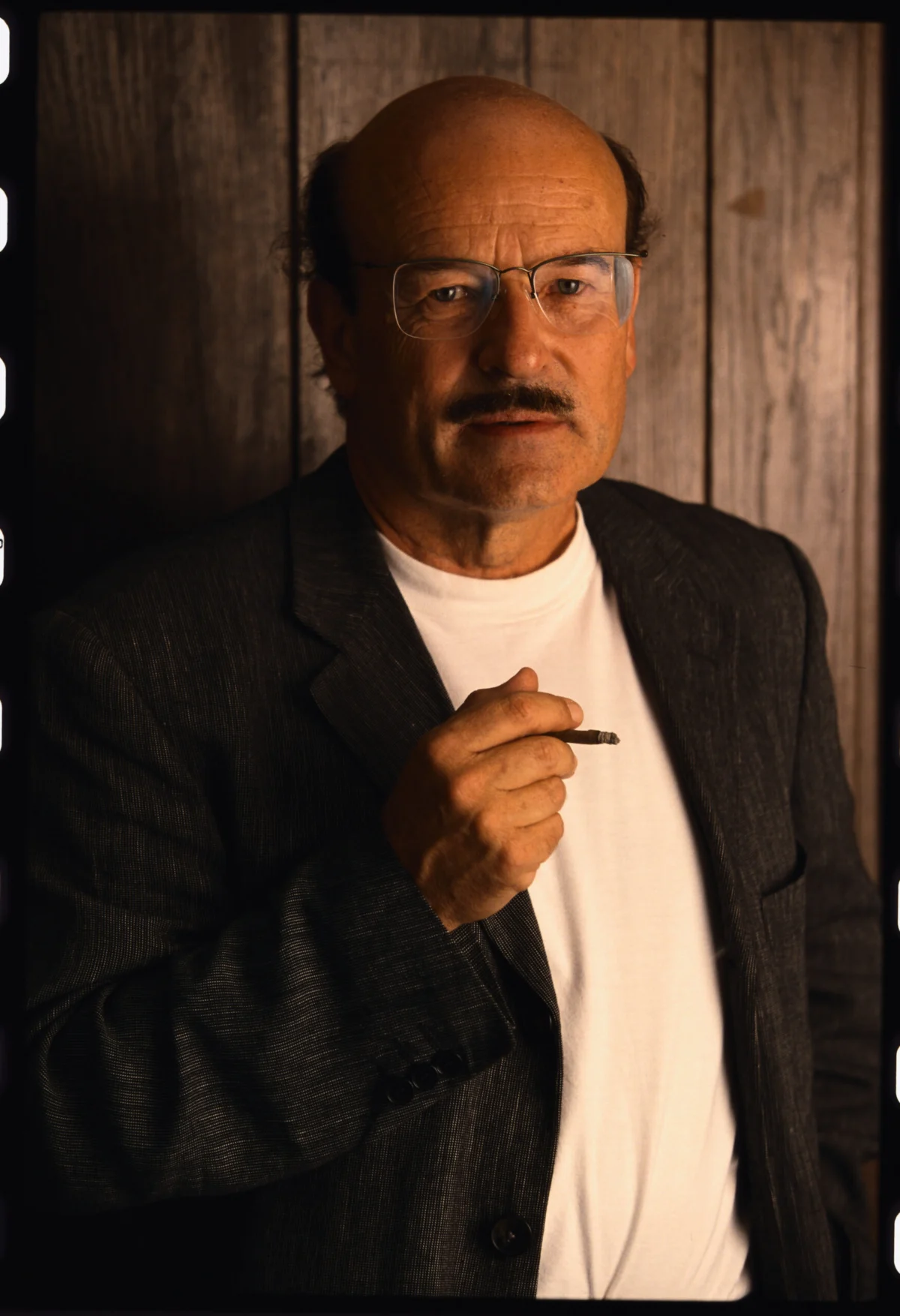
At 87, Volker Schlöndorff is not merely a guest at the Cannes Film Festival; he is part of its architectural history. Walking the Croisette today, the legendary German auteur carries the ease of a man who has long since stopped chasing validation. As he notes, citing the wisdom of former festival chief Gilles Jacob, "You got the Palme already. Go there for the fun."
It is a rare, hard-won serenity. For six decades, Schlöndorff has been the quintessential "political animal" of European cinema, a filmmaker whose career acts as a seismograph for the turbulent shifts in German and continental history. From the radical ruptures of the New German Cinema to the quiet, pastoral reflections of his latest work, Visitation, Schlöndorff has consistently interrogated the friction between private lives and the crushing weight of public policy.
The Formative Years: A European Education
Schlöndorff’s worldview is a synthesis of his unique biography. Born in wartime Germany, he migrated to France in his youth, a decision he identifies as the singular pivot point of his life. "Everything I am in life, as well as in my profession, in my art, it all comes from those 10 years in France," he reflects.
In Paris, he apprenticed under legends like Louis Malle and Jean-Pierre Melville, absorbing the intellectual rigor and structural experimentation of the French New Wave. This training provided him with a structural discipline that would later clash—and merge—with the chaotic, politically charged atmosphere of West Germany in the 1960s. It was this dual identity that allowed him to move with such fluidity between art-house prestige and the raw, confrontational politics of his homeland.

A Chronology of Confrontation: From Törless to The Tin Drum
Schlöndorff’s trajectory at Cannes serves as a timeline of his evolution. He first arrived in 1966 with Young Törless, an adaptation of Robert Musil’s novel regarding authoritarianism in an Austrian military school. The film was a lightning rod; a German cultural attaché famously stormed out of the screening, shouting, "This is not a German film!"
"For publicity, I couldn’t have asked for anything better," Schlöndorff notes with a dry smile. That scandal set the tone for his career: he would be a provocateur, a man who refused to let his nation bury its past.
The high-water mark of this career arrived in 1979 with The Tin Drum. Adapted from Günter Grass’s masterpiece, the film captured the surreal, grotesque nightmare of a child refusing to grow up while the world descended into fascist madness. Sharing the Palme d’Or with Francis Ford Coppola’s Apocalypse Now, the victory was symbolic of the era’s creative zenith. While Coppola was grappling with the trauma of Vietnam, Schlöndorff was dissecting the rot of the Nazi era. The Tin Drum went on to win the Academy Award for Best Foreign Language Film, a historic milestone that provided the director with a rare sense of professional peace.
"Sometimes, you’re kissed by the Muses," Schlöndorff admits. "That will remain, forever, my peak. As time goes by, I feel grateful to have had such a peak."

Supporting Data: The Breadth of an Auteur
Schlöndorff’s filmography is a testament to his restlessness. After his breakthrough, he engaged in what he calls "detours"—Hollywood projects that allowed him to work with masters like John Malkovich, Dustin Hoffman, and Faye Dunaway. Yet, even in projects like Death of a Salesman (1985) or the initial adaptation of The Handmaid’s Tale (1990), his focus remained on the fragility of the individual against the machinery of society.
His body of work—including The Lost Honor of Katharina Blum (1975), The Ninth Day (2004), and Diplomacy (2014)—consistently highlights the "fault lines of European history." Whether through the lens of terrorism, ideological collapse, or the moral compromises required to survive, Schlöndorff has remained an unyielding chronicler of the political.
The Babelsberg Interlude: When History Intervened
Perhaps the most jarring detour of his career occurred after the fall of the Berlin Wall. Schlöndorff, ever the patriot of the intellectual landscape, felt compelled to take the helm at Studio Babelsberg to save it from total collapse.
"Somebody had to do it," he says. The experience was transformative and exhausting, forcing him to shift from the creative, leftist-aligned world of cinema to the cold, capitalist realities of business management. "I lost five or eight years of filmmaking," he reflects. Yet, with the perspective of time, he accepts the sacrifice. Without his intervention, the historic studio might have ceased to exist. Today, he finds a quiet, poetic justice in using those same facilities to craft his own later works.

Official Stance: The Political Animal at 87
Schlöndorff’s return to Cannes this year with Visitation—an adaptation of Jenny Erpenbeck’s novel—is a homecoming that brings him full circle. Set in a lakeside property in Brandenburg, the film spans the Nazi era, the East German period, and the reunification.
When asked about his political identity, he remains steadfast. "I can’t help it. I’m the political animal. I’m completely involved and interested in what’s going on in history."
He notes a distinct shift in the modern era, however. "The difference between the ’60s and now is you don’t really have the belief anymore that you can change a lot, but you have to partake because politics is what decides our lives." Regarding the radicalism of the 1970s and the Red Army Faction, he is pragmatic. He never condoned violence, but he insists that his films were necessary mirrors to a society that had not yet purged its authoritarian elements. "The street protests of ’68 didn’t achieve much initially, so inevitably, it escalated… I think the people who used violence, at the beginning, had good intentions."
Implications: The Legacy of a Witness
The implications of Schlöndorff’s work reach far beyond the borders of Germany. His career demonstrates the necessity of the artist as a witness—not as a politician, but as a person who forces the audience to confront the intersection of their private joys and the encroaching shadow of public policy.

He credits his friend Billy Wilder with teaching him the most vital lesson for any artist: "How to not let your profession entirely take over your life." By keeping his feet firmly planted in both the world of film and the world of human experience, Schlöndorff has avoided the calcification that often plagues directors of his stature.
As he surveys his six decades of labor, he offers a final thought, channeling the indomitable spirit of Édith Piaf: “Je ne regrette rien.”
For Schlöndorff, the struggle was never about winning prizes or building empires. It was about the act of filming—the process of analyzing why a scene works, why a character falters, and why history, despite our best efforts to hide from it, eventually finds us all. Whether on the shores of a lake in Brandenburg or the red carpet of the Palais, he remains exactly where he belongs: at the center of the conversation, still listening, still watching, and still filming.











No comments yet. Be the first to join the conversation!