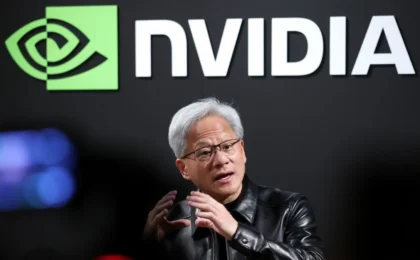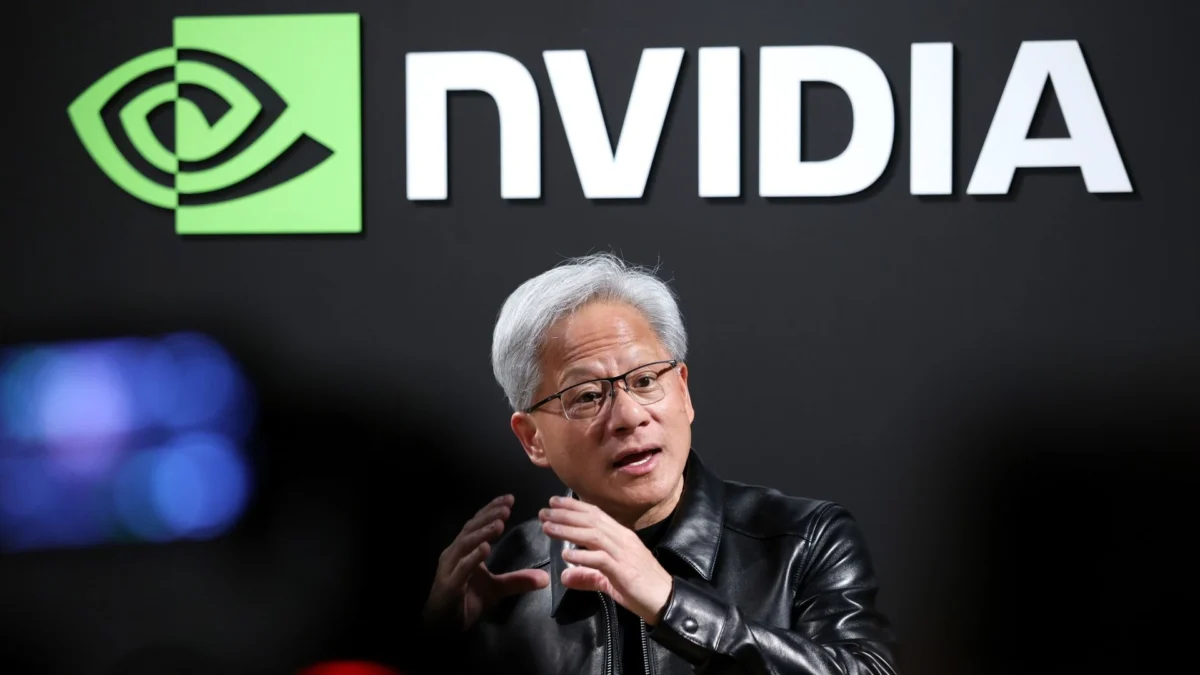
The Silicon Valley landscape was sent into a state of shock this week following the abrupt resignation of Jensen Huang, the visionary leader who transformed Nvidia from a niche graphics card manufacturer into the world’s most valuable technology company. The departure, which has left the semiconductor industry reeling, is now triggering a secondary crisis: a wave of internal disillusionment among the company’s elite engineering workforce.
Among the first to publicly vocalize the sentiment brewing within Nvidia’s headquarters is Darrel Dai, a prominent Robot Research Engineer. His decision to exit the company—shared via an extensive post on X—serves as a bellwether for the cultural anxiety currently permeating the ranks of the chip giant. While many corporate departures are handled with sanitized, boilerplate statements, Dai’s resignation offers a rare, granular look at how the sudden vacuum in leadership is impacting the morale of the very people who power Nvidia’s innovation.
The Chronology of a Corporate Earthquake
The sequence of events leading to the current state of uncertainty began with a swift, unanticipated announcement. Just days ago, Nvidia confirmed that Jensen Huang had stepped down as CEO. The move was as sudden as it was consequential, immediately sending shockwaves through the global stock markets and prompting a temporary halt in trading for the firm.
In the immediate aftermath, Nvidia’s Board of Directors moved to stabilize the ship by appointing Colette Kress, the company’s Executive Vice President and Chief Financial Officer, as interim CEO. Kress, a veteran financial strategist who has been instrumental in Nvidia’s fiscal growth during the AI boom, is now tasked with navigating the company through the most volatile transition in its history.
However, for engineers like Dai, the appointment of an interim leader does little to mitigate the loss of the "cultural architect" that Huang represented. The timeline of this transition remains opaque, with the board providing minimal insight into the nature of the allegations—if any—that precipitated Huang’s exit. This lack of transparency has become the primary point of friction between the company’s leadership and its technical staff.
The "Huang Factor": Why Engineers Are Leaving
To understand the weight of these departures, one must recognize the unique position Jensen Huang held within Nvidia’s corporate culture. Unlike the remote, purely administrative CEOs typical of many Fortune 500 companies, Huang was widely viewed as an "engineer’s CEO."
In his public statement, Darrel Dai highlighted the specific traits that fostered such intense loyalty:
- Strategic Foresight: Huang was instrumental in the long-term gamble on CUDA, a software layer that allowed Nvidia GPUs to perform general-purpose computing. This decision, made long before the current generative AI boom, effectively "built the infrastructure that powers today’s AI."
- Direct Engagement: Huang was known for his "Top 5" email practice, where he reportedly reviewed summaries from employees, maintained direct lines of communication with individual contributors, and stayed actively involved in the technical nuances of the company’s projects.
- Risk-Taking Culture: Nvidia’s environment was characterized by an encouragement to explore, fail, and iterate. This psychological safety, curated by Huang, allowed the company to pivot rapidly into robotics and physical AI.
Dai’s resignation is not merely a protest against an investigation; it is an admission that the "soul" of the company—the specific culture that encouraged risk-taking and bottom-up innovation—feels diminished by the shroud of secrecy surrounding the CEO’s departure.
The Implications for Physical AI and Robotics
Nvidia’s pivot toward "Physical AI"—the integration of advanced AI models into robots and autonomous systems—has been one of the company’s most ambitious frontiers. This sector relies heavily on the cross-pollination of hardware engineering and software intelligence, a synergy that thrived under Huang’s direct oversight.
The departure of key research engineers creates a "brain drain" risk. In an industry where talent is the ultimate currency, the exodus of those who truly understand the proprietary architecture of Nvidia’s robotics stack could have long-term implications for the company’s competitive edge. If the culture shifts from "exploratory" to "risk-averse" under interim management, the pace of innovation in robotics could see a measurable decline.
Furthermore, the open-source tools and platforms that Nvidia has shared with the developer community were central to its brand identity. Should the new leadership focus exclusively on quarterly fiscal results at the expense of this open-ecosystem strategy, Nvidia risks alienating the very developer base that keeps its hardware at the center of the AI revolution.
The Crisis of Transparency: A Breakdown in Trust
The core of the current tension lies in the gap between the board’s need for corporate discretion and the engineers’ need for organizational clarity. Dai’s critique is poignant: "I have felt that engineers’ perspectives matter here. On this decision, I have not felt heard."
This sentiment suggests that the "trust" that served as the bedrock of Nvidia’s success is currently fractured. While the board is undoubtedly constrained by legal and regulatory obligations regarding the specifics of the investigation, the silence is being interpreted by the staff as a lack of respect for the workforce.
A company of Nvidia’s scale is not just a collection of assets and patents; it is a complex social organism. When the "connective tissue"—the belief that individual contributions are visible and valued by leadership—is severed, the result is often a degradation in collective output.
Official Responses and the Road Ahead
As of this writing, Nvidia’s official stance remains focused on stability and continuity. The company has publicly reiterated its commitment to its current roadmap, emphasizing that its leadership team remains focused on its core objectives. However, there has been no official acknowledgment or response to the internal dissent voiced by employees like Dai.
Market analysts are closely watching the upcoming quarterly earnings call, which will likely serve as the first major test for Colette Kress. Investors will be looking for signs of operational stability, but the real metric of success for the interim CEO will be her ability to retain the "engineering heart" of the company.
The resignation of an engineer of Dai’s caliber serves as a warning: if the culture that Huang built is not preserved, the most talented members of the organization will not wait for the dust to settle. They will seek out environments that mimic the transparency, engagement, and vision they once enjoyed at Nvidia.
Conclusion: Can the Culture Survive the Architect?
The departure of Jensen Huang is more than a change in the C-suite; it is a test of whether Nvidia’s success is tethered to the individual or if it is truly embedded in the company’s DNA.
If the current leadership fails to address the "painful gap" in communication that employees are experiencing, the result could be a slow erosion of the company’s most vital asset: its people. The "Post-Huang" era has begun, and while the company’s financial fundamentals remain strong, the internal machinery is clearly struggling to adapt. Whether the interim leadership can bridge the divide between corporate governance and engineering culture remains the most critical question facing the tech giant today.
As the industry watches, the story of Nvidia continues to unfold—not in the boardrooms where the future is planned, but in the offices and labs where the engineers are deciding, one by one, whether the future they helped build is still a place they wish to call home.