For years, the networking industry has been obsessed with a singular metric: speed. From the early days of 802.11b to the high-octane performance of Wi-Fi 7, the narrative has consistently focused on how many gigabits per second a user could theoretically squeeze out of their home network. However, as we approach the mid-2020s, a quiet shift is occurring. The industry has realized that while we have achieved "enough" speed for virtually any modern consumer application, we have failed to achieve true consistency.
Enter Wi-Fi 8 (802.11bn), the next evolution of wireless networking. While Wi-Fi 7 promised—and delivered—blistering speeds of up to 23 Gbps, it also brought along persistent, frustrating realities: poor stability, weak wall penetration, and range limitations. Wi-Fi 8 represents a pivot from the "faster is better" mantra toward a new philosophy: "Ultra High Reliability."
Main Facts: The Shift to UHR
The core mission of the IEEE 802.11bn standard, colloquially known as Wi-Fi 8, is to address the stability gaps that plague modern smart homes and dense urban environments. While previous generations were defined by their peak theoretical throughput, Wi-Fi 8 is defined by its ability to manage signals in the "shakiest" conditions.
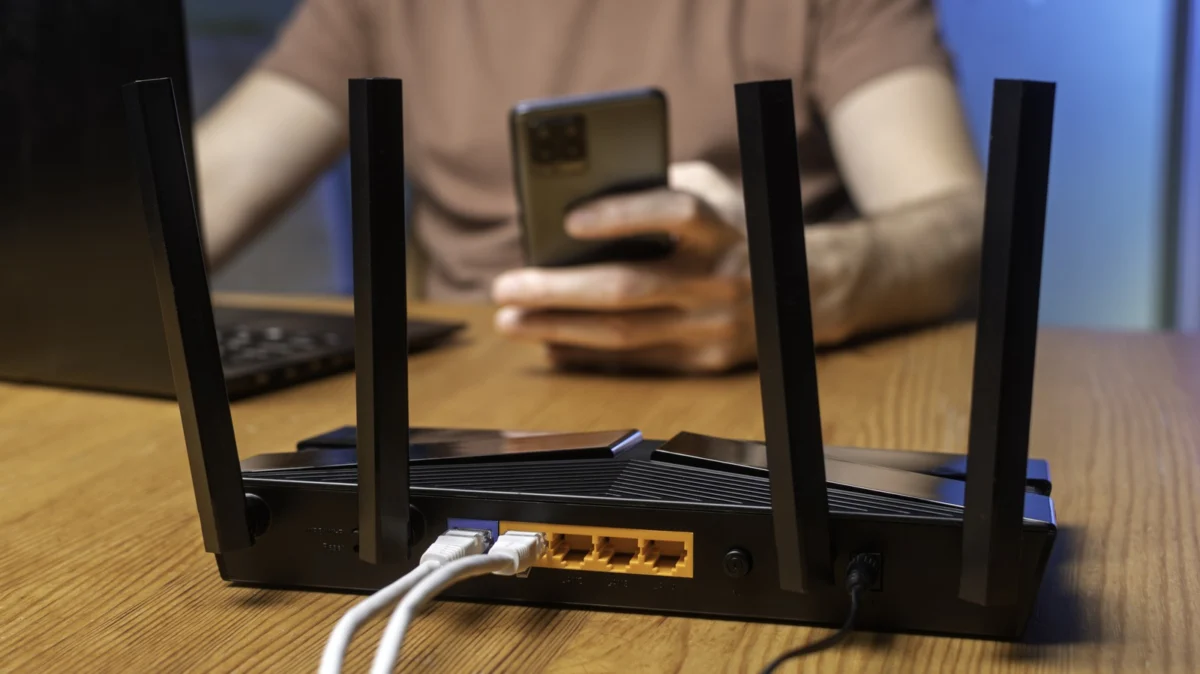
The standard is currently in its draft phase, with final ratification expected in 2028. Despite this, the industry is already mobilizing. Tech giants like ASUS and TP-Link have already unveiled routers based on early draft specifications. These devices are not necessarily faster in a laboratory vacuum, but they are designed to be significantly more intelligent in how they handle data traffic, manage interference, and coordinate between multiple access points in a mesh network.
Chronology: The Evolution of Wireless Standards
To understand why Wi-Fi 8 is such a departure from the norm, one must look at the timeline of wireless progress:
- 1999 (802.11b): The dawn of consumer Wi-Fi, offering 11 Mbps. Reliability was secondary to the sheer novelty of being untethered.
- 2009 (Wi-Fi 4/802.11n): Introduced MIMO (Multiple Input, Multiple Output) technology, marking the first real attempt to improve range and signal quality.
- 2019 (Wi-Fi 6/802.11ax): Focused on high-density environments, attempting to manage the growing number of smart devices in a single home.
- 2024 (Wi-Fi 7/802.11be): The speed king. By utilizing wider channels and multi-link operations, it pushed bandwidth to extremes, though it struggled with signal degradation at distance.
- 2025–2028 (The Wi-Fi 8 Transition): The current window where early hardware (draft spec) is hitting the market while the IEEE works to finalize the protocols for enhanced coordination and "Ultra High Reliability" (UHR).
Supporting Data: The 25 Percent Benchmark
What makes Wi-Fi 8 objectively "better" for the average user? The technical specifications, while still evolving, point toward three specific performance improvements that target the most common home networking complaints:
- Throughput in Weak Signal Areas: Wi-Fi 8 is projected to deliver a 25 percent improvement in throughput for devices located at the fringes of a network’s range. This addresses the "dead zone" phenomenon where a phone or laptop drops to a crawl simply because it is two rooms away from the router.
- Packet Loss Reduction: Data packets often drop when a device moves between mesh nodes or struggles with interference. Wi-Fi 8 aims to reduce these dropped packets by 25 percent, leading to smoother video calls and more stable gaming sessions.
- Latency Stabilization: During moments of peak network congestion—such as when multiple family members are streaming 4K video simultaneously—Wi-Fi 8 is designed to lower latency by 25 percent, ensuring that the "jitter" that makes online gaming frustrating is significantly mitigated.
These gains are achieved primarily through coordinated access point (AP) transmissions. In older standards, routers often "take turns" transmitting, which can lead to inefficient airtime usage. Wi-Fi 8 refines this by allowing compatible access points to communicate and synchronize their transmission schedules, effectively eliminating the "collisions" that occur when too many devices try to talk at once.
Official Responses and Industry Positioning
The industry’s decision to launch Wi-Fi 8 hardware based on draft specifications has been met with both excitement and skepticism.
Manufacturers argue that the early adoption is necessary to test the efficacy of coordinated AP transmission in real-world settings. A spokesperson for a major networking firm recently noted, "Our goal is not to sell a higher number on the box, but to solve the ‘mesh handoff’ problem. When a user walks from the kitchen to the bedroom, the device shouldn’t experience a momentary freeze as it switches nodes. Wi-Fi 8 makes that transition seamless."
Conversely, independent analysts have warned consumers to temper their expectations. Because the hardware currently on the market is built on a draft specification, there is no guarantee that these devices will be fully compatible with the final 802.11bn standard once it is ratified in 2028. This creates a "beta-tester" dynamic where early adopters are paying a premium for hardware that may lack the final, optimized firmware adjustments required by the official IEEE standard.
Implications for the Modern User
What does this mean for the person currently shopping for a router? The implications are three-fold:
1. The Congestion Crisis
If you live in a high-density apartment building, your neighbor’s Wi-Fi is essentially "noise" to your own router. Wi-Fi 8’s focus on stability and channel coordination will eventually provide a reprieve from this, as routers will be better at "listening" to the environment and adjusting their transmission patterns to avoid the noise generated by nearby networks.
2. The Ecosystem Requirement
It is crucial to remember that a router is only half of the equation. To experience the benefits of Wi-Fi 8, your client devices—smartphones, laptops, tablets, and gaming consoles—must also be equipped with Wi-Fi 8-compatible radio chips. Even if you purchase a cutting-edge router today, your current devices will continue to operate on their existing standards (Wi-Fi 6 or 7), meaning you will see zero benefit from the new protocol until you upgrade your entire hardware fleet over the coming years.
3. Positioning vs. Protocol
Despite the marketing hype surrounding the "Ultra High Reliability" of Wi-Fi 8, basic physics still apply. A router tucked away inside a metal cabinet, or hidden in a basement, will never perform optimally, regardless of the standard it uses. The industry maintains that simple, low-cost steps—such as moving a router to a central, elevated location away from physical obstructions—will provide more immediate and tangible improvements to home internet performance than the latest draft-spec router on the market.
Conclusion: A Measured Approach
The transition to Wi-Fi 8 is a necessary maturation of the networking industry. By shifting the focus from raw, unusable speed to the consistent, reliable delivery of data, the IEEE is addressing the actual pain points of the modern digital home.
However, for the average consumer, the message is clear: there is no need to rush. While the engineering behind Wi-Fi 8 is impressive and will undoubtedly improve our lives by 2028, the current generation of Wi-Fi 7 is more than adequate for the vast majority of households. Investing in Wi-Fi 8 today is a speculative move for enthusiasts and early adopters. For everyone else, the best strategy remains waiting for the standard to solidify, allowing the hardware to reach its final, reliable form. In the meantime, focus on the fundamentals: a central router location, a clean line of sight, and an honest assessment of whether your current stability issues are caused by the router itself or simply by its placement in your home. The race for speed is over; the era of stability has begun.