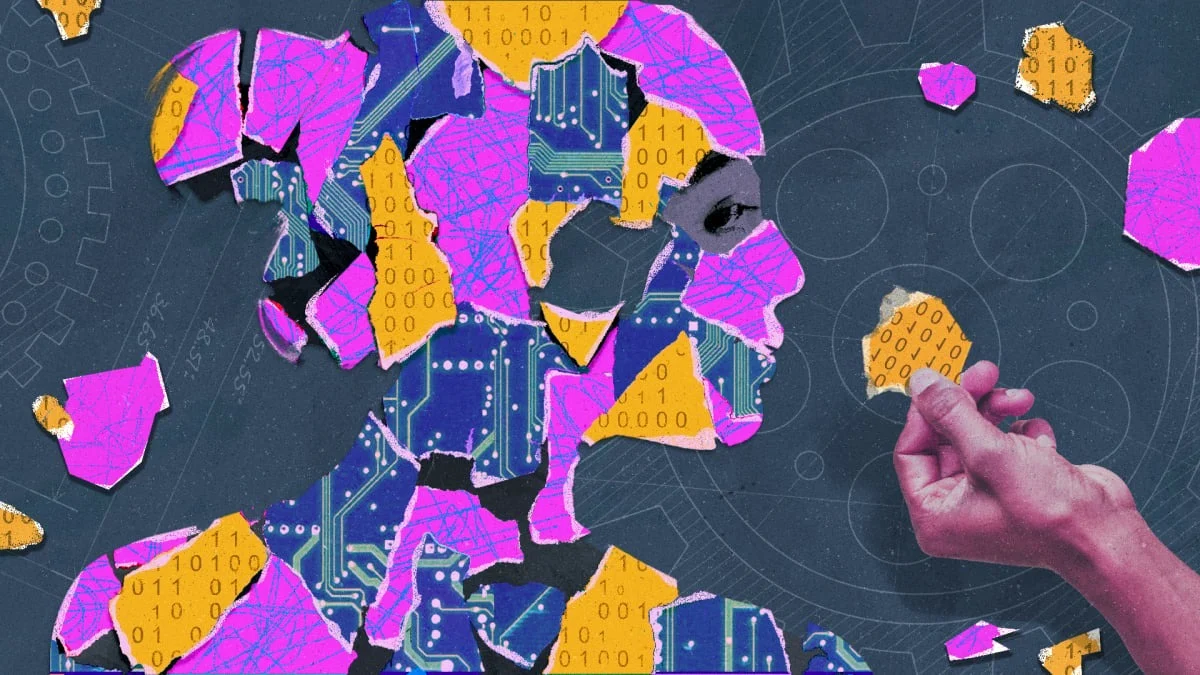
In the digital landscape of 2026, the age-old advice to "see it to believe it" has become a dangerous fallacy. As artificial intelligence models evolve at a breakneck pace, the traditional "tells" of deepfakes—the extra fingers, the waxy skin texture, or the uncanny, glassy eyes—are rapidly vanishing. We have entered a new era of digital skepticism where the visual Turing Test is no longer a reliable shield against fraud, political manipulation, and psychological warfare.
The Mirage of Reality: A Chronology of Deception
The threshold between authentic documentation and synthetic fabrication has blurred significantly over the past twenty-four months.
In late 2025 and early 2026, the public witnessed a series of high-profile incidents that underscored this volatility. We saw legitimate, yet bizarre, occurrences—such as Mitch McConnell’s hospital attire—circulating alongside sophisticated, fabricated imagery, such as the viral, entirely false depiction of Nekima Levy Armstrong as a "far-left agitator."
This pattern continued with President Trump’s genuine public outing with Mike Tyson in October 2026, contrasted sharply by the malicious spread of a fabricated, scandalous photo depicting a Georgia mayor in a compromising position. These incidents serve as a critical reminder: in the current media ecosystem, the provenance of a photo or video is often unrelated to its visual quality. High-fidelity images are now as likely to be synthetic as they are to be captured by a professional camera.
The Economics of Chaos: Why Scams Are Scaling
The threat is not merely limited to the reputational damage of public figures. The "scam economy" has evolved into a global crisis, fueled by generative AI. According to industry reports, digital scams—including deepfake-assisted social engineering—led to financial losses exceeding $148 billion in 2025. This represents a staggering 25 percent increase over the previous year, signaling that malicious actors are successfully leveraging AI to bypass traditional security hurdles.
The implications for the average consumer are profound. As AI-powered phishing, identity theft, and synthetic media continue to scale, the financial and social toll is mounting. Cybersecurity experts warn that as long as the cost of generating high-quality synthetic content remains near zero, the volume of misinformation will only continue to climb.
The Failure of Visual Analysis
"Those tells are mostly gone, and whatever replaces them will be gone in a year too," says Marijus Briedis, Chief Technology Officer at NordVPN. "Any guide built on visual artifacts has a short shelf life."
For years, cybersecurity educators focused on teaching users how to spot the "glitches" of AI—the strange shadows or the inconsistent lighting. However, Roei Sherman, senior director of research at Mitiga, notes that this approach is fundamentally flawed. "Every detection tip we publish eventually becomes a line in someone’s prompt," Sherman explains. As AI models are refined, they are explicitly trained to avoid the errors that once gave them away. Consequently, the act of pixel-peeping is an exercise in futility.
Checking the Source: A New Methodology for Truth
If visual inspection is dead, how does one navigate the information feed? Experts suggest shifting the burden of proof from the content itself to the source of the content.
1. Verification of Provenance
When encountering a shocking clip of a politician or a world leader, the first step should be to look for the "long-form" version. Misinformation often relies on decontextualized snippets. By locating the full interview, the official transcript, or the primary source video, users can determine if the clip was edited to mislead. If a clip appears in isolation across social media but is absent from major, reputable news outlets, the probability of it being a fabrication or a malicious edit increases exponentially.
2. The Trap of AI-Augmented Search
Interestingly, relying on automated tools to fact-check is becoming increasingly complicated. Sofia Rubinson, senior editor at NewsGuard, points out that even AI-powered search engines, such as those integrated into Google, can inadvertently reinforce misinformation.
"Fact-checkers used to depend on traditional search platforms to help research the origins of photos and videos," Rubinson notes. "But at NewsGuard, we’ve found that the AI-powered Google Search often misattributes imagery as depicting what misinformers claim." In short, the tools we use to verify the truth are being fed the same synthetic data as the rest of the web, leading to a feedback loop of misinformation.
The Logic Test: Thinking Like a Skeptic
Beyond technical verification, the most effective tool in the user’s arsenal is critical thinking. Experts advocate for a "plausibility assessment."
Ask yourself:
- Is this characteristic behavior? Does this public figure’s alleged comment or action align with their established record and platform?
- Is there corroboration? If an event is truly historic or controversial, it will be covered by a multitude of outlets from diverse political perspectives. If the only source for a massive story is a random social media account, proceed with extreme caution.
- Am I being ragebaited? AI-generated misinformation is often designed to trigger an immediate, visceral emotional reaction. If a piece of content makes you feel intense anger, fear, or moral superiority, it is likely designed to bypass your logical brain and prompt an impulsive share.
The Role of Institutional Oversight
While the individual must bear the responsibility of skepticism, there is a clear role for broader industry and government action. Currently, federal regulation in the United States remains in a state of lag, failing to keep pace with the rapid deployment of generative tools.
However, progress is being made at the state level and through industry-wide initiatives. Content provenance measures—such as digital watermarking and cryptographic signing of images (C2PA)—are beginning to gain traction. These technologies aim to provide a "digital birth certificate" for media files, allowing users to verify when, where, and by whom an image was created.
Additionally, organizations are stepping in to fill the intelligence gap:
- NewsGuard provides an AI monitor and specialized newsletters to track trending deepfakes.
- McAfee maintains a blog dedicated to identifying and flagging AI-powered scams.
- AI or Not offers a searchable database for users to check the authenticity of known manipulated imagery.
Conclusion: When in Doubt, Don’t Share
The ultimate takeaway for the digital citizen of 2026 is one of caution. If, after checking the source, looking for corroboration, and analyzing your own emotional response, you still harbor doubts, the most responsible action is to withhold your engagement.
"What [detection tools] are good for is the moment something feels off," says Briedis. "The tool agrees with you, and now you go and verify it properly."
Ultimately, the responsibility to halt the spread of misinformation rests with the end user. In an era where the visual truth is perpetually under siege, our greatest defense is a pause before the "share" button. If we treat every piece of sensational digital media as guilty until proven innocent, we can collectively build a more resilient and truthful information ecosystem. The age of automatic belief is over; the age of intentional verification has begun.