For many creators, the workspace is more than just a room—it is the engine room of creativity, a sanctuary where raw materials are forged into epic manifestations of fantasy. For internationally renowned cosplayers Benni and Svetlana Quindt, known globally as "Kamui Cosplay," the workshop had become something else entirely: a source of mounting stress in a climate that no longer fostered their artistic vision.
After years of building a legendary career in the heart of Bavaria, Germany, the duo made the radical decision to pack their lives into a shipping container and relocate to the sun-drenched island of Madeira, Portugal. This transition was not merely a change of scenery; it was a strategic overhaul of their creative life, designed to combat professional burnout and the stifling effects of German bureaucracy.

The Catalyst for Change: Why Move?
The decision to leave Germany was rooted in a confluence of personal and professional challenges. For Svetlana, the long, grey German winters triggered severe bouts of depression, directly impacting her ability to maintain the high-energy output required for professional cosplay. "I had gotten really bad depressions in Germany due to the cold weather and lack of sunshine," she notes.
Beyond the personal toll, the administrative landscape had become an obstacle. The increasing burden of German bureaucracy, which demanded an unsustainable amount of time dedicated to paperwork rather than art, stifled the couple’s productivity. As self-employed artists, they found that the "paper trail" was consuming the very time they needed for sculpting, sewing, and engineering. The choice was clear: they needed a location that offered both a climate conducive to mental health and an environment where they could reclaim their passion. After consulting global climate data, Madeira emerged as the clear winner—a place of perpetual mild temperatures and year-round sunlight.

A Logistical Odyssey: From Bavaria to Madeira
Moving a professional cosplay workshop is an exercise in extreme logistics. Over two decades, Kamui Cosplay had accumulated a massive inventory of specialized tools, mannequins, statues, and raw materials. Packing this life required a professional shipping company and a dedicated ocean container.
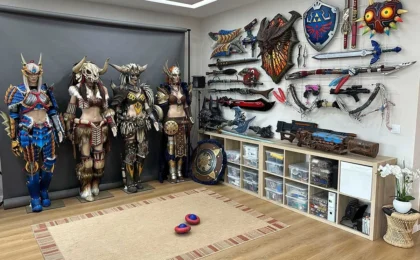
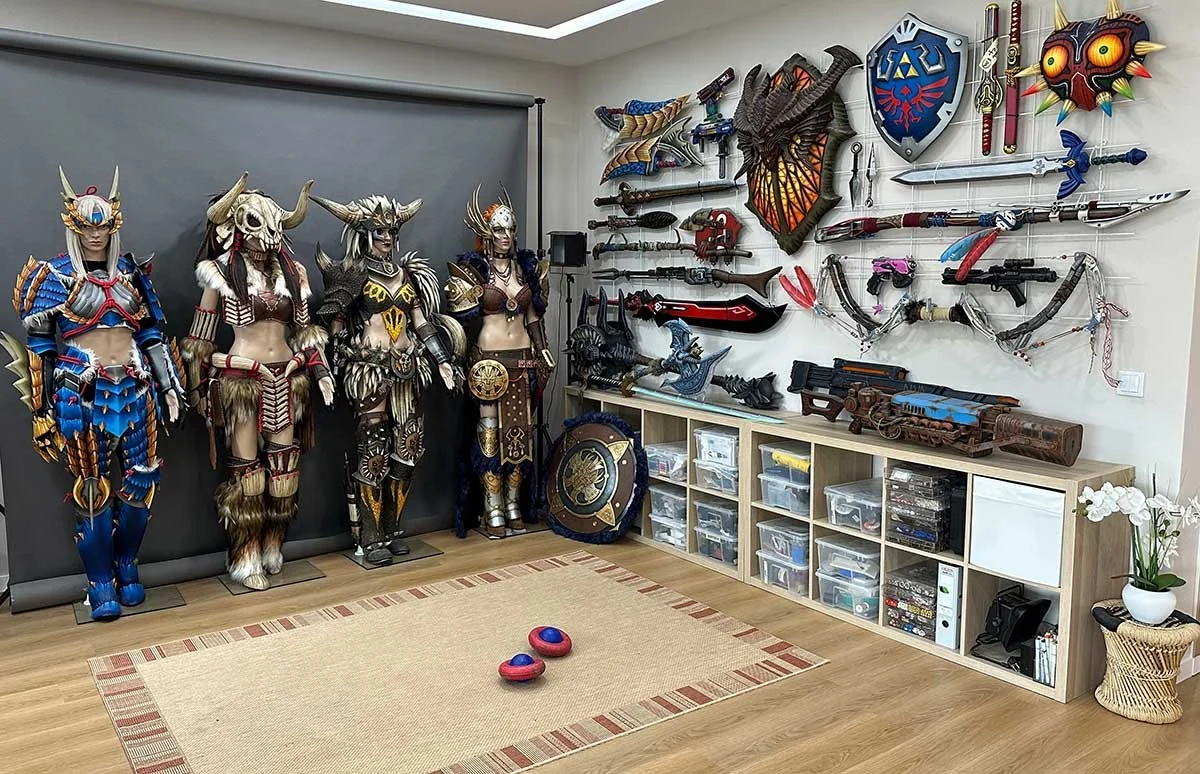
Upon arriving in Madeira, the couple faced the challenge of translating their expansive inventory into a new floor plan. They adopted a creative approach to real estate: they rented a property where they swapped the intended utility, designating the home’s largest living room as the primary workshop and transforming the largest bedroom into their living space. This prioritization highlights their philosophy: for a creator, the workspace is the heart of the home.

Digital Prototyping: The "Blender" Blueprint
One of the most innovative aspects of their relocation was the planning phase. Rather than relying on standard interior design apps, which often lack the precision required for specialized crafting equipment, Svetlana and Benni turned to Blender, the open-source 3D modeling software.
"When it comes to planning a workshop, every single centimeter is important," Svetlana explains. By building a 3D digital twin of their new home, they were able to optimize the layout for both aesthetics and safety. They established a "clean" zone in the main living area—optimized for photography, video recording, and showcasing finished props—and a "dirty" zone in a smaller, adjacent room. This separation was crucial, particularly for ventilation, as it allowed them to isolate the toxic fumes associated with 3D printing and spray painting from their main living and creative areas.

Strategic Organization: The IKEA Ecosystem
For storage, the couple advocates for modularity. Their system relies heavily on IKEA’s Kallax and Ivar shelving units. The Kallax system, with its deep cubes and drawer inserts, provides the structural integrity needed to display heavy statues while offering clean, hidden storage for fabric and electronic components.
The Ivar shelving, meanwhile, serves as the "heavy lifting" infrastructure, holding rolls of thermoplastic, PVC piping, and industrial-grade adhesives. This modular approach allows for rapid reorganization as projects evolve. For fellow creators, the lesson is clear: accessibility is the enemy of procrastination. If materials are tucked away in inaccessible boxes, they are rarely used. By utilizing open shelving and clear, labeled containers, the couple ensures that their vast archive of materials remains a visible and usable asset rather than a hoarding burden.

The Philosophy of "Letting Go"
A recurring theme in the Kamui Cosplay transition is the necessity of curation. Over 20 years of crafting, it is easy to accumulate a "hoarding" mentality, driven by the fear of running out of supplies for a high-stakes project. However, the move forced a reckoning with this inventory.
Svetlana emphasizes the importance of donating excess materials to local crafting clubs and community workshops. "It’s a great feeling that everything still found some use at the end," she notes. This act of "creative shedding" is essential for professional growth. By donating old paints, electronics, and fabrics, the couple not only lightened their moving load but also revitalized their creative space with only the essentials.

Two Decades of Professional Growth
The evolution of Kamui Cosplay’s workspace serves as a microcosm for the evolution of the craft itself. Svetlana’s journey began in 2003 with little more than a dream and minimal tools. Her first "workshop" was a shared corner in a small room. By 2009, she had acquired her first sewing machine and heat gun; it wasn’t until 2015 that 3D printers and airbrush kits became staples of her production.
This trajectory serves as a reminder to aspiring creators: a workshop is not built in a day. It is an organic entity that grows alongside the artist’s skill set. "Your workshop will grow with you just as you grow as an artist," she reflects. The key is not to aim for the massive, fully-stocked studio of a 20-year veteran on day one, but to focus on building a "cozy, well-prepared space" that allows for deep focus.

Implications for the Modern Creator
The transition of Kamui Cosplay is a case study in the intersection of mental health, professional efficiency, and lifestyle design. Their move underscores several critical shifts in the creative economy:
- The Digital Nomad/Creator Hybrid: As digital creators, the ability to work remotely allows artists to prioritize environmental factors—like climate—that directly impact their mental and physical well-being.
- Professionalization of Hobbyist Spaces: The use of 3D modeling software like Blender to design a home studio suggests that the "home workshop" is no longer just a hobbyist’s shed; it is a professional-grade production facility that requires the same architectural rigor as a commercial office.
- Sustainability in Crafting: The emphasis on donating rather than discarding materials points to a growing awareness of the environmental impact of the cosplay community. By managing inventory through a circular economy (donating to local clubs), creators can mitigate the waste typically associated with large-scale prop making.
Final Reflections
Benni and Svetlana’s new studio in Madeira is more than just a place to build armor and sew costumes; it is a testament to the idea that a workspace should be a supportive environment that facilitates, rather than complicates, the creative process. By meticulously planning their space, purging the unnecessary, and prioritizing their mental health, they have successfully future-proofed their career.

For those looking to renovate their own spaces, the message from Kamui Cosplay is one of patience and precision. Whether it’s a dedicated room or a small corner of a studio apartment, the secret to a successful workshop is not in the square footage, but in the intentionality of the design. As the couple settles into their new life in Portugal, they invite their community to witness the evolution of their craft, proving that even after two decades, the journey of the artist is never static—it is always moving toward the next, brighter horizon.