Suro Senen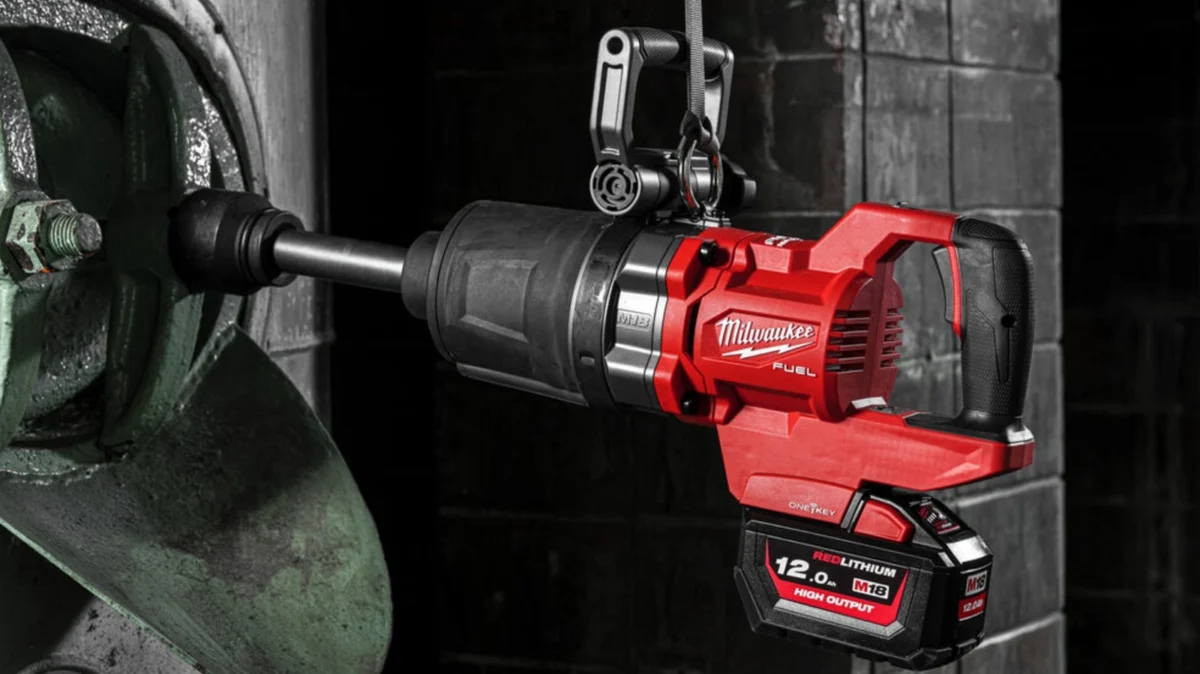
In the hyper-competitive arena of professional power tools, performance is no longer measured solely by raw torque or motor efficiency. Today, the true ceiling for power tool capability is defined by the energy density and discharge rates of the battery systems powering them. Milwaukee Tool, long recognized for its "nothing but heavy-duty" philosophy, has firmly established its M18 ecosystem as a titan of the industry. However, as the brand pushes into more demanding, high-draw applications, the necessity for a superior power reservoir has become apparent. Enter the M18 RedLithium Forge HD 12.0Ah battery: a high-capacity powerhouse designed to feed the most energy-hungry tools in the trade.
Main Facts: The Forge Revolution
The M18 RedLithium Forge HD 12.0Ah battery represents the pinnacle of Milwaukee’s cordless technology. Weighing in at 3.3 pounds, these packs are not designed for the compact, lightweight drills often used in cabinetry or light assembly. Instead, they are the specialized ammunition for the heavy-duty segment of Milwaukee’s catalog.
Retailing for approximately $229 per unit, these batteries offer more than just extended runtime. Their most critical feature is the high-density output capability, which allows them to sustain peak current for longer durations without the voltage sag that plagues lower-capacity cells. Furthermore, the Forge line introduces a 35-minute supercharge capability—an essential metric for professionals who cannot afford to have a multi-thousand-dollar tool sitting idle while waiting for a charge. This rapid replenishment ensures that the workflow remains uninterrupted, effectively bridging the gap between corded reliability and cordless mobility.
Chronology of Evolution: From Basic Power to Heavy-Duty Dominance
The shift toward massive battery packs like the 12.0Ah Forge was not an overnight transition. It is the result of a multi-year engineering trajectory:
- Phase 1 (Foundational): Milwaukee established the M18 platform, focusing on versatility and a unified battery interface that allowed a single pack to run everything from a flashlight to a circular saw.
- Phase 2 (The Fuel Transition): With the introduction of the "Fuel" branding, the company utilized brushless motors to extract significantly more efficiency from standard lithium-ion packs.
- Phase 3 (The High-Demand Era): As the company moved into outdoor power equipment (snow blowers, chainsaws) and heavy-duty shop machinery (sewer cleaners, dust extractors), it became clear that standard 5.0Ah or 6.0Ah batteries were the bottleneck.
- Phase 4 (The Forge Era): The launch of the Forge HD 12.0Ah line signaled a commitment to replacing gas-powered and corded equipment entirely. By optimizing the internal cell architecture for thermal management and high-amperage discharge, Milwaukee effectively created a "gas-killer" tier of tools.
Supporting Data: Which Tools Benefit Most?
The impact of the Forge 12.0Ah battery is most visible when analyzed across specific, high-draw categories.
Outdoor Power Equipment
Tools like the M18 Fuel 21-Inch Auger Propelled Snow Blower have effectively rendered gasoline models obsolete for many homeowners. By utilizing two 12.0Ah batteries simultaneously, this unit generates a peak of 7.5 horsepower. It can clear up to 500 feet of sidewalk on a single charge. Similarly, the M18 Fuel 16-Inch String Trimmer and the 14-Inch Top Handle Chainsaw rely on the Forge batteries to provide the constant high-torque output required to prevent the motor from "bogging down" when cutting through dense, wet, or thick material.
Shop and Site Infrastructure
In the workshop, the M18 Fuel 8-1/4-Inch Table Saw and the 9-Gallon Dual Battery Dust Extractor operate in "constant-on" states. Unlike a drill, which sees intermittent use, these tools pull current continuously. The table saw, capable of 600 linear feet of cuts on a single charge, demonstrates the efficiency of pairing advanced motors with the Forge 12.0Ah pack. The Dust Extractor further proves this point, offering up to 78 minutes of continuous suction—a non-negotiable metric for professional contractors maintaining OSHA-compliant job sites.
Heavy-Duty Fastening and Material Removal
The M18 Fuel 1-Inch D-Handle High Torque Impact Wrench is arguably the most impressive application of this battery tech. Delivering 2,000 ft.-lbs. of breakaway torque, the tool is a behemoth. The ability to install 200 heavy-duty bolts on a single charge is a testament to the Forge battery’s ability to maintain a steady voltage under extreme mechanical resistance.
Official Perspectives: The Philosophy of "System-Wide" Performance
Milwaukee’s engineering team has repeatedly emphasized that the battery is not an accessory—it is a core component of the tool’s design. According to product documentation and industry briefings, the Forge series was developed with "Thermal-Management Intelligence."
By optimizing the way the battery communicates with the tool’s onboard electronics, Milwaukee ensures that the power output is metered exactly to the demand of the motor. This prevents the overheating that would typically kill smaller cells. For the user, this means that the "12.0Ah" rating is not just about how long the tool runs, but about the quality of that runtime. A tool running on a Forge battery performs as if it were tethered to a wall outlet, maintaining its RPMs even under heavy load.
Implications for the Future of Professional Contracting
The move toward these high-capacity, high-performance batteries has profound implications for the professional sector:
- The Death of the Extension Cord: On many modern job sites, the presence of generators and long, daisy-chained extension cords is becoming a liability. The ability to run table saws, cut-off saws, and high-CFM dust extractors on battery power increases site safety and speed.
- Maintenance Reduction: Gas engines require carburetor cleaning, oil changes, fuel stabilization, and spark plug maintenance. Moving to an M18 Forge-supported system shifts maintenance from "mechanical repair" to "battery management."
- Sustainability and Ergonomics: While the tools are heavier—the 1-Inch Impact Wrench, for instance, weighs 21 pounds before the battery is even attached—the trade-off is a reduction in vibration and noise. The snow blower operates at 10 decibels lower than gas models, significantly reducing operator fatigue and noise pollution.
- Capital Investment Strategy: For contractors, the upfront cost of $1,499 for a kit is substantial. However, the ecosystem effect is key. When a user buys into the Forge system, they are not just buying a tool; they are buying into a shared energy platform that keeps their entire inventory of heavy-duty equipment operational.
The Verdict: Is the Investment Worthwhile?
For the casual DIYer, the Forge 12.0Ah batteries may represent overkill. However, for the professional who relies on the longevity and output of their gear to make a living, these power packs are an essential investment. Whether you are clearing a driveway, framing a house, or cleaning a job site, the synergy between Milwaukee’s Fuel motor technology and the Forge battery line has created a new standard for performance. As the industry continues to pivot away from fossil fuels and tethered power, it is clear that the battery—not the tool itself—is the true engine of modern construction.

 Rifan Muazin
 Azzam Bilal Chamdy