In the world of PC hardware, enthusiasts often push components to their absolute limits, chasing every megahertz and millivolt to squeeze out extra performance. However, a recent, peculiar experiment originating from the Chinese tech scene—shared via the BiliBili platform—has flipped this script entirely. A custom-modified version of Nvidia’s ubiquitous GeForce RTX 3060 has surfaced, stripped of its external power connectors and forced to operate entirely within the 75W power envelope provided by a standard PCIe x16 slot. While the feat of engineering is a testament to the versatility of the Ampere architecture, the results highlight a sobering reality regarding efficiency, thermal management, and the diminishing returns of extreme power constraints.
Main Facts: A GPU Stripped to the Bare Minimum
The Nvidia GeForce RTX 3060, originally launched in early 2021, was marketed as a mid-range titan. With a stock TDP (Thermal Design Power) of 170W, it was designed to deliver high-fidelity 1080p and entry-level 1440p gaming. Even as Nvidia re-released the card in recent months to address market volatility and component shortages, its power profile remained relatively consistent.
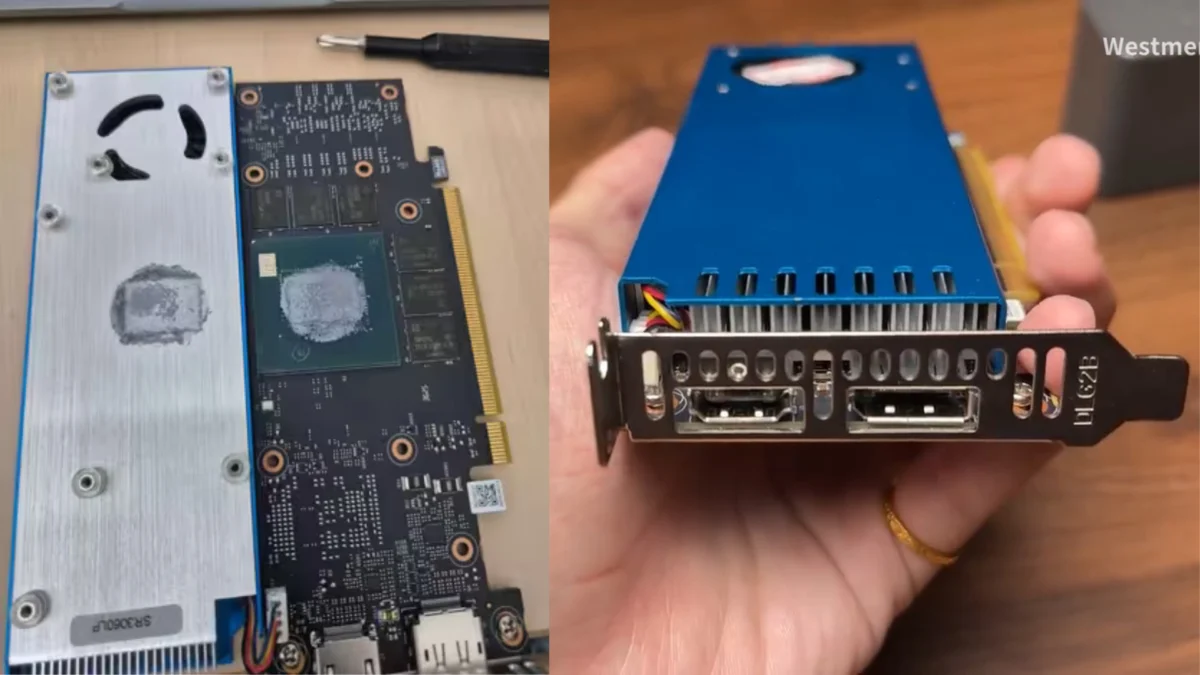
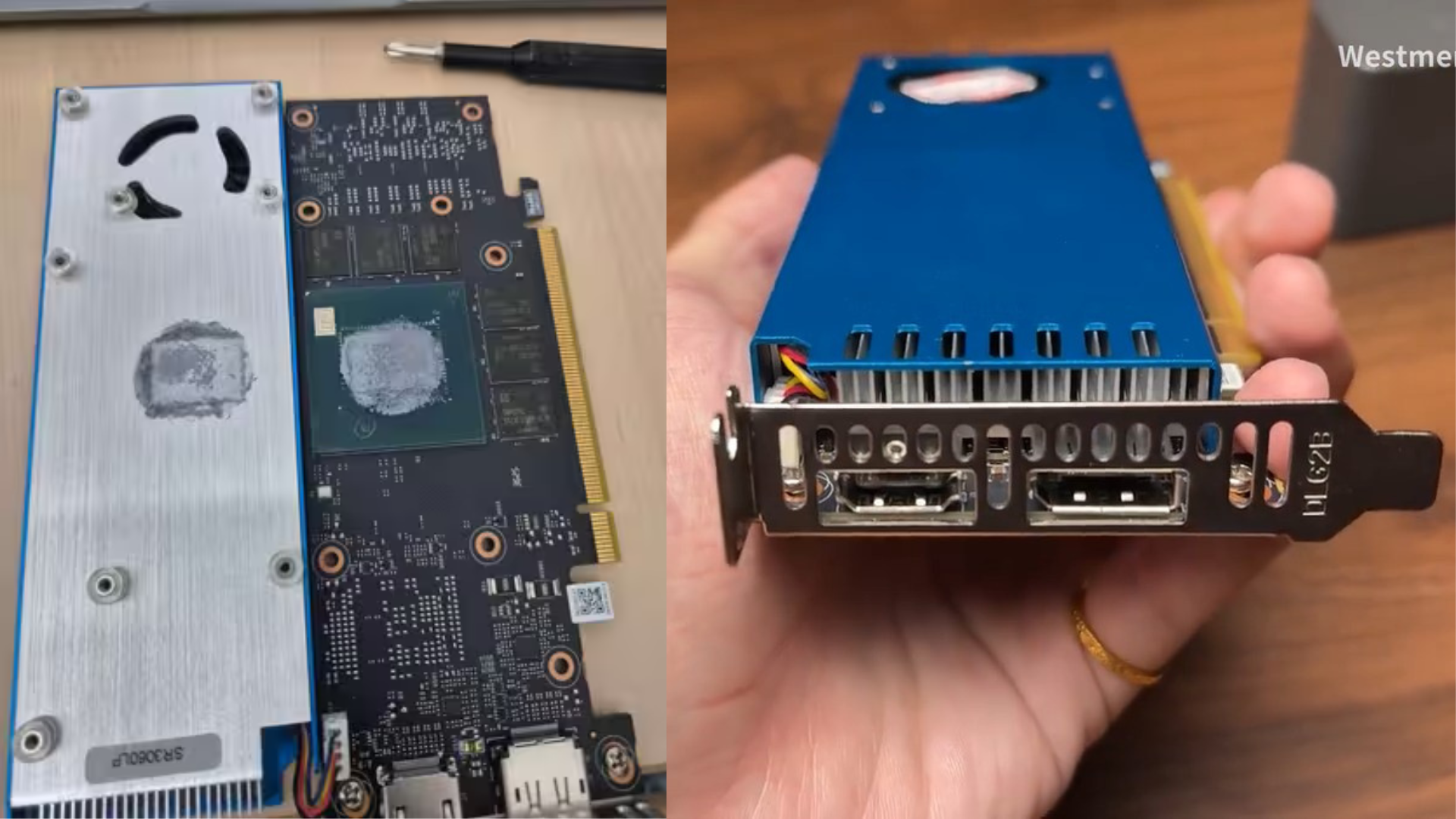
The modified unit discovered by the BiliBili channel WestmereX is a radical departure from this baseline. By removing the 6-pin or 8-pin power connectors, the creator has forced the card to draw all its electricity—limited to a maximum of 75W—directly from the motherboard’s PCIe interface. This is not merely a software-side undervolt; it is a physical modification involving shunt resistors to manipulate the power delivery controller, effectively capping the card at less than half of its intended power consumption.
The physical construction of the card is equally striking. It is a single-slot, low-profile card, reminiscent of the "blower" style enterprise cards found in workstations or compact server chassis. The cooling solution is rudimentary at best, lacking a traditional vapor chamber or multi-heatpipe array. Instead, it relies on a thin, metal-shroud-integrated heatsink, with no thermal pads for the VRAM modules.

A Chronological Look at the Experiment
The project gained traction in early September 2026, following a series of uploads on BiliBili that documented the card’s assembly and testing.
- Initial Concept (Late August 2026): The modder began by identifying the RTX 3060’s susceptibility to power limiting. While the card is famously efficient when undervolted—capable of maintaining stability at 100W—taking it down to 75W required a hardware-level shunt mod.
- The Build Phase: The card was physically modified to remove external power headers, and the PCB was stripped of non-essential components to keep it as compact as a modern smartphone. The assembly lacked a backplate and utilized a single, rear-mounted blower fan.
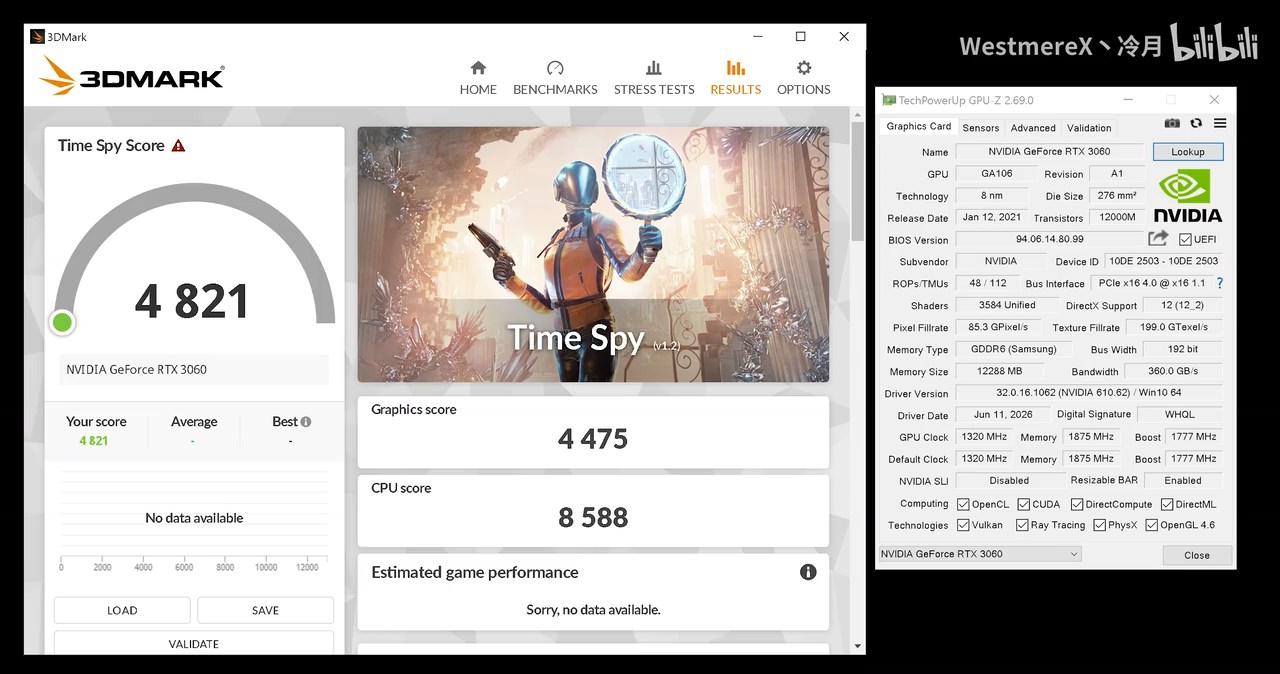
- Performance Benchmarking (September 4, 2026): The card was subjected to synthetic testing, specifically 3DMark Time Spy. The results were immediate and underwhelming, confirming that while the card could boot and function, it was struggling to remain within its operational frequency targets.
- Thermal Analysis: During the testing phase, the GPU hotspot temperatures quickly eclipsed 90 degrees Celsius, confirming that the cooling solution was insufficient even for a 75W power target, leading to severe thermal throttling.
Technical Implications: Why 75W is a Dangerous Threshold
The primary technical challenge with this modification is the physical limitation of the PCIe x16 slot. A standard slot is rated to provide up to 75W of power. By forcing the RTX 3060 to operate at or below this threshold, the user is essentially operating at the edge of the motherboard’s safety specifications.
The shunt mod, while successful in tricking the GPU into thinking it is within its power budget, does not account for the efficiency losses inherent in the voltage regulator modules (VRMs). Because the GPU is not designed to operate at such a low voltage-to-frequency curve, it suffers from severe clock-speed instability. In the tests performed, the core clock was unable to push past 900 MHz—a massive drop from the card’s rated boost clock of 1,770 MHz.
Furthermore, the lack of cooling on the memory modules is a significant oversight. Without thermal pads or a dedicated heatsink touching the VRAM, the memory is left to rely solely on ambient air circulation within the cramped shroud, which is already being heated by the main GPU die. This creates a "hot box" scenario that compromises the longevity of the card.

Performance Analysis: The Cost of Efficiency
When we compare the performance of this "Cableless 3060" to a stock unit, the disparity is stark. In 3DMark Time Spy, the modified card yielded a score of 4,821 points. A standard RTX 3060, by comparison, typically scores well over 9,000 points.
The performance delta is so significant that the card falls behind aging hardware such as the AMD Radeon RX 580 and the Nvidia GTX 1060. This effectively renders the card a novelty rather than a functional piece of gaming hardware. It is a "3060" in name and architecture only; its functional output is comparable to entry-level integrated graphics or older, low-end discrete cards.
The thermal throttling is the final nail in the coffin. With the hotspot hitting 90°C+ during synthetic loads, the card is constantly forced to downclock to protect itself from permanent damage. This creates a feedback loop: the card slows down to cool off, but the cooling system is so inadequate that it cannot maintain a stable frequency, resulting in erratic frame times and potential system instability.
Industry and Community Perspective
The reaction from the hardware community has been one of fascination mixed with skepticism. While the modding community respects the technical ingenuity required to perform a shunt mod and a custom PCB integration, there is a consensus that this project serves as a cautionary tale rather than a blueprint.
Industry analysts note that this experiment underscores why GPU manufacturers set specific power limits. Nvidia’s engineering teams spend thousands of hours optimizing the V/F (voltage-frequency) curves to ensure that the card remains stable, cool, and efficient. When these constraints are stripped away—or enforced too aggressively—the result is not "efficiency" in the traditional sense, but rather "degradation."
Furthermore, the rise of powerful integrated graphics (iGPUs) in 2026 makes such modifications even more redundant. With modern mini-PCs and handhelds utilizing mobile APUs that can rival this 75W 3060 without the need for cumbersome, unreliable, and thermally-challenged custom cards, the use case for a "cableless" desktop GPU has all but vanished.
Conclusion: A Novelty, Not a Solution
The 75W RTX 3060 is a fascinating experiment in what can be done when one pushes the boundaries of hardware design. It highlights the incredible flexibility of the Ampere architecture and the skill of the Chinese modding scene. However, it also serves as a stark reminder of the laws of physics.
A GPU is an integrated system of power delivery, clock management, and thermal dissipation. By removing the power connectors and the supporting cooling infrastructure, the modder has created a card that exists in a state of constant compromise. It is a testament to technical curiosity, but it also demonstrates that "smaller" and "more power-efficient" are not always better—especially when the performance trade-offs leave the hardware unable to compete with even decade-old alternatives.
For the average consumer, this project is a reminder that the best way to manage a GPU’s power usage is through software undervolting within the manufacturer’s specified design parameters. While it may not be as headline-grabbing as a "cableless" card, it remains the only way to achieve a balance of performance, thermal safety, and longevity in today’s demanding gaming environment.