

By Matthew Wilson | Technology Correspondent
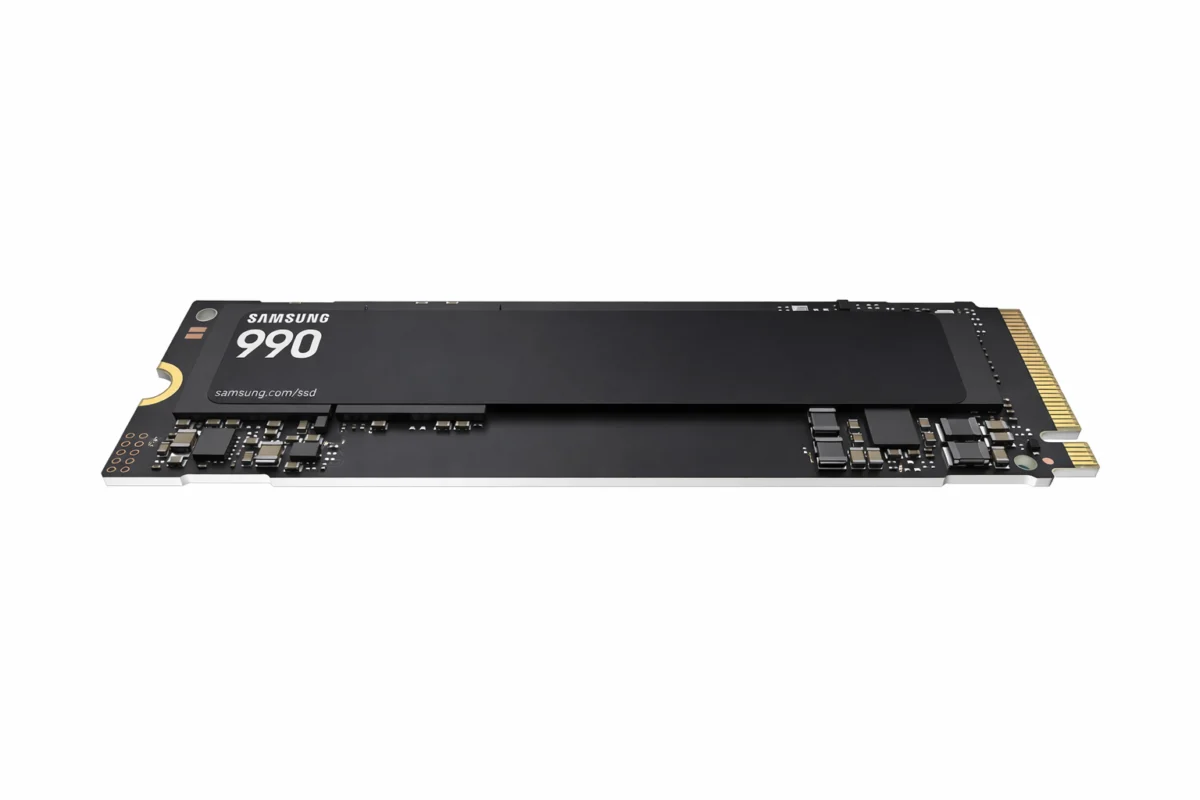
In an industry where storage costs historically trended toward democratization and accessibility, the current landscape has shifted dramatically. Samsung, a global titan in memory and storage solutions, has officially unveiled its latest consumer-grade storage solution: the non-Pro variant of the Samsung 990 SSD. While the drive boasts impressive technical specifications and improved power efficiency, its market entry has been overshadowed by a significant sticker-shock phenomenon driven by the global AI boom.
Main Facts: The New 990 SSD at a Glance
The Samsung 990 non-Pro series arrives as a direct successor in the company’s PCIe 4.0 lineup. It aims to bridge the gap between high-end enthusiast drives and budget-friendly alternatives. Samsung has positioned this drive to capitalize on newer NAND technology, which the company claims offers superior power efficiency compared to the high-performance 990 Pro series.
Key performance specifications for the new line include:
- Sequential Read Speeds: Up to 7,250 MB/s for the 2TB model and 7,150 MB/s for the 1TB model.
- Sequential Write Speeds: A consistent 6,450 MB/s across both capacities.
- Random Performance (IOPS): The 2TB model leads with 850K read and 1,200K write IOPS, while the 1TB variant hits 700K read and 1,100K write IOPS.
Despite these strong figures, the primary narrative surrounding the launch is the pricing. At £212.19 for the 1TB model and £411.99 for the 2TB version, the barrier to entry has shifted from what was once a consumer-friendly segment into premium territory.
A Chronology of Escalation: How We Got Here
To understand why a non-Pro SSD carries such a hefty price tag, one must look at the recent history of the NAND flash market.
Early 2023: The storage market was characterized by a "glut" of NAND supply. Consumers enjoyed a "golden age" of SSD pricing, where high-speed 2TB NVMe drives were frequently found on sale for under £100. Competition was fierce, and manufacturers were desperate to clear warehouse stock.
Late 2023 to Early 2024: The emergence of generative AI and Large Language Models (LLMs) began to reshape the semiconductor industry. Data centers worldwide pivoted their procurement strategies to prioritize high-density storage and HBM (High Bandwidth Memory) to facilitate massive AI training workloads. This shift diverted NAND wafer production away from consumer SSDs toward enterprise-grade AI infrastructure.
Mid-2024: Supply chain reports indicated that manufacturers like Samsung, SK Hynix, and Micron began cutting production of consumer-grade NAND to protect profit margins and meet the insatiable demand for AI-ready enterprise hardware.
Present Day (July 2026): The market has fully inverted. With supply tightened and production costs for high-density flash rising, the "AI Tax" has reached the consumer end-user. The launch of the Samsung 990 is the latest proof point that the days of cheap, high-performance storage are effectively on hold for the foreseeable future.
Supporting Data: The Impact of the AI Boom
The volatility in the SSD market is not an isolated incident; it is a direct result of capital allocation in the tech sector. Analysts have noted that for every wafer dedicated to producing 1TB and 2TB consumer drives, there is a significantly higher profit margin to be found in enterprise drives tailored for AI clusters.
The price disparity is stark. Just two years ago, a consumer could easily purchase a high-tier 2TB PCIe 4.0 drive for approximately £90 to £110. The new Samsung 990, priced at over £400 for the same capacity, represents a near 300% increase in cost. This is not merely inflation; it is a fundamental shift in supply-side economics.
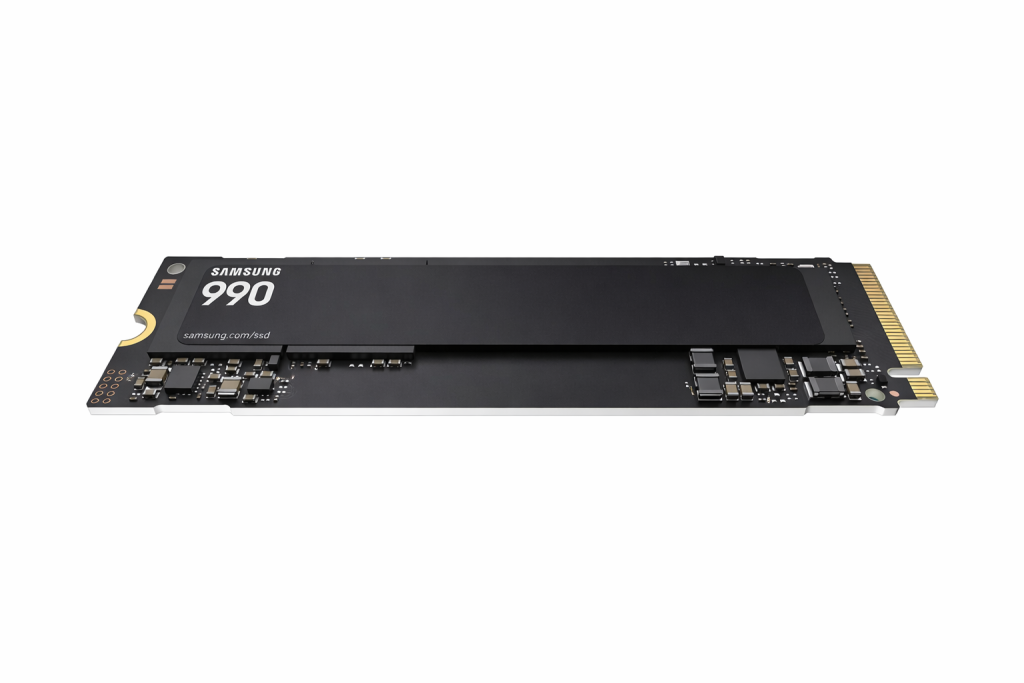
Furthermore, the integration of "newer NAND" architectures in the 990 series is designed to optimize power consumption—a feature typically requested by laptop manufacturers looking to extend battery life. While this is a welcome technical upgrade, the cost of implementing these refined production processes is being passed directly to the consumer, who is already contending with limited manufacturing capacity.
Official Responses and Industry Context
Samsung has remained relatively quiet regarding the specific pricing strategy, preferring to emphasize the drive’s engineering milestones. In technical briefings accompanying the launch, the company highlighted the "enhanced power management" and "next-gen NAND density" as the primary value propositions.
Independent analysts, however, suggest that the high pricing is a reflection of the "floor" set by NAND manufacturers. Because raw material costs remain high due to AI-driven competition, Samsung and its competitors are no longer willing to engage in the "race to the bottom" pricing wars that defined 2023.
"The consumer storage market has become a secondary priority for silicon foundries," says one independent storage analyst. "When the enterprise sector is willing to pay premiums for every available gigabyte of flash, the retail price of consumer drives must rise to match the opportunity cost of production."
Implications: What Does This Mean for the Consumer?
The release of the Samsung 990 poses a difficult question for PC enthusiasts and gamers: Is it time to stop upgrading, or is this the "new normal"?
1. The Death of the "Budget Upgrade"
For years, upgrading from an HDD to an SSD, or from a SATA SSD to an NVMe, was the most cost-effective way to improve system performance. With 1TB drives now pushing past the £200 threshold, system builders must now account for significantly higher storage budgets. This may lead to a shift toward smaller boot drives paired with slower, high-capacity secondary drives, or perhaps a longer cycle between storage upgrades.
2. The Longevity Factor
The concern now shifts from performance to reliability. As the KitGuru editorial team noted, current hardware owners are increasingly protective of their existing drives. When a replacement for an existing 2TB drive costs more than the original build might have, the "repair or replace" mentality shifts entirely toward "repair at all costs." Data recovery services and robust backup strategies have become more valuable than ever before.
3. The Future of PCIe 4.0 and 5.0
The 990 series is a PCIe 4.0 device. As the industry pushes toward PCIe 5.0, which requires even more sophisticated cooling and power management, one has to wonder if these prices will ever return to historical lows. If the AI sector continues to grow at its current pace, the competition for NAND wafers will remain fierce, keeping consumer storage prices elevated for the long term.
Final Thoughts: Navigating the Market
The Samsung 990 is undeniably a high-quality product. Its performance metrics, specifically the 1,200K write IOPS on the 2TB model, make it a formidable drive for content creators and power users. However, it arrives at a moment where the value proposition is deeply obscured by market forces entirely outside of the consumer’s control.
For those currently in need of storage, the recommendation is to wait for retail promotions, if possible. For those whose drives are functioning well, the best strategy is a proactive maintenance plan. Keep your firmware updated, monitor your TBW (Total Bytes Written) via software tools like Samsung Magician, and invest in external cold storage to reduce the load on your primary drive.
We are currently in a period of technological transition. The AI revolution is transforming how we store data, and unfortunately, the consumer wallet is the one absorbing the shock of that transition. Whether this represents a permanent plateau in storage pricing or a temporary spike remains to be seen—but for today’s buyer, the Samsung 990 serves as a sobering reminder of the true cost of cutting-edge hardware.











