

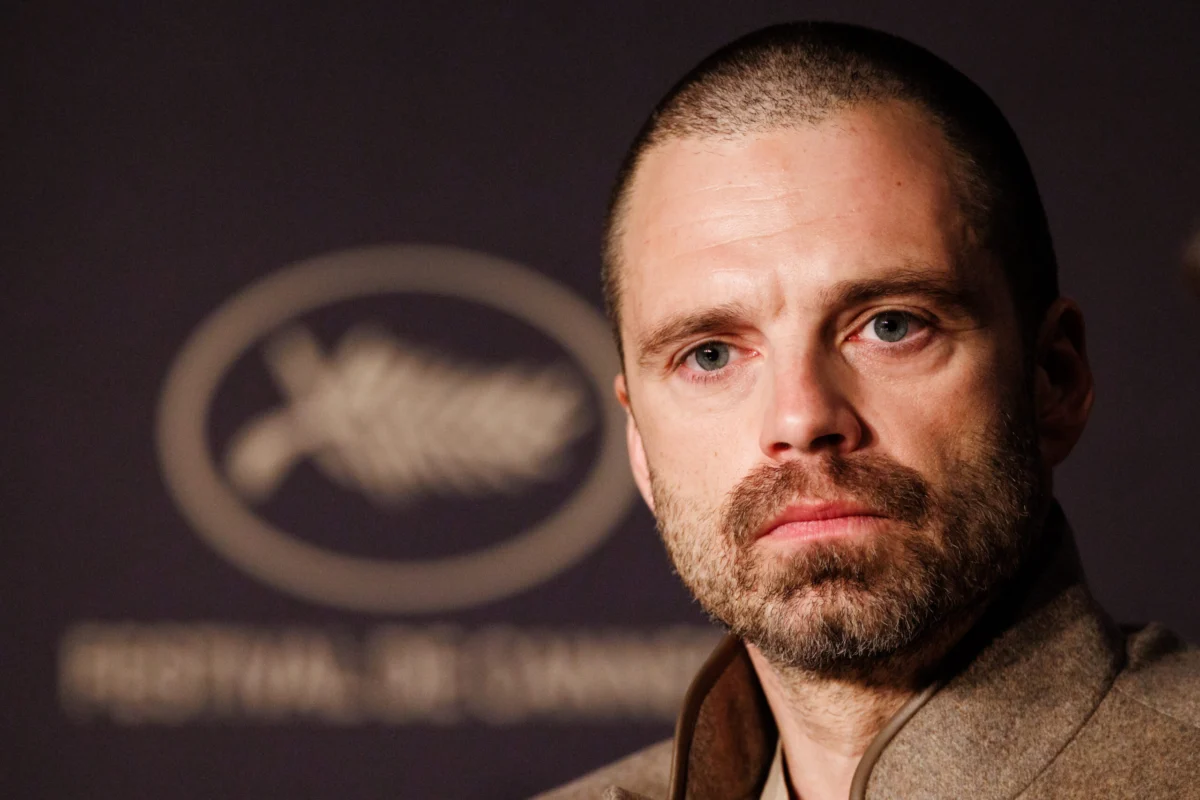
The Cannes Film Festival has long served as a crucible for global cinema, a place where art house sensibilities collide with the most pressing sociopolitical fractures of the day. This year, no figure has sat more squarely at the center of that friction than Sebastian Stan. Returning to the festival just a year after his transformative portrayal of Donald Trump in The Apprentice, Stan has traded the high-stakes corridors of American politics for a more intimate, yet equally volatile, exploration of the modern "clash of values" in Cristian Mungiu’s new drama, Fjord.
The Weight of the Role: From Trump to the "Fjord"
For Sebastian Stan, the transition from portraying the 45th U.S. President to playing Mihai, a Romanian-born conservative Christian father in Norway, has been a process of spiritual and professional recalibration. During a Tuesday press conference at Cannes, the actor admitted that he is "still purging" the lingering influence of his previous role.
The contrast between the two projects is stark. Last year, Stan’s presence at Cannes was dominated by the shadow of the upcoming 2024 U.S. election. Today, with that election firmly in the rearview mirror and a new administration settled in, the conversation has shifted. When asked by The Hollywood Reporter how his perspective on the American presidency—and the man he inhabited on screen—had evolved in the intervening months, the room erupted in a ripple of nervous laughter, anticipating a diplomatic dodge.
Stan, however, silenced the room with a sudden shift in demeanor. His expression hardened, signaling that the gravity of the current political landscape is not a subject he treats with levity. "It’s just not a laughing matter, to be honest," Stan remarked. "I think we’re in a really, really bad place. I really do. When you’re looking at what’s happening—the consolidation of the media, censorship, the threats, the supposed lawsuits that seemingly never end… the writing was on the wall."
He drew parallels between the challenges faced by the production of The Apprentice—which famously faced threats of legal action and uncertainty regarding its festival premiere—and the broader trend of institutional friction. "We went through all of it way before Jimmy Kimmel and Stephen Colbert," he added, noting his desire for a cultural climate that doesn’t necessitate such constant, high-stakes combat.
A Chronology of Artistic Evolution
Stan’s trajectory to Fjord is deeply rooted in his own history. Born in Romania and later moving to Vienna and finally the United States, Stan’s personal narrative has been defined by displacement, adaptation, and the navigation of varying cultural ideologies.
- Early Life: Stan’s formative years in Romania and his subsequent migration to Rockland County, New York, provided the bedrock for his empathy toward the immigrant experience.
- The Mungiu Connection: Long an admirer of Romanian auteur Cristian Mungiu—specifically after viewing the 2016 film Graduation—Stan viewed Fjord as a homecoming.
- The Research Phase: To inhabit the role of Mihai, Stan, alongside co-star Renate Reinsve, engaged in extensive research, including visiting Pentecostal churches and immersing himself in the specific, traditionalist upbringing he remembers from his own childhood.
- The Premiere: The film’s reception on Monday night was electric, garnering a nine-and-a-half-minute standing ovation, effectively positioning Fjord as the leading contender for this year’s Palme d’Or.
The Cultural Lightning Rod: The Centrality of Fjord
Fjord is, by all accounts, a provocative piece of cinema. Directed by Mungiu, the film centers on a conservative Christian couple (Stan and Reinsve) living in Norway whose lives are dismantled when they run afoul of the nation’s child protective services. The narrative is explicitly designed to interrogate the tension between traditionalist family values and the perceived draconian reach of a progressive state.
The film does not seek to provide easy answers. Instead, it places the audience in an uncomfortable position: asking who is more guilty of moral overreach—the conservative parents imposing their religious dogma on their children, or the state apparatus imposing its secular, progressive values on a family unit?
Director’s Intent: A Global Mirror
Cristian Mungiu, speaking at the festival, emphasized that the film is not merely a critique of Norway or Romania, but a broader commentary on the global decay of civil discourse. "What I really wish to do is speak about something that I consider to be one of the most important issues in our contemporary global society: this conflict of values," Mungiu explained. "We see that this led to the splitting of the society into groups of people that really detest each other. We say that nowadays we live in a global world, but we couldn’t be more divided."
Mungiu’s process involved years of investigative research, speaking with police, judges, and NGOs to understand the real-world scenarios where immigrant families have had children removed. His takeaway is a sobering critique of the modern "us vs. them" binary. "Even a progressive society is good to doubt every now and then about the values that you wish to impose on others," Mungiu noted. "If they are this good, you need to convince them—not impose them."
Personal Stakes: The Next Chapter
The themes of the film—parenting, inheritance of values, and the difficulty of navigating a polarized world—hit home for Stan in a profound way. The actor recently revealed, alongside his partner Annabelle Wallis, that they are expecting their first child.
"I’ve been reflecting about having children and trying to understand what it means to be a parent in today’s world," Stan shared during the press conference. This newfound personal stake adds a layer of vulnerability to his performance in Fjord. The character of Mihai is not a caricature to Stan; he is a man fighting for the survival of his values in a system that perceives him as an existential threat.
When challenged by a journalist regarding his own experiences with discrimination or the alienation of an outsider, Stan’s response was characteristically thoughtful. He pivoted away from the personal to the systemic, describing discrimination as an atmospheric pressure currently surrounding everyone. "I think the only way to do it is just to remain as honest as possible, and to think about your own morals and your own values, and to be the example that you want to see in the world," he said.
Implications for Modern Cinema
The success of Fjord at Cannes suggests that audiences are hungry for art that confronts the "un-discussable." Stan, an actor who has successfully bridged the gap between Marvel blockbuster stardom and high-brow European auteurism, believes that the role of the artist is not to solve the world’s problems, but to embody them with enough accuracy to force a reflection.
"I’m an actor—I’m not on the front lines, I’m not in an operating room, I’m not being shot at," Stan conceded. "But this is my medium, this is my lane, and all I can do is try to involve myself in movies that bring up conversations and different points of view."
As the festival continues, the conversation surrounding Fjord serves as a litmus test for the industry’s tolerance for intellectual discomfort. In a landscape increasingly dominated by algorithmic content and safe, consensus-driven storytelling, the work of Stan and Mungiu stands as a defiant reminder that cinema’s primary function remains to hold a mirror up to society—even when the reflection is one we find difficult to look at.
Whether or not Fjord secures the Palme d’Or is, in many ways, secondary to the dialogue it has already ignited. By tackling the schism between tradition and progress, Stan has once again proven himself to be one of the most intellectually adventurous actors of his generation, willing to risk his own comfort to challenge the rigid divisions of the modern world.











No comments yet. Be the first to join the conversation!