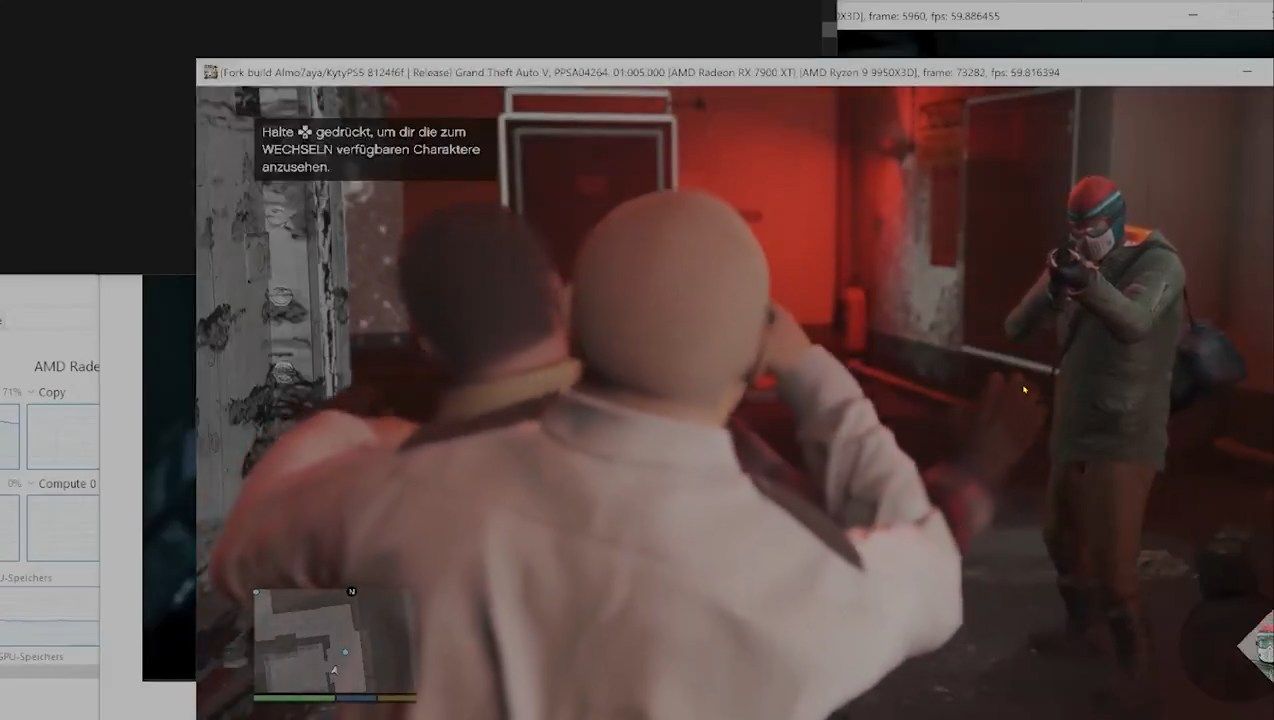
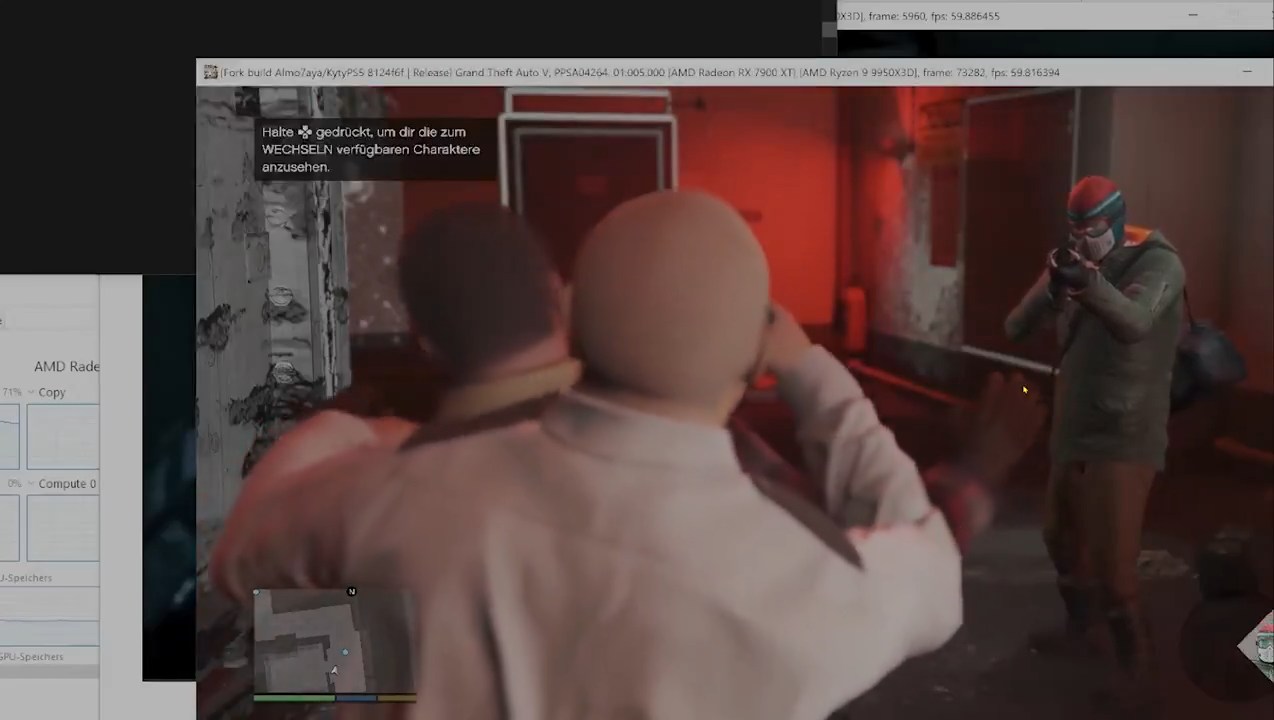
The landscape of console emulation is witnessing its most aggressive era of development in history. Within a remarkably short window, the PlayStation 5 emulation scene has transitioned from basic, static interface rendering to the functional, real-time gameplay of major AAA titles. Most notably, the PS5 version of Grand Theft Auto V—a title that remains a cultural and commercial juggernaut—is now playable on PC at frame rates ranging from 40 to 60 FPS for short, albeit volatile, bursts.
This rapid acceleration in progress is not merely a technical curiosity; it represents a monumental shift in the timeline of game preservation and accessibility. As modders and developers race to bridge the gap between proprietary console hardware and the open architecture of the PC, the implications for the future of gaming are profound.
The Current State of PS5 Emulation: A Technical Breakthrough
For years, the leap from the PlayStation 4 to the PlayStation 5 architecture suggested a daunting barrier for the emulation community. The PS5’s custom I/O throughput, specialized decompression blocks, and complex GPU integration were once considered "emulation-proof" for the near future. However, the rise of the KytyPS5 emulator, alongside the concurrent efforts of ShadEmu, has dismantled these assumptions.
Just over a month ago, the emulation scene was celebrating minor, incremental successes. GTA V was little more than a static splash screen, and the primary focus was on 2D indie titles or lightweight 3D games. Today, the narrative has shifted entirely. The ability to run the starting mission of GTA V—a title requiring significant real-time rendering of assets, lighting, and physics—indicates that the foundational hurdles of instruction set translation and shader compilation are being overcome with staggering speed.
Chronology of Rapid Development
The trajectory of this progress follows an exponential curve:
- Early Summer 2026: Initial boot-ups of simple PS5 indie titles began appearing on GitHub. Developers focused on the fundamental kernel calls and basic graphics API translation (Vulkan/DirectX).
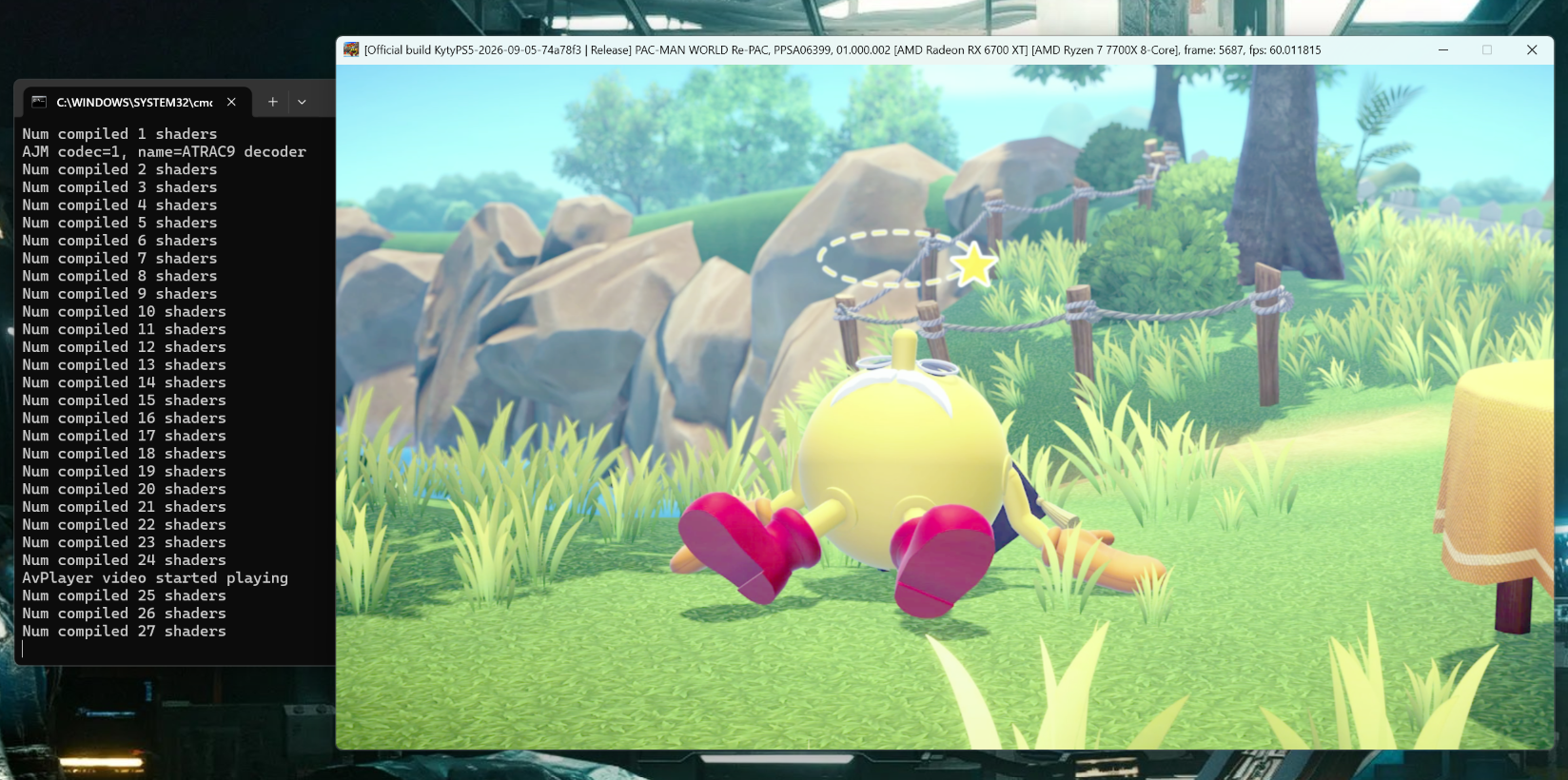
- August 2026: A wave of "playable" status updates for smaller titles, including PAC-MAN WORLD Re-PAC, Double Dragon Gaiden: Rise of the Dragons, and Tomb Raider IV-VI Remastered, confirmed that the emulation architecture was capable of stable, high-frame-rate output on high-end hardware.
- Early September 2026: The first successful, albeit brief, gameplay footage of Grand Theft Auto V (PS5 version) surfaced. The emulator demonstrated the capability to render complex, real-time cutscenes, which are notorious for being the most difficult segments to emulate due to their reliance on specific engine-side hardware calls.
- Mid-September 2026: Documentation of GTA V entering the open-world environment, albeit at sub-15 FPS, showcased that the emulator is capable of handling the game’s massive world-streaming requirements, even if stability is currently lacking.
Supporting Data and Hardware Requirements
The performance metrics observed in these early stages are heavily dependent on top-tier enthusiast hardware. The demonstration of GTA V running at 40–60 FPS was achieved on a system equipped with an AMD Ryzen 7 9950X3D processor and an AMD Radeon RX 7900 XT graphics card. This hardware profile underscores the "brute force" nature of early-stage emulation; because the software is not yet optimized for the specific architecture of the console, the PC must compensate for the lack of hardware-level efficiency with raw processing power.
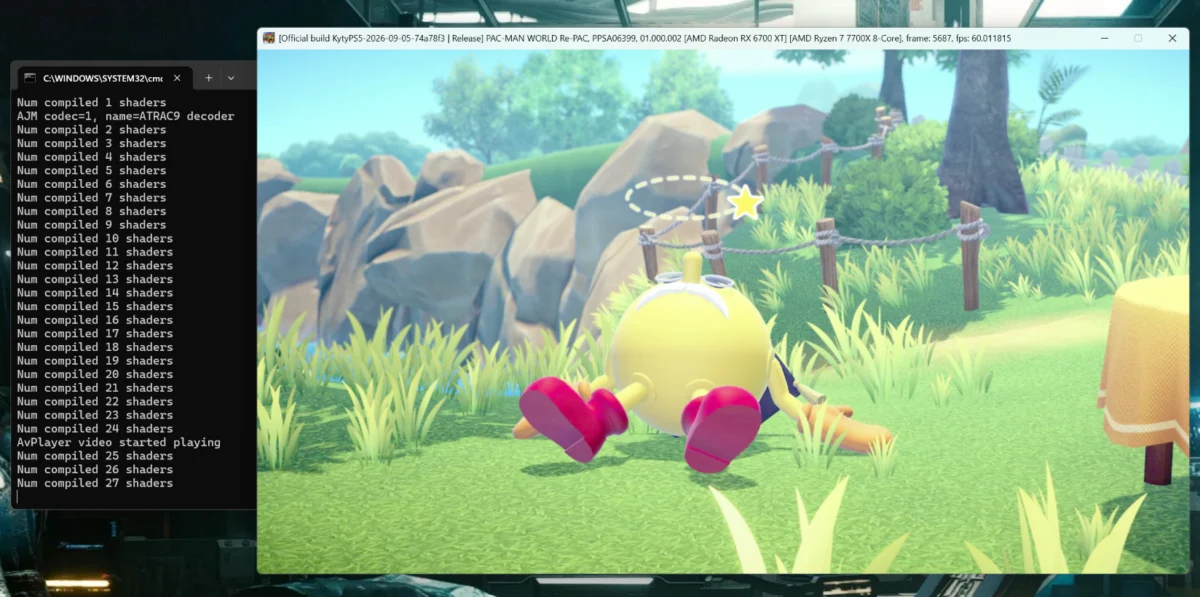
Conversely, lighter titles like PAC-MAN WORLD Re-PAC have proven that the emulation framework is becoming increasingly efficient. On an RX 6700 XT and a Ryzen 7 7700X, this title achieved a locked 60 FPS, proving that the emulator is not inherently limited to flagship hardware for less demanding software.
Furthermore, the SharpEmu project is taking a distinct approach by prioritizing architectural accuracy over quick compatibility. While KytyPS5 chases the "big wins" of playable AAA games, SharpEmu is focusing on the infrastructure required to run the PS5’s native OS environment. The recent, albeit primitive, booting of Astro’s Playroom on a Steam Deck—at a crawl of 0.5 to 1 FPS—is a vital milestone for handheld accessibility, proving that the PS5’s proprietary software environment can, in theory, be brought to portable Linux-based hardware.
The Implications of the "GTA VI" Shadow
The elephant in the room regarding this rapid development is, undoubtedly, Grand Theft Auto VI. Following the release of gameplay footage that confirmed the title would be capped at 30 FPS on consoles at launch, the demand for a PC version has reached an all-time high.
There is an underlying, albeit ambitious, sentiment within the emulation community: the desire to see GTA VI playable on PC via emulation before, or shortly after, Rockstar Games releases an official port. While this remains a distant dream—given that the PS5 version of GTA VI will likely utilize the console’s hardware in ways that even GTA V does not—the current progress with GTA V serves as a proof-of-concept. It demonstrates that the community is no longer waiting for developer permission to experience high-fidelity console games on PC hardware.
Hurdles and Official Responses
Despite the excitement, the scene faces significant challenges. Emulation is not just about rendering graphics; it is about replicating the entire hardware ecosystem of the PS5. Crashes, such as those occurring when police encounters begin in GTA V, signify that the emulator is struggling to translate specific interrupts and memory management tasks that occur during intense gameplay cycles.
To date, Sony has maintained its standard position regarding software emulation and unauthorized access to its proprietary firmware. While there have been no specific legal actions taken against the current developers of KytyPS5 or SharpEmu, the history of the emulation scene—from the takedown of major Switch emulators to the legal battles involving early PlayStation emulators—suggests that as these projects become more viable, they will face increased scrutiny from rights holders.
Why This Matters: Preservation vs. Piracy
The discourse surrounding PS5 emulation often splits into two camps: those who view it as a necessary tool for long-term game preservation and those who view it as a vector for piracy. Proponents argue that consoles are ephemeral; as the hardware ages and capacitors fail, the only way to preserve the digital software of this generation will be through emulation. The work currently being done by the KytyPS5 team is, in their view, a vital insurance policy against the inevitable obsolescence of physical and digital PS5 hardware.
However, the rapid push for "playability" of modern, active-market titles creates a complex legal and ethical environment. Unlike the preservation of retro consoles (such as the PS1 or PS2), PS5 emulation is occurring while the platform is still in its peak commercial lifecycle. This creates tension with developers and publishers who rely on the console ecosystem to secure their revenue streams.
The Road Ahead
As we look toward the remainder of 2026, the emulation scene is clearly entering a new chapter. We are no longer discussing "if" the PS5 can be emulated, but rather "how fast" the compatibility layer can be refined. The transition from Astro’s Playroom boot screens to the open-world exploration of GTA V in such a short window is a testament to the collective intelligence of the modding community.
For the average gamer, this means that while they shouldn’t expect to play their entire PS5 library on a PC today, the foundation is being laid for a future where platform exclusivity is increasingly blurred. Whether this leads to a new era of open gaming or a renewed wave of restrictive digital rights management (DRM) and legal intervention remains to be seen. One thing is certain: the developers working on these projects are operating at the bleeding edge of software engineering, and their progress is reshaping the industry’s understanding of console-to-PC compatibility.
As hardware continues to evolve and PC performance ceilings climb, the "unplayable" status of today will, in all likelihood, become the "playable" standard of tomorrow. For now, the community watches the code repositories with bated breath, waiting for the next update that might turn a stuttering 15 FPS experience into a seamless, high-fidelity masterpiece.