

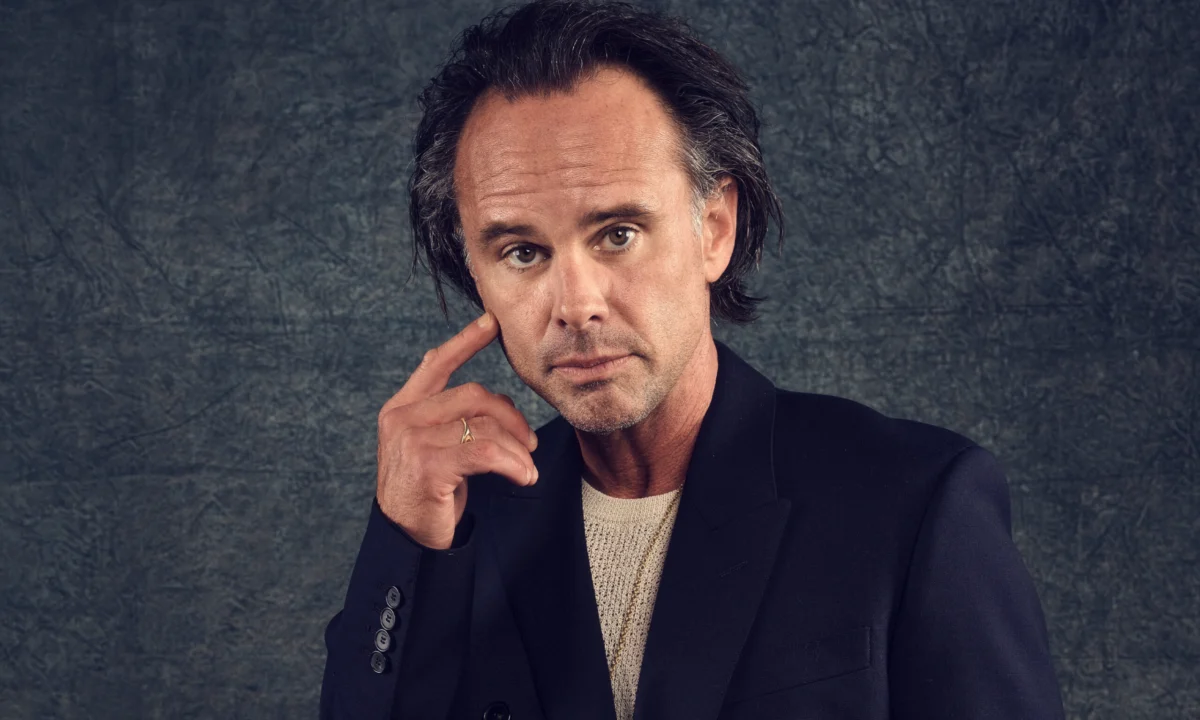
While the 2011 blockbuster Cowboys & Aliens was marketed as a high-concept genre mashup pitting nineteenth-century frontiersmen against extraterrestrial invaders, the true drama occurred behind the scenes. Years after the film’s release, star Olivia Wilde has pulled back the curtain on a harrowing, near-death experience that transformed her co-star, Walton Goggins, from a fellow actor into a real-life savior.
In a recent appearance on Dax Shepard’s Armchair Expert podcast, Wilde recounted the terrifying moments during a desert sequence that could have ended in tragedy. The revelation has cast a new light on the production of the Jon Favreau-directed film, highlighting the inherent dangers of practical stunt work and the split-second heroism that often goes unnoticed in the cinematic process.
The Sequence: A High-Stakes Production
The scene in question was designed to be one of the film’s most epic visual spectacles. It featured Wilde, alongside Hollywood heavyweights Daniel Craig and Harrison Ford, leading a cavalry-style charge across a dusty desert landscape. The production design was ambitious, involving roughly 40 horses galloping in a full-sprint formation, designed to simulate a desperate counter-attack against the film’s alien antagonists.
For any production, managing 40 horses in a synchronized charge is a logistical nightmare and a significant safety risk. The actors involved were required to maintain speed and formation while navigating uneven terrain, all while blinded by the plumes of dust kicked up by the thundering hooves ahead of them. It was in this chaotic, high-velocity environment that the sequence began to unravel.
A Chronology of the Accident
According to Wilde’s account, the incident occurred with little warning. The sheer intensity of the sprint, combined with the unpredictable nature of working with livestock, led to a sudden mechanical failure of the human-animal bond.
The Fall
As the group surged forward, Wilde’s horse reacted violently to the chaotic environment. "This horse jumps and bucks me off in the craziest way," Wilde recalled during the podcast. The impact was immediate and severe. Wilde was thrown from the saddle, striking her head and back against the hard-packed desert floor.
The "Dead Zone"
Wilde found herself lying in a precarious position—on the far side of a slight embankment or "lip of dirt." This natural terrain feature, while seemingly innocuous, created a critical blind spot for the riders behind her. The combination of the embankment and the thick, suffocating cloud of dust kicked up by the stampeding horses meant that the oncoming riders were effectively blind to her presence.
The Sound of Thunder
Lying on the ground, disoriented and injured, Wilde described a sensory experience that shifted from the adrenaline of a movie set to the primal fear of imminent death. Pressing her ear to the ground, she heard the low-frequency rumble of dozens of horses rapidly closing the distance. "It sounded like thunder, like they were coming towards me," she said. In those few seconds, Wilde admitted she had resigned herself to the worst-case scenario. "I had the thought—it sounds so dramatic—but I thought, ‘It’ll be quick. It’ll be like, pulverized applesauce. Out.’"
The Intervention: Walton Goggins’ Split-Second Decision
Just as the wall of horses threatened to trample her, Walton Goggins intervened. Goggins, who was positioned behind Wilde in the formation, had managed to spot her on the ground despite the dust and the chaos of the charge.
In what can only be described as a moment of instinctive, life-saving clarity, Goggins did not merely shout a warning. He made a tactical decision that required immense riding skill and complete disregard for his own safety. He maneuvered his horse sideways, creating a physical barrier between the unconscious or immobile Wilde and the oncoming stampede.
By turning his horse perpendicularly, Goggins forced the rest of the pack to split. Other riders, bewildered by Goggins’ sudden change in direction, were forced to veer around the pair. "People split the two sides around us thinking he had just gone insane, but he was protecting my body on the ground," Wilde explained. His decision essentially turned his own horse into a human shield, absorbing the potential impact of the chaos to protect his colleague.
Supporting Data: The Reality of On-Set Stunt Safety
The incident involving Wilde and Goggins underscores a persistent truth in the film industry: despite modern advances in CGI and safety protocols, the use of live animals in film production remains one of the most dangerous aspects of movie-making.
According to historical data from the Screen Actors Guild (SAG-AFTRA) and the American Humane Association (which monitors animal welfare on sets), accidents involving horses are among the most common causes of serious on-set injuries. While stunt coordinators implement rigorous training and "rehearsed" paths for animals, the unpredictability of a 1,200-pound animal in a high-stress environment—such as a desert location with pyrotechnics, noise, and multiple riders—is impossible to eliminate entirely.
In the case of Cowboys & Aliens, the scale of the production added a multiplier effect to the risk. Moving 40 horses in close proximity creates a "herd mentality," where one horse’s panic can rapidly trigger a chain reaction among the others. Goggins’ ability to handle his mount with such precision during this "herd panic" is a testament to the specialized horsemanship training often required for Western genre films.
Official Responses and Industry Perspectives
While Walton Goggins has not publicly dwelled on the event in recent media cycles—staying true to a characteristically humble persona—Wilde’s public acknowledgment has sparked a conversation regarding the often unsung heroes of film production.
Industry veterans note that the bond formed between actors during grueling location shoots often leads to an unspoken "protector" dynamic. When actors are in the trenches of a long production, the distinction between "co-star" and "team member" blurs. Wilde’s admission serves as a rare look into the protective measures actors take for one another, which are rarely captured on film or included in press kits.
There has been no official statement from the production company regarding the incident, which occurred over a decade ago. However, the story has resonated deeply with fans and fellow performers, serving as a reminder that the high-octane action audiences enjoy in theaters is often the result of real, physical peril for those in front of the lens.
Implications: The Legacy of the "Cowboys & Aliens" Incident
The revelation of this near-tragedy brings several implications to the forefront of the film industry’s safety discourse.
1. The Necessity of Real-Time Awareness
Wilde’s story highlights that even with the best safety protocols, the most vital safety component on a film set is the situational awareness of the performers themselves. Goggins’ ability to identify a crisis in a fraction of a second and act decisively is a skill that cannot be taught through safety briefings; it is an innate quality of high-level professionals.
2. The Ethics of Practical Stunts
While audiences often clamor for "authentic" practical stunts over digital effects, the industry is increasingly debating the cost-benefit ratio of such risks. The Cowboys & Aliens incident is a clear example of how close a production can come to a fatal error. While the industry has made significant strides in safety, the reliance on live animals and high-speed action remains a high-risk factor.
3. Professional Camaraderie
Beyond the technical aspects, the story serves as a poignant reminder of the humanity within the industry. In an era where the divide between the stars and the "reality" of a film is often obscured by heavy marketing and digital enhancement, Wilde’s gratitude provides a grounding perspective. It reaffirms that behind the scenes, there is a community of people who look out for one another in ways that extend far beyond the script.
Conclusion
Olivia Wilde’s account of her time on Cowboys & Aliens does more than just share an interesting anecdote; it provides a stark, visceral reminder of the fragility of the human body and the heroism of those who act when the cameras are rolling. Walton Goggins, known to audiences for his intense portrayals of complex characters, proved that his most compelling role was the one he played off-camera: the man who didn’t hesitate to put himself in harm’s way to save a life.
As film productions continue to push the boundaries of spectacle and immersion, the legacy of this event serves as both a warning and a tribute—a warning about the dangers inherent in the art, and a tribute to the people who make it possible through their bravery, skill, and unwavering commitment to their peers. Whether in a dusty desert in 2011 or on a modern soundstage today, the protection of the performer remains the most important element of any production, and occasionally, it requires a hero who is as real as the danger they face.










