Suro Senen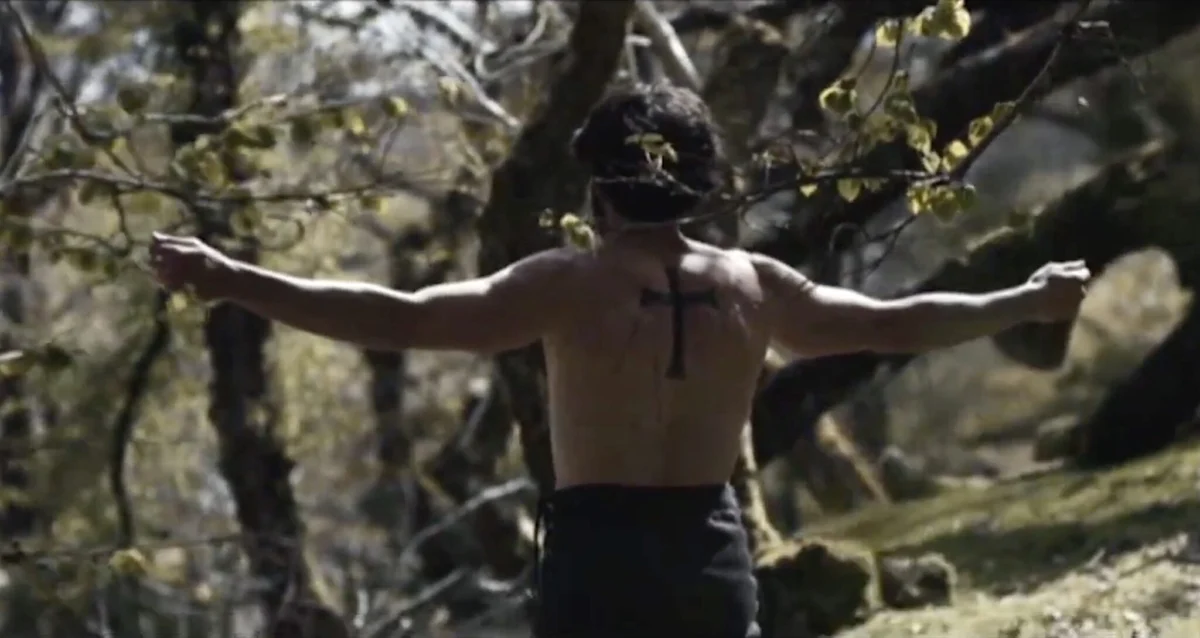
Ten years after its initial release, the 2017 historical thriller Pilgrimage remains an anomaly in the landscape of medieval cinema. Directed by Brendan Muldowney, the film serves as a visceral, uncompromising look at a period often sanitized by romanticism or bogged down by high-fantasy tropes. Rather than presenting a sanitized version of the Middle Ages, Muldowney crafts a dark, mud-caked odyssey that explores the intersection of religious fanaticism, cultural displacement, and the brutal cost of faith.
While recent trends in historical drama often lean toward either the epic scope of blockbuster franchises or the polished aesthetic of streaming prestige series, Pilgrimage stands apart as an indie-spirited, unsettling, and thoroughly grounded character study.
Main Facts: A Holy Burden in a Hostile Land
Set in 1209 C.E., the film’s narrative is deceptively simple: a small group of monks, tasked with transporting a powerful holy relic from a remote monastery on the western coast of Ireland to Rome, must navigate a landscape fractured by political instability and religious fervor.

The "relic" in question is not the traditional piece of the True Cross or a saint’s fingerbone. In a subversive twist, the object at the heart of the journey is the very stone used to murder Saint Matthias—the apostle chosen by lot to replace Judas Iscariot. Within the film’s lore, the relic is not a source of healing but a conduit for a vengeful, catastrophic power. The monks, recognizing the artifact’s malevolent aura, treat it with terror, rarely daring to touch it or meet its gaze. It is a burden that functions more like the Ark of the Covenant in Raiders of the Lost Ark than a traditional Christian token of grace.
The ensemble cast anchors this harrowing journey. Tom Holland, long before his global recognition as Spider-Man, delivers a nuanced performance as Diarmuid, a naive young novice. He is joined by Jon Bernthal, whose portrayal of "The Mute"—a stoic, physically imposing servant with a dark, mysterious past—provides the film’s emotional and violent core. Their relationship, built on a quiet, protective, and non-verbal bond, serves as the anchor for the viewer in a world devoid of mercy.
Chronological Trajectory of the Journey
The narrative follows a strict, escalating trajectory that mirrors the physical and spiritual deterioration of the pilgrims.

- The Inciting Incident: Pope Innocent III, anticipating a new Crusade, dispatches Brother Geraldus (Stanley Weber) to Ireland. His objective is to retrieve the relic and bring it to Rome, believing it will turn the tide against the "infidels and heretics" of the East.
- The Departure: The monks depart their isolated, rugged monastery, which is depicted not as a bastion of learning, but as a harsh, subsistence-based community. They are accompanied by a small escort of Norman soldiers, an uneasy alliance that underscores the tension of the era.
- The Road to Waterford: The journey across Ireland is a masterclass in tension. The group must traverse dangerous terrain, including forests marked by pagan symbols and paths blocked by the remnants of a nation in flux. Every encounter is a potential death sentence.
- The Climax: As the group nears the port of Waterford, the conflicting agendas of the Norman nobleman Raymond de Merville (Richard Armitage), the zealot Geraldus, and the protection-seeking monks collide. The film’s final act strips away the facade of holy duty, revealing the raw, political, and personal motivations of every player.
Supporting Data: The Architecture of Authenticity
What sets Pilgrimage apart is its commitment to historical and linguistic realism. The film utilizes a trilingual approach to reflect the fractured power dynamics of the 13th century. Characters speak in Irish, French, and Latin (represented by English for the audience), with only a few individuals acting as bridges between these worlds. This language barrier is not just a stylistic choice; it is a narrative weapon that highlights the mutual suspicion between the Irish, the Normans, and the representatives of the Vatican.
The visual language of the film is equally deliberate. The monastery is presented as a cluster of beehive-shaped stone huts—historically accurate for the time—where monks harvested sea cucumbers and seaweed. There is no trace of the "misty, romanticized" Ireland often depicted in popular culture. The violence is equally grounded: there are no cinematic flourishes or stylized swordplay. Combat is portrayed as a frantic, desperate, and often clumsy struggle for survival. It is a world where a single, poorly aimed strike results in a slow, agonizing death.
Furthermore, the film’s depiction of the "Old Ways" vs. the encroaching authority of Rome provides a fascinating layer of cultural tension. The Irish monks respect the pre-Christian history of the land, while the Cistercian Geraldus views any deviation from Roman doctrine as an affront to God. This friction creates an environment of constant, underlying anxiety.

Official Perspectives and Thematic Implications
The themes of Pilgrimage resonate deeply in the contemporary era. The film serves as a critique of religious fundamentalism, exploring how individuals—often those in positions of power—weaponize faith to justify atrocities. Brother Geraldus is perhaps the most chilling figure in the film; his eyes light up with a "dangerous glee" whenever he contemplates the fate of those he deems damned. His zealotry is a direct precursor to modern radicalization, and the film does a remarkable job of depicting this without resorting to anachronistic tropes.
The performances of Holland and Bernthal are particularly notable in this context. Holland’s Diarmuid represents the loss of innocence in a world that demands a rigid, often violent, adherence to external structures. He is a young man who has never known anything outside his monastery walls, forced to reconcile his peaceful upbringing with the brutal realities of the world. Bernthal’s performance as "The Mute" provides the necessary counterweight. He is a man weighed down by his past, seeking absolution through physical service. His transition from a submissive, dog-like servant to a "berserker" is a testament to the inescapable nature of his history.
The Mirror to Modernity
The film also offers a meta-commentary on the nature of history itself. The author notes that while it is tempting to claim that "the Irish saved Western Civilization," such narratives often ignore the collaborative, often messy reality of historical preservation. The monks in the film work by candlelight, unsure if their efforts will survive the chaos of the time. This mirrors the modern anxiety surrounding the digital age, where human labor and art are increasingly ceded to automated systems.

The film’s title, Pilgrimage, is ultimately a grim joke. The journey is not one of spiritual renewal, but a political scheme fueled by greed and ego. The relic is not a blessing; it is a burden that corrupts those who seek to use it for their own ends.
Conclusion: A Timeless Study of Human Frailty
Pilgrimage is more than just a decade-old indie film; it is a haunting, evocative, and intellectually stimulating piece of historical fiction. It succeeds because it refuses to offer the audience an easy way out. By focusing on the "ground-level" reality of life in the 13th century—where moral choices are impossible and survival is the only true currency—Muldowney creates a narrative that feels both archaic and disturbingly relevant.
For those looking to move beyond the polished, sanitized versions of history seen in mainstream media, Pilgrimage remains an essential watch. It honors the bravery of those who lived in such harsh times while unflinchingly exposing the zealotry and systemic failures that defined their world. It is a film that asks us to consider what we would be willing to carry, and what we would be willing to sacrifice, when the world begins to burn.

 Nana Muazin
 Raul Delapena Setiawan