Lina Hope
The global hierarchy of high-performance computing (HPC) has undergone a tectonic shift. For years, the United States has maintained a firm grip on the pinnacle of the Top500 list—the definitive, biannually updated ranking of the world’s most powerful supercomputers. That era of unchallenged American dominance has been interrupted. China has officially reclaimed the top spot with a revolutionary new system dubbed "LineShine," located in the tech hub of Shenzhen.
Surpassing the U.S. Department of Energy’s formidable "El Capitan" system, LineShine marks the first time a Chinese-built machine has topped the global leaderboard since 2017. While the geopolitical implications of this milestone are significant, the architecture behind LineShine is sending shockwaves through the scientific and engineering communities for an entirely different reason: it achieved its record-breaking performance by ignoring the current industry trend toward AI-optimized GPU acceleration.
A Chronology of the Supercomputing Arms Race
The race to reach exascale performance—the ability to perform at least one quintillion calculations per second—has been the primary objective of major world powers for the past decade.
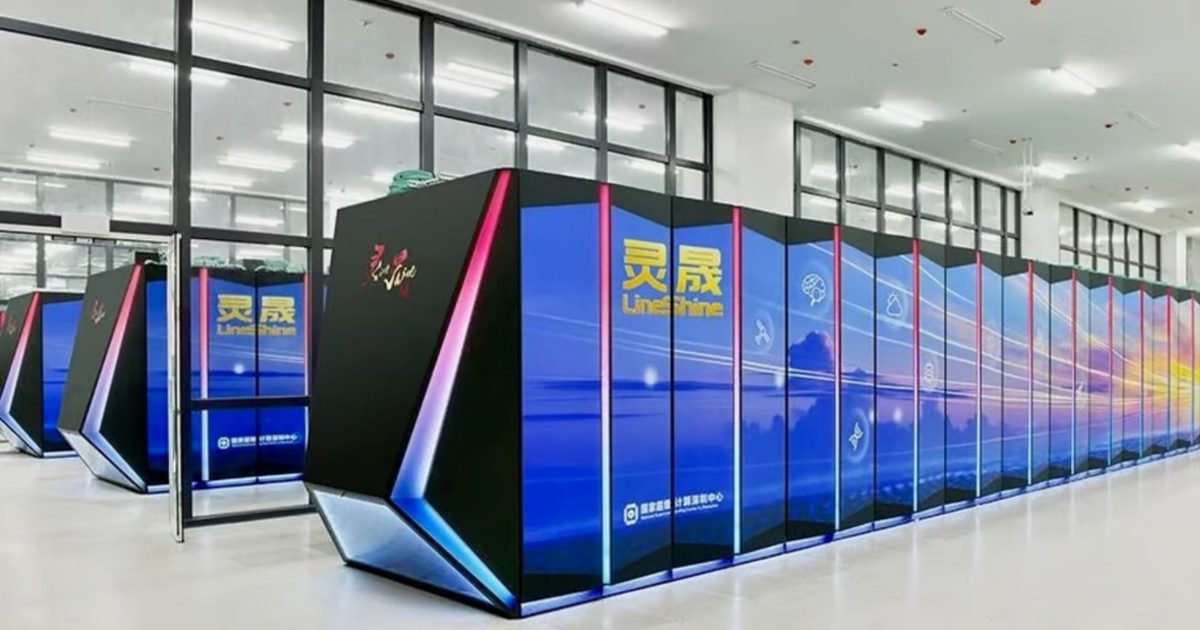
- 2010–2016: China’s rapid ascent in supercomputing was marked by the dominance of the Tianhe-2 and Sunway TaihuLight systems, which held the No. 1 spot for several years, signaling China’s intent to become an HPC superpower.
- 2017–2022: The U.S. regained momentum with the deployment of the IBM-built Summit and later the Frontier system at Oak Ridge National Laboratory, which became the first officially recognized exascale machine.
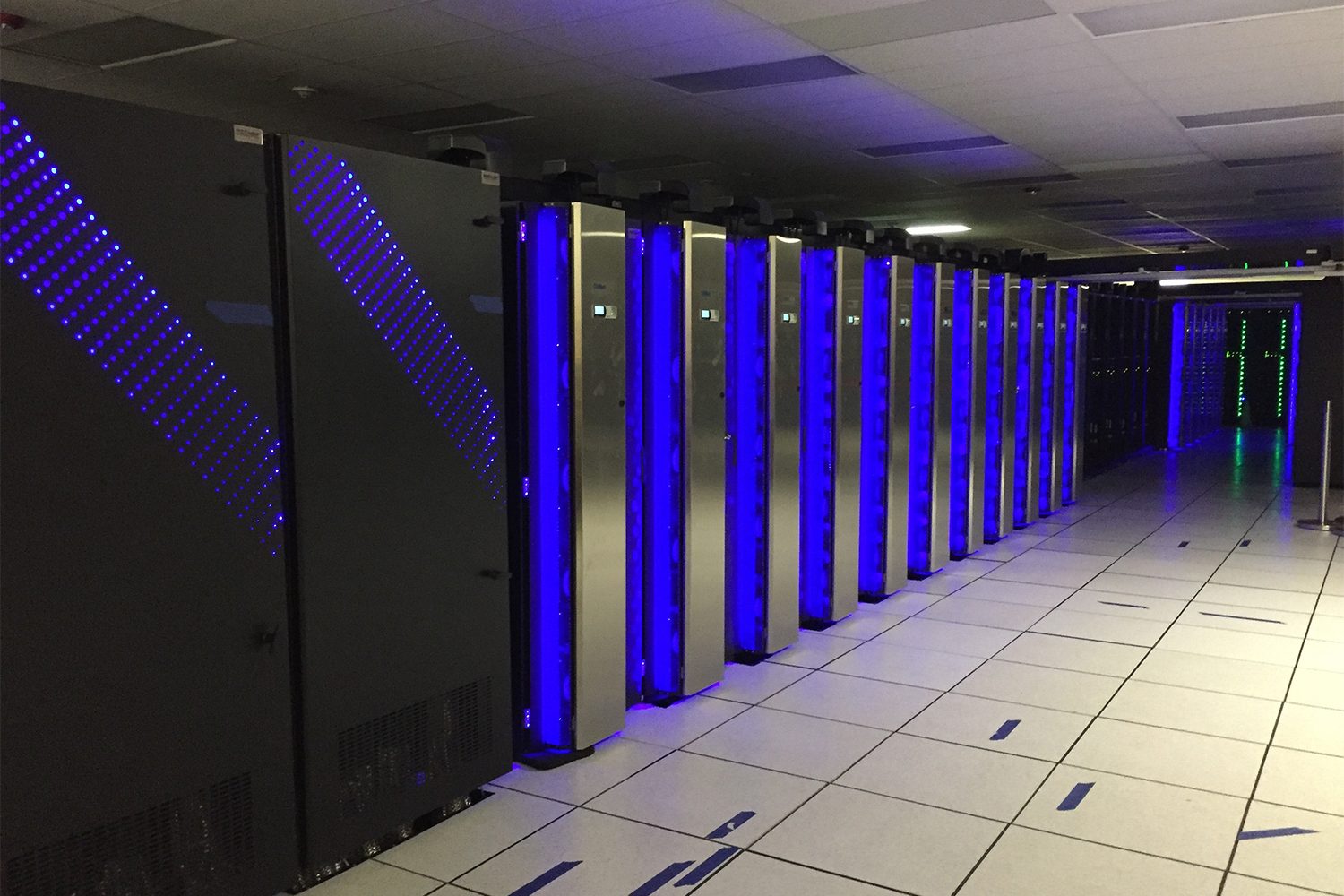
- 2023–2025: The U.S. solidified its lead with the deployment of El Capitan, a machine engineered specifically for the National Nuclear Security Administration, designed to handle extreme-scale simulations for national security.
- June 2026: China unveiled LineShine. By breaking the 2.1 exaflop barrier using an entirely different architectural philosophy, the system effectively ended the U.S. winning streak, forcing a reevaluation of how global powers approach "raw power" versus "specialized efficiency."
The Architectural Anomaly: The Tortoise Outruns the Rocket
The most striking aspect of the LineShine system is its defiance of modern computing orthodoxy. In the current era, where artificial intelligence (AI) has become the primary driver for hardware development, most supercomputers are built around massive arrays of Graphics Processing Units (GPUs). These specialized chips are designed to handle the parallel processing required by large language models and neural networks.
LineShine, however, has taken the "tortoise" approach. Instead of leaning on the GPU-heavy designs favored by Western manufacturers, the system utilizes a proprietary, highly optimized CPU architecture. By focusing on massive-scale central processing unit (CPU) integration, LineShine has managed to achieve a performance of over 2.1 exaflops.
Why CPU-Centric Design Still Matters
Industry analysts have often dismissed CPU-only designs as relics of the past, arguing that the future of HPC is exclusively tied to AI-accelerated hardware. LineShine disproves this by demonstrating that for traditional scientific simulations—such as fluid dynamics, climate modeling, and molecular chemistry—the sheer throughput of a perfectly optimized CPU cluster can rival, and sometimes outperform, the more "hyped" AI-focused architectures.

This shift suggests that countries may no longer need to rely on access to high-end, Western-designed AI GPUs to achieve world-class computing performance. By innovating at the CPU level, Chinese engineers have bypassed the supply chain bottlenecks that have hampered high-performance chip imports, potentially creating a new, independent path to technological self-sufficiency.
Supporting Data and Technical Benchmarks
To understand the scale of LineShine, one must look at the performance metrics that define the Top500 list. The Linpack benchmark, which measures how fast a computer can solve dense systems of linear equations, is the gold standard for these rankings.
- Performance Metrics: LineShine registered 2.14 exaflops on the High-Performance Linpack (HPL) benchmark.
- Efficiency: While the exact power consumption figures are closely guarded, internal reports from the Shenzhen facility suggest that the system operates with a power-to-performance ratio that is competitive with current U.S. exascale machines, despite the difference in architecture.
- Scaling: The system utilizes an interconnect fabric that allows for lower latency than many previous Chinese models, addressing one of the primary historical hurdles in Chinese supercomputer design.
The jump to 2.1 exaflops is not merely a quantitative increase; it represents a qualitative leap in what researchers can model. At this scale, scientists can simulate global climate patterns with a level of granularity that was previously impossible, or model the folding of proteins for drug discovery in real-time.
Official Responses and Geopolitical Implications
The announcement of LineShine has prompted a flurry of reactions from international observers. In the United States, the Department of Energy and private stakeholders have largely remained stoic, emphasizing that the Top500 list is a snapshot in time rather than a permanent measure of capability.
"The ranking is a moment of recognition, but it is not the totality of our technological ecosystem," noted an anonymous source within the U.S. national laboratory system. "Our focus remains on the integration of AI and quantum computing, which we believe will offer more long-term utility than raw HPL performance alone."
Conversely, the Chinese Ministry of Science and Technology has hailed LineShine as a triumph of "indigenous innovation." The project was reportedly developed with a specific emphasis on circumventing international restrictions on high-end processor technologies. The success of the system is being framed as a validation of the nation’s "New Infrastructure" initiative, which prioritizes the development of domestic hardware to insulate the economy from global trade tensions.

The Future of Global Computing: Sustainability and Power
While the competition for the top spot on the Top500 list is the public face of this rivalry, a much more challenging battle is brewing behind the scenes: the battle for sustainable power.
Supercomputing facilities are essentially small power plants. A machine operating at exascale requires tens of megawatts of electricity—enough to power a small city. The cooling requirements are equally daunting, often necessitating the use of millions of gallons of water. As LineShine and future iterations of U.S. systems like El Capitan continue to push the boundaries of performance, the conversation is shifting from "how fast?" to "at what cost?"
The Energy-Efficiency Mandate
The next phase of the supercomputing race will likely be determined by the Green500—the companion list to the Top500 that ranks systems by energy efficiency. If a country can achieve 2.1 exaflops while consuming 30% less power than its competitors, that nation will effectively control the future of the industry.

Europe is already moving toward this model, investing billions into regional facilities that integrate HPC with renewable energy grids. These facilities are designed to train future AI models and accelerate research in biotech and robotics, but they are being built with a "sustainability-first" mandate.
Conclusion: A New Era of Competition
The crowning of LineShine as the world’s fastest supercomputer is a clear signal that the era of monolithic, predictable technological leadership is over. The U.S. and China are now locked in a race that is as much about architectural philosophy as it is about raw, computational output.
For the average citizen, this might seem like a distant battle of giants. However, the ramifications are immediate. The nation that masters exascale computing—and does so sustainably—will hold the keys to the next generation of scientific breakthroughs. Whether it is through the GPU-heavy path of American innovation or the CPU-centric ingenuity of the LineShine project, the world is witnessing a fundamental transformation in how we define the limits of human knowledge and problem-solving capability.
The race is no longer just about who has the fastest machine; it is about who can best harness that power to shape the future of our civilization. For now, the lead belongs to Shenzhen, but the race is far from over.


 Suro Senen
 Reynand Wu