Asro
Asro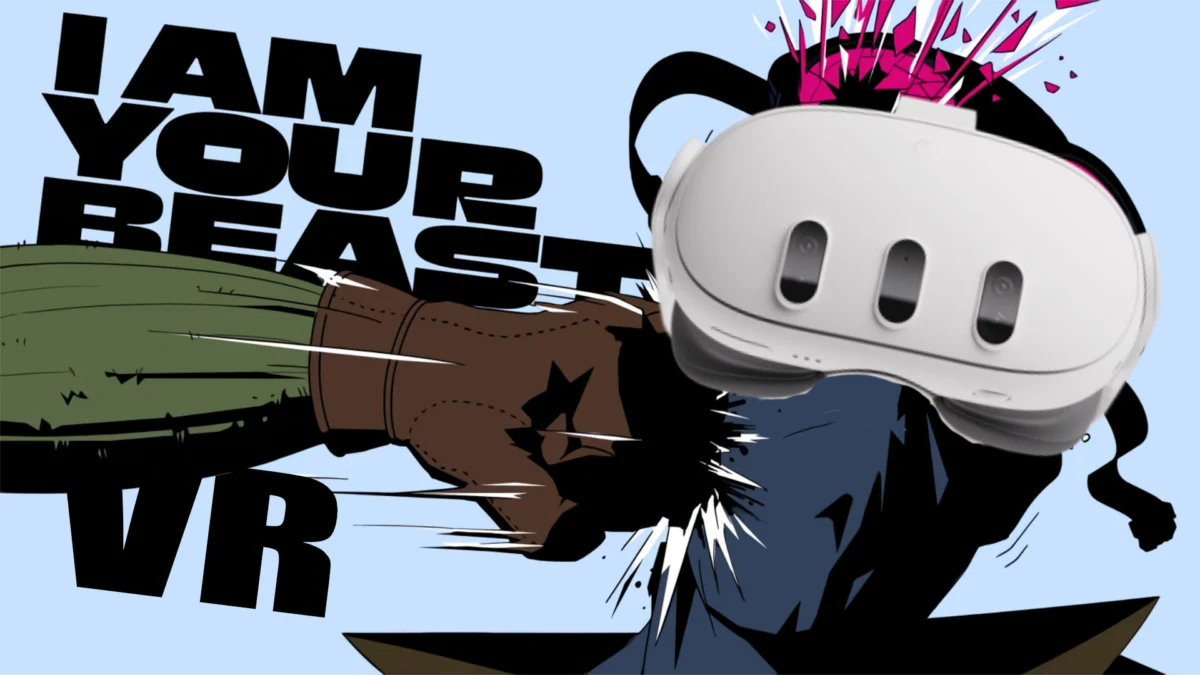
By Mustafa Mahmoud
While the gaming industry continues to be dominated by "flat" screen experiences—traditional titles played on monitors or televisions—the niche yet passionate world of Virtual Reality (VR) continues to defy expectations. Far from being a dying medium, VR is currently experiencing a sophisticated evolution, characterized by deeper mechanics, experimental storytelling, and technical refinements that leverage modern hardware. The recently concluded Summer 2026 VR Games Showcase served as a poignant reminder of this momentum, unveiling a slate of titles that prove VR is not merely a gimmick, but a robust platform for innovative gameplay.
Main Facts: A New Frontier for Immersive Gaming
The Summer 2026 VR Games Showcase acted as a lightning rod for the industry, aggregating a diverse array of developers and titles that underscore the platform’s versatility. The event was highlighted by several major announcements that bridged the gap between established fan-favorite franchises and experimental new intellectual properties.
The crown jewel of the event was undoubtedly the official unveiling of Hot Dogs, Horseshoes & Hand Grenades 2 (H3VR2). For the uninitiated, the original H3VR is widely considered the gold standard for VR ballistics and firearm simulation. Its sequel, however, seeks to transcend the "shooting gallery" roots of its predecessor by introducing a comprehensive narrative framework.
Other notable announcements included:
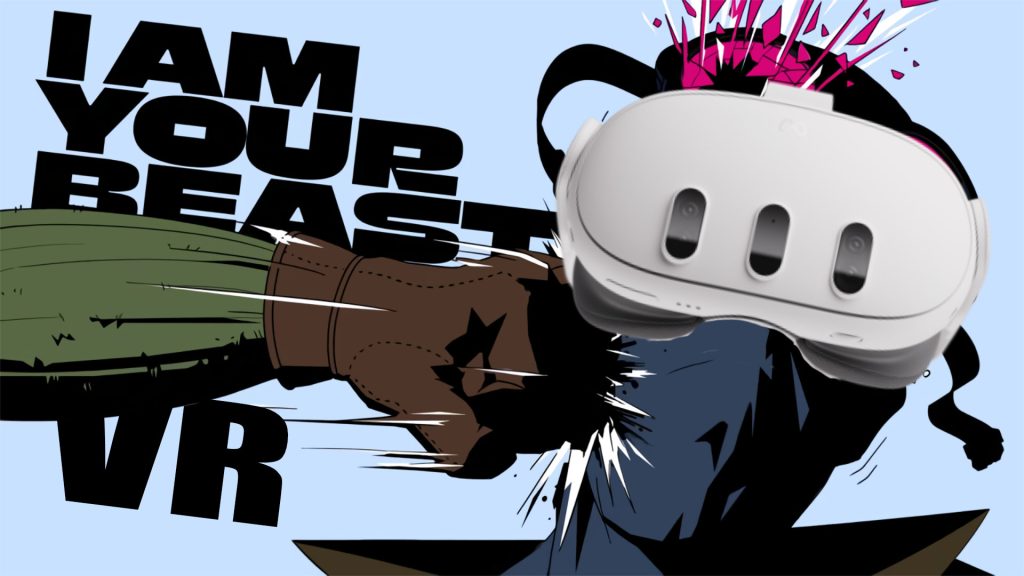
- I Am Your Beast VR: A high-octane, kinetic FPS port that translates the game’s signature fast-paced, "John Wick-meets-hotline-Miami" aesthetic into a fully immersive environment.
- Lanesplit: A high-speed motorcycle racing title receiving a major VR overhaul.
- Maestro: An orchestra rhythm game expanding its repertoire with an Attack on Titan collaboration.
- Transformers: Beyond Reality: A surprising pivot into the run-and-gun genre, bringing the iconic franchise to VR with a fresh perspective.
Chronology: From Niche Curiosity to Tactical Depth
The evolution of VR as a gaming medium has been non-linear. In the early 2010s, VR was largely defined by "tech demos" and short-form experiences. However, the last five years have seen a massive shift in development philosophy.
- 2020–2022: The Foundation Era. Titles like Half-Life: Alyx set a benchmark for what "AAA" VR could look like. Developers began moving away from simple teleportation mechanics toward full-room scale locomotion.
- 2023–2025: The Refinement Period. During this window, independent developers focused on physics-based combat and complex inventory systems. The success of the original H3VR during this time proved that players craved depth—the ability to physically manipulate every bolt, slide, and magazine of a virtual weapon.
- June 2026: The Showcase Milestone. The Summer 2026 VR Games Showcase represents the current maturation point. Developers are no longer just asking, "Can we make this work in VR?" but rather, "How can we make this a genre-defining experience?" The announcement of H3VR2 as a "tactical extraction roguelike" signifies a transition from sandbox simulations to structured, replayable game loops.
Supporting Data: Why VR Growth Remains Resilient
Critics of VR often point to the high entry barrier—the cost of headsets and the required physical space—as evidence of a plateau. However, the data from the showcase suggests that engagement is deepening. The shift toward "extraction" mechanics, as seen in H3VR2, is a response to market trends in traditional gaming. By adopting the high-stakes, risk-reward nature of the extraction genre, developers are successfully pulling in players who previously found VR experiences too "shallow."
Furthermore, the integration of established franchises like Transformers and Attack on Titan indicates that major intellectual property holders are increasingly comfortable entrusting their brands to VR developers. This suggests that the "installed base" of headsets is now large enough to justify the budgets required for these high-profile adaptations.
Official Responses and Developer Philosophy
The developers behind H3VR2 have been vocal about the design philosophy driving their sequel. By shifting the perspective to a "6-foot tall sentient hot dog" navigating a sprawling sci-fi megastructure, the team is embracing the surrealism that only VR can provide.
"We wanted to take the physics-heavy DNA of the original game and give it a purpose," a lead developer noted during the showcase. "VR is at its best when the player feels a sense of agency—not just in how they move, but in how they solve problems. By moving into the extraction roguelike space, we are forcing players to make tactical decisions that feel grounded, despite the absurdity of the setting."
Similarly, the team behind the I Am Your Beast VR port emphasized that the goal was "velocity." The challenge of translating high-speed PC movement into a headset without inducing motion sickness was the primary hurdle, one they claim to have overcome through innovative "snap-turn" and "comfort-velocity" settings that maintain the player’s momentum while ensuring accessibility.
Implications: The Future of the Medium
What does this mean for the future of gaming? It is becoming increasingly clear that VR will not replace the monitor or the television. The friction of wearing a headset—even with modern, lightweight designs—means it will likely remain a "secondary" primary experience for many gamers.
However, the implications for game design are profound:
- Physics as a Primary Mechanic: As VR titles like H3VR2 become more popular, players are beginning to demand higher levels of interactivity in non-VR games. We are already seeing "physics-first" design philosophies bleeding into traditional titles.
- The Rise of "Hybrid" Play: We are witnessing an increase in titles that are designed for both VR and flat-screen play. I Am Your Beast is a prime example of this duality, allowing players to choose their level of immersion without sacrificing the core gameplay loop.
- Experimental Narrative Structures: The "sentient hot dog" narrative of H3VR2 proves that VR is the perfect medium for abstract, experimental storytelling. Because the player is literally in the world, developers can play with perspective and scale in ways that are impossible on a flat screen.
Conclusion: A Platform with Staying Power
The Summer 2026 VR Games Showcase demonstrated that VR is far from a stagnant market. While it may never achieve the ubiquity of mobile gaming or console play, it has successfully carved out a permanent, vital niche. It is a space where developers can push the boundaries of physics, immersion, and genre.
As we look toward the remainder of 2026, the focus will shift from the initial "wow factor" of VR to the quality of the long-form experiences being built. Whether you are a fan of tactical shooters, rhythm games, or high-octane racing, the upcoming slate of titles proves that there is significant life—and a lot of creative ambition—left in the virtual world.
The industry remains divided on whether VR will ever be the "primary" way to play. But perhaps that is the wrong question to ask. Maybe the goal was never to replace traditional gaming, but to expand the vocabulary of what a game can be. If the Summer 2026 VR Games Showcase is any indication, that vocabulary is only getting larger, stranger, and more exciting.
KitGuru Commentary
The recent flurry of announcements highlights a pivot in VR development. We are seeing a move away from "experience" pieces and toward "full-fat" gaming. While the mainstream continues to fixate on the next generation of console hardware—like the upcoming Grand Theft Auto VI optimizations for the PS5—it is heartening to see that there is still a significant amount of investment flowing into the VR ecosystem. The question remains: will the broader gaming public make the leap, or will VR remain the domain of the dedicated enthusiast? Let us know your thoughts in the comments section below.


 Basiran
 Pevita Pearce