

Introduction: A Legacy Reborn from the Crypt
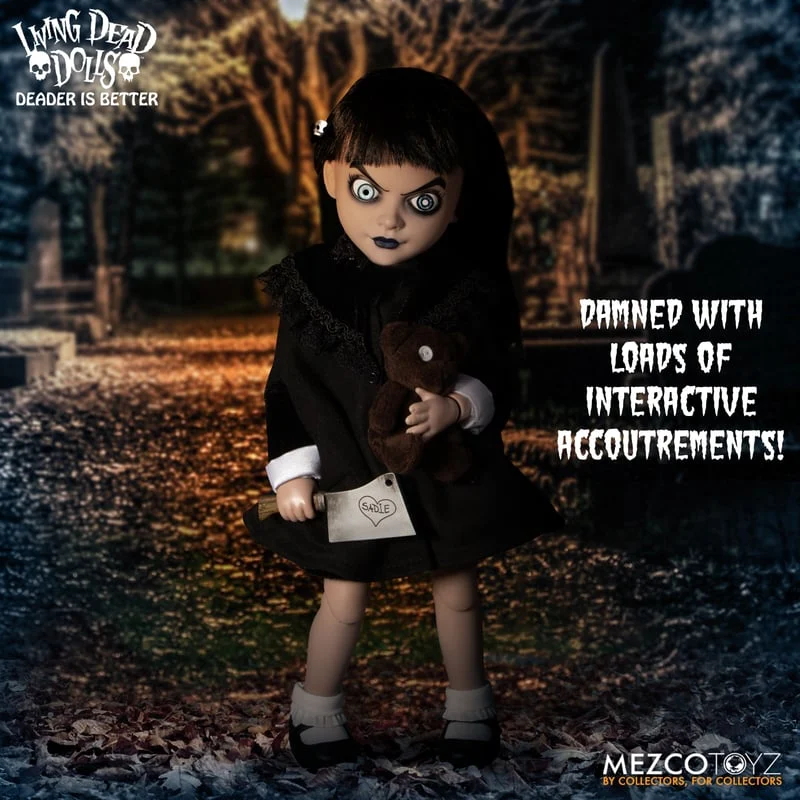
"No one cared how she turned up dead, so Sadie chose to rise instead."
For over two decades, the Living Dead Dolls (LDD) line has occupied a singular, macabre niche in the collectibles market. Created by Ed Long and Damien Glonek and brought to life through the dark artistry of Mezco Toyz, the brand has served as a beacon for fans of the gothic, the supernatural, and the unsettling. Now, as of February 2023, the brand has officially entered a new era. The announcement of a high-end, deluxe iteration of the original "First Living Dead Doll," Sadie, signals a significant pivot for the franchise—moving away from traditional static collectibles toward a more interactive, poseable, and sophisticated design language.
This transformation is not merely a stylistic update; it is a technical overhaul that addresses the evolving demands of adult collectors. By integrating advanced articulation, swappable facial expressions, and high-fidelity accessories, Mezco Toyz is repositioning the Living Dead Dolls as premium "art toys" capable of rivaling the high-end 1/6th scale market.
The Chronology of a Cult Classic
To understand the significance of the new Sadie, one must first look at the lineage of the brand. The Living Dead Dolls were born in 1998, emerging from a hobbyist project into a global phenomenon.
- 1998: Long and Glonek began creating handmade, custom dolls in their spare time, selling them at horror conventions. The concept—each doll coming with a death certificate and a tragic backstory—struck a chord with the burgeoning "Goth" subculture of the late 90s.
- 2000: A partnership with Mezco Toyz was forged, allowing for mass production that maintained the handcrafted, gritty aesthetic of the original prototypes.
- 2001–2010: The brand expanded into various "Series," each featuring a specific theme, ranging from Victorian-era hauntings to modern slasher homages. Sadie, the brand’s mascot and the first official release, became the face of the company.
- 2015–2020: The line saw experimental expansions, including "Living Dead Dolls Presents," which featured licensed characters from horror films like A Nightmare on Elm Street, The Exorcist, and Halloween.
- 2023: The launch of the "Deluxe" platform. By modernizing the original mascot, Mezco is effectively bridging the gap between the nostalgic, simple dolls of the past and the complex, poseable figures expected by modern collectors.
Supporting Data: The Anatomy of the New Sadie
The transition to a "deluxe" model is evidenced by the technical specifications of this release. Unlike the standard dolls of the past, which were often limited in movement and detail, the new Sadie is engineered for display versatility.
Technical Specifications:
- Articulation: Featuring 18 points of articulation, the doll allows for realistic movement. This is a massive leap from the rigid or limited-movement bodies of previous series.
- Interchangeability: The "Death Mask" system allows for two distinct expressions: a "grave glare" and a "sinister smirk." This is paired with five interchangeable hand sets, facilitating a wide range of storytelling possibilities.
- Optical Mechanics: Perhaps the most impressive feature is the internal control mechanism that allows the doll’s glass-like eyes to be moved, offering a sense of "life" that static painted eyes cannot replicate.
- Accessories: The level of detail extends to her accoutrements:
- A personalized, engraved tombstone.
- A functional coffin-shaped purse.
- A bouquet of black flowers.
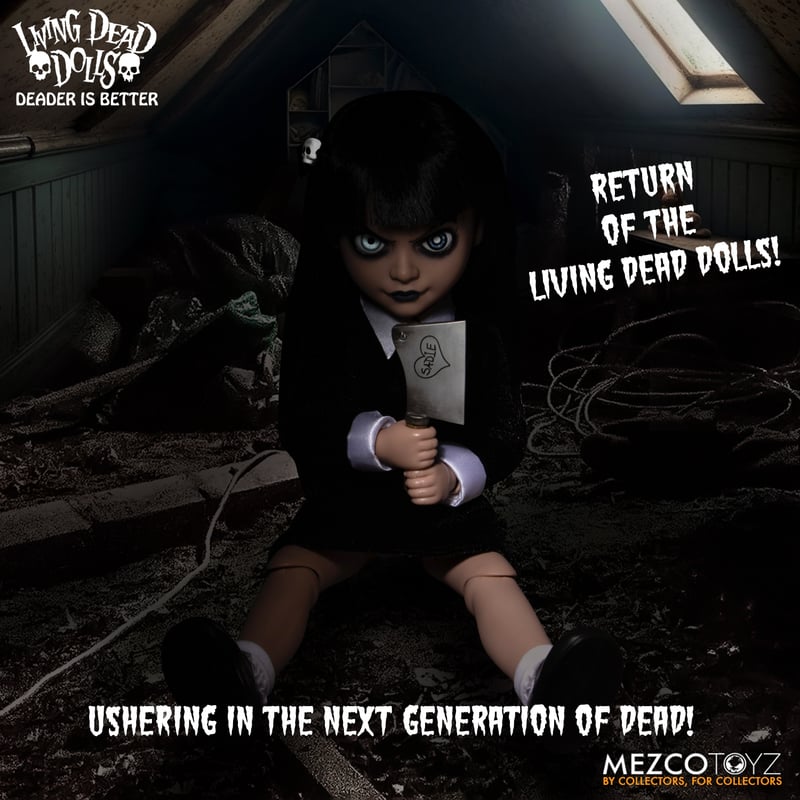
- A signature meat cleaver.
- A heterochromatic teddy bear, designed to reflect her own aesthetic.
At a price point of $120, this figure is aimed squarely at the collector market, positioning itself between entry-level toys and high-end collector statues.
Official Perspective: The Evolution of "Creepy"
While Mezco Toyz remains characteristically cryptic regarding the "lore" of their dolls, the company has emphasized that this release is a response to collector feedback. In recent years, the hobbyist community has trended toward hyper-realism. Collectors are no longer satisfied with display-only pieces; they demand pieces that can be photographed, posed in dioramas, and integrated into complex display cases.
The decision to launch this new standard with Sadie is symbolic. By choosing the character who started it all, Mezco is essentially saying that while the technology has changed, the soul of the brand—the dark, Victorian-inspired macabre—remains untouched. The inclusion of the "Death Mask" face plates suggests a commitment to modularity that will likely define future releases in this deluxe line.
Implications for the Collectibles Market
The move to "Deluxe" Living Dead Dolls carries several implications for the industry at large:
1. The Rise of the "Display-Ready" Doll
The hobby of doll collecting is no longer confined to porcelain enthusiasts or children. It has been subsumed into the broader "Action Figure" collector demographic. By incorporating 18 points of articulation, Mezco is essentially creating a bridge. Fans of 1/6th scale figures (like Hot Toys or Sideshow) may find the new LDD line appealing because it offers a stylized, horror-focused alternative to the typical military or superhero fare.
2. Market Saturation and Premium Pricing
At $120, the barrier to entry is higher than the standard $40–$60 LDD releases of the past. This suggests that Mezco is testing the elasticity of their fanbase. If the Deluxe Sadie succeeds, it is highly probable that we will see "Deluxe" versions of other legacy characters like Posey, Kitty, or Eggzorcist.
3. The Digital-Physical Hybrid
In an era of social media, the "instagrammability" of a figure is a primary driver of sales. The ability to swap hands, adjust eyes, and change expressions makes this figure a dream for toy photographers. The company is leaning into this by providing accessories that encourage creative staging. The coffin-shaped box, while traditional, now serves as a high-end storage solution for these numerous accessories, adding value to the unboxing experience.
A Cultural Critique: Why Sadie Still Matters
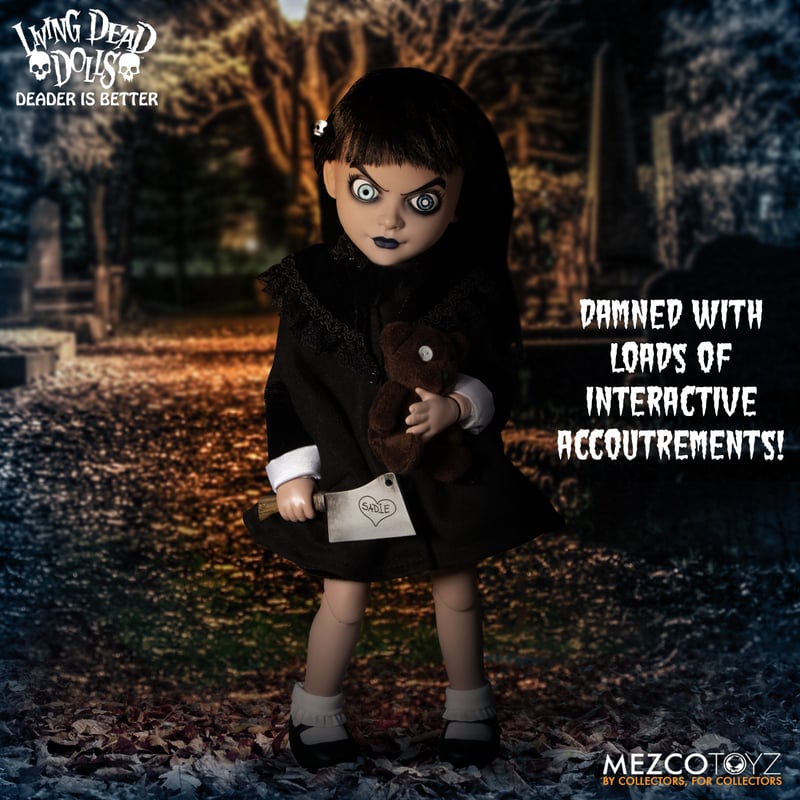
Why does a doll released in 1998 still resonate in 2023? The answer lies in the "Living Dead" aesthetic. It manages to be both timeless and retro. By avoiding the hyper-realism of modern horror cinema and leaning into the "doll-like" uncanny valley, the Living Dead Dolls occupy a space that is genuinely unsettling.
The new Sadie doesn’t try to look like a real person; she looks like a beautiful, terrifying object. The inclusion of accessories like the "meat cleaver" alongside a "teddy bear" highlights the core tension of the brand: the collision of childhood innocence and adult morbidity. This is a design philosophy that remains potent.
Future Outlook: What Lies Beyond the Crypt?
As the scheduled shipping window of July–September 2023 approaches, all eyes are on the quality control of these new mechanisms. If the articulation and eye-movement systems prove durable, the Living Dead Dolls could experience a massive resurgence in popularity.
For the dedicated collector, the message is clear: the crypt has been opened, but it is no longer the dusty, static tomb of the 90s. It is a laboratory of dark, poseable possibilities. Whether you are a longtime devotee of the macabre or a newcomer lured by the sophisticated design, the return of Sadie marks a pivotal moment in the history of horror collectibles.
As the industry continues to evolve, the "Living Dead" show no signs of returning to their graves. Instead, they are simply finding new, more articulate ways to haunt our shelves. For those ready to invite the darkness into their homes, the deluxe Sadie is not just a purchase; she is an invitation to participate in a legacy that is, in every sense of the word, undead.
About the Author
Jeff Saylor is a veteran of the pop culture and collectibles industry. A self-professed artist, writer, and gamer, his insights into the intersection of nostalgia and modern design have made him a voice of authority in the community. Whether he is dissecting the intricacies of a new figure release or exploring the cultural history of the macabre, his work continues to document the ever-changing landscape of modern fandom.










No comments yet. Be the first to join the conversation!