
 Nana
Nana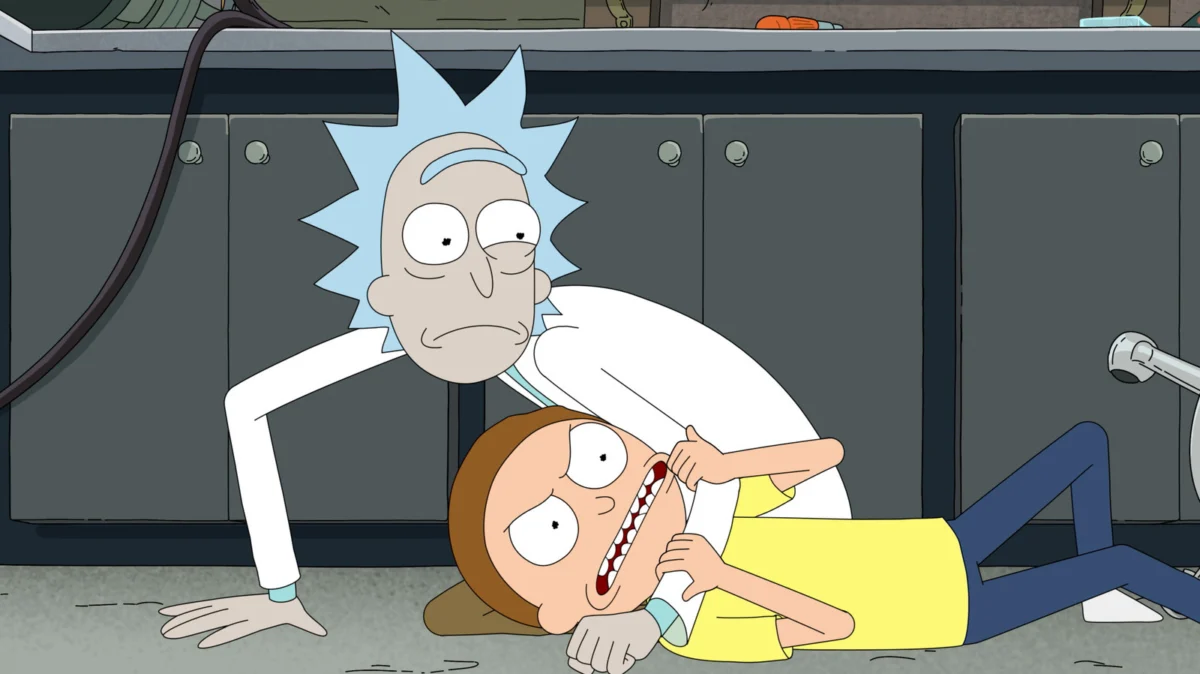
By Editorial Desk
Warning: This article contains major spoilers for the Season 9 premiere of "Rick and Morty," titled "There’s Something About Morty."
"Rick and Morty" has officially returned, and if the Season 9 premiere is any indication, the creative team at Adult Swim is not interested in coasting on past glories. In an explosive kickoff titled "There’s Something About Morty," the series has resurrected its most formidable and enigmatic antagonist: Evil Morty. This return marks a significant pivot for the show, balancing high-stakes multiversal threats with the grounded, character-driven narrative that has defined the series’ evolution over the last decade.
The Return of the Multiverse’s Greatest Threat
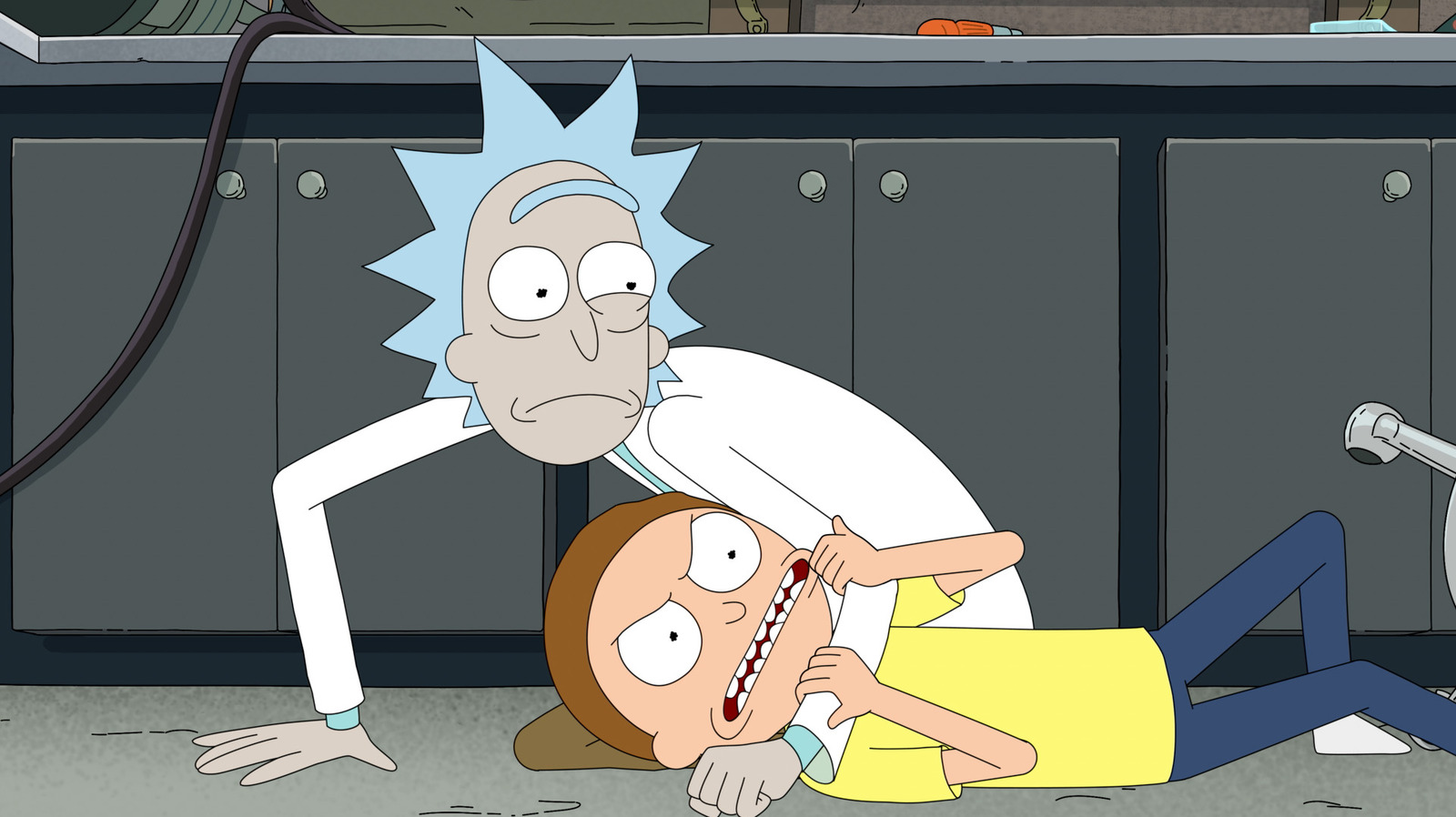
The premiere episode wastes no time establishing a new status quo. The shocking revelation that Rick Sanchez has been secretly collaborating with his most dangerous nemesis—Evil Morty—serves as the episode’s narrative anchor. This uneasy alliance is particularly jarring given the history between the two.
Fans will recall that Evil Morty’s previous arc saw him orchestrating a coup to become the President of the Citadel, systematically dismantling the infrastructure of the multiverse to isolate himself from the tyranny of the Ricks. His ultimate goal was liberation; he murdered countless variants of his grandfather to secure his freedom from the Central Finite Curve.
However, "There’s Something About Morty" reveals that his departure was short-lived. The episode discloses that Evil Morty has been leveraging the Omega Device—a cataclysmic weapon introduced in Season 7—to blackmail Rick. The device, capable of erasing every iteration of the Smith family across the infinite expanse of the multiverse, acts as the ultimate leash. By holding the existence of the entire Smith lineage hostage, Evil Morty has forced the smartest man in the universe into a series of covert, high-stakes adventures.
A Chronology of Conflict: From Puppet to Puppet Master
To understand the weight of this return, one must look at the trajectory of Evil Morty across the series’ history.
- The Origins (Season 1): Evil Morty was introduced as a mysterious, eye-patched puppet controlled by "Evil Rick." At the time, he was a subversion of the traditional "Morty" trope, appearing as a victim before the reveal that he was the true mastermind.
- The Rise to Power (Season 3): The character returned to dominate the Citadel of Ricks, using democratic manipulation to ascend to the presidency, showcasing a level of intelligence that challenged Rick’s perceived superiority.
- The Escape (Season 5): In one of the most critically acclaimed finales in the show’s history, Evil Morty successfully broke the Central Finite Curve, effectively exiting the universe where Rick was the "smartest man alive."
- The Omega Blackmail (Season 9): The current timeline finds the character not as an exile, but as an active, albeit reluctant, partner to Rick, signaling a shift from total separation to dangerous proximity.
Stylistic Evolution: Anime Influences and Visual Storytelling
Beyond the narrative beats, the premiere is a visual tour-de-force. The episode leans heavily into high-octane, anime-inspired action sequences that evoke the kinetic intensity of Katsuhiro Otomo’s "Akira." The animators have utilized the show’s increased budget and technological advancements to push the boundaries of what a half-hour adult animated comedy can deliver.
The choreography of the fight scenes—specifically those involving the multiversal tech—highlights the stark contrast between the show’s early, more static animation and its current, fluid, and cinematic approach. This visual flair serves a thematic purpose: it underscores the god-like power that both Rick and Evil Morty wield, making their human vulnerabilities all the more poignant when they are finally exposed.
The Psychology of a God-Like Teenager
What truly distinguishes "There’s Something About Morty" from typical "lore-heavy" episodes is its commitment to character psychology. Despite his vast intellect and his ability to rewrite reality, Evil Morty remains, fundamentally, a teenage boy.
The episode expertly deconstructs his facade, revealing that his pursuit of power is, in many ways, a trauma response. He is a character defined by a desperate, albeit suppressed, need for validation. Even when he commands the power to wipe out entire timelines, he is driven by the same insecurities as the Morty we have followed since the pilot. This humanization does not diminish him as a villain; rather, it elevates him into one of the most complex antagonists in modern animation. He is not "evil" because he is a monster; he is "evil" because he is a mirror—a version of Morty who realized that the only way to survive a toxic relationship with a god-like figure is to become a god himself.
Dan Harmon’s Philosophy on Canon and Narrative Structure
The return of Evil Morty also provides a window into the show’s evolving approach to storytelling. Co-creator Dan Harmon has long been vocal about his disdain for rigid "canon." In an industry where cinematic universes and serialized interconnectedness are the norm, Rick and Morty remains an outlier.
Harmon’s philosophy, which prioritizes the "episode-of-the-week" format over dense, lore-heavy serials, is evident in the show’s pacing. Even when dealing with massive plot points like Rick Prime or the return of Evil Morty, the show refuses to let these elements become the "main" story. Instead, they are treated as seasoning—important, yes, but not the meat of the meal.
This approach serves as a protective measure against the stagnation that plagues long-running series. By refusing to commit to a singular serialized direction, the writers retain the freedom to pivot, experiment, and subvert expectations. As fans observed during the Season 7 introduction of Rick Prime, the show often introduces massive threats only to resolve them in ways that prioritize character growth over spectacle.
Implications: What Lies Ahead?
The return of Evil Morty raises significant questions about the future of Season 9. Will he remain a permanent fixture? Based on the show’s history, it is unlikely. The creative team has signaled, both through narrative pacing and interviews, that Evil Morty is not intended to be a recurring "Big Bad" in the traditional sense.
Instead, his presence functions as a catalyst for growth for the main characters. His interaction with Rick in the premiere forces the latter to acknowledge a peer who is not just his equal, but perhaps his superior in terms of long-term planning. For Morty, the encounter is a haunting reminder of what he could become if he allowed his resentment to fully consume him.
Conclusion: A Masterclass in Legacy
"Rick and Morty" continues to defy the "100 years" meme by actually delivering on the promise of perpetual reinvention. The return of Evil Morty in Season 9 is a reminder that the show’s greatest strength is not its science fiction concepts, but its willingness to let its characters suffer the consequences of their own brilliance.
As the season progresses, viewers should temper their expectations for a serialized battle for the soul of the multiverse. Instead, they should prepare for a series that continues to oscillate between high-concept sci-fi absurdity and the deeply human, often painful, reality of the Smith family. Evil Morty is back, not to save or destroy the show, but to hold up a mirror to its protagonists—reminding us that in the infinite expanse of the multiverse, the most dangerous thing you can encounter is a version of yourself who has nothing left to lose.
Whether this is the last we see of him for the season or the start of a new, darker chapter, one thing is certain: the stakes have never been higher, and the show has never been more confident in its ability to handle them.


 Pevita Pearce
 Asep Darmawan




