

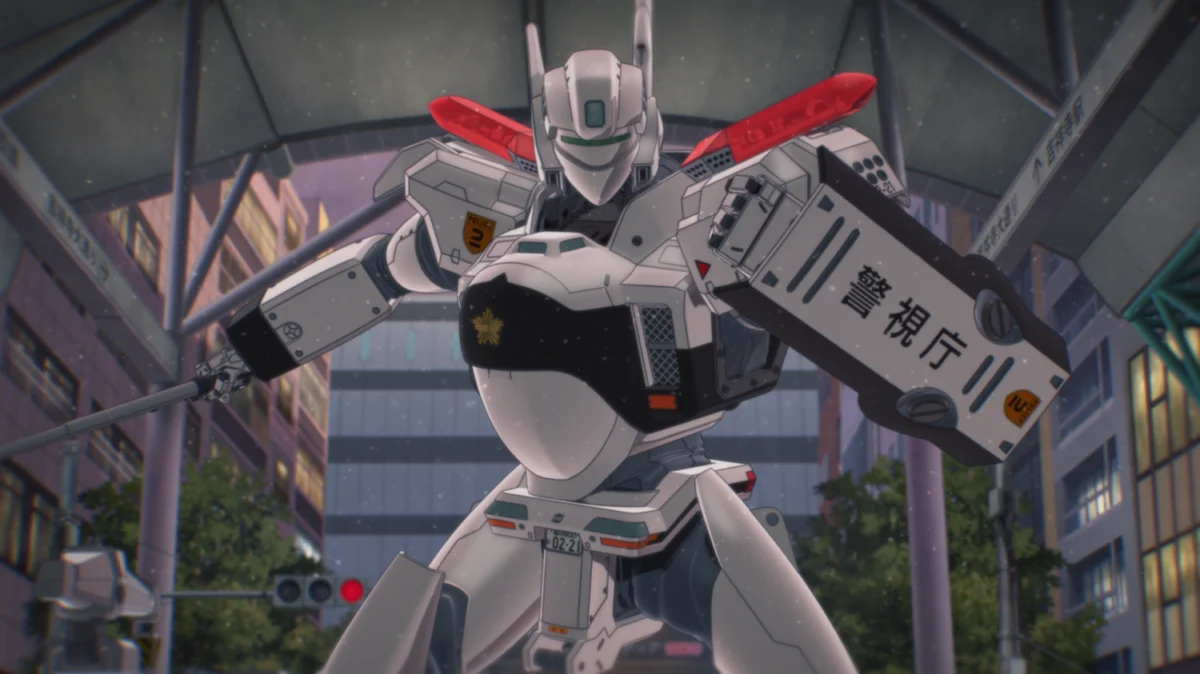
In the vast, sprawling ecosystem of Japanese animation, few franchises possess the cultural weight and idiosyncratic charm of Mobile Police Patlabor. Since its inception in 1988, the series has stood as a distinct counter-narrative to the "super robot" genre, opting for the grit of civil service over the glory of galactic conquest. Now, nearly four decades after it first captivated audiences, the franchise is making a highly anticipated return with Patlabor EZY.
The latest installment, which debuted its first three episodes in theaters under the subtitle "File 1," marks a significant milestone. By reuniting the original creative powerhouse, Headgear, Patlabor EZY attempts to bridge the gap between the franchise’s storied past and the complexities of the modern world, ushering in a new generation of officers to the iconic Special Vehicles Section 2.
Main Facts: A Franchise Reborn
The core premise of Patlabor EZY remains faithful to the DNA of the original series while updating its setting for a contemporary audience. The show follows a fresh batch of recruits who find themselves tasked with piloting the signature patrol labors—the large, humanoid mecha that define the show’s aesthetic.
Unlike its peers in the mecha genre, Patlabor has always functioned more as a police procedural than a war drama. The "labors" are essentially industrial tools, and their misuse necessitates a specialized police division. The current release strategy for EZY is staggered:
- File 1 (Released May 2026): Comprising the first three episodes.
- File 2 (Scheduled August 2026): Anticipated continuation of the narrative arc.
- File 3 (Scheduled March 2027): The final installment, completing the initial season’s run.
The return of the Headgear collective—a group comprising Mamoru Oshii, Kazunori Ito, Yutaka Izubuchi, Akemi Takada, and Masami Yuki—is perhaps the most significant "fact" regarding the production. Their involvement ensures that the cynical, grounded, and often humorous tone of the original remains intact, avoiding the trap of becoming a generic action reboot.
Chronology: From 1988 to the Near Future
To understand the significance of Patlabor EZY, one must look at the timeline of the franchise’s influence.
1988: The Genesis
The Patlabor project began as a multimedia experiment, launching simultaneously as a manga and an Original Video Animation (OVA). It introduced a world where the "Babylon Project"—a massive land-reclamation effort—required giant robots, creating a new societal paradigm where crime involving these machines was inevitable.
1989–1990: The Golden Age
The original 47-episode television series and the subsequent feature films directed by Mamoru Oshii cemented Patlabor as a critical darling. Oshii’s Patlabor: The Movie (1989) and Patlabor 2: The Movie (1993) are widely regarded as masterpieces of philosophical sci-fi, exploring themes of terrorism, political instability, and the philosophy of language.
2000s–2010s: The Lull and the Live-Action Experiment
Following the conclusion of the main narrative arcs, the franchise saw various remakes and side stories, culminating in the 2014–2015 live-action THE NEXT GENERATION: Patlabor series. While ambitious, it struggled to capture the lightning-in-a-bottle magic of the original hand-drawn cel aesthetic.
2026: The EZY Era
Patlabor EZY represents a return to form. By utilizing modern animation techniques while maintaining the industrial design language of the 80s—boxy, heavy, and mechanical—the production seeks to honor the "analog" soul of the series even as it addresses the digital concerns of the 2020s.
Supporting Data: The Banality of Heroism
The brilliance of the Patlabor franchise—and the reason it sustains such a loyal fanbase—lies in its subversion of expectations. While audiences might expect high-stakes space battles, they are instead given the "banality of life" on the force.

Data points regarding the series’ narrative structure highlight this unique approach:
- Character Focus: Approximately 70% of screen time is dedicated to non-combat scenarios, including bureaucracy, maintenance of the labors, and interpersonal drama among the Section 2 officers.
- Technical Realism: The mecha design emphasizes mass, torque, and hydraulic limitations. Labors are not agile, gravity-defying warriors; they are heavy machines that require constant maintenance.
- Setting: The series is firmly rooted in a "near-future" Japan, mirroring actual urban planning and civil engineering issues, which grounds the fiction in a recognizable reality.
In EZY, this focus remains unchanged. The new recruits are not chosen for their pilot prowess alone, but for their ability to navigate the complex social and political landscape of a city that has become increasingly dependent on labor technology.
Official Responses and Creative Vision
The reunion of Headgear has been the primary selling point of the production. In a rare joint statement released alongside the debut of File 1, the collective emphasized that Patlabor EZY was not intended to be a nostalgia trip.
"The world has changed significantly since the 1980s," the statement read. "We are no longer looking at the dawn of robotics, but at their ubiquity. EZY explores what happens when these machines are no longer a novelty but a core component of our infrastructure, and the consequences of that reliance."
Industry analysts have noted that the animation quality in the first three episodes reflects a "deliberate retro-modernity." By avoiding the excessive use of CGI for the labors, the studio has opted for a hybrid approach that keeps the physical weight of the machines present. Fans have responded positively, noting that the "heaviness" of the robots feels authentic, a stark contrast to the weightless, high-speed battles found in contemporary mecha anime.
Implications: The Legacy of a Genre
The implications of Patlabor EZY go beyond the success of a single show. It signals a shift in the anime industry toward "prestige revivals"—projects that don’t just reboot a brand for a quick cash-in, but seek to evolve the thematic discourse of the original work.
The Shift in Mecha Tropes
Patlabor has always been the antidote to the "super robot" trend. By focusing on the police, the series highlights the intersection of law, technology, and ethics. In an era where autonomous systems, AI, and surveillance are at the forefront of public debate, Patlabor EZY arrives at a perfect cultural moment. It asks the viewer to consider: If we build machines to do our work, who is responsible when they fail?
Cultural Impact
The success of File 1 suggests that there is a hunger for "slow-burn" science fiction. In an age of high-octane, fast-paced streaming content, the deliberate, character-driven pace of Patlabor feels like a radical choice. It suggests that modern audiences are capable of—and perhaps craving—a more thoughtful engagement with their entertainment.
Looking Ahead to 2027
As we look toward the releases in August and March 2027, the stakes for the characters in Section 2 will undoubtedly rise. However, if the history of the franchise is any indication, the ultimate conflict will not be won through a bigger laser or a faster robot, but through the quiet, stubborn resilience of the officers who simply show up to do their jobs.
In the end, Patlabor EZY proves that the soul of the franchise was never in the robots themselves, but in the people who had to live with them. By honoring this, Headgear has ensured that the series remains as relevant today as it was in the late 20th century. Whether you are a veteran fan who remembers the original debut or a newcomer curious about the "police procedural with giant robots," EZY offers a masterclass in how to modernize a classic without losing its heart.
As the sirens of the Special Vehicles Section 2 echo through the streets of a near-future Tokyo once more, it is clear that the patrol labors are back—not to save the world, but to keep the peace, one shift at a time.












No comments yet. Be the first to join the conversation!