In the rapidly evolving landscape of social media, the difference between a post that goes viral and one that vanishes into the digital ether often comes down to a single variable: length. As platform algorithms grow increasingly sophisticated, prioritizing user retention and meaningful interaction, marketers and creators are finding that the "less is more" philosophy is no longer just a suggestion—it is a strategic imperative.
Understanding how to balance the character counts of your captions and the duration of your videos is essential for maximizing reach. When a post is too long, platforms frequently hide the content behind a "See More" button. This single extra tap acts as a friction point that discourages users, signaling to the algorithm that the content failed to captivate, thereby reducing its overall distribution.

The Core Data: Why Conciseness Wins
The primary driver of modern social media engagement is the "hook." Whether it is a text post on LinkedIn or a short-form video on TikTok, the window to capture a user’s attention is measured in milliseconds.
Research consistently indicates that shorter, punchy content is easier to consume. When users do not have to exert cognitive effort to digest information, they are more likely to engage with likes, comments, and shares. These engagement signals are the currency of the digital economy; they determine who sees your content next and how effectively your brand narrative scales.

Platform-by-Platform Benchmarks: A Strategic Overview
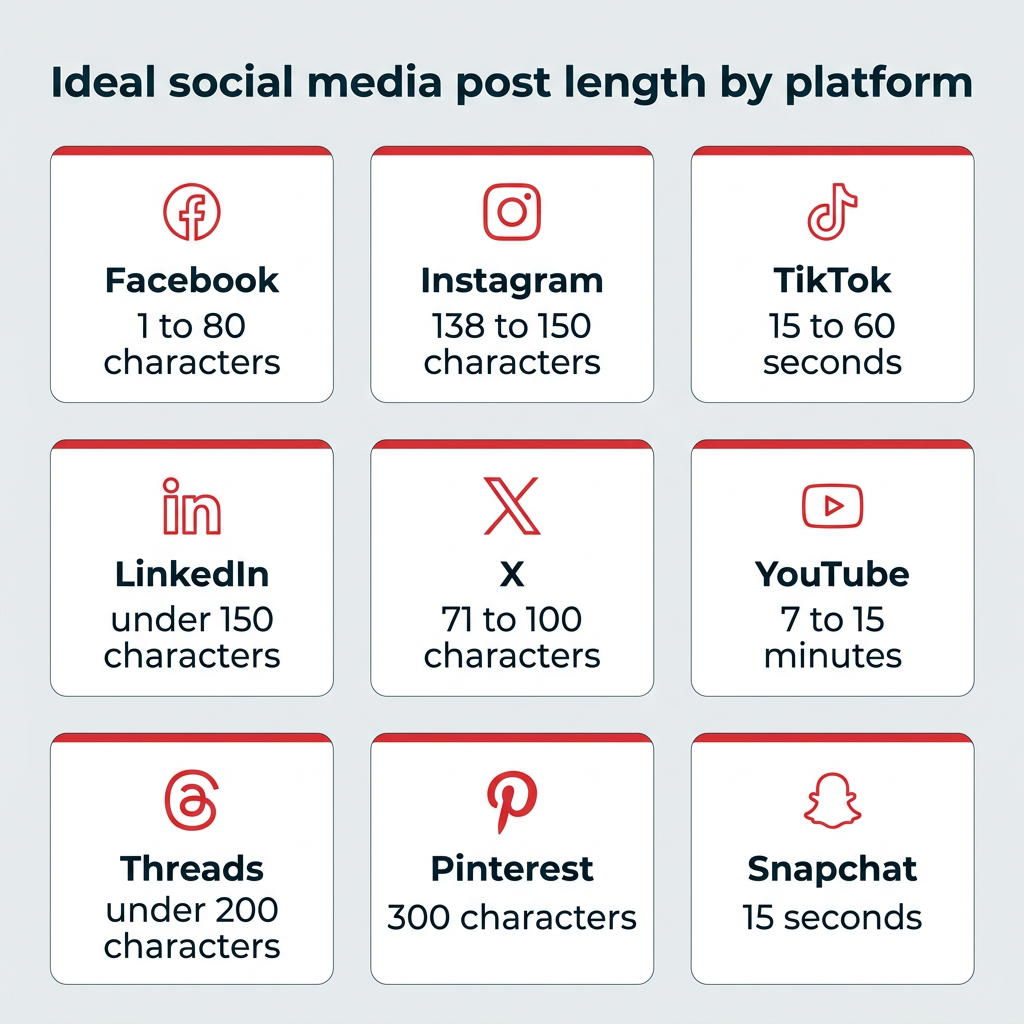
To navigate the current ecosystem, creators must tailor their content to the unique constraints and user behaviors of each platform. Below is the current industry standard for optimal performance:
| Platform | Content Type | Ideal Length |
|---|---|---|
| Organic Post | 1–80 Characters | |
| Organic Caption | 138–150 Characters | |
| TikTok | Organic Video | 15–60 Seconds |
| Post (Above the fold) | < 150 Characters | |
| X (Twitter) | Organic Post | 71–100 Characters |
| YouTube | Long-form Video | 7–15 Minutes |
| Threads | Post | < 200 Characters |
Chronology of Content Optimization
The evolution of post length has mirrored the evolution of the platforms themselves.
- The Early Era (2010–2015): Platforms were defined by rigid constraints—the 140-character limit on Twitter was the gold standard for brevity.
- The Expansion Phase (2016–2020): As platforms sought to keep users on-site longer, character limits increased (Twitter moving to 280, Facebook expanding significantly). However, data from researchers like BuzzSumo revealed that while users could write more, they didn’t necessarily want to read more.
- The Current Era (2025–2026): We have entered the era of the "algorithmic hook." Platforms are now optimized for watch-time and dwell-time. This has created a paradoxical environment where platforms offer more space (e.g., 25,000 characters on X Premium) but reward content that respects the user’s limited time.
Deep Dive: Platform-Specific Strategies
Mastering Facebook Engagement
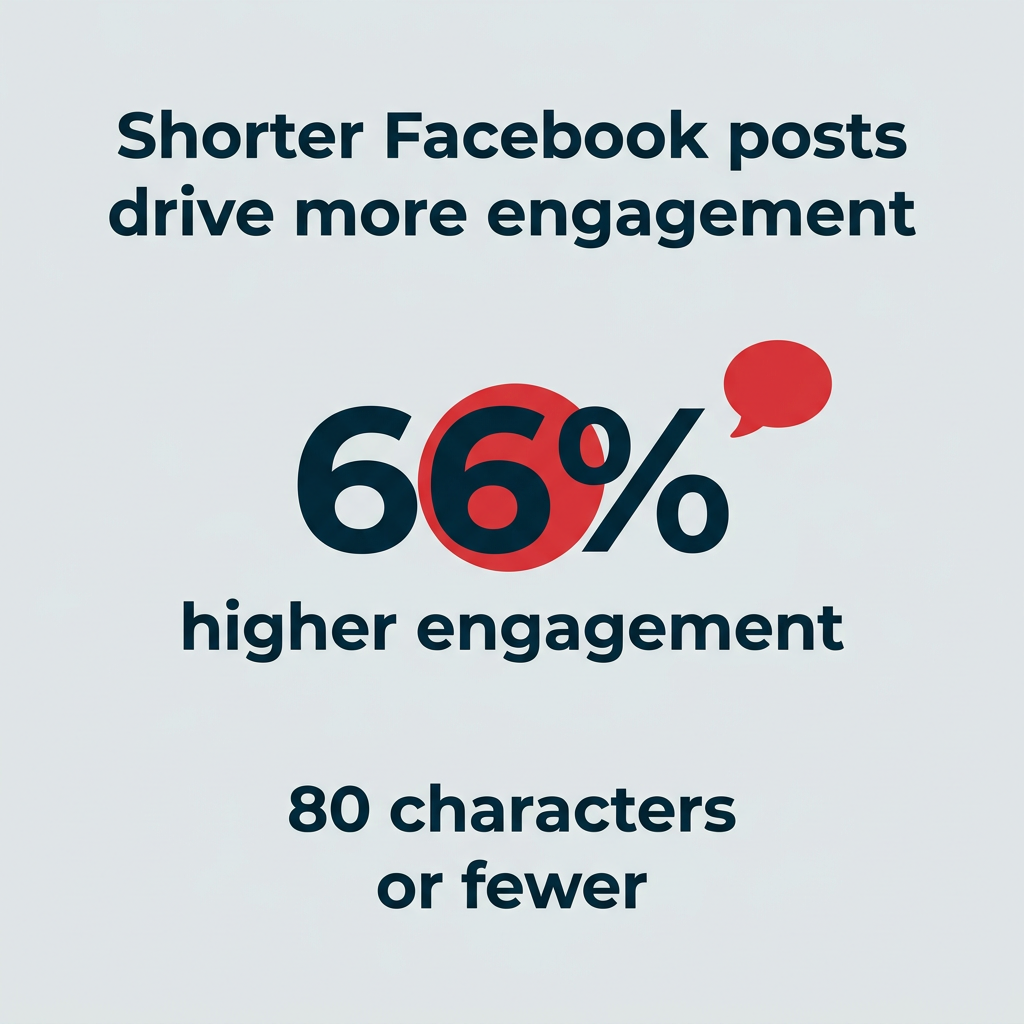
Despite its maturity, Facebook remains a vital channel for 37% of U.S. adults who check the platform multiple times daily. Historical data, including studies of over 800 million posts, shows that posts under 50 characters outperform their longer counterparts by a significant margin. For paid ads, the sweet spot is even narrower: 5 to 19 words. To succeed on Facebook in 2026, brands must prioritize the "above the fold" message.
The Visual Language of Instagram
Instagram is fundamentally a visual medium. While the platform allows for 2,200 characters, the highest engagement rates are found in captions between 138 and 150 characters. For Reels, the 15-to-60-second window remains the "Goldilocks zone." These videos are long enough to provide value but short enough to maintain high completion rates, which the Instagram algorithm rewards with increased visibility.
The TikTok "Watch-Time" Revolution
TikTok has fundamentally changed the game. While users can upload videos up to 10 minutes long, the platform’s algorithm prioritizes watch-time percentage. A 30-second video that is watched to the end will consistently outperform a 3-minute video where the user drops off after 10 seconds. For brands, the advice is clear: lead with a hook in the first second and keep the pacing tight.
Professionalism on LinkedIn
LinkedIn has seen a surge in "document posts" (carousels) and newsletters. However, for standard posts, the 150-character limit remains the boundary for the "See More" cutoff. Interestingly, LinkedIn is the outlier for long-form content; research by Paul Shapiro into top-performing LinkedIn articles suggests that 1,900 to 2,000 words is the ideal length for professional thought leadership that drives high-quality leads and comments.

Official Guidance and Industry Best Practices
Meta, TikTok, and LinkedIn have all moved toward providing tools that help creators optimize their output. Meta’s Ads Manager, for example, is designed to encourage clarity. When drafting ad copy, the removal of adverbs, jargon, and passive voice is the standard for professional copywriters.
Similarly, YouTube’s search-engine-first approach requires a different kind of length management. While titles should be kept to 70 characters to avoid truncation in search results, the video content itself thrives in the 7–15 minute range. This duration allows for sufficient ad insertion while keeping viewer retention stable.
Implications for Future Strategy
The data suggests that the future of social media marketing is not about volume, but about "precision." As AI-driven content generation becomes more prevalent, the ability to synthesize complex ideas into short, high-impact messages will become a competitive advantage.
Key Implications for Marketers:
- Prioritize the Hook: Regardless of the platform, the first 150 characters or the first 3 seconds of video determine your success.
- Use Data, Not Gut Feeling: Use tools to monitor your "See More" click-through rates. If your audience isn’t clicking to expand, your initial hook is failing.
- Respect the Platform’s DNA: Don’t repurpose a 15-minute YouTube essay as a 15-minute Instagram Reel. Edit for the platform’s user behavior.
- Embrace the "5-5-5" Rule: Spend five minutes creating, five minutes engaging with peers, and five minutes responding to your own comments. Engagement is a two-way street that reinforces the algorithmic success of your post length.
Conclusion: The Audience is the Final Arbiter
While these benchmarks provide a reliable framework, they are not immutable laws. The ultimate test of any post length is your specific audience’s response. Use these figures as a starting point, then conduct A/B testing to see what resonates with your unique demographic.
As we move through 2026, remember that your goal is not just to capture attention, but to hold it. By stripping away the unnecessary and focusing on the core value of your message, you ensure that your content remains high-performing in an increasingly noisy digital environment. Whether it’s a 6-character hashtag or a 2,000-word LinkedIn article, the measure of success remains the same: did you provide enough value to justify the time the user spent with you?
Stacey McLachlan is an award-winning digital strategist and editor with over a decade of experience in content optimization. Her work focuses on bridging the gap between algorithmic requirements and human-centric storytelling.