Lina Irawan
The cultural geography of East Asia has long been defined by the profound influence of Chinese civilization. For centuries, the Chinese writing system—known as hanzi—served as the lingua franca of administration, philosophy, and religion across the region. When Japan and Korea adopted these characters, they were not merely importing a tool for record-keeping; they were plugging into a sophisticated intellectual network. Yet, as history unfolded, these nations diverged in their linguistic paths. Today, Japan maintains a complex, multi-script system involving kanji and two phonetic syllabaries, while South Korea primarily utilizes hangul, an alphabet widely regarded as one of the most logical and efficient in the world.
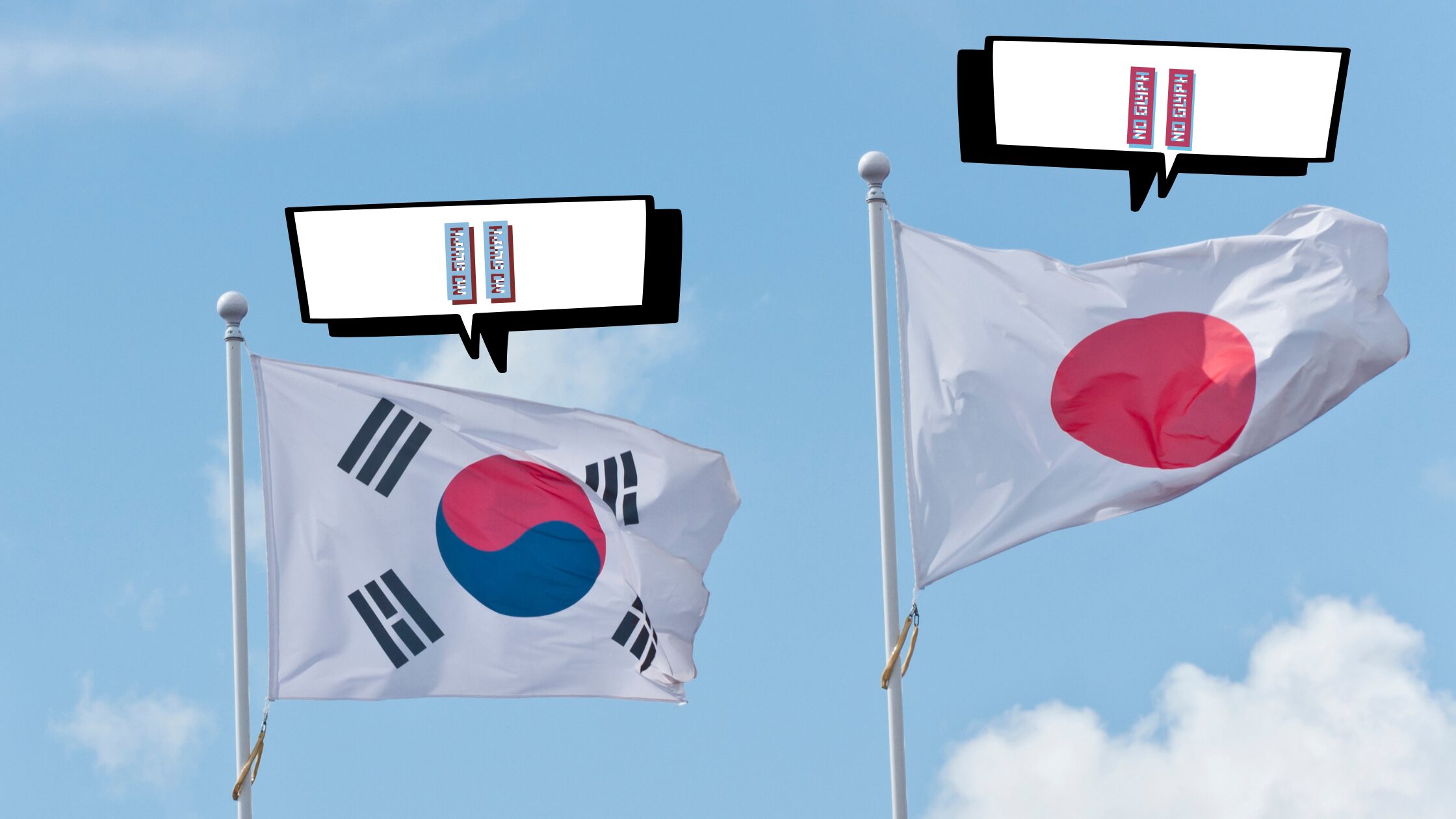
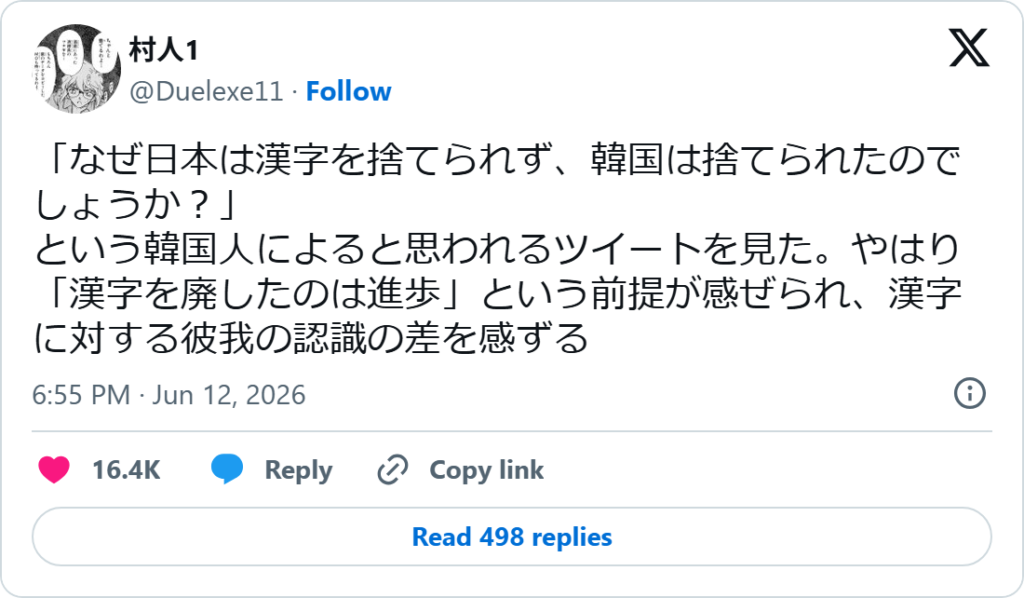
This divergence has recently sparked a fiery, multilingual debate on social media, fueled by a simple yet provocative question: "Why couldn’t Japan abandon kanji while Korea could?" The question touches on the intersection of national identity, colonial trauma, and the pragmatic necessities of language.
The Modern Debate: Is Simplification Always Progress?
The current discourse was ignited by a post on the platform X (formerly Twitter) by user @Duelexe11, who highlighted a sentiment expressed by a Korean observer. The premise was clear: the transition from complex, character-based systems to simplified phonetic alphabets is an objective sign of progress. This assumption, however, triggered an immediate defensive response from Japanese netizens.
The debate quickly exposed a fundamental philosophical clash. Many Japanese participants argued that the Western-centric view—which equates alphabetic scripts with evolution—is a "phonocentric" fallacy. They contend that kanji offer a unique cognitive advantage: higher information density. Because a single character can represent an entire concept, Japanese readers can process complex ideas at a glance, whereas a purely phonetic script might lead to ambiguity in a language saturated with homophones.
One Japanese user demonstrated this by posting a paragraph written entirely in hiragana. The result was a wall of text that was notoriously difficult to parse, proving that while kanji-less writing is possible, it creates significant cognitive friction. A Chinese contributor echoed this, noting that in languages with limited phonetic ranges, characters serve as a vital disambiguation tool. For the Japanese, kanji are not a burden to be shed; they are an essential mechanism for clarity.
A Chronology of Resistance: The Failed Abolitionist Movements
The idea of discarding kanji is not a modern obsession; it has been a recurring theme in Japanese history for over a century. The first notable call for reform came from Maejima Hisoka, the visionary founder of the modern Japanese postal system. In the final years of the Edo period, Maejima submitted a proposal to the last Shogun, Tokugawa Yoshinobu, arguing for the total abolition of Chinese characters. The Shogun, occupied with the collapse of the Tokugawa order, paid little heed to the suggestion.
When the Meiji Restoration ushered in a new era of modernization, the debate intensified. Reformers were driven by a desire to boost national literacy rates to compete with Western powers. Three distinct schools of thought emerged:
- The Gradualist School: Proposed limiting the number of kanji in daily use.
- The Kana-only School: Advocated for the complete abandonment of characters in favor of kana.
- The Romaji School: Argued that Japan should adopt the Latin alphabet to fully integrate into the global community.
Despite these efforts, reform was consistently stymied by the sheer utility of the existing system. Even the most radical thinkers faced a wall of cultural inertia. In the early 20th century, novelist Shiga Naoya even proposed that Japan adopt French as its national language, claiming that the Japanese language was "incomplete and inconvenient." His argument, notably lacking in linguistic rigor and based largely on aesthetic "vibes," failed to gain traction, yet it underscored the desperation felt by some intellectuals to bridge the gap between Japan and the West.
The GHQ Occupation and the 1948 Literacy Survey
The most serious threat to kanji arrived following Japan’s defeat in World War II. The Allied occupation forces (GHQ/SCAP), operating under the belief that kanji were a primary cause of Japan’s "backwardness" and low literacy rates, actively pushed for total abolition.
Newspapers such as the Yomiuri Shimbun began running editorials in support of the move. In 1946, the Japanese Cabinet issued the Tōyō kanji list, which restricted the use of characters to 1,850 as a transitional measure toward complete elimination. However, the occupiers were working from a position of ignorance. They assumed the Japanese populace was largely illiterate, an assumption rooted in racial biases prevalent at the time.
To justify the total removal of kanji, the GHQ commissioned a massive nationwide literacy survey in 1948, involving over 16,000 participants. The results were a shock: the illiteracy rate was found to be a negligible 1.7% to 2.1%. In reality, Japanese literacy had been remarkably high since the late Edo period, thanks to the terakoya (temple schools) that provided education to the masses. By the early 20th century, school enrollment had already reached near-universal levels. The GHQ, faced with empirical evidence that the "difficult" writing system was not actually hindering public education, quietly shelved the plan.
The Homophone Problem and Linguistic Necessity
The fundamental reason kanji survived the postwar purge is practical: the Japanese language is plagued by homophones. Because Japan adopted Chinese characters and compressed Chinese pronunciations into Japanese morae, many different words sound identical.
During the Meiji period, the explosion of wasei-kango—new compounds created to translate Western concepts like "society" (shakai) or "rights" (kenri)—further cemented the necessity of kanji. Without these visual anchors, written Japanese would suffer from severe semantic ambiguity. By the time the Japanese Language Council chairman, Morito Tatsuo, declared in 1965 that total abolition was "inconceivable," the battle was effectively over. The 1981 transition from Tōyō kanji to the more flexible Jōyō kanji list, later expanded in 2010 to 2,136 characters, solidified the role of kanji as an permanent fixture of Japanese life.
The Korean Exception: Colonialism and Identity
Korea’s path was markedly different. King Sejong the Great created hangul in the 15th century to empower his people, famously stating that a wise man could learn it in a morning. Yet, for nearly 450 years, the Confucian elite suppressed it, labeling it "vulgar" and a tool for the uneducated.
The transformation occurred in the crucible of the 20th century. During the Japanese occupation (1910–1945), hangul became a powerful symbol of Korean nationalism and resistance. While kanji (known as hanja in Korea) were associated with the colonial power and the old order, hangul represented the soul of the nation.
Following the division of the peninsula, North Korea moved quickly to purge hanja from daily life by 1949. South Korea followed a more erratic path, including a brief, unsuccessful ban on hanja education in the 1970s. Today, South Korea is a "hangul-first" society. Because Korean phonology adapted more gracefully to Chinese loanwords, the homophone issue is less acute than in Japanese, making a purely phonetic script viable for daily communication.
Implications and the Future
The current status of these two systems reflects two very different approaches to modernization. Japan has successfully integrated a foreign writing system into its national identity, transforming it into a hallmark of its unique literary culture. South Korea, conversely, reclaimed its indigenous script as an act of decolonization and democratization.
For the modern language learner, the implications are stark. While the "Hangul Generation" in South Korea now faces challenges in reading historical texts and understanding the etymological roots of their vocabulary, they benefit from a highly accessible, efficient writing system. Japan, meanwhile, remains a bastion of character-based complexity. For those aspiring to fluency in Japanese, the task of mastering thousands of kanji remains the unavoidable price of entry—a gatekeeper that ensures the language remains a deeply traditional, yet constantly evolving, reflection of the Japanese spirit.
As the Romaji Association finally folded in 2023, the last organized movement to strip kanji from the Japanese language officially vanished. The writing on the wall is clear: kanji are here to stay.


 Neng Nana
 Asro
Asro