

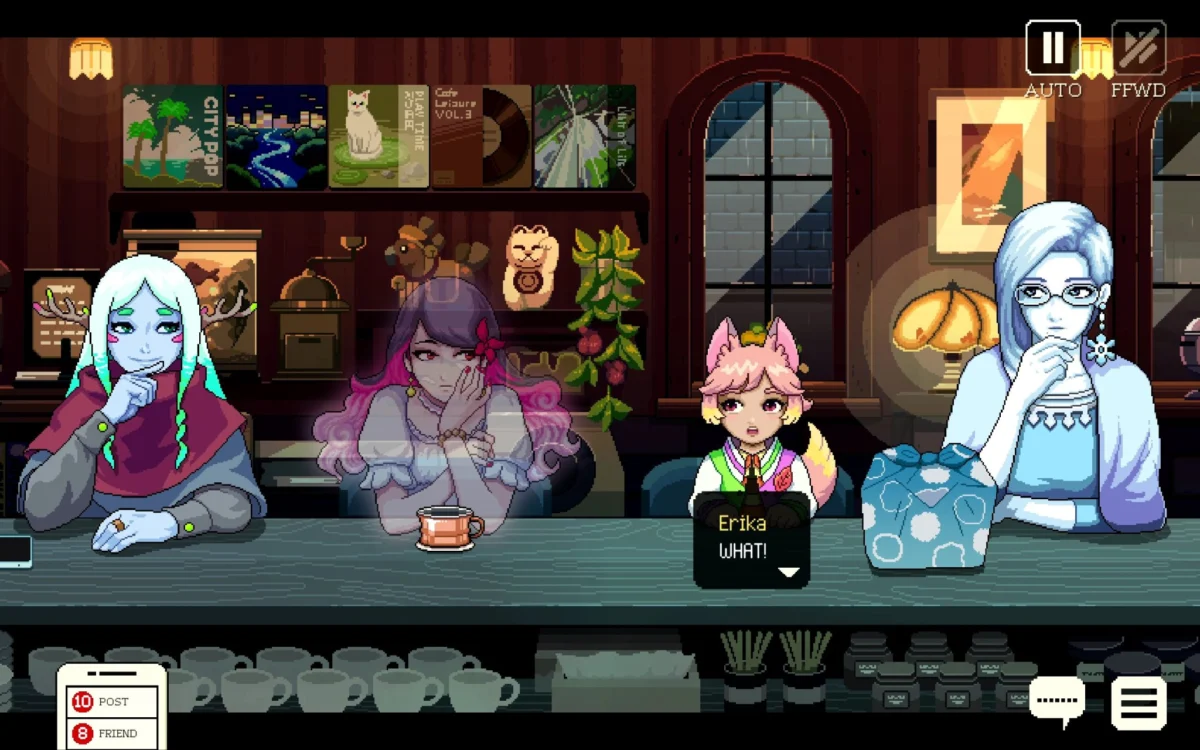
In the modern landscape of gaming, where high-octane action and complex competitive mechanics often dominate the headlines, there remains a quiet, persistent demand for spaces that offer sanctuary. We all, at times, seek a familiar, safe harbor—a location that feels as comfortable as home, even when we find ourselves physically or emotionally far away from it. This is the core philosophy behind the Coffee Talk series, a franchise that has carved out a unique niche by blending the mundane rituals of service with the extraordinary lives of the supernatural. With the release of Coffee Talk Tokyo, the series trades the rain-slicked, melancholic streets of Seattle for the humid, vibrant energy of a Japanese summer, proving that while the scenery may change, the cathartic warmth of a shared beverage remains a universal constant.
Main Facts: A New Setting, A Familiar Comfort
Coffee Talk Tokyo serves as the latest entry in the beloved visual novel and simulation series. Developed for those who appreciate a slower, more deliberate pace of storytelling, the game tasks players with acting as the proprietor of a late-night cafe. In this world, the boundaries between the human and the supernatural are porous; legendary creatures from folklore walk among us, grappling with the same stressors that define the modern human experience: economic instability, family expectations, identity crises, and the search for connection.
Unlike its predecessors, Coffee Talk Tokyo shifts its focus to the bustling, sweltering streets of Japan. This geographic shift brings with it a fresh cast of characters, each meticulously designed to reflect both their mythological origins and their contemporary struggles. For fans of the series, the game feels like a homecoming; for newcomers, it serves as an accessible entry point into a world where empathy is the primary mechanic. The game remains a "sip of pure contentment," balancing the art of barista work with the weight of narrative depth.
Chronology: The Evolution of the Barista’s Journey
The Coffee Talk franchise began as a modest but impactful indie project, quickly gaining a reputation for its "cozy" aesthetic and lo-fi soundscapes.

- The Seattle Era: The original Coffee Talk and its follow-up, Coffee Talk Episode 2: Hibiscus & Butterfly, established the foundation. Players learned the ropes of coffee brewing and latte art, serving as a confidant to a variety of fantasy races—elves, succubi, and orcs—all navigating urban life. These titles established the "loop" of the series: listen to the customer, brew the drink that mirrors their emotional state, and watch the story unfold.
- The Transition to Tokyo: With Coffee Talk Tokyo, the developers have expanded upon the successful formula. The timeline of the series remains nebulous, existing in a version of our world that is simultaneously familiar and magical. The transition to Tokyo marks a thematic pivot toward the specific cultural pressures of Japanese society, such as the conbini (convenience store) work culture and the complexities of being an expat in a rigid society.
- The Modern Iteration: The current release introduces refined mechanics, including "hot" and "cold" drink variants, and a more robust social media integration that rewards players for exploring the nuances of their patrons’ digital footprints.
Supporting Data: The Cast and the Craft
The strength of Coffee Talk Tokyo lies in its character-driven narrative. The writing team has crafted a roster that feels lived-in and authentic, despite the inclusion of mythical beings. Consider, for instance, the central family dynamic: a Japanese woman supporting her family as the primary breadwinner, alongside her British "house husband." Their primary conflict involves their Kitsune daughter, who is navigating the social isolation of the school system while desperately trying to shield her parents from the truth.
This is juxtaposed against a variety of other archetypes:
- The Retired Kappa: A salaryman forced to contemplate his worth after a lifetime of corporate service.
- The Nopperabo Entrepreneur: A junior to the Kappa who is attempting to innovate the market with emoting goggles, bridging the gap between his faceless nature and human expression.
- The Yuki Onna Restaurateur: A character navigating the heavy burden of grief while maintaining the public face of a successful business owner.
- The Mizuchi Musician: A talented artist suffering from creative burnout, struggling to find relevance after losing his spiritual home.
These characters are not merely window dressing. Their interactions, aided by the player’s choice of beverage, determine the trajectory of their personal arcs. The "Endless" game mode provides a space for players to practice their craft without the pressure of the main storyline, ensuring that the act of making drinks—complete with a stencil-based latte art system—remains satisfying regardless of the narrative stakes.
Official Responses and Creative Direction
The development team has been vocal about their desire to keep the series focused on "the quiet moments." By bringing back composer Andrew Jeremy, who has been instrumental in defining the Coffee Talk sound, the studio has ensured that the auditory experience remains as cohesive as the visual one. The lo-fi soundtrack acts as a crucial buffer for the player, facilitating a meditative state that allows the heavier themes of the script to land with greater impact.
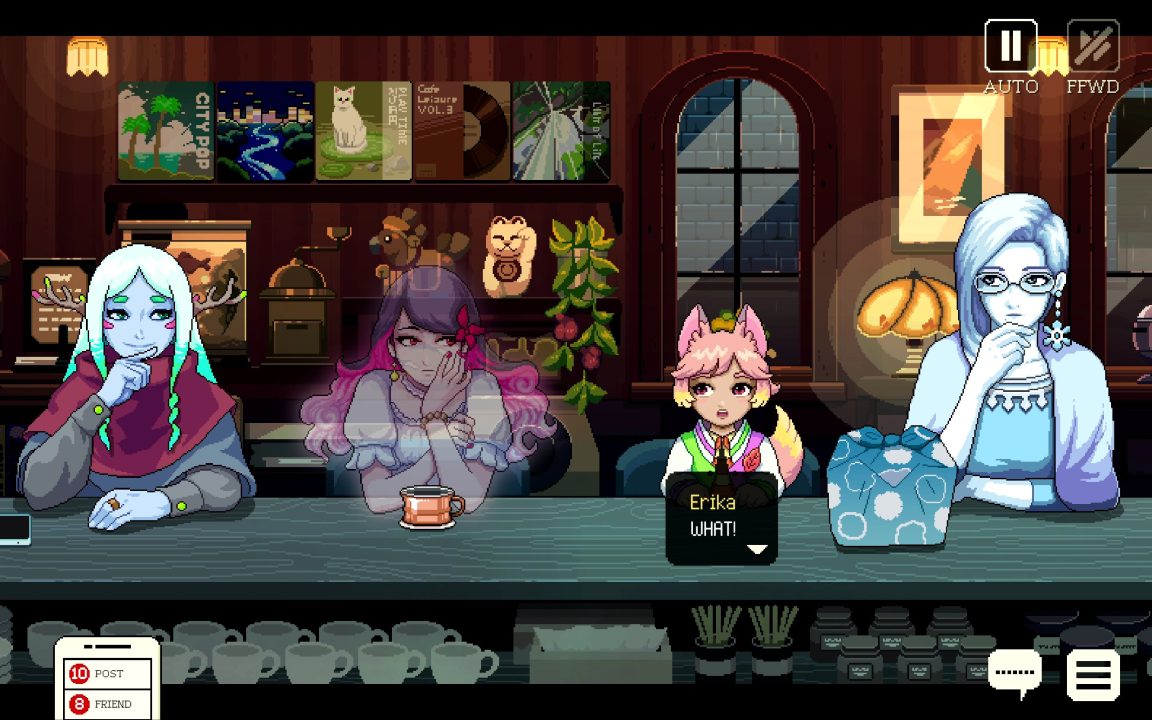
From a technical standpoint, the game is a polished product. The pixel art has seen a marked improvement, with the developers opting for more expressive, fluid animations for the sprites. The UI design, often a point of contention in visual novels, has been praised for its clarity. During testing on hardware such as the Steam Deck, the game performed flawlessly, proving that the developers prioritized accessibility and optimization for a wide range of platforms. The script, a massive undertaking given the branching dialogue paths, remains remarkably error-free, a testament to the rigorous quality control applied to the narrative design.
Implications: Why We Need ‘Coffee Talk’ Now More Than Ever
The implication of Coffee Talk Tokyo’s success is a clear indicator of the gaming industry’s shifting priorities. Players are increasingly gravitating toward "cozy" games that prioritize emotional intelligence over combat prowess.
The Therapeutic Potential of Gaming
The game functions as a low-stakes simulator for empathy. By requiring the player to "read" a character—interpreting their vague requests and emotional cues to craft the perfect drink—the game mirrors the real-world challenge of active listening. When a player successfully serves a drink that comforts a character, they are rewarded not with experience points or currency, but with a deeper piece of dialogue and a moment of human (or supernatural) connection.
Replayability and the ‘Cozy’ Loop
The inclusion of hidden scenes, social media cameos, and the "Endless" mode ensures that the game has a long shelf life. The developers understand that their audience is not looking for a "win" state in the traditional sense, but rather a "complete" experience. By allowing players to revisit days and fast-forward through dialogue, the game removes the frustration of repetition, allowing for a stress-free exploration of all possible outcomes.

Cultural Representation
By placing the story in Tokyo, the game engages with the specific anxieties of modern Japanese life. It portrays the struggles of the "salaryman" and the overworked service clerk with a sense of dignity. It does not treat these struggles as exotic, but rather as universal human conditions that are simply exacerbated by the specific cultural and societal pressures of the setting.
Conclusion: A Refill Worth Having
Coffee Talk Tokyo is more than just a sequel; it is a refinement of a philosophy. It reminds us that our stories are often best told over a warm cup, in the quiet hours of the night, in the company of those who are willing to listen. Whether you are a veteran of the rainy Seattle nights or a newcomer stepping into the cafe for the first time, this game offers a space that is as inviting as it is thought-provoking.
In an era of relentless digital noise, Coffee Talk Tokyo invites us to slow down. It asks us to look at the people around us—the salaryman, the student, the stranger—and realize that everyone is carrying a weight we cannot see. By serving them a warm drink and listening to their stories, we find that we aren’t just playing a game; we are participating in a small, digital act of kindness. Coffee Talk Tokyo is, without a doubt, one refill that no fan of the genre should miss. It is a masterpiece of cozy gaming, a testament to the power of a simple, well-brewed cup of coffee, and a gentle reminder that even in the most mundane of settings, there is always room for magic.












No comments yet. Be the first to join the conversation!