

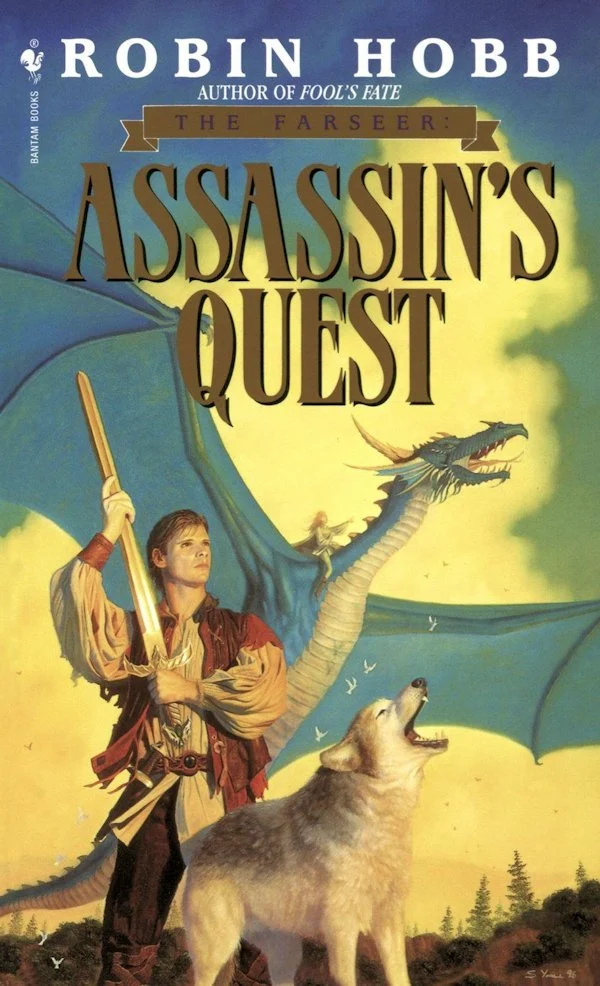
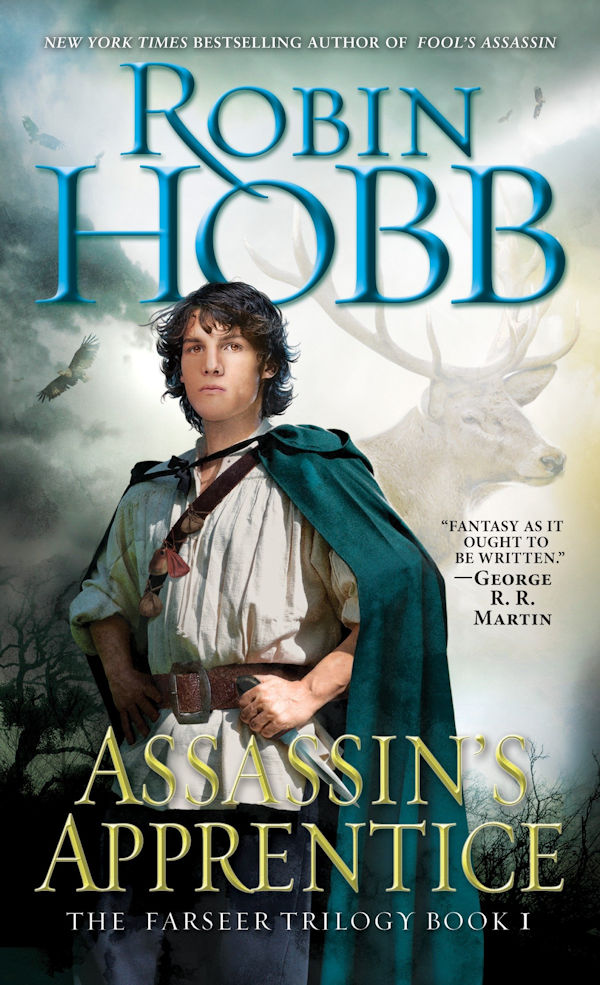
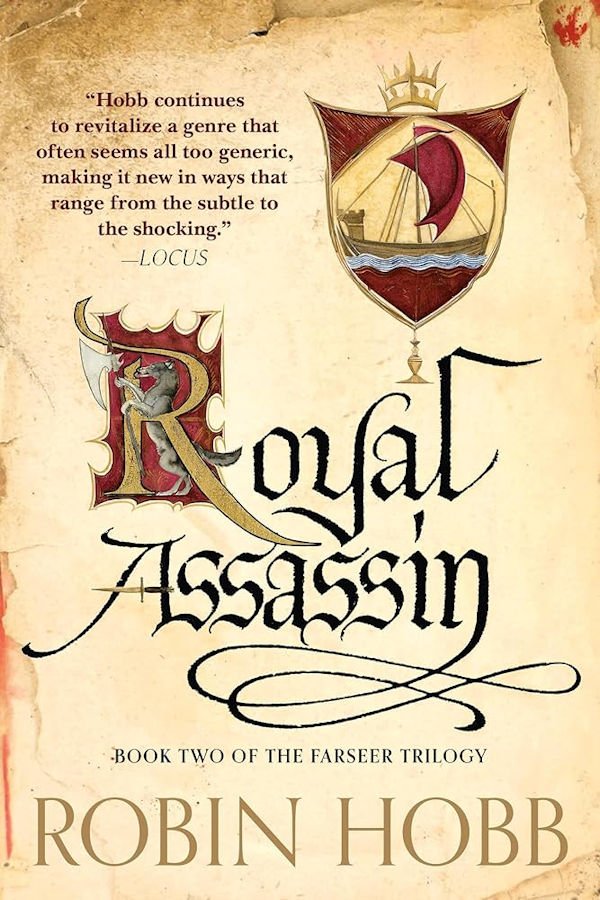
Robin Hobb’s The Farseer trilogy—comprising Assassin’s Apprentice (1995), Royal Assassin (1996), and Assassin’s Quest (1997)—remains a cornerstone of high fantasy. While its grim, courtly intrigue and slow-burn character studies are traditionally categorized alongside the works of George R.R. Martin or Tad Williams, a modern lens reveals a surprising truth: Hobb was writing the DNA of what we now identify as "romantasy" decades before the genre claimed its dominance on the New York Times bestseller lists.
The Evolution of a Genre: Beyond the Sword and Sorcery
At first glance, the tumultuous life of FitzChivalry Farseer bears little resemblance to the hyper-focused, emotionally volatile, and physically charged narratives found in modern hits like Rebecca Yarros’s The Empyrean series or Sarah J. Maas’s A Court of Thorns and Roses. In The Farseer trilogy, romance is rarely the primary driver of the plot. The fate of the Six Duchies—besieged by the Red Ship Raiders—looms large, and the political machinations of the Farseer line often demand that personal desires be sacrificed for the crown.
Yet, to dismiss Hobb’s influence is to ignore the structural parallels that underpin the current success of romantasy. The enduring power of Hobb’s work stems from the same core tenet that drives the modern boom: the prioritization of the protagonist’s internal emotional landscape over the external mechanics of saving the world.
Chronology of a Masterpiece
The publication of the trilogy marked a turning point in 1990s fantasy, moving away from the "chosen one" tropes of the era toward a more nuanced, psychological approach to heroism:
- 1995: Assassin’s Apprentice – Introduced the world to Fitz, a royal bastard trained in the arts of assassination. The book established the "reluctant hero" archetype that has become a staple of contemporary fiction.
- 1996: Royal Assassin – Deepened the internal conflict of the protagonist, focusing on the tension between duty and love, and solidified the enigmatic, transformative relationship between Fitz and the Fool.
- 1997: Assassin’s Quest – Concluded the trilogy with a sprawling, soul-searching journey that prioritized personal catharsis and the cost of power over simple victory.
These works did not just tell a story; they created an emotional blueprint. By utilizing a first-person perspective, Hobb allowed readers to inhabit the agonizing decisions of her protagonist, a technique now essential to the immersive, high-stakes nature of modern romantasy.
Supporting Data: The Anatomy of Character-Driven Fantasy
The success of both The Farseer trilogy and current romantasy staples rests on three pillars:
1. The Power of First-Person Intimacy
In modern romantasy, the reader is locked inside the protagonist’s head, experiencing every heartbeat, betrayal, and longing. Hobb pioneered this intimacy with Fitz. Without this direct line to his psyche, his "irrational" choices—such as choosing vengeance over royal duty or prioritizing his bond with a wolf over the safety of the kingdom—might have alienated the audience. Instead, these choices deepen the connection. We forgive the character’s flaws because we understand the trauma that necessitates them.
2. Relationships as Narrative Engines
While romantasy often centers on the "slow-burn" romance, Hobb centers on the "slow-burn" connection. The relationship between Fitz and the Fool is perhaps the most sophisticated example in fantasy literature. It encompasses tropes now synonymous with the genre: forced proximity, a deep, soul-level understanding between two outcasts, and the juxtaposition of sharp-tongued cruelty with profound, self-sacrificing love.
3. Magic as a Metaphor for the Self
In many contemporary series, magic is an extension of the character’s emotional state. Hobb’s dual systems—the Wit and the Skill—function exactly this way. The Wit (the forbidden, animalistic connection) and the Skill (the noble, but isolating, mental projection) are not just plot devices; they are metaphors for Fitz’s struggle to belong. They represent the duality of human nature, a theme that modern authors have adopted with fervor to heighten the emotional stakes of their protagonists’ journeys.
Official Perspectives: The Philosopher’s Take
Hobb’s mastery lies in her ability to ground grand, high-stakes fantasy in the mundane reality of human existence. As noted in Royal Assassin, the Fool challenges Fitz’s perception of what constitutes a "great life":
"Not all men are destined for greatness," I reminded him.
"Are you sure, Fitz? Are you sure? What good is a life lived as if it made no difference at all to the great life of the world? A sadder thing I cannot imagine… No, Fitz, this is life. And no one has time not to think of such things. Each creature in the world should consider this thing, every moment of the heart’s beating."
This sentiment echoes the modern romantic mandate: the idea that personal happiness, internal growth, and the connections we forge with others are just as valid—and just as "epic"—as the overthrowing of a tyrant.
Implications for the Modern Literary Landscape
Does this mean Robin Hobb is the "mother of romantasy"? While literary history is rarely so linear, the parallels are undeniable. Modern authors have refined the focus on romance, but they are building on a foundation that Hobb laid down: the belief that the reader will follow a character anywhere, provided they are allowed to feel every beat of that character’s heart.
The industry has taken notice. The shift toward character-centric, high-emotion fantasy has moved the needle on what is commercially viable. Publishers now prioritize the "internal arc" as much as the "world-building arc." Hobb’s success proved that readers crave the vulnerability of the hero as much as their power.
Why It Matters
When a character in a modern bestseller chooses their partner over their nation, the reader understands it not because it is "correct," but because they have been trained to value that emotional intimacy. This is the "Hobb effect." It is the reason why, decades later, The Farseer trilogy remains a touchstone for new writers.
As we look at the current boom in genre fiction, we see the echoes of Fitz’s internal monologue everywhere. We see it in the way magic systems are tethered to trauma, in the way "found family" dynamics are elevated to the level of epic destiny, and in the refusal to let the hero be a blank slate.
Conclusion: The Enduring Wisdom
Robin Hobb’s work continues to serve as a reminder that the most dangerous, most magical, and most rewarding thing one can do is to truly see another person. Whether through the lens of a romantic partner or a lifelong companion like the Fool, the core of the fantasy genre remains the human condition.
As the genre continues to evolve, we would do well to keep Hobb’s advice at the forefront of our reading:
"Don’t do what you can’t undo, until you’ve considered what you can’t do once you’ve done it."
In the world of fantasy—and particularly in the passionate, high-stakes world of modern romantasy—that consideration is the difference between a story that fades and a story that lasts a lifetime. Hobb’s trilogy is firmly the latter, standing as a testament to the fact that while wolves may have no kings, the readers certainly have their queens of fantasy.










No comments yet. Be the first to join the conversation!