Published Jul 4, 2026, 7:00 PM EDT
By Aimee Hart
WARNING: This article contains significant spoilers from George R.R. Martin’s Fire & Blood and speculation regarding future events in House of the Dragon season 3.
In the brutal tapestry of Westerosi history, few conflicts are as devastating or as thoroughly documented in their savagery as the Dance of the Dragons. Ryan Condal, as showrunner for HBO’s House of the Dragon, has consistently demonstrated an unflinching commitment to portraying the grim realities of this Targaryen civil war, a fidelity rooted deeply in George R.R. Martin’s source material, Fire & Blood. As season 3 progresses, the body count is anticipated to rise dramatically, yet not all casualties occur on the battlefield. The tragic and often-debated demise of Queen Helaena Targaryen, a figure of fragile innocence caught in the maelstrom of dynastic ambition, stands as a poignant testament to the war’s far-reaching cruelty.
Helaena, daughter of King Viserys I and Queen Alicent Hightower, and the sister-wife of the usurper King Aegon II, embodies the quintessential victim of a conflict she neither sought nor understood. Her simple desire to "keep chickens," a stark contrast to the dragons and political machinations surrounding her, paints a picture of a soul ill-suited for the viper’s nest of King’s Landing. As the conflict intensifies and Rhaenyra Targaryen’s "Blacks" consolidate their power, Helaena’s fate becomes a critical, yet ambiguous, point in the narrative, shrouded in speculation within Fire & Blood and presenting a significant adaptive challenge for the television series. Her story, whether ending in suicide, assassination, or a tragic accident, underscores the profound personal cost of the Dance of the Dragons.
The Unfolding Tragedy: Helaena’s Fate in Fire & Blood
The chronicle of the Dance of the Dragons, as presented in Fire & Blood, is a testament to both the grandeur and the horrific cost of power. It is a narrative meticulously crafted through the often-conflicting accounts of in-universe historians, maesters, and chroniclers, each offering their perspective on events that shaped the Seven Kingdoms. While the exact circumstances may be debated, all agree on one devastating fact: Helaena Targaryen’s life met a tragic end shortly after Queen Rhaenyra Targaryen’s triumphant, yet fleeting, conquest of King’s Landing.
The Fall of King’s Landing and Helaena’s Imprisonment
Following the fierce naval engagement known as the Battle of the Gullet, which saw significant losses for Rhaenyra’s forces but ultimately cleared the path to the capital, King’s Landing itself fell to the "Blacks" with surprising swiftness. Aegon II, wounded and demoralized, fled the city, leaving his mother, Queen Alicent, and his sister-wife, Helaena, along with their remaining children, to face Rhaenyra’s wrath.
Helaena, already deeply scarred by the murder of her eldest son, Jaehaerys, at the hands of Blood and Cheese, found herself a prisoner within the very walls that had once afforded her regal protection. Confined to Maegor’s Holdfast within the Red Keep, she was a queen in name only, stripped of her freedom and subjected to the psychological torment of captivity. Her already fragile mental state, marked by her prophetic "dreamer" tendencies and a general disinterest in the cutthroat politics of the court, deteriorated further under the oppressive weight of her circumstances. The joyous arrival of Rhaenyra and her Black Council marked not a new dawn for the realm, but a deeper descent into despair for Helaena.
The Fatal Plunge: A Death Amidst Despair
As detailed in the chapter "The Dying of the Dragons: Rhaenyra Overthrown," the chroniclers are unified in the manner of Helaena’s physical death, if not its underlying cause. It is recounted that Helaena, in an act of profound desperation, "threw herself from her window in Maegor’s Holdfast." Her fall was horrific, ending as she was "impaled upon the iron spikes that lined the dry moat below." The imagery is stark, brutal, and unforgettable, a grim punctuation mark on a life defined by an almost ethereal detachment from the harsh realities of her world. Her death, regardless of the catalyst, was a public spectacle of tragedy, immediately becoming a flashpoint for dissent and further fueling the fires of the civil war.
Multiple Narratives: The Speculation Surrounding Helaena’s Demise
The narrative framework of Fire & Blood, where events are filtered through the subjective lenses of various historical accounts, allows for a rich tapestry of interpretation, particularly around controversial or ambiguous moments. Helaena’s death is perhaps the most prominent example of this narrative strategy. Grand Maester Munkun, Septon Eustace, and the common folk of King’s Landing each offer compelling, yet differing, explanations for her final act, leaving the definitive truth elusive and open to speculation.
Grand Maester Munkun’s Account: The Weight of Brutality
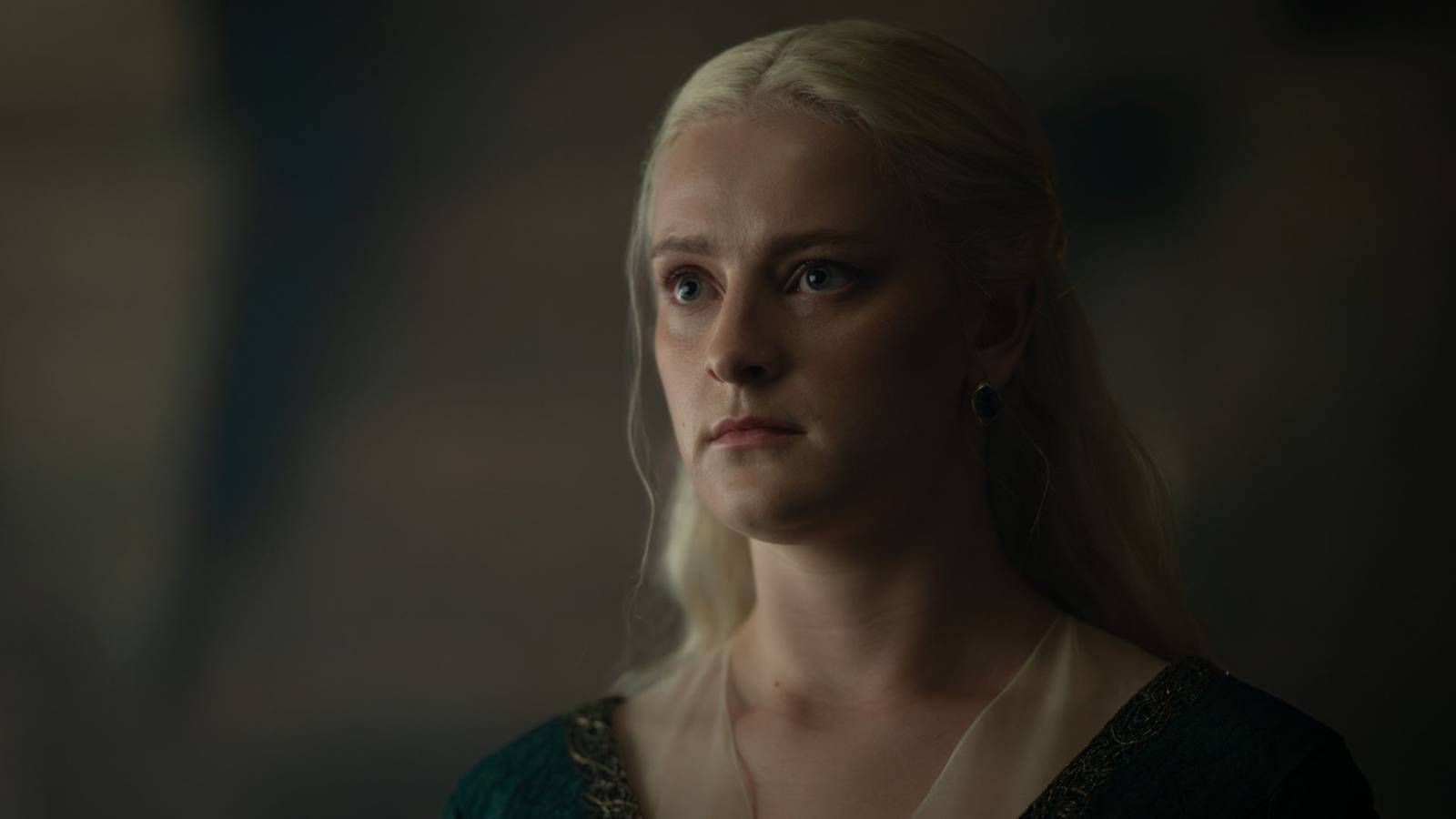
Grand Maester Munkun, in his The Dance of the Dragons, A True Telling, attributes Helaena’s suicide to the immediate horrors she witnessed while imprisoned. According to Munkun, Helaena was profoundly affected by the public hangings of Ser Thoron and Ser Denys, two knights who had attempted to liberate Lord Corlys Velaryon from Rhaenyra’s custody in the Red Keep.
Helaena, known for her gentle disposition and sensitive nature, would have been ill-equipped to process such a brutal display of justice. Her life, though regal, had been largely sheltered from the raw savagery of war and punishment. The sight of men dying violently, particularly in a manner so public and final, could easily have shattered her already fragile psyche. Munkun’s account suggests a death born of trauma and despair, a soul simply unable to bear the weight of the encroaching darkness. It paints Helaena as a victim of circumstance, overwhelmed by the cruelty unfolding around her.
Septon Eustace’s Version: Grief and the Loss of Maelor
Septon Eustace, whose chronicles often lean towards moralistic interpretations, provides a far more personal and heartbreaking reason for Helaena’s suicide. He claims that Mysaria, Rhaenyra’s enigmatic Mistress of Whispers, delivered the devastating news of her youngest son, Maelor, to Helaena.
Maelor’s fate was one of the most gruesome atrocities of the Dance. While attempting to escape from King’s Landing with his protector, Ser Rickard Thorne, the young prince was intercepted by a vengeful mob at Bitterbridge. In a horrific act of mob violence, Maelor was torn apart, his body dismembered as the commoners fought over his dragon egg. This unspeakable act, fueled by the widespread resentment towards the Targaryens and the Green faction, would have been a catastrophic blow to Helaena, who had already endured the murder of Jaehaerys. Septon Eustace’s narrative suggests that the revelation of Maelor’s brutal end, delivered by Mysaria with calculated cruelty, pushed Helaena beyond the brink of endurance, leading her to seek an escape from unimaginable grief in death. This account highlights the profound maternal bond and the unbearable pain of losing a child in such a barbarous manner.
The Dark Whispers of King’s Landing: The Shadow of Assassination
Beyond the more "official" accounts of the maesters and septons, Fire & Blood also includes the chilling "whispers" of the common folk within King’s Landing. These rumors, often darker and more cynical, suggested that Helaena’s death was not self-inflicted but rather an assassination orchestrated by Rhaenyra herself.
According to these dark whispers, Rhaenyra, seeking to inflict maximum suffering upon the Green faction and send a grim message to Prince Daeron the Daring (who was still a threat), ordered Helaena’s death. This version portrays Rhaenyra as a queen consumed by vengeance, willing to stoop to the cruelest acts to assert her authority and punish her rivals. If true, it would profoundly darken Rhaenyra’s character, painting her as a merciless tyrant rather than a wronged queen. This theory also highlights the political paranoia prevalent in King’s Landing during Rhaenyra’s short, tumultuous reign, where fear and suspicion permeated every corner of the court. It casts a long shadow over Rhaenyra’s legacy, implying a capacity for calculated cruelty that aligns with the escalating brutality of the war.
Helaena’s Prophetic Mind and Mental State
Beyond these external factors, Helaena’s unique character as a "dreamer" must also be considered. Her cryptic prophecies, often dismissed as nonsensical ramblings, frequently foreshadowed tragic events. Living with such an acute sensitivity to impending doom, coupled with the traumatic events of the war (Blood and Cheese, her captivity, the ongoing violence), would undoubtedly have taken a severe toll on her mental health. It is plausible that her death, whether by her own hand or forced, was the culmination of a profound psychological breakdown, a desperate attempt to escape a reality that had become too unbearable for her prophetic and gentle spirit to endure. Her dreams, once a source of mysterious insight, likely became a torment, showing her the horrors before they fully manifested.
From Page to Screen: House of the Dragon‘s Adaptive Approach
The transition of Fire & Blood to the screen presents Ryan Condal and the House of the Dragon creative team with both opportunities and challenges. While committed to the spirit of Martin’s narrative, the show has already demonstrated a willingness to diverge from the book’s events for dramatic impact, character development, or to offer clearer answers to the ambiguities presented in the source material. Helaena’s death is a prime candidate for such an adaptation.
Ryan Condal’s Adaptive Philosophy
Condal has often spoken about the delicate balance of adaptation: honoring the essence of the source material while crafting a compelling visual narrative. This means making choices where Fire & Blood‘s multi-perspectival, often contradictory, accounts are distilled into a single, definitive on-screen reality. For Helaena, this implies that the show will likely choose one of the speculative reasons for her death, or perhaps even invent a new one, to provide a clear, impactful resolution to her storyline.

Precedents for Divergence: The Case of Laenor Velaryon
The most significant divergence from Fire & Blood thus far has been the "death" of Laenor Velaryon. In the book, Laenor is unequivocally murdered by his lover, Ser Qarl Correy, at Daemon Targaryen’s behest, to clear the way for Daemon to marry Rhaenyra. The show, however, presented a dramatically altered version: Laenor’s death was faked, allowing him to escape to Essos with Ser Qarl and live a life free from the constraints of Westerosi politics.
This change served several purposes: it softened Daemon and Rhaenyra’s complicity in murder, provided a happier ending for a sympathetic character, and highlighted the show’s capacity for unexpected twists. This precedent is crucial when considering Helaena’s fate. If the show was willing to spare Laenor, could it, in theory, alter Helaena’s trajectory? While a full survival seems highly improbable given the profound impact of her death on the subsequent narrative, the manner and reason for her death are certainly open to creative interpretation.
The Absence of Maelor in the Show
Another significant point of divergence, as noted in the original article, is the apparent absence of Maelor, Aegon and Helaena’s youngest son, in the television series. In Fire & Blood, Maelor’s brutal death at Bitterbridge is a primary catalyst for Septon Eustace’s account of Helaena’s suicide. By removing Maelor from the narrative, the show eliminates a key emotional trigger for Helaena’s grief-driven suicide.
This necessitates that if Helaena’s death is to be portrayed as self-inflicted, the show must establish alternative, equally powerful motivators. These could include the cumulative trauma of the war, the loss of Jaehaerys, the profound psychological impact of her captivity, the breakdown of her family, or perhaps even her prophetic abilities showing her no escape from the endless cycle of violence.
The Current State and Potential Interpretations in House of the Dragon
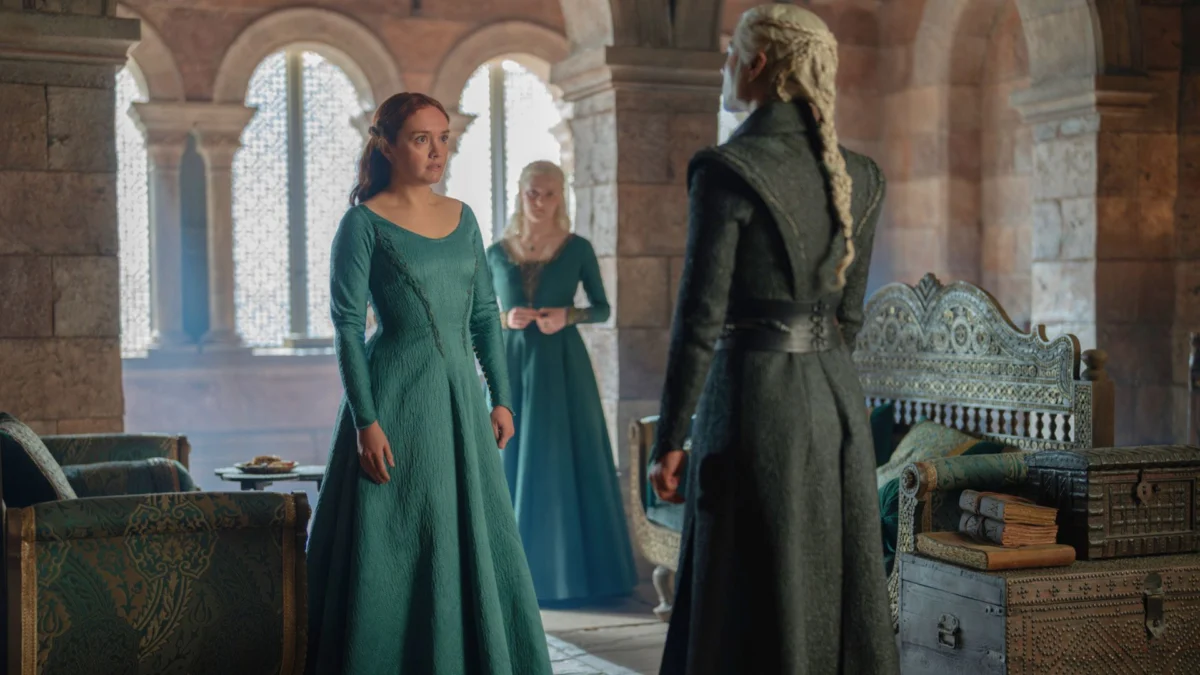
As of the current point in the show’s narrative, Helaena Targaryen is alive but has been captured alongside her mother, Alicent Hightower, following Rhaenyra’s successful takeover of King’s Landing. This sets the stage for her impending doom, placing her squarely in the perilous position that precedes her death in the books.
The show has several avenues to explore for Helaena’s ultimate fate:
- Trauma-Induced Suicide: Without Maelor, the show could emphasize the sheer psychological torment Helaena endures. The murder of Jaehaerys, the constant threat to Jaehaera, the betrayal, the imprisonment, and her inherent sensitivity could collectively drive her to take her own life. This would be a poignant exploration of mental health in wartime, a theme often overlooked in fantasy narratives.
- A Definitive Assassination: The show could choose to confirm the "dark whispers" and definitively portray Rhaenyra, or a member of her Black Council (perhaps Mysaria acting on her own initiative or Rhaenyra’s implicit command), ordering Helaena’s death. This would make Rhaenyra a more morally complex and ruthless figure, cementing her image as a queen capable of great cruelty. It would also remove all ambiguity, providing a clear villain for this particular tragedy.
- Accidental Death During an Escape Attempt: A completely new interpretation could see Helaena attempting to escape her captivity, perhaps driven by a desire to protect Jaehaera, and suffering an accidental fall from the window. This would retain the visual of her death from the book but shift the agency and intent, making it a tragic accident rather than suicide or murder.
- Focus on Alicent’s Perspective: Whatever the cause, Helaena’s death will be an immense emotional blow to Alicent. The show is likely to highlight Alicent’s profound grief and despair, further solidifying her hatred for Rhaenyra and deepening the tragedy of their broken friendship.
While a complete survival for Helaena seems highly unlikely given her crucial role in fueling the public’s outrage against Rhaenyra, the how and why of her death remain the show’s to define. The creative team will undoubtedly seek to maximize the dramatic and emotional impact of this pivotal moment, shaping audience perception of the characters and the war itself.
The Echoes of Tragedy: Implications and Legacy
Helaena Targaryen’s death, regardless of its specific cause, is a watershed moment in the Dance of the Dragons, carrying profound political, emotional, and social implications that ripple throughout the remainder of the conflict. Its portrayal in House of the Dragon will be critical in shaping the audience’s understanding of the war’s true cost and the moral compass of its key players.
Political Fallout: Fueling the Fires of Rebellion
In Fire & Blood, Helaena’s death is not merely a personal tragedy; it becomes a powerful symbol of Rhaenyra’s perceived tyranny and cruelty. The common folk of King’s Landing, already suffering under the weight of war and Rhaenyra’s increasingly harsh rule, interpret her death as yet another act of injustice. This public outcry is a significant factor in the escalating discontent that culminates in the infamous "Storming of the Dragonpit," a riot that sees thousands perish and several dragons killed, further destabilizing Rhaenyra’s precarious hold on the Iron Throne.

If the show maintains this consequence, Helaena’s death will directly contribute to the unraveling of Rhaenyra’s reign in the capital, portraying her as a queen who alienates her own people. It underscores the idea that even in victory, Rhaenyra struggles to command the loyalty and affection of the commoners, a stark contrast to the initial public adoration for Aegon (however fleeting).
The Devastating Impact on Alicent Hightower
For Queen Alicent Hightower, Helaena’s mother, this death would represent the ultimate devastation. Having already lost her grandson Jaehaerys to the brutal reprisal of Blood and Cheese, the loss of her gentle, prophetic daughter would surely push her to the brink of despair. Alicent’s character, driven by a complex mix of duty, maternal love, and resentment, would be irrevocably altered.
Helaena’s death could either break Alicent entirely, rendering her a shadow of her former self, or it could steel her resolve with a cold, unyielding desire for vengeance against Rhaenyra. This emotional arc will be crucial to Alicent’s character development in season 3 and beyond, deepening the tragedy of her broken friendship with Rhaenyra and emphasizing the personal toll of their dynastic feud.
Aegon II’s Quest for Vengeance
Though Aegon II is often portrayed as a weak and dissolute king, he does possess a capacity for rage and a deeply ingrained Targaryen pride. The death of his sister-wife, especially if framed as an assassination by Rhaenyra, would undoubtedly ignite a furious desire for vengeance within him. This could galvanize his resolve, transforming him from a reluctant monarch into a more determined, albeit still flawed, warrior king in the latter stages of the Dance. Helaena’s death could thus become a catalyst for Aegon’s renewed brutality and his unwavering pursuit of the Iron Throne, adding another layer of personal animosity to the already bloody conflict.
Rhaenyra’s Tarnished Reign
Regardless of whether Helaena’s death is suicide or murder, its impact on Rhaenyra’s image and reign is significant. If it’s a suicide, it highlights the immense suffering inflicted by her conquest and the profound despair she inadvertently caused. If it’s an assassination, it solidifies her reputation as a cruel and ruthless ruler, a "Maegor with teats" as some whisper in the book.
This moment will test Rhaenyra’s leadership and the loyalty of her council. How will figures like Daemon Targaryen, Corlys Velaryon, and Mysaria react to such an event? Will they see it as a necessary evil, a tragic inevitability, or a bridge too far? Helaena’s death contributes significantly to the erosion of Rhaenyra’s moral authority, making her short reign in King’s Landing a period of escalating darkness and discontent.
The Enduring Symbol of Lost Innocence
Ultimately, Helaena Targaryen’s story is a tragic symbol of innocence lost amidst the unforgiving brutality of power struggles. Her simple dream of "keeping chickens" stands in stark contrast to the dragons, fire, and blood that define her family’s legacy and her own fate. Her character, with her gentle nature and prophetic insights, offered a brief glimpse of a different kind of Targaryen, one not consumed by ambition or madness. Her demise, therefore, represents the crushing of that alternative, a grim reminder that in a civil war, the most vulnerable and least complicit often pay the highest price.
As House of the Dragon season 3 unfolds, the anticipation surrounding Helaena’s fate will undoubtedly be intense. The creative team faces the challenge of rendering this pivotal, heartbreaking moment with the weight and emotional resonance it deserves, solidifying its place as one of the Dance’s most poignant and consequential tragedies. Whether through despair, manipulation, or calculated cruelty, Helaena’s story will serve as a powerful testament to the devastating and indiscriminate cost of the Targaryen civil war.