Suro Senen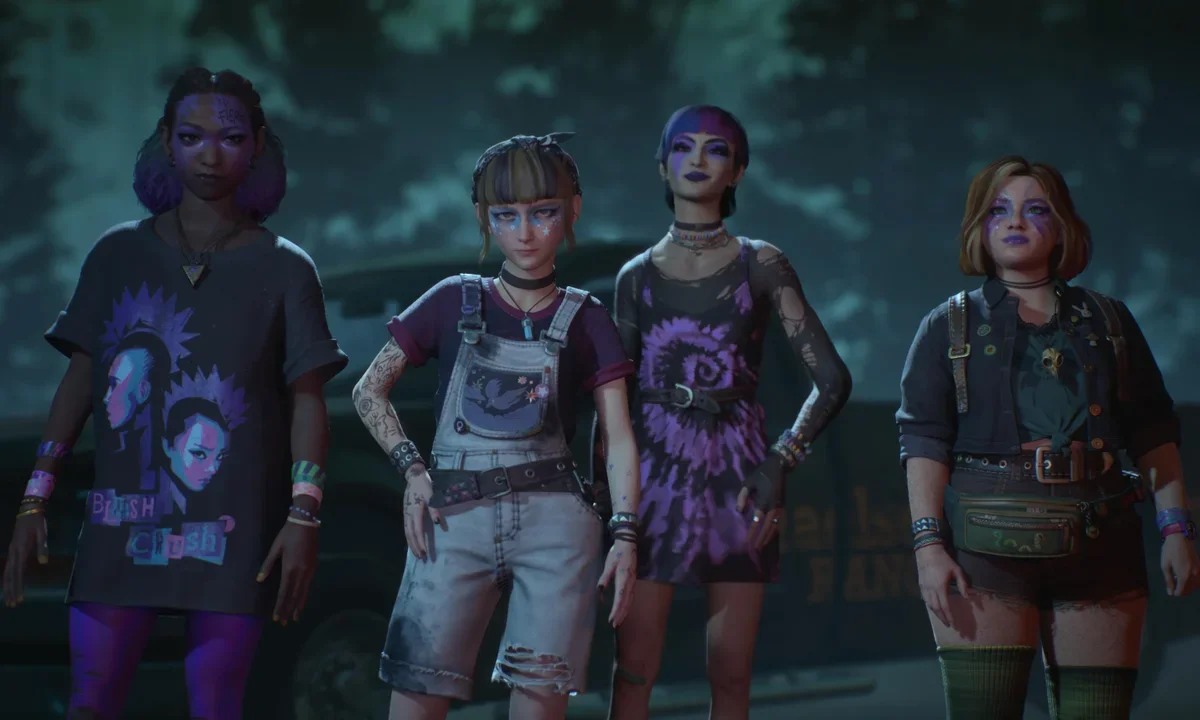
The French gaming industry is facing a moment of profound uncertainty as Don’t Nod, the acclaimed developer behind the genre-defining Life is Strange series, stares down a precarious financial precipice. According to a recently surfaced auditor’s report, the Paris-based studio could exhaust its remaining cash reserves as early as November 2026, triggering an urgent scramble for capital that has thus far yielded little success.
The revelation, brought to light by analyst Gauthier Andres, details a sobering reality for a company that has long been a darling of the narrative-adventure genre. With cash reserves sitting at approximately €8.8 million as of April 13, 2026, the company’s leadership is engaged in a desperate bid to stave off insolvency, casting a long shadow over the future of its upcoming projects and its workforce.
The Core Crisis: A Stalled Financial Lifeline
At the heart of the crisis is the breakdown of the relationship between Don’t Nod and its largest shareholder, the Chinese technology titan Tencent. As of December 2025, Tencent maintained a significant foothold in the developer’s operations, controlling 41.9% of its stock and 33.5% of its voting rights.
Despite this deep institutional integration, Tencent has reportedly rebuffed requests from Don’t Nod’s board chair, Oskar Guilbert, for a short-term capital injection. Furthermore, the Chinese giant has signaled a reluctance to engage in further co-production agreements—a common industry practice where a publisher or major shareholder helps fund individual projects in exchange for future revenue splits.
Guilbert, who has spent the better part of the last several months in high-level negotiations, has not limited his search for capital to Tencent. He has reportedly held discussions with several "major industry players" in hopes of securing a partnership that would bridge the funding gap for the studio’s current development pipeline. However, as of mid-2026, these efforts remain largely unsuccessful. The company had initially targeted the end of May 2026 as a deadline for securing a "major partner" to underwrite its projects, a milestone that appears to have passed without the necessary resolution.
A Chronology of Decline and Restructuring
The current fiscal struggle did not emerge in a vacuum. It is the culmination of a multi-year period defined by aggressive expansion, creative pivots, and the shifting winds of the global games market.
2023–2024: The Strategic Pivot
Following years of relative stability, Don’t Nod embarked on a major restructuring plan. In an attempt to streamline operations and focus its creative efforts, the studio announced it would reorganize its production pipeline around three core pillars: RPGs, narrative adventures, and action-adventure games. The goal was to build a more predictable, scalable business model.
2025: The First Signs of Turbulence
The transition proved more costly than anticipated. In 2025, the studio was forced to implement a series of layoffs, reducing its headcount by an undisclosed number. These job cuts were a grim indicator of the financial pressure mounting within the walls of the Paris office. Despite the release of new IPs like Lost Records: Bloom and Rage and Aphelion, the commercial performance of these titles—while critically regarded—failed to provide the immediate, massive capital inflows required to sustain the studio’s ambitious development schedule.
2026: The Auditor’s Warning
The auditor’s report acts as the most concrete piece of evidence regarding the studio’s precarious state. By confirming that the cash burn rate is unsustainable beyond November, the report has forced the studio’s financial woes into the public domain, making it difficult for the company to maintain the facade of a business-as-usual operation.
Supporting Data: The Cash Burn and Market Environment
To understand why Don’t Nod is in this position, one must look at the broader economic climate of the video game industry.
The studio’s cash position of €8.8 million is, by modern AAA and AA standards, remarkably thin. For a mid-sized studio employing hundreds of developers, this amount represents only a few months of payroll and operating expenses. When combined with the high cost of developing modern, high-fidelity titles, the lack of a "buffer" means that even a minor delay in a project’s release or a slight underperformance in sales can lead to a liquidity crisis.
Furthermore, the industry is witnessing a "cooling off" period regarding Chinese investment. For several years, companies like Tencent and NetEase acted as the primary financiers for Western studios, providing the capital necessary to fuel the "gold rush" of indie and mid-tier development. However, that trend has reversed. NetEase, for instance, has aggressively divested from several studios it previously founded or funded—most notably Fantastic Pixel Castle—as it refocuses on its core domestic interests.
For Don’t Nod, this represents a fundamental shift in the availability of "easy" capital. The era of open-ended investment from Eastern giants is contracting, leaving independent studios to fend for themselves in a market that is increasingly skeptical of non-blockbuster returns.
Official Responses and Stakeholder Silence
As of this writing, the situation remains fluid. GamesIndustry.biz and other trade outlets have reached out to both Don’t Nod and Tencent for comment. Neither party has provided a substantive update on the state of their negotiations.
The silence from Tencent is particularly telling. By withholding additional capital, the conglomerate is essentially placing the onus on Don’t Nod to find a new path forward, either through a new strategic buyer, an acquisition, or a significant downsizing. For the employees of Don’t Nod, this silence is likely deafening, as the uncertainty regarding the studio’s future directly impacts job security and the creative direction of projects currently in production.
Implications: What Happens Next?
The potential collapse or forced acquisition of Don’t Nod would send shockwaves through the narrative-adventure community. The studio is widely credited with helping to elevate the narrative-heavy game format into the mainstream through the Life is Strange franchise, influencing a generation of developers and storytelling techniques in interactive media.
There are three likely outcomes for the studio:
- The "White Knight" Acquisition: A larger publisher or a private equity firm could step in to acquire the studio, absorbing its IP and talent. While this would secure the jobs of the developers, it often comes with a loss of creative autonomy.
- Radical Downsizing: If no buyer is found, Don’t Nod may be forced to shed a significant portion of its staff and cancel all but its most profitable or near-completion projects to survive as a "lean" operation.
- Insolvency: Should no capital materialize before the November deadline, the studio faces the risk of entering formal insolvency proceedings. In this scenario, the company’s assets, including its valuable intellectual properties, would be liquidated to pay off creditors.
The plight of Don’t Nod serves as a cautionary tale for the industry at large. It highlights the vulnerability of studios that rely on external capital to fuel a high-burn development model. As the industry matures and the venture-capital-style funding that defined the early 2020s dries up, studios are finding that creative excellence is not always a shield against the brutal realities of a balance sheet.
For now, the team at Don’t Nod continues to work, attempting to deliver their current slate of games while the board races against the clock. November is no longer a distant deadline; it is a looming reality that will determine whether one of Europe’s most creative studios survives to tell its next story.


 Nana
Nana
 Layla Zulfa