

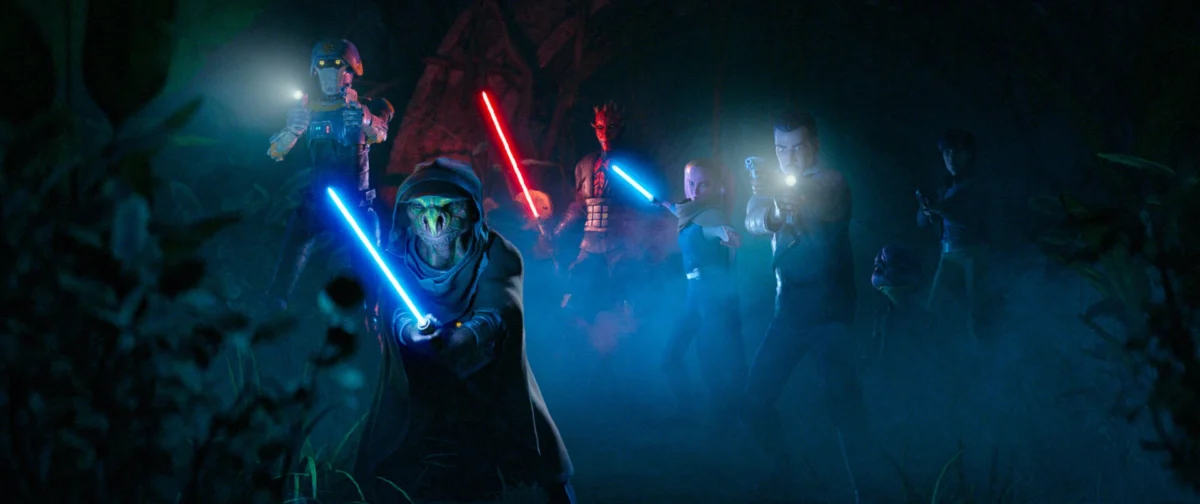
The Star Wars galaxy has long been defined by the delicate, often lethal, balance between the light and the dark. Yet, in the gripping two-part season finale of Star Wars: Maul – Shadow Lord, that balance is shattered by the arrival of a singular, terrifying force. When a mysterious figure emerges from the mist on the planet Janix, the audience and the series’ titular protagonist alike are forced to confront the apex predator of the Galactic Empire: Darth Vader.
Creator Dave Filoni, Supervising Director Brad Rau, and Head Writer Matthew Michnovetz recently sat down to peel back the layers of the creative process, revealing how they transformed a high-stakes finale into a masterclass of psychological horror and visceral action.
Main Facts: The Arrival of the Dark Lord
The conclusion of Star Wars: Maul – Shadow Lord Season 1 marks a pivotal shift in the series’ narrative trajectory. As Maul—a character defined by his cunning, ambition, and history as a broken agent of evil—faces a threat he cannot manipulate, the stakes are elevated to an existential level.
The finale establishes that Darth Vader is not merely an antagonist; he is a force of nature. By stripping Vader of dialogue, the creative team leaned into the "silent killer" archetype, drawing inspiration from horror icons like Michael Myers and Jason Voorhees. This decision reinforces Vader’s status as a relentless, unstoppable weapon of the Emperor, serving as a chilling reminder to Maul of what true, "perfected" evil looks like compared to his own scrambling, fractured ambitions.
A Chronology of Terror: From Concept to Screen
The path to the finale was a multi-year effort that began long before the cameras—or the animation software—started rolling.
Phase 1: Previsualization and Planning
The team, led by Rau and Michnovetz, utilized an exhaustive previsualization (previs) process. This was not merely about mapping out the action; it was about defining the spatial relationship between the characters and the environment. By creating proxy versions of the sets on Janix, the team was able to experiment with camera angles, lighting, and pacing before a single frame of final animation was rendered.
Phase 2: Defining the Silhouette
Art Director Andre Kirk and designer Chris Madden were tasked with a daunting challenge: reinterpreting a character as iconic as Darth Vader for the show’s unique aesthetic. The team pivoted toward the physical presence of the original actor, David Prowse. By studying Prowse’s movements—not just in the suit, but as a wrestler and stunt performer—the team created a version of Vader that felt physically imposing and distinct from previous iterations.
Phase 3: The Handoff
The finale required a seamless transition between Episodic Directors Steward Lee and Nate Villanueva. The coordination required for this was immense, involving detailed meetings regarding everything from the physics of Vader’s cape to the specific lens choices used to magnify his stature on screen.
Supporting Data: The Anatomy of a Duel
The choreography of the finale was heavily influenced by the fluid, high-stakes combat found in films like Ang Lee’s Crouching Tiger, Hidden Dragon. However, for the Maul team, the challenge was balancing that fluidity with the sheer, crushing weight of Vader.
- The "Prowse" Factor: The team focused on making Vader feel like a "horror" element. This meant the movement had to be both heavy and surprisingly precise. The choreography implies that Vader anticipates his opponents’ strikes, turning the battle into a clinical execution rather than a standard back-and-forth duel.
- Environmental Storytelling: The use of fog and dawn lighting was intentional. The transition from the dark, tense hunt of Episode 9 to the harsh, exposed reality of the morning light in Episode 10 served to heighten the vulnerability of the characters.
- The "Shadow" Training: The series reveals that Maul has been training the Jedi Padawan Devon Izara. This isn’t traditional Jedi or Sith training; it is a synthesis of the two, meant to prepare her for a galaxy where the old rules no longer apply.
Official Responses: Insights from the Creative Team
The creative team views the inclusion of Vader as an essential mirror for Maul’s own descent.
"The challenge with using Darth Vader here is to show Maul the horror of what you can become when you have power and evil come together in a more perfected version than what Maul is," says Dave Filoni. For Filoni, who has worked with the character of Vader since his inception in Star Wars Rebels, the goal was to ensure that the audience understood the hierarchy of power in the Empire. "Vader is better, more powerful, more destructive, more of a weapon for the Emperor, which is a problem."
Brad Rau emphasized the psychological toll this encounter takes on the characters. "We wanted to keep them on the run for the whole episode," Rau notes. "When you see Maul, who has been this nuanced, dangerous manipulator, suddenly look genuinely scared… that’s the moment the audience understands that the game has changed."
Matthew Michnovetz highlighted the tragedy inherent in the story. "Vader is a force of nature, but their destinies are entwined. The tragedy of it all is that, at the end of the day, Maul has to be left undone. We watch him build his little empire, his syndicate, and then he’s left with the consequences."
Implications: The Future of the Shadow Lord
The finale does more than close a chapter; it sets the stage for a darker, more complex second season. The death of Daki and the subsequent radicalization of Devon Izara are not accidental plot points; they are the result of a calculated, albeit cruel, lesson taught by Maul.
The Secret of Crimson Dawn
As the dust settles on Janix, the narrative threads left dangling are ripe for exploration. Devon Izara remains unaware of the "wicked truth"—that her new Master (Maul) is intrinsically linked to the downfall of her previous world and that he has been grooming her for a reality she is only beginning to comprehend.
The destruction of Maul’s syndicate serves as a reset button for his character. With his resources stripped away and his physical and emotional vulnerabilities exposed, Maul is forced to rely on his wits and his new apprentice. The team hinted that Season 2 will explore how Maul regains his grip on the criminal underworld, specifically through the lens of Crimson Dawn.
A New Reality for Devon Izara
Ultimately, the finale is a character study of Devon. By forcing her to choose between the path of the Jedi and the path of the Shadow Lord, the creators have granted her a level of agency that is rare for a protagonist in this position. Her decision to stay with Maul is not one made out of ignorance, but out of a survival instinct honed by trauma.
As the series moves forward, the "Age of Maul" promises to be defined by this precarious teacher-student dynamic. The presence of Darth Vader looms large over the galaxy, a silent, armored sentinel that serves as the ultimate benchmark for both the hero and the villain.
Star Wars: Maul – Shadow Lord has successfully managed to expand the lore of the Star Wars universe while maintaining the intimate, character-driven focus that fans of Dave Filoni’s work have come to expect. Whether Maul can ever hope to survive in a galaxy governed by the shadow of the Sith remains the central question for the seasons to come.
All episodes of Star Wars: Maul – Shadow Lord are currently streaming on Disney+, inviting viewers to witness the moment the galaxy changed forever.











No comments yet. Be the first to join the conversation!