

Your website’s internal link architecture is not a static monument; it is a living, breathing ecosystem. Over months and years, as your site expands, that architecture inevitably begins to rot. It doesn’t happen in a sudden, catastrophic collapse, but rather through a slow, creeping entropy that pulls your most valuable pages into a bottomless pit of obscurity.
While many SEO professionals obsess over acquiring external backlinks, they often ignore the "secret weapon" already at their disposal: their own internal link structure. If left unmanaged, the equity—the "link juice" or PageRank—that you have painstakingly built flows aimlessly, favoring recent, low-value content over the revenue-driving pillars that sustain your business.
The Reality of Internal Link Decay
Internal link decay is the gradual, often invisible degradation of how authority flows through your website. It is rarely the result of a single, malicious decision; rather, it is the byproduct of growth. Every time a new page is published, an old one is deleted, or a navigation menu is redesigned, the internal topography of your site shifts.
Entropy is the natural state of any growing website. Without deliberate, ongoing intervention, your most critical landing pages—those that drive conversions and revenue—slowly receive a smaller and smaller fraction of the PageRank they deserve. This is not because the equity has vanished, but because it has been diverted to less important destinations.
The Chronology of Erosion
- The Accumulation Phase: A site begins with a clear, logical structure. Link equity flows downward from the homepage to categories, and then to individual articles.
- The Growth Sprawl: As the content library grows, the "distance" from the homepage to high-value pages increases. New content naturally links to other new content, creating isolated silos.
- The Structural Shift: Redesigns, menu updates, and faceted navigation changes occur. Suddenly, thousands of links that previously pointed to core pages are removed or redirected.
- The Plateau: Because the internal distribution of authority no longer supports the most important pages, search rankings begin to stall. The SEO team assumes the problem is a lack of new backlinks, when the real culprit is internal leakage.
Why Link Decay Remains Undetected
The reason most SEOs fail to notice internal link decay is that it happens in the background. It is a slow-motion process that rarely triggers an alert in Google Search Console until the damage to organic traffic is already visible.
The Bias Toward "Fresh" Content
Writers and content creators are inherently biased toward novelty. When drafting new articles, the natural tendency is to link to the most recent, relevant content. Because Large Language Models (LLMs) and modern search algorithms prioritize freshness, companies are churning out content at record speeds. Consequently, your high-converting product pages from three years ago—the "pillar" content that serves as your business’s foundation—slowly lose their prominence as new, less authoritative pages steal the internal link focus.
The "Silent" Redesign
UX and design teams frequently make changes based on aesthetic or conversion-rate-optimization goals. When a mega-menu is trimmed, or a footer is simplified, the impact on site-wide link distribution is often ignored. If a global navigation link is removed, you may have effectively severed thousands of internal connections overnight. This is a structural change that happens without a single line of code being flagged for SEO purposes, yet it acts as a massive drain on your domain authority.
The Trap of Faceted Navigation and Pagination
E-commerce sites are particularly susceptible to "sink pages." When your site links to page 2, page 3, and beyond in a category, you are sending equity into paginated URLs that rarely need to rank. Similarly, faceted navigation—where filters like /products?color=blue&size=medium are indexed—can create an infinite loop of low-quality pages. These pages compete with your main category pages for crawl budget and equity, effectively diluting your potential to rank for primary keywords.
Measuring the Decay: A Strategic Audit
You cannot fix what you cannot measure. To reclaim your site’s authority, you must shift from passive management to an active audit process.
Step 1: Mapping the Link Score
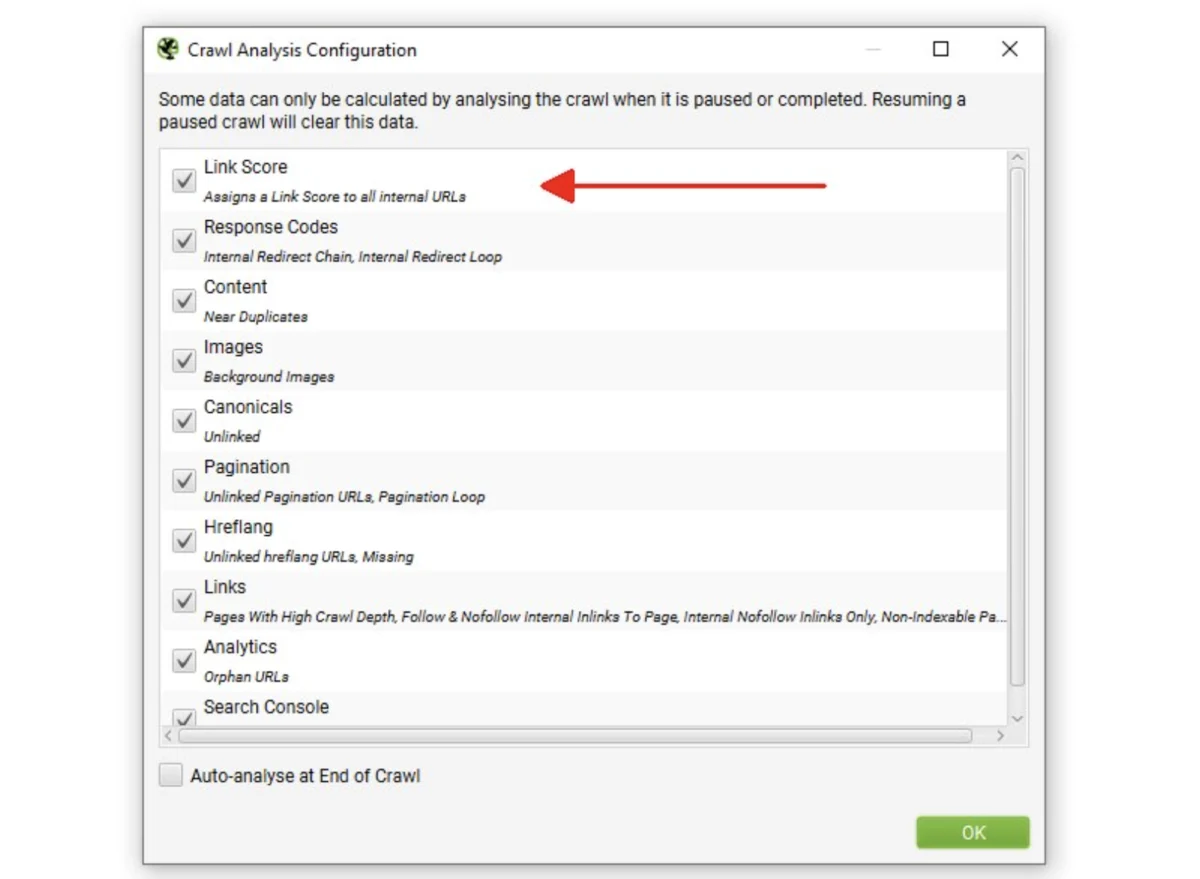
Utilize professional crawlers like Screaming Frog, Sitebulb, or JetOctopus to simulate how Googlebot perceives your internal PageRank distribution. In Screaming Frog, the "Link Score" metric is essential here. Do not look at the raw count of internal links; look at the weighted value of those links.
Step 2: Aligning Equity with Revenue
Once you have your Link Score report, export it and compare it to your business priorities. Create a list of your top 20 revenue-generating pages. If these pages do not appear at the top of your Link Score list, you have a critical misalignment. The gap between your "pages that matter" and "pages receiving equity" is the exact measurement of your internal link decay.

Step 3: Identifying Redirect Chains
A hidden killer of SEO performance is the "redirect chain." Over years of migrations and content cleanups, you likely have thousands of internal links pointing to old URLs that now 301-redirect to new ones. Every hop in a redirect chain wastes crawl budget and adds latency. By mapping these links and updating them to point directly to the final destination, you can consolidate your signal strength without building a single new backlink.
Step 4: The Orphaned Page Audit
Orphaned pages—those that have no internal links pointing to them—are effectively invisible to search engines. A comprehensive audit will reveal these forgotten assets. You have two choices: link to them from relevant, high-authority sections of your site, or delete them to prune your crawl budget.
The Equity vs. Entropy Framework
Think of your website as a complex network of plumbing. External backlinks represent the "fresh water" being pumped into the system from the outside. Your internal links are the pipes that distribute that water.
Entropy is the result of letting the pipes grow in random directions, leading to leaks and low pressure in the rooms that need it most.
Equity is the result of intentional engineering, where you deliberately direct the "water" toward the most vital areas of your business.
Restoring and Maintaining Structural Integrity
Once the decay is identified, the recovery process should be systematic and prioritized.
1. Retroactive Internal Linking
Start with your highest-value pages. Use your content archive as an asset. Older, high-authority blog posts often sit on a goldmine of link equity. By auditing these posts and inserting contextual links to your current product or pillar pages, you can instantly boost the visibility of your most important assets.
2. Building Strategic Hubs
Fragmented content clusters are a recipe for stagnation. If you have 50 articles on a specific topic but no central hub page, your authority is diluted. Create a comprehensive, "ultimate guide" style hub page that links to all 50 articles, and have those 50 articles link back to the hub. This creates a powerful, self-reinforcing topic cluster that consolidates equity.
3. Implementing a Content Process
Decay is best prevented at the source. Update your editorial checklist to include two mandatory questions:
- "Which existing pillar page should this new content link to?"
- "Which high-authority legacy pages can I update to include a link to this new content?"
By making internal linking a mandatory step in the publishing process, you turn every new post into a tool for strengthening your existing site structure.
Implications for Future Growth
The difference between a website that plateaus and one that achieves compounding growth is almost always structural. Companies that spend thousands of dollars on external link-building campaigns while ignoring internal decay are essentially pouring water into a leaky bucket.
When you prioritize equity distribution, you improve your crawl efficiency, your indexation, and your ability to rank for high-intent keywords. As search engines continue to rely on semantic connections and topical authority, your internal link structure will become an even more critical ranking factor. By treating internal linking as a disciplined, quarterly maintenance task rather than a "set it and forget it" feature, you insulate your site from the natural entropy of the web, ensuring that your most valuable content remains the cornerstone of your organic success.











