Laily UPN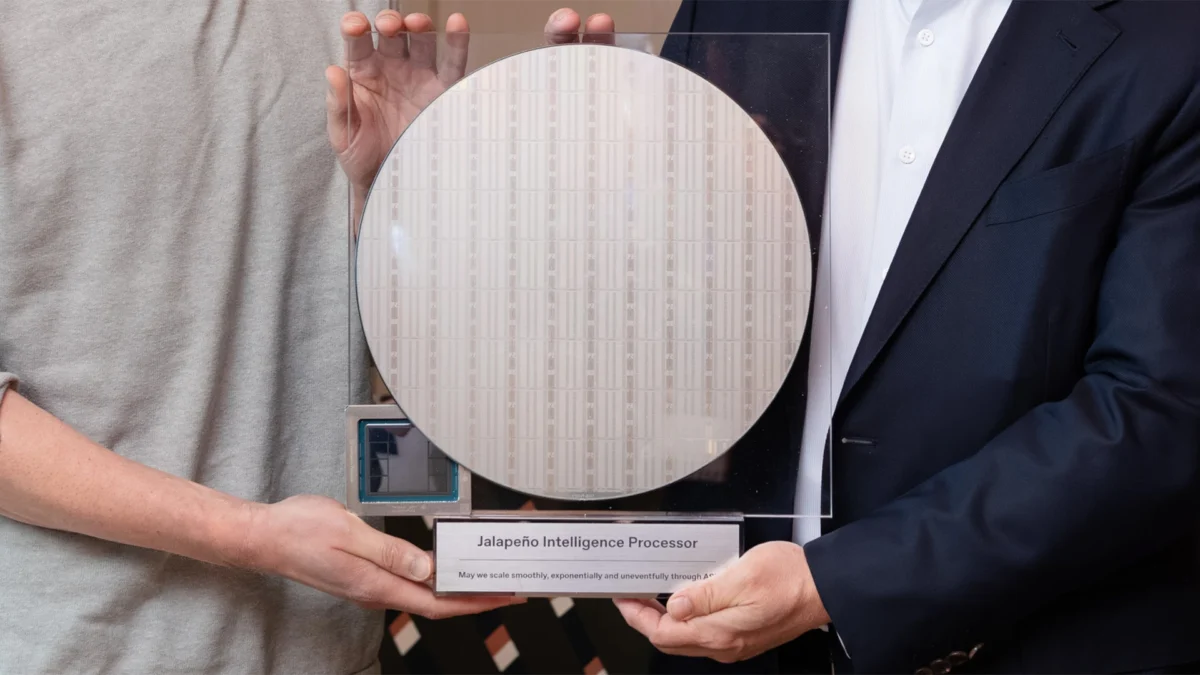
In a move that signals a seismic shift in the AI hardware landscape, OpenAI—the research laboratory behind the transformative ChatGPT—has officially pulled back the curtain on its first custom-designed inference processor. Developed in close partnership with semiconductor giant Broadcom, the chip, codenamed "Jalapeño," is not merely an incremental upgrade to existing hardware. Instead, it represents a fundamental rethinking of how Large Language Models (LLMs) and agentic AI workloads are served at scale.
By moving away from the "one-size-fits-all" approach of general-purpose GPUs and training-oriented accelerators, OpenAI is positioning Jalapeño as the cornerstone of its long-term hardware strategy. This initiative marks the company’s transition from a pure software developer to a vertically integrated AI infrastructure powerhouse.
The Core Mandate: Beyond General-Purpose Accelerators
The industry has long relied on training-centric hardware, such as NVIDIA’s H100 and Blackwell series, to handle the heavy lifting of inference. While these chips are marvels of engineering, they were originally designed for the massive matrix multiplication required during the training phase, often leading to inefficiencies when deployed for real-time, low-latency inference.
OpenAI is explicitly distancing Jalapeño from this lineage. The processor is an Application-Specific Integrated Circuit (ASIC) built from the ground up to address the unique bottlenecks of inference: data movement, memory bandwidth, and networking latency. Unlike common inference accelerators that often rely on cheaper, slower DRAM to cut costs, Jalapeño integrates high-bandwidth memory (HBM) alongside a massive compute chiplet. This design philosophy prioritizes the ability to balance high-throughput serving with the instantaneous response times required for complex, multi-step reasoning and "agentic" AI tasks—where the model doesn’t just predict the next token but interacts with external environments.

Chronology of Development: A Nine-Month Sprint
One of the most startling revelations regarding Jalapeño is the speed of its development. The chip reached tape-out—the final stage of design before manufacturing—in a mere nine months. In the traditionally glacial world of semiconductor design, where cycles typically span 18 to 24 months, this turnaround is nothing short of revolutionary.
The Role of AI in Silicon Design
The shortened development timeline raises a critical question: How was this achieved? While neither OpenAI nor Broadcom has provided a detailed technical breakdown, it is widely understood that OpenAI utilized its own advanced models to assist in the design, simulation, and optimization phases. By leveraging generative AI to automate complex routing and logical verification, the engineering team was able to bypass traditional bottlenecks.
Furthermore, Broadcom’s deep library of modular, reusable IP (Intellectual Property) blocks allowed the team to assemble the processor with a "Lego-like" efficiency. This strategy of combining custom-tuned logic with battle-tested industry standard interfaces provided the necessary speed without sacrificing the chip’s specialized performance requirements.
Supporting Data: Analyzing the "Jalapeño" Architecture
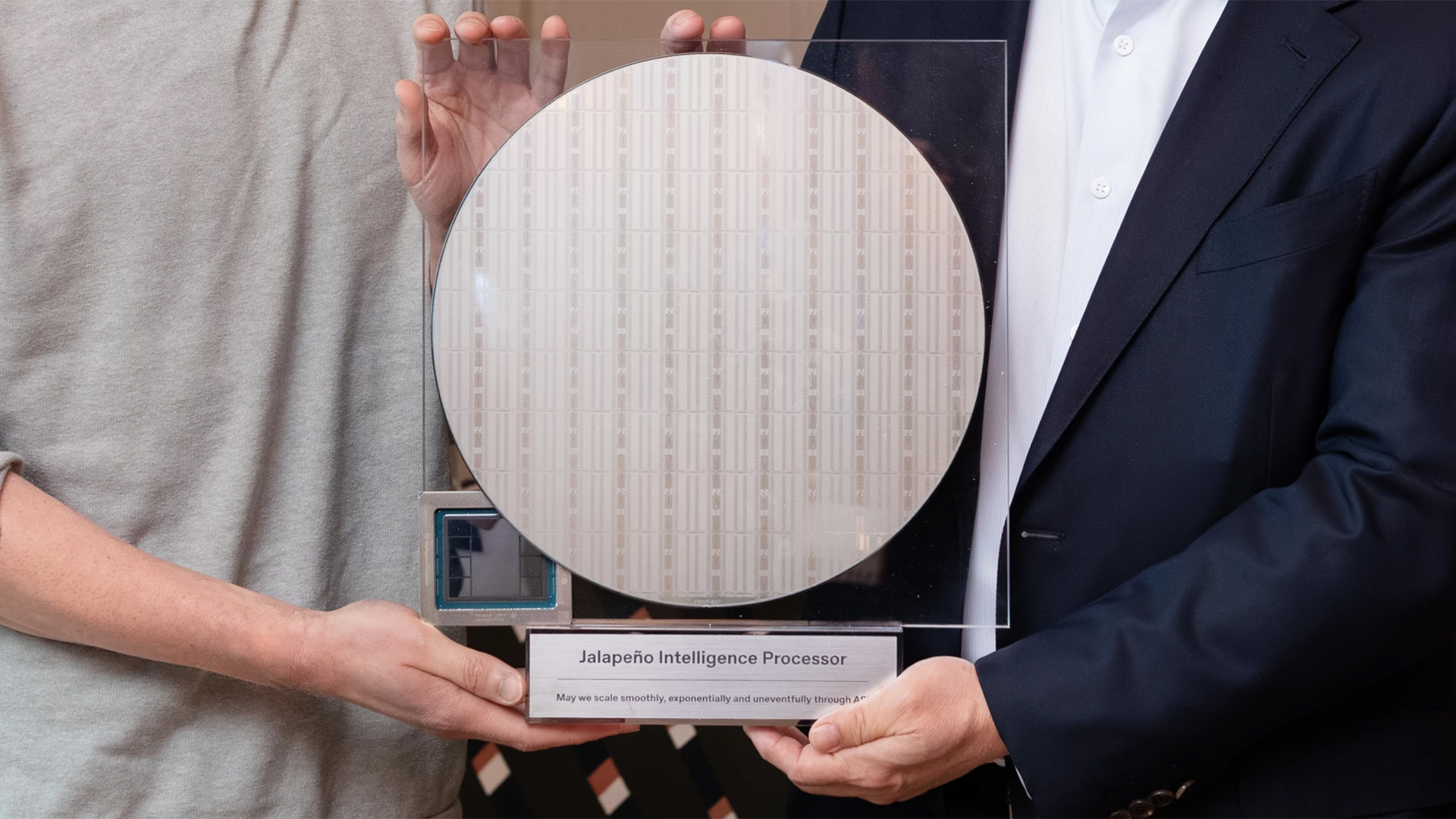
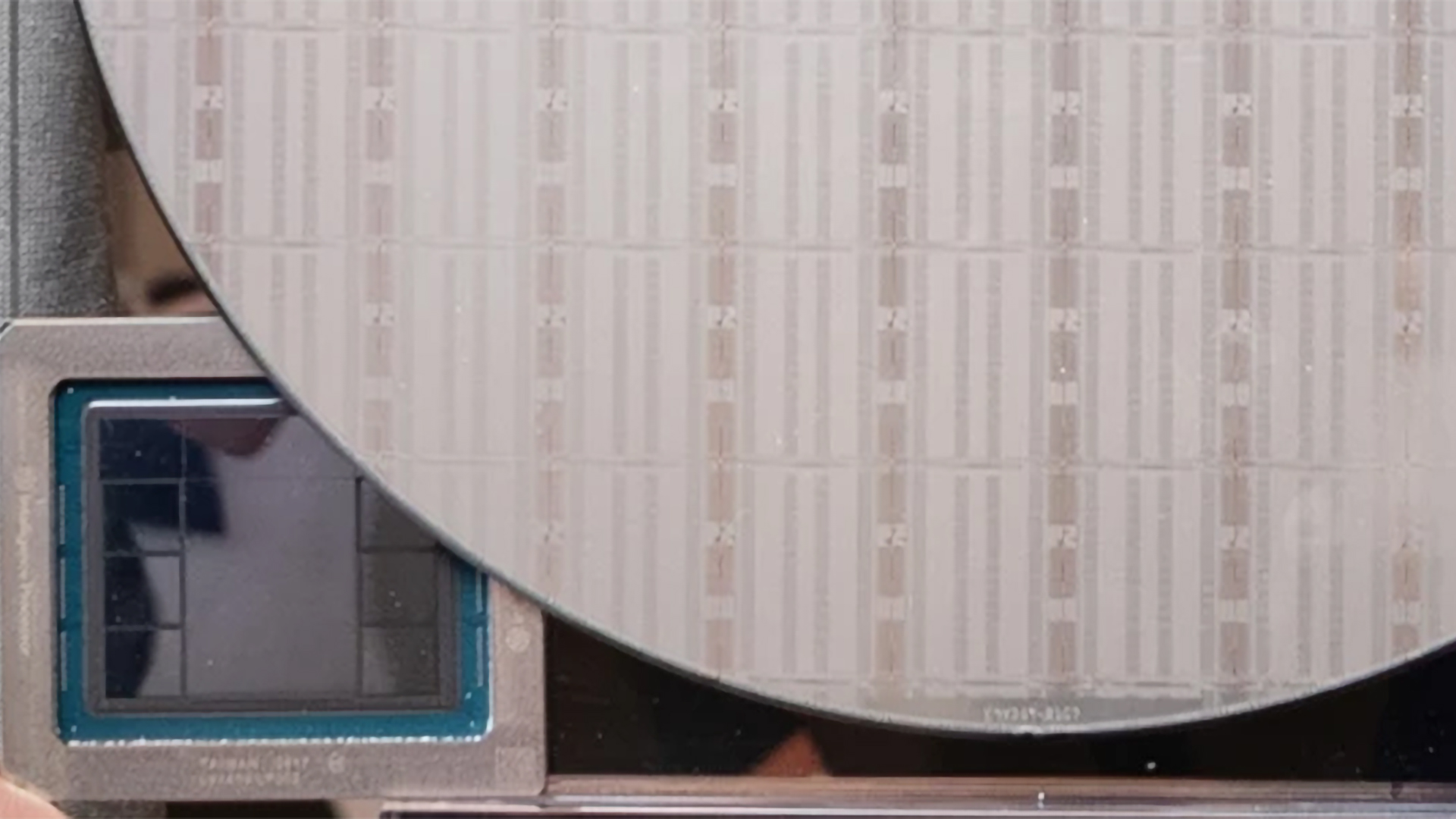
While technical specifications remain tightly guarded, visual analysis of the released wafer images provides a glimpse into the hardware’s complexity. The packaging reveals a high-density, multi-chiplet arrangement, a hallmark of modern advanced packaging technology.

The Anatomy of the Chip
The processor features a singular, large compute chiplet, estimated to measure approximately 840 mm². This size is significant, as it approaches the maximum "reticle limit" of current EUV (Extreme Ultraviolet) lithography systems. Surrounding this central brain are six HBM modules, providing the massive memory bandwidth necessary to keep the compute units fed during intense inference sessions. An auxiliary chiplet, likely responsible for I/O and networking interfaces, completes the package, flanked by structural dummy dies to maintain physical integrity.
The floorplan, characterized by a highly repetitive, columnar structure, strongly suggests a tiled AI accelerator architecture. Whether this utilizes a 2D systolic array or a more complex network of vector and tensor engines remains a point of intense speculation among silicon analysts. However, the sheer physical footprint suggests that Jalapeño is not a "lite" version of a GPU, but a heavyweight processor designed to handle the most demanding frontier models currently in development, such as the internal iteration referred to as GPT-5.3-Codex-Spark.
Official Responses and Strategic Intent
The leadership at both companies has framed this project as a necessary evolution for the next decade of AI growth. Richard Ho, who spearheads the hardware program at OpenAI, emphasized that the chip was optimized based on granular insights into how frontier models behave. "We optimized the architecture around the kernels, memory movement, networking, and serving patterns that matter most for frontier AI models," Ho stated.
Broadcom’s CEO, Hock Tan, took a broader, infrastructure-level view. He noted that the collaboration is not a one-off project but the first in a multi-generational roadmap. According to Tan, these processors are destined for "gigawatt-scale" data centers—massive, power-hungry facilities that represent the next frontier of computing infrastructure. The inclusion of Microsoft as a partner for the 2026 deployment underscores that this is a high-stakes, multi-billion-dollar bet on the future of enterprise AI.
The Implications: What This Means for the Market
The emergence of Jalapeño sends a clear message to the incumbent hardware providers like NVIDIA and AMD: the software-first giants are coming for the silicon layer.
1. Competitive Pressure on Incumbents
While Jalapeño is currently in the lab phase, its existence puts immense pressure on existing roadmaps. If OpenAI can indeed achieve substantially better performance-per-watt than current state-of-the-art accelerators, it could significantly lower the operational costs of running services like ChatGPT. As the industry shifts from training to inference, the market for energy-efficient chips will grow exponentially.
2. The Move Toward Vertical Integration
OpenAI’s pivot toward hardware mimics the path taken by companies like Apple, Google (with its TPUs), and Amazon (with its Trainium and Inferentia chips). By controlling the entire stack—from the model architecture to the silicon execution—OpenAI gains the ability to "hard-wire" its software optimizations directly into the metal, achieving performance levels that are theoretically impossible on generic hardware.
3. The "Gigawatt-Scale" Future
The explicit mention of gigawatt-scale data centers points to the future of AI: physical scale. The energy constraints of modern AI are becoming the primary limiting factor for progress. By focusing on performance-per-watt, Jalapeño is built to be the engine of this transition. If successful, this architecture could become the standard for large-scale inferencing, potentially marginalizing general-purpose GPUs in the specific niche of LLM serving.
4. A New Model for Collaboration
The partnership model between OpenAI and Broadcom is equally significant. Broadcom acts as the "foundry-adjacent" designer, providing the expertise to navigate the complex world of TSMC manufacturing and chip packaging, while OpenAI provides the architectural blueprint based on its proprietary software needs. This symbiosis could become the blueprint for future AI startups looking to break free from the supply constraints of the current GPU market.
Conclusion
Jalapeño represents the maturation of the AI industry. We are moving out of the "experimental phase," where off-the-shelf components were sufficient to power the AI revolution, and into an era of bespoke, application-specific hardware.
While skepticism remains warranted regarding the lack of disclosed benchmarks and the uncertainty of how it will stack up against future-generation competition like the AMD Instinct MI400 or Nvidia’s Rubin architecture, the intent is clear. OpenAI is building the physical foundation upon which it expects the future of artificial intelligence to stand. By 2026, when these chips begin their deployment in the world’s most advanced data centers, we will finally learn whether the "Jalapeño" has the heat to melt the current competition or if it is merely the first step in a long, iterative journey toward silicon sovereignty.


 Sagoh
Sagoh
 Basiran