Nana Muazin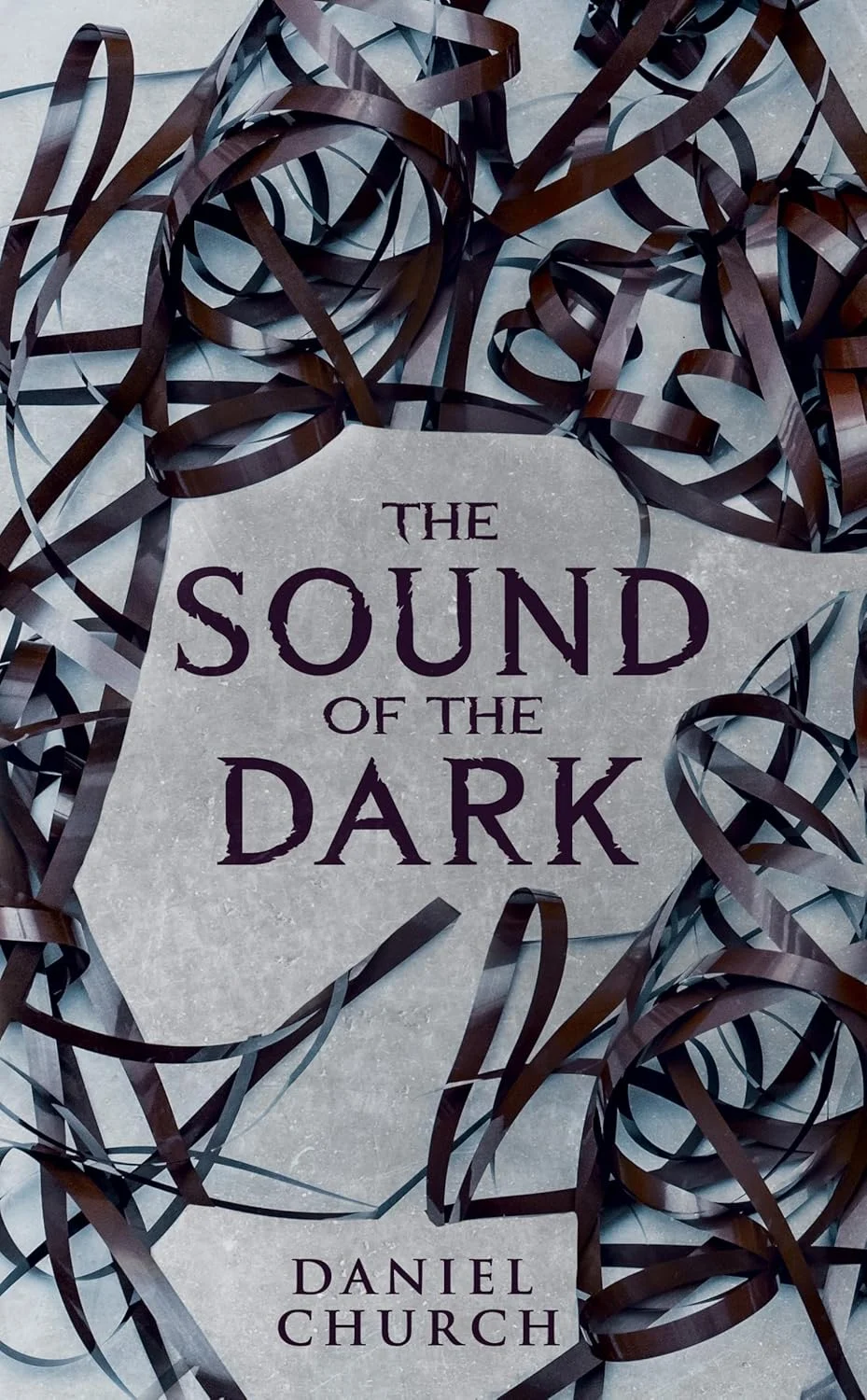
In the landscape of contemporary horror, few novels manage to bridge the gap between the meticulous, procedural nature of true crime and the unvarnished, cosmic terror of supernatural fiction. Daniel Church’s latest release, The Sound of the Dark, achieves this volatile synthesis with remarkable—and often unsettling—precision. By centering his narrative on an alienated true crime podcaster investigating an infamous 1983 family massacre, Church creates a literary experience that functions as both a slow-burn mystery and a visceral descent into madness.
Main Facts: A Tragic Case, A Modern Obsession
At the heart of The Sound of the Dark is Cally Darker, a protagonist defined by her professional detachment and personal instability. A Manchester-based podcaster struggling with depression and an unsupportive partner, Cally finds her anchor when a cryptic tip leads her to the cold case of Tony Mathias.
In 1983, Mathias, an experimental artist, sought to create a soundscape installation using audio gathered from the abandoned RAF base at Warden Fell. The project ended in unimaginable tragedy: after visiting the site, Mathias returned to his family’s caravan and murdered his wife and two children before taking his own life. There is no ambiguity regarding the perpetrator; the novel opens with the harrowing testimony of a neighbor who witnessed the slaughter. The central tension, therefore, is not "who" but "why."
Cally’s investigation—and the reader’s journey—is framed by the mantra: "DON’T PRESS PLAY." It is a testament to Church’s narrative restraint that the mystery remains rooted in the human element before spiraling into the otherworldly.
Chronology of the Investigation
The narrative structure of The Sound of the Dark is deliberately paced, unfolding in three distinct phases:
Phase I: The Leisurely Inquiry
The first quarter of the novel mirrors the rhythmic pacing of a classic Agatha Christie "village mystery." Cally relocates to the countryside, utilizing her father’s vacant home as a base of operations. Here, the reader is introduced to a cast of local characters, each eager to participate in Cally’s podcast. While some critics might find these early interviews repetitive, they serve a vital purpose: establishing the humanity of the victims and the baffling nature of Mathias’s transformation from a "gentle soul" to a murderer.
Phase II: The Sonic Infection
The midway point of the novel represents a structural shift. Cally finally accesses Mathias’s original recordings from Warden Fell. As she begins the process of digitizing and analyzing the tapes, the story abandons the safety of the investigative procedural. The tapes contain evidence of paranormal phenomena that directly mirror the psychological and physical deterioration experienced by Mathias decades prior. Cally’s life becomes a series of vivid, terrifying nightmares, signaling that the "contagion" of the tapes has found a new host.
Phase III: The Cosmic Climax
The final act sheds all pretense of suburban mystery. The narrative shifts into "gonzo" horror, moving from the localized tragedy of the caravan park to a high-stakes confrontation at Warden Fell. Cally and her allies must face the reality that the site is not merely a place of death, but a conduit for cosmic entities. The resolution is distinctly Lovecraftian, yet viewed through a modern, cinematic lens reminiscent of John Carpenter’s In the Mouth of Madness.
Supporting Data: The Craft of Contagion
What distinguishes The Sound of the Dark from other entries in the "cursed object" subgenre is its psychological impact on the reader. Modern horror often relies on "fourth-wall breaking"—explicitly telling the audience they are now part of the curse. Church opts for a more sophisticated, low-key approach.
By focusing on the audio tapes as the vector of infection, Church leans into the inherent intimacy of the podcasting medium. As Cally listens to the tapes, the boundary between her research and her reality dissolves. The novel’s effectiveness relies on its ability to make the reader feel like an accomplice to the discovery. While the prose occasionally suffers from heavy exposition—particularly during dream sequences and lengthy character backstories—these segments are ultimately secondary to the book’s atmospheric dread.
Official Perspectives and Literary Context
The novel stands as a significant contribution to the resurgence of "folk horror" set against a modern technological backdrop. By contrasting the analog decay of 1980s cassette tapes with the digital, ephemeral nature of true crime podcasts, Church creates a dialogue between past and present.
While the story contains tropes—such as the "doomed" confidant character, Griff, who serves as a sounding board for Cally’s discoveries—these are handled with a self-awareness that respects the reader’s intelligence. The character of Cally is particularly noteworthy; her battle with mental health is not presented as a "plot device" but as the very lens through which the supernatural horror is refracted. Her internal struggle mirrors the external threat of Warden Fell, making the climax feel like an earned, if not inevitable, catharsis.
Implications: The Ethics of True Crime and Beyond
One might expect a novel about a podcaster to offer a searing critique of the ethics of the true crime industry. Surprisingly, The Sound of the Dark eschews moralizing. The podcast serves as a functional scaffolding for the plot rather than a thematic target. Instead, the implication of the book lies in the "curiosity of the witness."
Cally is driven by a need to uncover the truth, a common trait among those who consume true crime. The novel asks: at what point does our fascination with the trauma of others become a vulnerability? When Cally pursues the mystery of the Mathias massacre, she unknowingly invites the same forces into her life. The horror is not just the act of murder, but the act of looking—of pressing play, of digging, and of refusing to look away until the darkness looks back.
Final Assessment: A Leap of Faith
The Sound of the Dark is a bold, challenging, and frequently terrifying work. It is a rare novel that successfully transitions from a cerebral mystery to a visceral horror experience without losing the reader’s suspension of disbelief.
While the book’s reliance on long stretches of expository dialogue—often delivered by characters who appear briefly to provide essential, reality-shattering information—can feel slightly uneven, the momentum of the plot is undeniable. The climax at Warden Fell provides a satisfying, high-octane conclusion that brings Cally’s journey full circle.
For readers who appreciate the slow-burn dread of classic British horror combined with the fast-paced, high-concept threats of modern cosmic fiction, The Sound of the Dark is an essential addition to the bookshelf. It is a work that demands your attention and, perhaps, asks you to reconsider the next time you find yourself clicking "play" on a story about someone else’s nightmare. Daniel Church has crafted a narrative that lingers long after the final page, a haunting reminder that some echoes of history are better left unrecorded.
Whether the reader views the novel as a cautionary tale about the dangers of obsession or a pure, unadulterated scare, The Sound of the Dark succeeds on its own terms. It is a wild, imaginative, and deeply atmospheric ride that reaffirms the power of the written word to induce genuine unease. If you are willing to take the leap, Cally Darker’s story is waiting—just be careful what you listen to along the way.


 Raul Delapena Setiawan
 Nila Kartika Wati