Nana Wu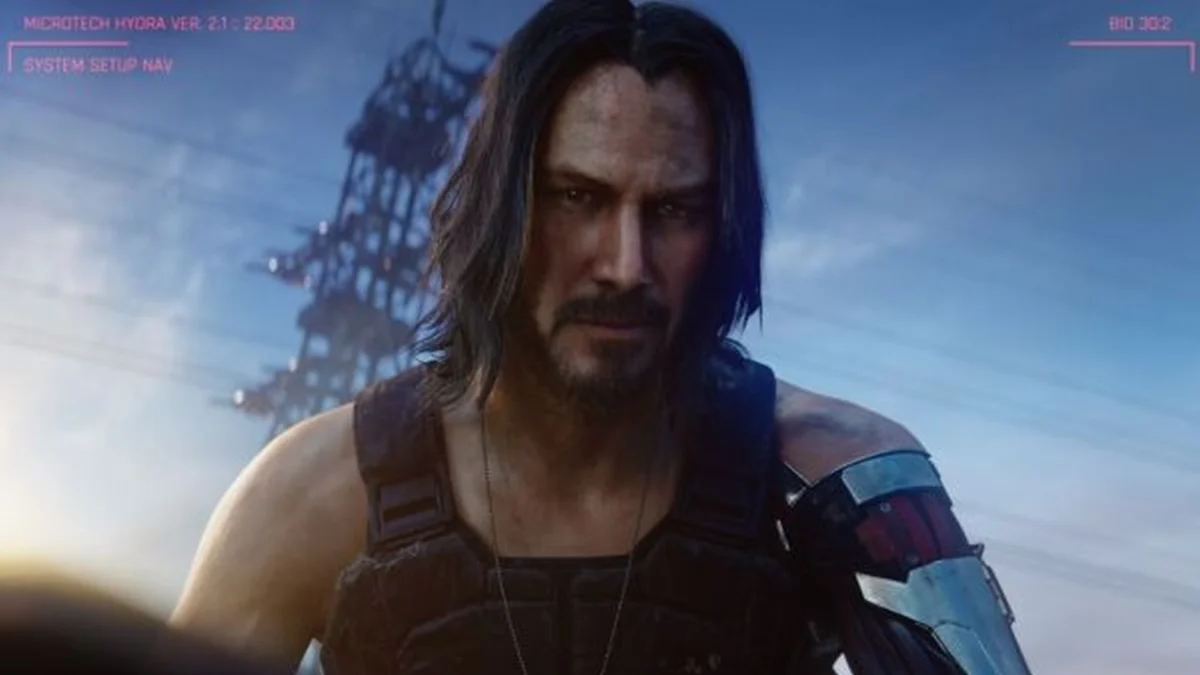
In an era where generative artificial intelligence is reshaping the landscape of creative industries, the video game sector finds itself at a pivotal crossroads. As developers grapple with the promise of unprecedented efficiency and the peril of artistic homogenization, the industry’s heavyweights are beginning to weigh in. MichaÅ‚ Nowakowski, the joint CEO of CD Projekt Red—the visionary studio behind the monumental The Witcher series and the neon-soaked dystopia of Cyberpunk 2077—has recently offered a sobering perspective on the encroaching wave of AI-generated titles.
While Nowakowski acknowledges the technical inevitability of fully AI-constructed games, he remains profoundly skeptical of the philosophy driving this rapid automation. His comments, delivered to Edge’s Knowledge newsletter, highlight a growing divide between the "quantity-first" approach of emerging AI-native studios and the "quality-first" artisanal ethos that has defined CD Projekt Red’s global success.
The Main Facts: Efficiency vs. Artistic Intent
The core of the debate lies in the speed of production. During his discussions with founders of nascent AI-based development studios, Nowakowski was confronted with a vision of the future that prioritized velocity above all else. He recounts a conversation with an entrepreneur who boasted of a hyper-streamlined pipeline: the ability to generate 40 game prototypes within a single week, narrow that field to five viable candidates in two weeks, and push a final product to market by the end of the third.
To the venture capitalist or the growth-obsessed publisher, this sounds like a dream. In a market where development cycles for AAA titles can stretch to five, six, or even eight years, the ability to iterate at such a blistering pace is a disruptive force. However, Nowakowski is not sold. "Maybe that’s going to be successful," he noted, "but I have some doubts whether this is really the path to follow."
These doubts are rooted in the fundamental definition of a video game. For Nowakowski, a game is not merely a collection of functional code, assets, and game loops; it is a creative endeavor that requires a distinct "soul"—a cohesive, human-led vision that resonates with players on an emotional level.
A Chronology of the AI Surge in Gaming
The transition toward AI integration in game development has been swift, moving from background utility to center-stage debate in less than three years:
- Early 2022: Large Language Models (LLMs) and image generation tools like Midjourney gain mainstream traction, sparking early experiments in automated asset creation and NPC dialogue generation.
- Late 2022 – 2023: Major industry players begin announcing "AI-first" initiatives. Tools for procedural terrain generation, voice acting synthesis, and coding assistance become standard in many development pipelines.
- Early 2024: The emergence of "AI-native" studios—companies built specifically to leverage generative models to minimize human labor and maximize output frequency.
- Mid-2024: The discourse shifts from "how can we use AI to help?" to "should we let AI lead?" This has led to widespread pushback from developers, labor unions, and players concerned about job displacement and the degradation of creative standards.
- Present Day: Industry leaders like CD Projekt Red are publicly articulating their stance, drawing a line between using AI as a tool for efficiency versus using it as a replacement for human creative direction.
The Competitive Landscape: The Fight for Attention
Nowakowski’s skepticism is not just an aesthetic preference; it is a calculated business observation. In the contemporary gaming market, the primary challenge is no longer just development—it is discoverability.
The gaming ecosystem is currently saturated. Thousands of titles are released annually across platforms like Steam, the Epic Games Store, and console storefronts. This influx is exacerbated by the presence of competing media: high-end television, blockbuster cinema, and the ever-present, algorithmically driven pull of social media. This "fight for attention" is, as Nowakowski describes, "tougher than it ever was."
The danger of an AI-flooded market is the potential for a "race to the bottom." If the industry moves toward a model where dozens of AI-generated titles are pushed to stores weekly, the sheer volume of content could lead to a catastrophic dilution of quality. When every game is "good enough" because it was assembled by a prompt-based algorithm, the ability of any single title to capture the public imagination becomes infinitely more difficult.
Supporting Data and Industry Concerns
The apprehension expressed by CD Projekt Red’s leadership is mirrored across the broader developer community. Recent investigative efforts, such as those by GamesRadar’s Austin Wood, have highlighted that the resistance to generative AI is not merely a "Luddite" reaction to change.
The concerns cited by over 30 developers interviewed in recent months are multifaceted:
- Ethical Sourcing: A primary concern is that generative models are trained on the scraped work of artists, writers, and animators without consent, credit, or compensation. This creates a legal and moral gray area that many established studios are wary of entering.
- Labor Impacts: There is a tangible fear regarding the erosion of entry-level positions. Junior roles, which have historically served as the training ground for the next generation of industry talent, are the most susceptible to being replaced by automation.
- Legal Vulnerability: The question of intellectual property rights for AI-generated content remains unsettled in courts worldwide. Studios are hesitant to base their entire business model on assets that they may not legally own.
- Environmental Costs: The massive compute requirements for training and running generative AI models have raised questions about the carbon footprint of this new wave of software development.
Official Responses and Corporate Philosophy
CD Projekt Red’s position serves as a strategic middle ground. The studio has publicly expressed a desire to scale their operations—specifically to work on multiple projects simultaneously, such as the next installment in The Witcher franchise and new Cyberpunk properties—but they have been equally clear about their boundaries.
They have no intention of turning into a "fast-fashion" style publisher that churns out a big game every year. Instead, they emphasize the need for "soul" and "legs"—the ability for a game to stand on its own merits, offer a unique experience, and foster a long-term community. By focusing on quality, the studio aims to build the kind of brand loyalty that algorithms cannot manufacture.
This sentiment is echoed by other industry titans, though the implementation varies. Some studios are integrating AI into the "boring" parts of development—optimizing code, bug testing, or creating background textures—while keeping the creative "heart" firmly in human hands. The goal is to reduce the "drudge work" without sacrificing the creative authorship that makes a game a work of art.
The Implications: A Fork in the Road
The industry is currently facing a fork in the road. One path leads to a hyper-efficient, highly automated landscape where the volume of content explodes, but the depth of individual experiences potentially shrinks. In this future, the "hit" of the month might be generated by a machine, consumed by a user, and forgotten by the next week.
The other path, championed by the likes of Nowakowski, involves a more measured integration of technology. It suggests that as the market becomes more crowded, the value of human-centric, "soulful" design will actually increase. As players become more adept at identifying the "uncanny valley" of AI-generated stories and design, they may increasingly gravitate toward experiences that bear the unmistakable mark of human struggle, passion, and intent.
Ultimately, the future of gaming will not be decided by what is technologically possible, but by what is economically and culturally sustainable. If the history of the industry has taught us anything, it is that players are remarkably good at detecting when a game has been made with passion versus when it has been manufactured for a quota.
While the AI-driven "40 prototypes a week" model may find a niche in the hyper-casual or mobile gaming sectors, it is unlikely to displace the prestige experiences that CD Projekt Red and their peers deliver. The real challenge for the industry in the coming decade will be maintaining that human connection in a world that is increasingly defined by the machine. As Nowakowski suggests, as long as you have a fresh idea with a soul, you will always have a fighting chance—regardless of what the algorithms are doing.


 Azzam Bilal Chamdy
 Reynand Wu