

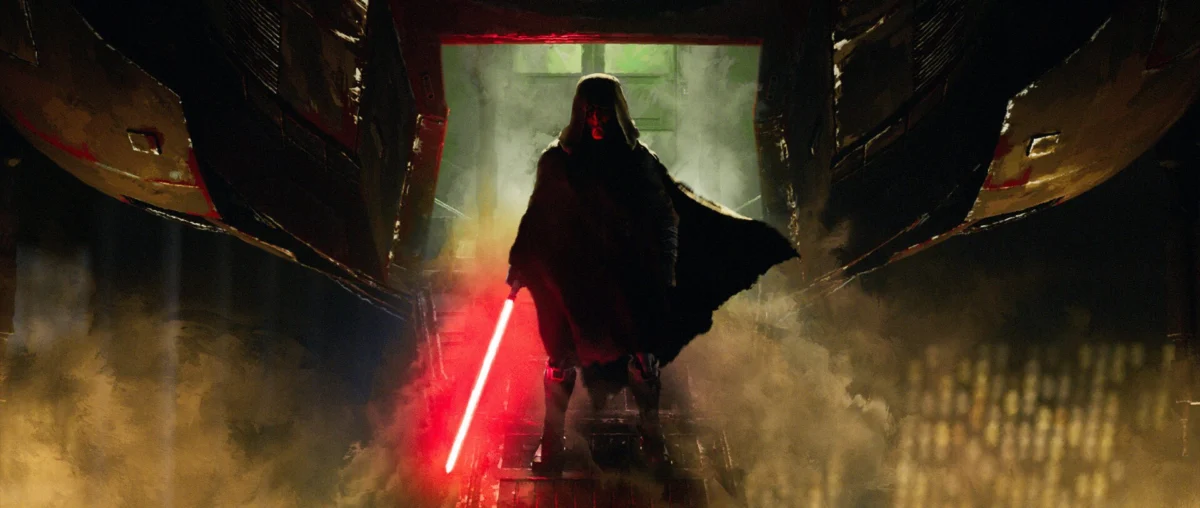
For nearly two decades, the name Kiner has been synonymous with the rhythmic pulse and emotional resonance of the Star Wars animated universe. From the high-stakes battlefield crescendos of The Clone Wars to the gritty, ground-level tension of The Bad Batch, Kevin Kiner—and more recently, his children Sean and Deana Kiner—have been the architects of the franchise’s sonic evolution. With the release of the latest animated series, Star Wars: Maul – Shadow Lord, now streaming in its entirety on Disney+, the trio has embarked on their most experimental endeavor yet: crafting a musical identity for a series that trades traditional space-opera grandeur for the visceral, distorted textures of heavy metal and classic film noir.
The Genesis of a New Sonic Era
The journey to define the sound of Maul – Shadow Lord began long before the first frame of animation was polished. When the Kiner trio was approached by Supervising Director Brad Rau and Head Writer Matt Michnovetz, the directive was clear: the series required a departure from the established Star Wars musical lexicon.
"They wanted to push it in a new direction," Deana Kiner explains. "They described Maul – Shadow Lord as a Star Wars version of heavy metal."
This directive initially posed a creative challenge. Kevin Kiner, the veteran composer who launched his Star Wars tenure with the 2008 The Clone Wars feature film, recalls his initial attempt to translate that vision into reality. "At first, I got out all my guitars and started thrashing things around," he admits with a laugh. "And I totally failed."
The failure, however, was a necessary step in the creative process. It led the family to realize that capturing the essence of Maul—a character defined by internal agony and external rage—required more than just aggressive guitar riffs; it required a fundamental deconstruction of sound. They moved away from traditional orchestration and toward a heavy reliance on distorted synthesizers, manipulated through a vast array of over 100 physical pedals and digital signal processors.
Chronology of Composition: From Concept to Screen
The scoring process for Maul – Shadow Lord was as meticulous as it was collaborative. Each episode required roughly three weeks of intensive development, a timeframe necessitated by the complex, serialized nature of the storytelling.
The Kiners worked in close synchronization with the animation team, often receiving episodes where the pacing and voice acting were already locked. This allowed the composers to pinpoint the exact emotional beats of the narrative. Unlike previous projects where the family might have focused on specific character themes in isolation, Shadow Lord demanded a more holistic approach.
The trio adopted a fluid workflow, often trading off narrative arcs to maintain a singular, cohesive "voice" for the series. "We’re throwing files back and forth," Kevin notes. "We’re always making sure we have access to how the other person made that sound or knows what we are using for specific characters."
This collaborative method reached its zenith in the character arc of Devon Izara. As the Padawan shifts from a hidden exile to an apprentice of Maul, her musical theme had to evolve alongside her. By Episode 10, when Devon experiences a traumatic loss and embraces her darker path, the Kiners wove Maul’s own motif from Star Wars Rebels directly into her melody. "We actually hid the second half of Maul’s theme in Devon’s theme," Sean Kiner reveals. "So when we play them together, suddenly they line up as they’re united in purpose. Her theme is expressing it’s coming into its own, but in a really dark way."
Supporting Data: Technical Innovation and The "Williams" Influence
Despite their move toward industrial, distorted soundscapes, the Kiners remain acutely aware of the daunting legacy they work within. As Kevin Kiner frequently emphasizes, the bar for Star Wars music was set by John Williams, whose work is characterized by extreme density—not just in orchestration, but in thematic complexity.
"He’s going through musical ideas and shifts constantly," Sean Kiner adds. "In other styles, you have one musical thought and you can stretch that out for a pretty long time. Here, you have to be coming up with something new and something good and interesting pretty fast."
To achieve this in Shadow Lord, the team utilized a sophisticated hybrid of vintage and modern tools. The distortion heard beneath the title cards and end credits is often a synthesis of clean synthesizer signals pushed through vintage guitar amps or modern digital plugins that emulate the grit of classic tube gear. This technical versatility allowed them to honor the "soul-ripping" nature of Maul’s existence. As Deana describes it, "Maul feels like he’s constantly tearing things. His screams are very visceral, back of the throat. They feel like soul-ripping. And I think that’s how we finally found what feels like Maul."
Official Perspectives: A Collaborative Safe Space
The collaboration between the Kiner family and the Lucasfilm production team—led by Brad Rau, Dave Filoni, and Athena Portillo—has been characterized by a high degree of creative freedom. For a franchise as lore-heavy as Star Wars, this trust is significant.
Brad Rau, who intentionally "spoiled" the entire season for the composers at the outset, believes this transparency was vital to the series’ success. By understanding the full trajectory of Devon’s tragic arc and the noir-inspired mystery of Detective Brander Lawson, the Kiners were able to craft motifs that pay off in later episodes.
"We wanted a pulpy noir feeling as something we talked about the whole time," Rau states. "They brought that to us, giving us this very familiar Star Wars sound and something brand new that we’ve never heard before."
This sense of trust has fostered an environment where the Kiners feel empowered to take risks. "It’s such an encouraging atmosphere where we’re doing this as a team and we’re not worried about nailing it right away," Kevin says. "There’s a freedom to take a big swing and see what happens."
Implications: The Future of the Star Wars Soundscape
The success of Maul – Shadow Lord suggests a shift in how Star Wars music will be perceived in the future. By successfully integrating heavy metal aesthetics and noir sensibilities into the Star Wars galaxy, the Kiners have proven that the franchise’s musical identity is not a static museum piece, but a living, breathing entity capable of adaptation.
The inclusion of iconic motifs—such as the brief, haunting allusions to "The Imperial March" when Darth Vader appears in episode nine—proves that modern experimentation can coexist with legendary history. Kevin’s philosophy of "alluding" to the masters rather than mimicking them allows for a fresh perspective that respects the audience’s nostalgia while pushing them toward new emotional territory.
Moreover, the Kiners’ commitment to community interaction—watching the fan reaction as each episode drops—highlights the modern relationship between content creators and their audience. As the trio looks toward the upcoming second season, they carry with them the lessons of their first experiment: that darkness, when scored with precision and passion, can be just as compelling as the light.
The age of Maul has indeed begun, and for the Kiner family, it represents the next step in a lifelong journey through the stars. The soundtrack for Star Wars: Maul – Shadow Lord Season 1 is currently available on all major streaming platforms, serving as a testament to a family that continues to define the sound of a galaxy far, far away.











No comments yet. Be the first to join the conversation!