Siti Muinah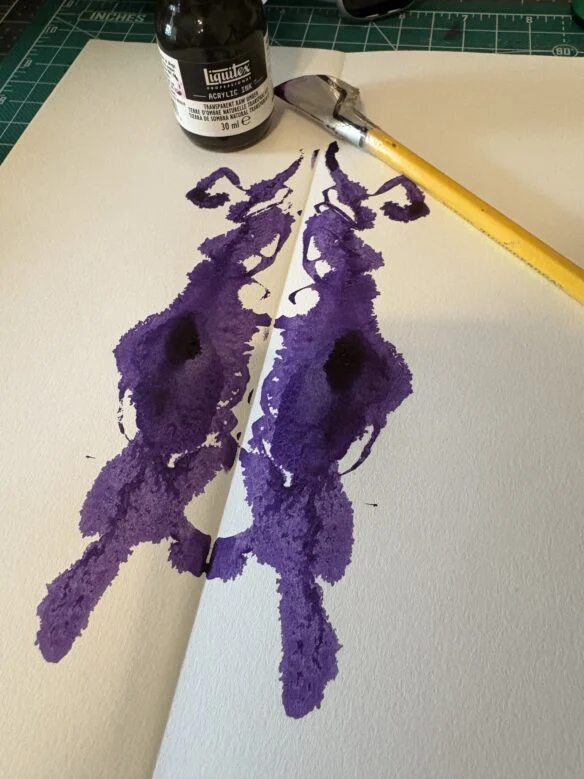
By [Your Name/Journalistic Desk]
In the vast, sprawling archive of human connection, few artifacts are as hauntingly beautiful—or as curiously overlooked—as the "Ghost Book." Popularized in the early 20th century, these unique albums served as a bridge between the social tradition of collecting signatures and the burgeoning cultural fascination with spiritualism. Today, Journey Planet, the acclaimed fanzine dedicated to the intersection of science fiction, fantasy, and fandom, has issued a formal call for entries, inviting fans to contribute their own signatures and "ghosts" to a new, thematic issue. This project, spearheaded by Sara Felix, aims to bridge the gap between historical curiosity and contemporary fan expression, with potential for a physical gallery exhibit in the future.
Main Facts: The Call to Action
The Journey Planet initiative is a direct appeal to the creativity and participation of the global fandom community. The editors are seeking physical submissions of signatures transformed into "ghosts"—a process involving the strategic folding of paper while ink is still wet to create a mirror-image, abstract imprint of a person’s name.
These contributions are not merely for publication; they are intended to form the backbone of a specialized issue of Journey Planet dedicated to the legacy of The Ghost of My Friends. The project organizers have provided a comprehensive instructional document that outlines the historical background, technical methods for creating high-quality "ghosts," and the logistical requirements for submission.
To ensure their work is included in this archival endeavor, participants must adhere to a strict deadline: August 1st, 2026. Submissions must be mailed to the organizers, and interested parties are instructed to consult the provided Google document to retrieve the necessary contact and mailing details.
Chronology: From Victorian Parlors to Modern Fandom
To understand the weight of this project, one must understand the provenance of the Ghost of My Friends phenomenon.

The Era of Spiritualism (1900–1920)
At the dawn of the 20th century, the Western world was gripped by a widespread fascination with spiritualism and the occult. Parlor games became a staple of social gatherings, and the "Ghost Book" emerged as a parlor-room staple. The process was simple yet evocative: a guest would write their signature in thick, wet ink, fold the page precisely in half, and press it firmly. When unfolded, the resulting Rorschach-like inkblot—the "ghost"—would bear a ghostly, mirrored resemblance to the original signature. These books acted as physical manifestations of social circles, frozen in a medium that felt simultaneously scientific and supernatural.
The Archive Revival
The website The Ghosts of My Friends has done the essential work of cataloging these vintage volumes, identifying the original publishers and the social context in which these books thrived. By surfacing these artifacts, the site laid the groundwork for a modern revival.
The Fandom Integration (2024–2026)
Journey Planet has historically acted as a repository for fan history and creative discourse. By adopting the "Ghost Book" format, the editors are effectively merging the history of 20th-century social interaction with the 21st-century digital-age desire for tangible, analog community markers. The current call for entries marks the first time this Victorian practice is being explicitly applied to the modern, global fandom community on a systemic scale.
Supporting Data: The Mechanics of the "Ghost"
Creating a "ghost" is an exercise in both precision and chance. For those participating in the Journey Planet call, the organizers have emphasized the importance of following specific guidelines to ensure that the submissions are both aesthetically consistent and suitable for reproduction in a print fanzine.
Technical Requirements for Submission
- Ink Density: The signature must be written in a high-flow, dark ink. Ballpoint pens, while efficient for signatures, often lack the pigment density required to create a vivid "ghost." Fountain pens or gel pens are strongly recommended.
- Paper Quality: The weight and texture of the paper significantly impact the absorption and transfer of the ink. Standard printer paper may bleed or tear, so participants are encouraged to use higher-grade stationery where possible.
- The Fold: Accuracy is paramount. The fold must be crisp and the pressure applied across the surface must be uniform to ensure a clean transfer.
- Authentication: Each "ghost" should be accompanied by the legible signature of the creator to ensure the archive maintains a record of the individuals behind the spectral images.
These technical specifications transform a simple social game into an act of collaborative art, ensuring that the resulting fanzine serves as a high-quality historical document rather than merely a collection of messy ink stains.
Official Responses and Editorial Vision
While the project is a collaborative effort, the vision behind it is rooted in the preservation of ephemeral culture. Sara Felix, in her announcement, highlights that this is more than just a fanzine issue; it is a long-term archival project.

"We are not just looking for content," an editorial spokesperson noted in the project’s internal briefing. "We are looking for a footprint. In an era of digital signatures and fleeting social media interactions, the physical act of creating a ‘ghost’—something that requires time, physical medium, and post-service—reclaims a sense of intimacy that is often lost in our digital-first lives."
The editors have also signaled that they are exploring the logistics of a potential exhibition. Should the volume of submissions prove sufficient, there is a possibility that these signatures will be showcased in a physical gallery setting at future conventions or literary events. This would elevate the project from a fan-media endeavor to a legitimate art installation, reflecting the "Spiritualist" roots of the original 1900s trend.
Implications: Why This Matters to Fandom
The Journey Planet call to action is significant for several reasons, touching upon themes of legacy, materiality, and the nature of community.
The Material Turn
In a post-pandemic world, there has been a notable shift back toward analog hobbies—letter writing, physical zine-making, and paper crafts. By focusing on a technique that is inherently "slow" and tactile, Journey Planet is participating in a wider cultural movement that rejects the disposability of the digital.
Archiving the "Fan Self"
Fandom is often criticized for its ephemerality—the idea that fan discourse is "here today, gone tomorrow." By requesting physical signatures to be stored in an archive and potentially exhibited, Journey Planet is providing a way for fans to "leave a mark." It is a form of digital-age vanity that feels surprisingly humble; it is the desire to be remembered, not by a digital handle or a profile picture, but by an abstract, ghostly imprint of one’s own hand.
Interdisciplinary Crossover
The project sits at a fascinating intersection of Victorian history, art, and modern fan culture. By engaging with the history of spiritualism, participants are invited to learn about the social history of the early 20th century, effectively using fandom as a gateway to broader historical inquiry.

Conclusion: The August 2026 Horizon
As the clock ticks toward the August 1st, 2026, deadline, the pressure—and the excitement—is mounting. This project represents a unique opportunity for fans to contribute to a collective work that is both an homage to a bygone era and a statement about the endurance of human connection.
Whether the Journey Planet issue succeeds in becoming a definitive, cross-generational archive or remains a quirky, niche experiment depends entirely on the participation of the community. As of now, the instructions are clear, the goal is set, and the pens are ready. The ghosts of the future are waiting to be made.
For those interested in participating, all materials and instructions can be found via the Journey Planet instructional document. Do not miss the chance to leave your mark—or rather, your ghost—in the annals of modern fandom.


 Ammar Sabilarrohman