In an era defined by the instantaneous nature of push notifications, fiber-optic internet, and artificial intelligence-driven news aggregation, one might assume the "running of the interns" at the U.S. Supreme Court would have been relegated to the archives of journalistic history. Yet, as of late June 2026, the tradition remains as vibrant—and as sweaty—as ever.
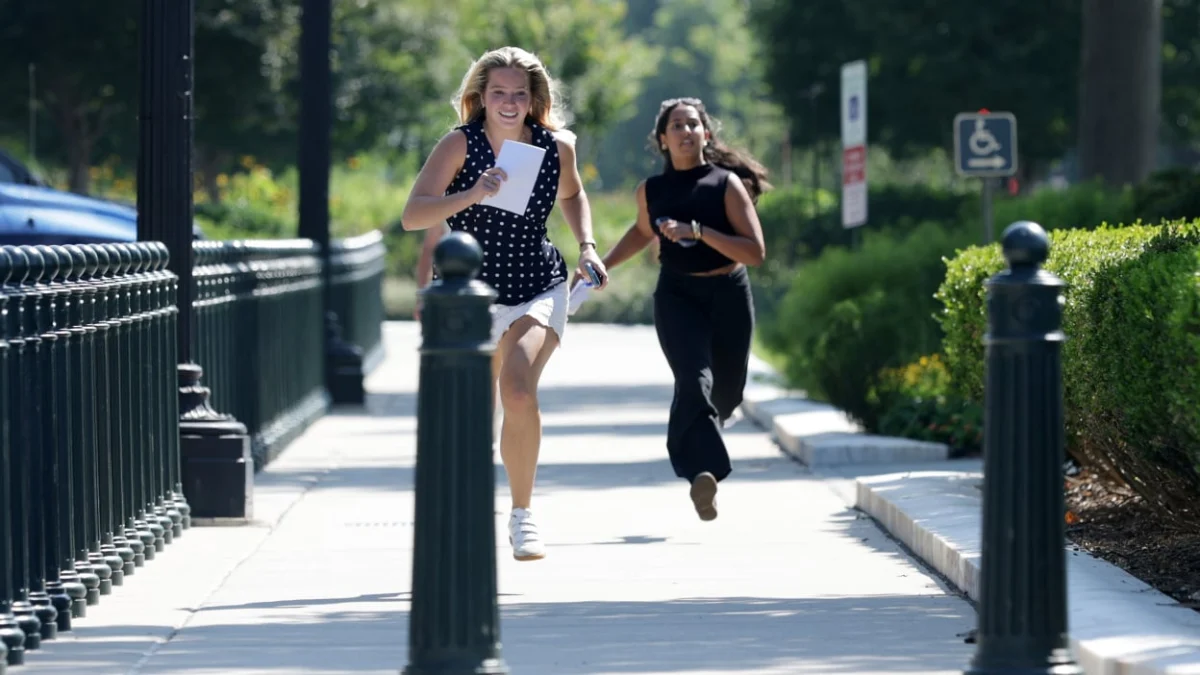
Following the release of high-stakes rulings on June 30, 2026, including landmark decisions on birthright citizenship, the eligibility of transgender athletes, and critical campaign finance thresholds, the scene outside the Supreme Court plaza looked like a high-speed athletic event. Clad in business-casual attire and sneakers, interns from major media networks were captured on social media sprinting from the steps of the Court, clutching printed copies of the opinions. It is a spectacle that manages to blend the high-minded gravity of American jurisprudence with the frantic energy of a collegiate relay race.
The Main Facts: An Analog Relic in a Digital World
The "running of the interns" is exactly what it sounds like: a frantic dash by media interns to physically transport printed, time-stamped copies of Supreme Court opinions from the building’s interior to news vans and reporting stations positioned outside.
Because recording devices—including phones, tablets, and laptops—are strictly prohibited inside the courtroom, the physical document is the "source of truth." For decades, the media outlet that reached its broadcast desk first with the text could be the first to break the news to the American public. Even in 2026, when the Court releases digital PDFs simultaneously on its website, the physical paper remains a symbolic and sometimes functional necessity for producers who need to analyze thousands of pages of text before a live camera goes on air.
Chronology of a Washington Ritual
The tradition is not merely a modern affectation; it is deeply rooted in the 20th-century history of the American press.

The Print Era (1970s–1990s)
Before the internet, the Court’s opinions were delivered exclusively on paper. The "run" was a genuine necessity. News wires and television networks relied on these physical copies to relay the news across the country via teletype or satellite uplink. It was a race against the clock, where the fastest runner often determined which network scooped its competitors.
The Inflection Point: Bush v. Gore (2000)
The 2000 presidential election served as the "Big Bang" for the modern iteration of the tradition. As the nation held its breath for the decision that would resolve the Florida recount, the eyes of the world were on the Supreme Court steps. The frantic image of interns racing to get the decision to network anchors cemented the ritual in the public consciousness, elevating it from an internal industry quirk to a national media event.
The Digital Pivot and the "Extinction" (2020–2022)
During the COVID-19 pandemic, the Court pivoted to an exclusively digital release system. For two years, the absence of the "run" led many media analysts to declare the tradition dead. Critics argued that in a world of instant digital distribution, physical transport was a performative waste of energy. However, as the Court reopened to the public, the ritual returned, proving that even in a digital world, the physical act of "breaking news" remains a powerful piece of theater.
Supporting Data: Why It Persists
While critics view the sprint as an anachronism, media organizations cite several reasons for its persistence:
- The "Live" Factor: For television networks, the visual of a runner emerging from the Court provides a sense of urgency that a silent screen refresh cannot replicate. It creates a narrative of "active" news gathering.
- Editorial Processing: While a PDF might be posted online, it often takes time for researchers to digest complex legal jargon. Interns bring the hard copies directly to senior legal correspondents who are already "on air" or preparing to go live, allowing for real-time annotation and analysis.
- The "Institutional Memory" of the Press Corps: The Supreme Court press corps is a tight-knit community that values tradition. The run is a rite of passage for interns, a grueling initiation that connects them to the legendary reporters who paved the way.
Official Responses and Industry Perspectives
Legal scholars and media experts remain divided on the necessity of the practice.

"It’s a bizarre intersection of high-stakes law and collegiate sports," says a veteran Washington producer who requested anonymity. "On one hand, we have the most powerful judicial body in the world. On the other, we have a bunch of kids in dress shoes sprinting across a plaza. It feels like a scene from a movie, but it is undeniably effective for our workflow."
Conversely, the Supreme Court’s Public Information Office has historically remained neutral, simply managing the flow of documents to the press as they have for decades. They do not mandate the running; the media does. The interns themselves often describe the experience as a blend of adrenaline and terror—the fear of tripping, the weight of the historical document, and the pressure of national expectations.
The Cultural Implications: Why We Can’t Look Away
The enduring popularity of the "running of the interns" in 2026 speaks to a broader human fascination with the physical world. In an age where we are constantly told that "everything is moving to the cloud," seeing a human being perform a physical task to deliver information is oddly comforting.
The Social Media Effect
The ritual has found new life on platforms like TikTok and X (formerly Twitter). The footage of interns sprinting often goes viral, leading to memes, appreciative comments about the interns’ athletic prowess, and even tongue-in-cheek calls for athletic apparel brands to sponsor the "event." This social media engagement transforms a bureaucratic process into a participatory spectator sport, bridging the gap between the insular world of Washington politics and the general public.
The Value of "Slow" News in a "Fast" World
There is a profound irony in the fact that, in an age of AI-generated summaries, the most trusted news often still relies on a human being running through the streets. It suggests that while we crave speed, we also crave the human element of journalism. The "running of the interns" reminds us that news is not just data—it is a human endeavor.

Conclusion: A Tradition with Legs
As long as the Supreme Court continues to hand down decisions that shape the lives of millions, the media will feel the pressure to be first. And as long as there is a physical document to be handed over, there will likely be an intern ready to sprint across the plaza to get it.
While the "running of the interns" may seem like a strange, vestigial organ of the American media landscape, it serves as a testament to the persistent, frantic, and undeniably human nature of the news cycle. Whether it is a necessity or a piece of performance art, it is a ritual that has successfully survived the transition from the teletype machine to the TikTok feed—and it shows no signs of slowing down.