

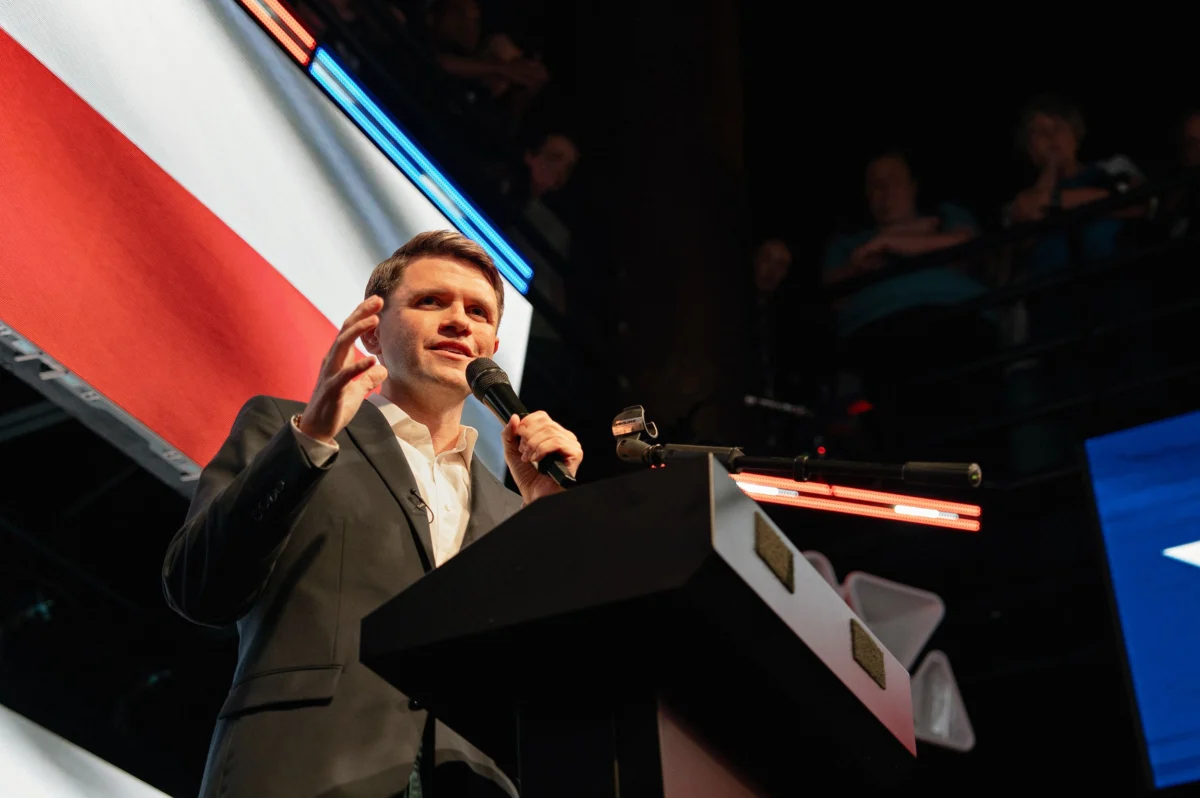
Introduction: A New Front in the Texas Culture War
In a political landscape defined by intensifying polarization, the 2026 Texas Senate race has descended into a bizarre, high-stakes collision between traditional retail politics and the radicalized lexicon of the modern “manosphere.” On Tuesday, Texas Attorney General Ken Paxton—a figure whose career has been defined as much by legal scandal as by ideological fervor—clinched the Republican nomination for the U.S. Senate. Backed by the institutional weight of the MAGA movement and a personal endorsement from Donald Trump, Paxton’s victory speech did not pivot toward the pragmatic concerns of the Lone Star State’s 19 million voters. Instead, he launched a barrage of gendered, ad hominem attacks against his Democratic opponent, Texas state representative James Talarico, signaling that this general election will be fought not just on policy, but on the perceived masculinity of the candidates.
Chronology of the Conflict
The descent into rhetorical warfare began almost the moment the primary results were finalized. Paxton, seeking to consolidate the base, immediately branded Talarico as an avatar of "radical" Democratic ideology. In a performance that mirrored the combative style of the former president, Paxton debuted a list of derogatory nicknames for Talarico, including "Tofu Talarico," "Six-Gender Jimmy," "James Talafreako," and, most pointedly, "Low-T Talarico."
By Wednesday, the campaign rhetoric had expanded beyond the candidate himself. Stephen Miller, a prominent architect of the Trump administration’s policies, took to social media to amplify the narrative, falsely claiming that Texas Democrats had made history by nominating their “first transgender senate candidate.” This orchestrated campaign of misinformation and gender-focused insults has quickly become the primary’s defining feature, forcing the Talarico campaign to navigate a barrage of bad-faith attacks while attempting to keep the focus on Paxton’s own extensive history of alleged corruption and ethical breaches.
The Roots of the "Low-T" Narrative
The fixation on Talarico’s masculinity is not an accidental campaign strategy; it is a direct export of the "manosphere"—a loose network of online communities obsessed with evolutionary psychology, bio-hacking, and a hyper-masculine ideal of health and strength. Within these spaces, "Low-T" (low testosterone) and "soy boy" have become standard epithets for men who are viewed as culturally or politically progressive.
This rhetoric has found a comfortable home at the highest levels of federal power. Health Secretary Robert F. Kennedy Jr., a key player in the current administration’s health policy, has frequently weaponized the concept of male vitality. Kennedy has repeatedly sounded the alarm on what he characterizes as a "testosterone crisis" among American men, often citing declining clinical trends while ignoring the nuance of endocrinology. His public advocacy for high-protein, meat-heavy diets as a remedy for this perceived national decline has provided a pseudo-scientific veneer to the political attacks leveled against Talarico.
Ironically, the claim that Talarico is a "vegan" is based on a deliberate distortion of a 2022 fundraising event where Talarico, then running for re-election to the Texas House, advocated for reducing meat consumption to mitigate climate change and noted that his campaign would source vegan options for events. Despite being seen eating meat and dairy regularly on the campaign trail—including a widely publicized visit to Austin’s Taco Joint—the "vegan" label has been weaponized as a shorthand for "un-Texan."
Supporting Data: Corruption vs. Culture War
Democratic strategists, including Eric Koch, founder of the political communications firm Downfield, argue that the reliance on such juvenile insults is a symptom of desperation.
"Ken Paxton is desperate to deflect from the fact that his own party impeached him and he’s the most corrupt politician in America," Koch asserts. "He’s got nothing other than name-calling, because his résumé, top to bottom, is one endless string of corruption and crimes."
The financial reality of the race underscores this tension. While the Talarico campaign has emerged as a fundraising powerhouse—even turning the "Talafreako" insult into a profitable merchandise line—the Republican establishment is privately expressing anxiety. Reports indicate that party leadership is increasingly concerned about the high costs associated with rebranding a candidate as baggage-heavy as Paxton for a general election. The financial drain of defending a scandal-ridden nominee is creating a genuine rift within the GOP, as donors weigh the necessity of maintaining the Senate majority against the risks of backing a candidate whose personal legal liabilities could alienate moderate suburban voters.
Official Responses and Tactical Shifts
The Talarico campaign has adopted a "deflect and define" strategy. By leaning into the absurd nature of the insults, they have effectively neutralized the initial impact of the smears. Selling "I’m a Talafreako" T-shirts was a move that deprived the Paxton camp of the "shock and awe" power typically afforded to such nicknames.
For his part, Paxton’s camp remains steadfast, betting that the culture war strategy will resonate with the core base. By framing the election as a battle for the "soul of Texas manhood," they hope to mobilize rural voters who feel alienated by the rapid demographic and cultural changes in the state’s urban centers. However, this strategy faces a significant hurdle: Texas has a massive, diverse electorate that is often more concerned with property taxes, energy infrastructure, and education funding than with the perceived hormone levels of a state representative.
Implications for the 2026 Election
The 2026 Texas Senate race represents a critical test case for the endurance of "Trumpian" political tactics in a post-Trump era. If a campaign built on "manosphere" grievances and internet-slang-based mudslinging succeeds in a state as large and complex as Texas, it will effectively cement this style of politics as the new standard for the Republican Party.
Conversely, if the strategy fails, it may signal a turning point for the GOP—a realization that the "base-only" strategy, which works in low-turnout primaries, is insufficient for a general election with nearly 19 million eligible voters. The result will provide a clear indicator of whether the electorate remains deeply entrenched in cultural identity battles or if it is beginning to crave a return to policy-driven governance.
Conclusion: Substance or Spectacle?
As the race moves toward the general election, the contrast between the two candidates could not be more stark. Talarico, a former teacher and Presbyterian seminarian, is attempting to pivot the conversation toward public service, economic reform, and the restoration of institutional integrity. Paxton, conversely, is doubling down on a narrative of personal strength, cultural defiance, and the "othering" of his opponent.
The ultimate question facing Texas voters is not one of biology or diet, but of governance. Does the electorate prefer a candidate who speaks to the anxieties of the internet age, or one who focuses on the material reality of their constituents? By choosing to make this election a referendum on "masculinity," Ken Paxton has effectively made himself the test subject for the longevity of this political style. Whether he is remembered as a master of the new political theater or a relic of a dying brand of scorched-earth politics will be decided at the ballot box. For now, the "Testosterone Primary" serves as a jarring reminder of how far the boundaries of American political discourse have shifted in a remarkably short period.












No comments yet. Be the first to join the conversation!