Rifan Muazin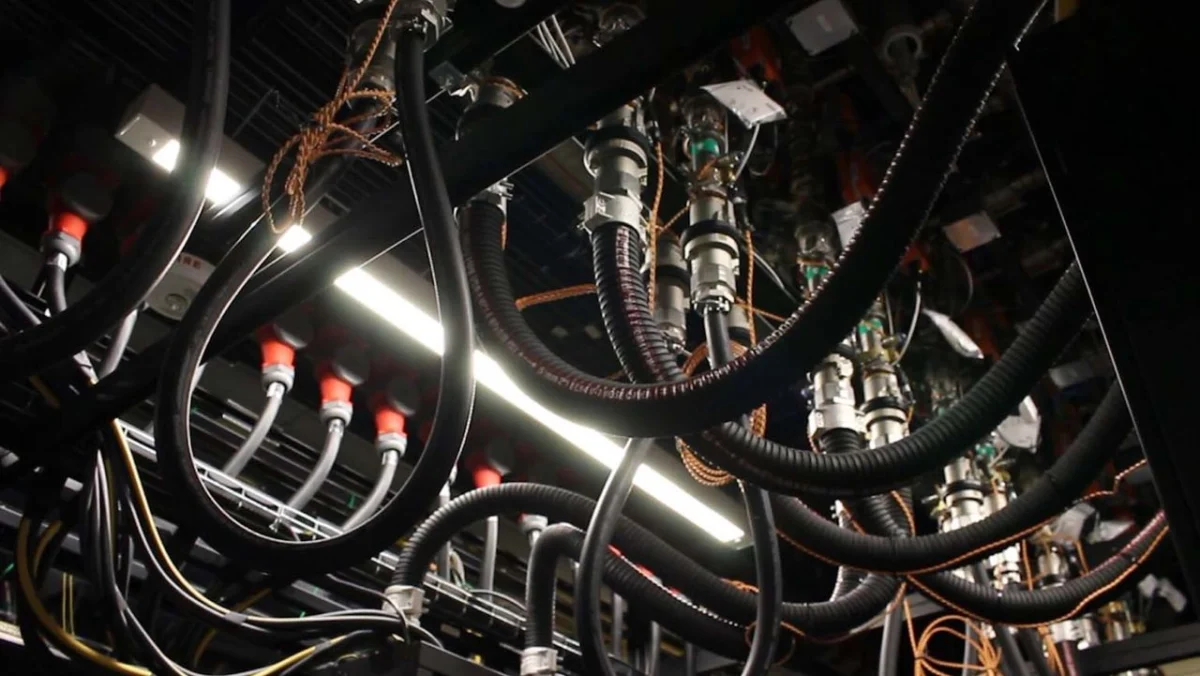
For years, the rapid expansion of the digital economy has been tethered to a physical constraint: the data center. As artificial intelligence models grow in complexity, the hardware required to power them—GPUs and high-performance CPUs—has become exponentially more power-hungry and thermally dense. This surge in energy consumption has placed data centers under intense public and regulatory scrutiny, as their massive footprints consume gargantuan amounts of electricity and, perhaps more controversially, millions of gallons of water for evaporative cooling.
However, a paradigm shift is underway. Nvidia, the architect of the modern AI revolution, has officially signaled that the era of traditional air-cooled data centers is reaching a hard physical limit. By pioneering a new, high-temperature, closed-loop liquid cooling architecture, the company is attempting to decouple AI growth from environmental degradation.
The Cracks in the Air-Cooled Foundation
The fundamental problem facing modern data centers is a basic law of physics: heat is the enemy of performance. In traditional setups, cooling fans push vast volumes of air through server racks to prevent hardware from throttling or failing. This method, while effective for low-density computing, is increasingly obsolete in the age of generative AI.
As rack densities climb to accommodate thousands of GPUs, air cooling struggles to keep pace. To maintain optimal temperatures, operators often rely on evaporative cooling towers, which consume massive quantities of water—a precious resource, particularly in the drought-prone regions where many new data centers are being constructed due to land availability and tax incentives. This creates a "cooling paradox": the very infrastructure required to run the AI models that might solve climate problems is itself a major contributor to water scarcity and local environmental stress.
Chronology of the Shift: From Air to Liquid
The transition to liquid cooling did not happen overnight. It is the result of a multi-year engineering trajectory necessitated by the sheer heat density of Nvidia’s latest silicon.
- The Air-Cooling Ceiling: Through the early 2010s, air cooling remained the gold standard. However, as GPU power requirements jumped from hundreds of watts to nearly a kilowatt per chip, the airflow needed to cool these components became physically impossible to deliver without creating deafening, inefficient "wind tunnels" in server rooms.
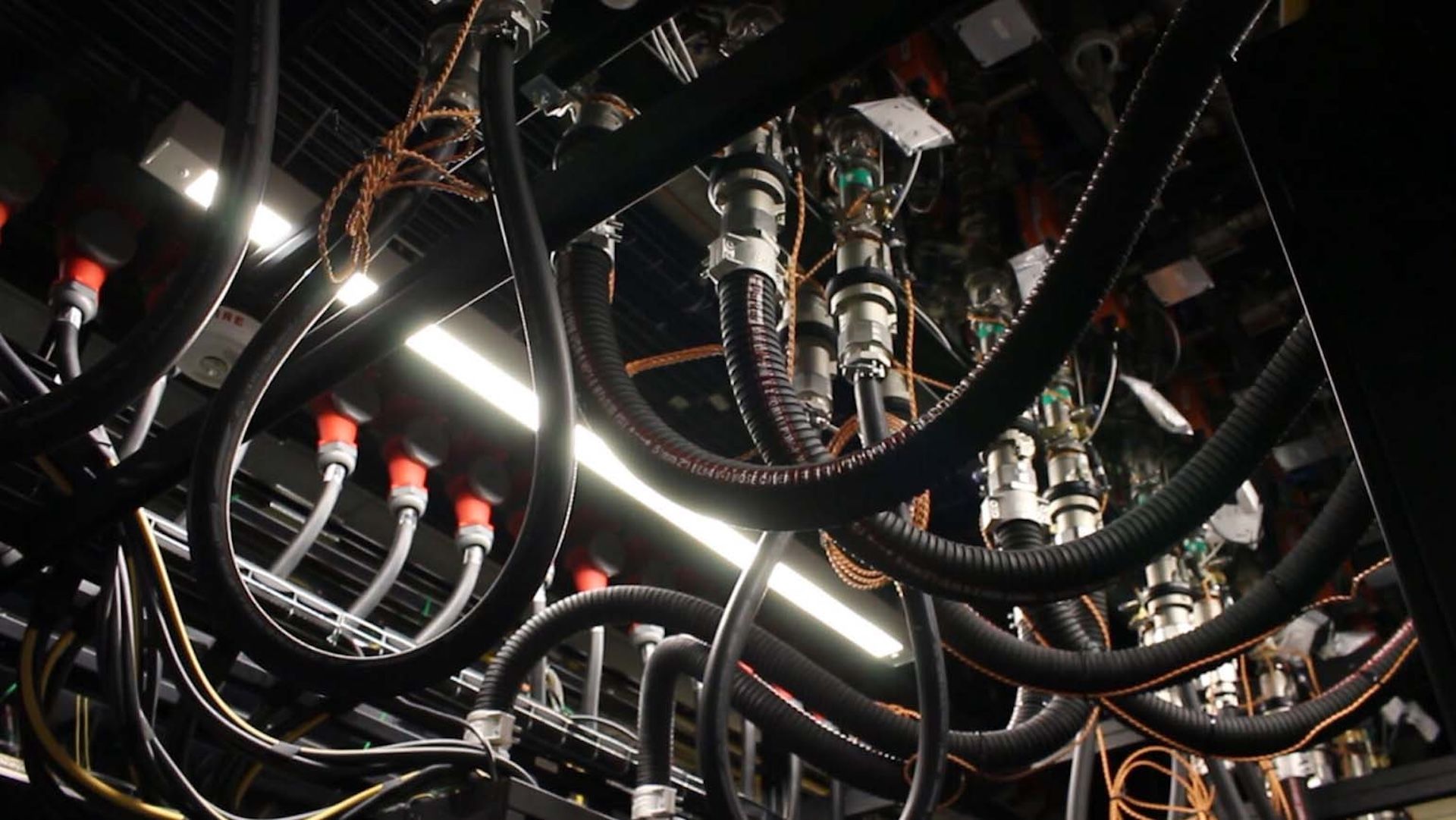
- The Introduction of Direct-to-Chip Cooling: In recent years, companies began experimenting with "cold plates"—metal blocks containing liquid channels placed directly against the processor. This proved far more efficient than air cooling, as liquid has a significantly higher thermal conductivity than air.
- The Closed-Loop Breakthrough: Nvidia’s latest iteration, integrated into its upcoming Rubin and current H100/Blackwell-class systems, moves beyond simple liquid loops. By adopting a high-temperature closed-loop design, Nvidia is now circulating coolant at 45°C (113°F). This higher operating temperature allows the system to dump heat into the environment using simple dry coolers, entirely bypassing the need for water-intensive evaporative towers.
- 2024–2025 Implementation: The industry is currently in the midst of a massive capital expenditure cycle, transitioning existing and new "AI factories" to these liquid-cooled designs, marking the first time in history that liquid has become a "mandatory" rather than "optional" feature for high-end computing.
Supporting Data: Why Water Matters
The performance gap between air-cooled and water-cooled hardware is not merely incremental; it is transformative. Independent testing, including recent studies on H100 deployments, has provided empirical evidence of why this shift is occurring.
Performance Gains
When comparing identical H100 systems under identical workloads, liquid-cooled units have demonstrated roughly 17% higher performance. This is largely due to "thermal headroom." Because the liquid cooling system keeps the chip temperatures stable—fluctuating between 41-50°C—the GPU can sustain higher clock speeds without triggering thermal throttling. In contrast, air-cooled systems under the same stress often oscillate between 54-72°C, forcing the hardware to throttle its performance to prevent catastrophic damage.
The Efficiency Metric
The Power Usage Effectiveness (PUE) ratio is the industry standard for measuring data center efficiency. A PUE of 1.0 is the theoretical limit, representing a facility where every watt of power goes to the IT equipment rather than the building infrastructure (like cooling). Traditional air-cooled facilities often hover around 1.5 to 1.6. With Nvidia’s new liquid-cooled, closed-loop reference designs, facilities are trending toward a PUE approaching 1.1, significantly lowering the "hidden" cost of running an AI model.
Space Efficiency
The physical footprint of an AI data center is also shrinking. Because liquid cooling allows for much higher density—packing more chips into a smaller volume without the risk of hot spots—Nvidia’s next-generation Rubin systems can now be contained within two racks, where older designs would have required six. This 3x reduction in space requirement allows companies to build smaller buildings, further reducing construction-related carbon footprints.
Official Perspectives: The Industry View
The industry response to this shift has been one of inevitability. Ali Heydari, Director of Data Center Cooling and Infrastructure at Nvidia, has been vocal about the company’s "DSX reference design." According to Heydari, the goal is "zero water consumption." By eliminating the need for evaporation, the system functions as a hermetically sealed loop that essentially recycles the same coolant indefinitely.
Richard Whitmore, CEO of Motivair, a leader in server cooling solutions, provided the blunt reality of the situation: "Once the watts per chip crossed a certain level, liquid cooling became mandatory." This sentiment is echoed across the data center sector, from hyperscalers like Microsoft and Google to colocation providers like Equinix, all of whom are re-tooling their facilities to accommodate the "liquid-first" future.
Implications: A Sustainable Future for AI?
The implications of this shift are profound, both for the environment and the economics of the tech industry.
1. Environmental Stewardship
The most immediate benefit is the mitigation of the data center’s water footprint. In regions like the American Southwest, where water is the primary point of contention between tech giants and local municipalities, the ability to run an AI factory with virtually zero water evaporation is a massive regulatory and PR win. It transforms the data center from a "water hog" into a "water-neutral" neighbor.
2. Economic Density
For data center operators, the economic argument is simple: space is money. If you can triple the computing power within the same square footage, you significantly increase the Return on Investment (ROI) of the facility. This is critical for companies looking to scale AI clusters to millions of parameters without being limited by the physical size of their server halls.
3. Hardware Longevity
Thermal cycling—the process of heating and cooling components rapidly—is a leading cause of hardware fatigue. By maintaining a constant, lower temperature through liquid cooling, the lifespan of expensive GPUs and networking hardware is likely to be extended. This reduces the frequency of hardware replacements, effectively lowering the "e-waste" footprint of the AI industry.
4. The "AI Factory" Era
We are moving away from the term "data center" toward the concept of the "AI factory." These are not merely rooms full of servers; they are precision-engineered environments where cooling is as important as the silicon itself. As Nvidia continues to roll out its Rubin architecture, the expectation is that liquid cooling will become the industry standard for all enterprise-grade AI clusters.
Conclusion
The transition to liquid-cooled AI infrastructure is perhaps the most significant structural change in the history of the data center. By moving away from the inefficiency of air-based cooling and the wastefulness of evaporative systems, Nvidia and its partners are creating a path forward that balances the insatiable appetite for AI with the realities of a planet with finite resources.
The technology is no longer in the experimental phase; it is the backbone of the next generation of computing. As the industry moves forward, the success of these "liquid-cooled factories" will likely serve as the blueprint for all future infrastructure, proving that technological progress and environmental responsibility are not mutually exclusive—provided the engineers are willing to rewrite the rules of the room.

 Iffa Jayyana
 Suro Senen