

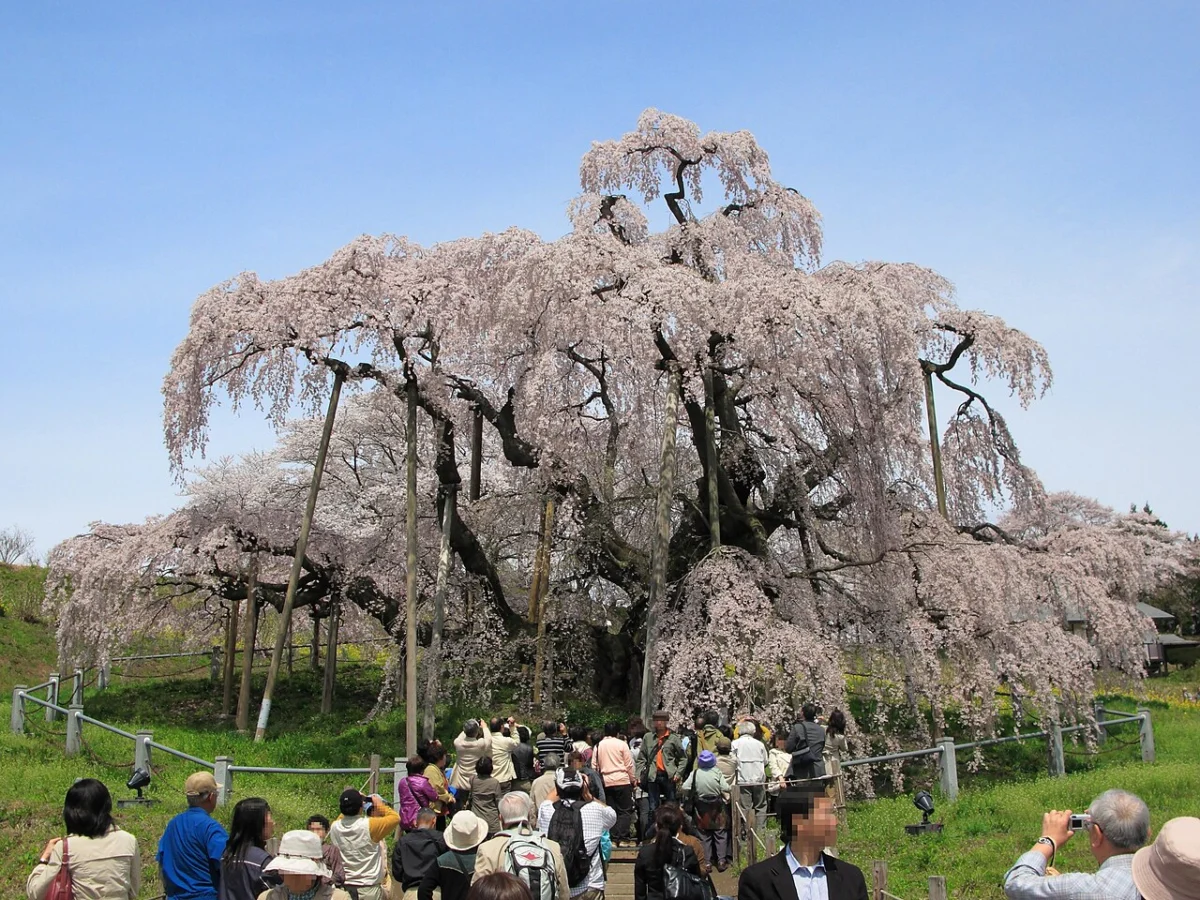
Standing on a gentle hillside in the Fukushima Prefecture, the Miharu Takizakura—or "Miharu’s Waterfall Cherry"—is not merely a tree; it is a living monument that has witnessed forty generations of Japanese history. As one of the "Three Great Cherry Trees of Japan," this ancient beni-shidare (weeping cherry) attracts hundreds of thousands of pilgrims annually. Yet, for all its fame, it remains a fragile, natural entity that demands careful planning and respectful observation.
Main Facts: A Living Masterpiece
The Takizakura is a specimen of Prunus pendula, estimated to be over 1,000 years old. Unlike the ubiquitous Somei-yoshino cherry trees that dominate Tokyo’s parks—which are clones with a lifespan of roughly 80 years—the Takizakura is a singular, ancient individual.
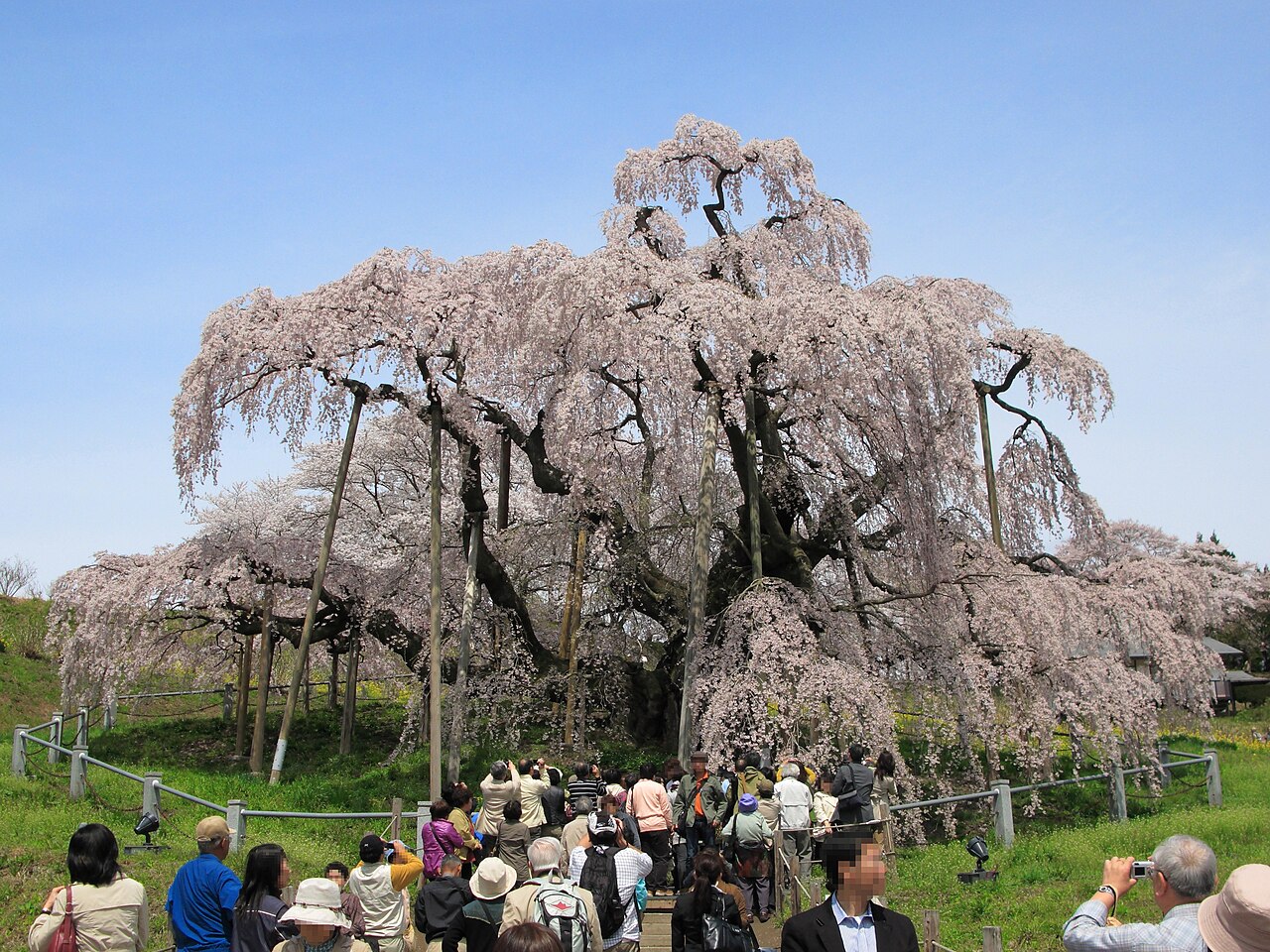
- Height: 13.5 metres.
- Trunk Circumference: 8.1 metres at chest height.
- Branch Spread: 14.5 metres to the south; 14.0 metres to the west; 11.0 metres to the east; 5.5 metres to the north.
- Status: Designated a National Natural Monument of Japan on October 12, 1922.
The asymmetry of the tree—leaning heavily toward the south—is a silent testament to a millennium of growth, where the tree has continuously adjusted its posture to capture sunlight and shield itself from the harsh winds of the Tohoku region.
Chronology: From Feudal Landmark to Global Icon
The history of the Takizakura is deeply intertwined with the local Miharu domain. During the late Edo period, the feudal lords of the region protected the tree as an oyadoboku (official tree). Its stature was solidified in the national consciousness by the 1830s, when the poet Kamo no Suetaka immortalized the tree in verse, describing blossoms "reaching to every corner of Oshu."
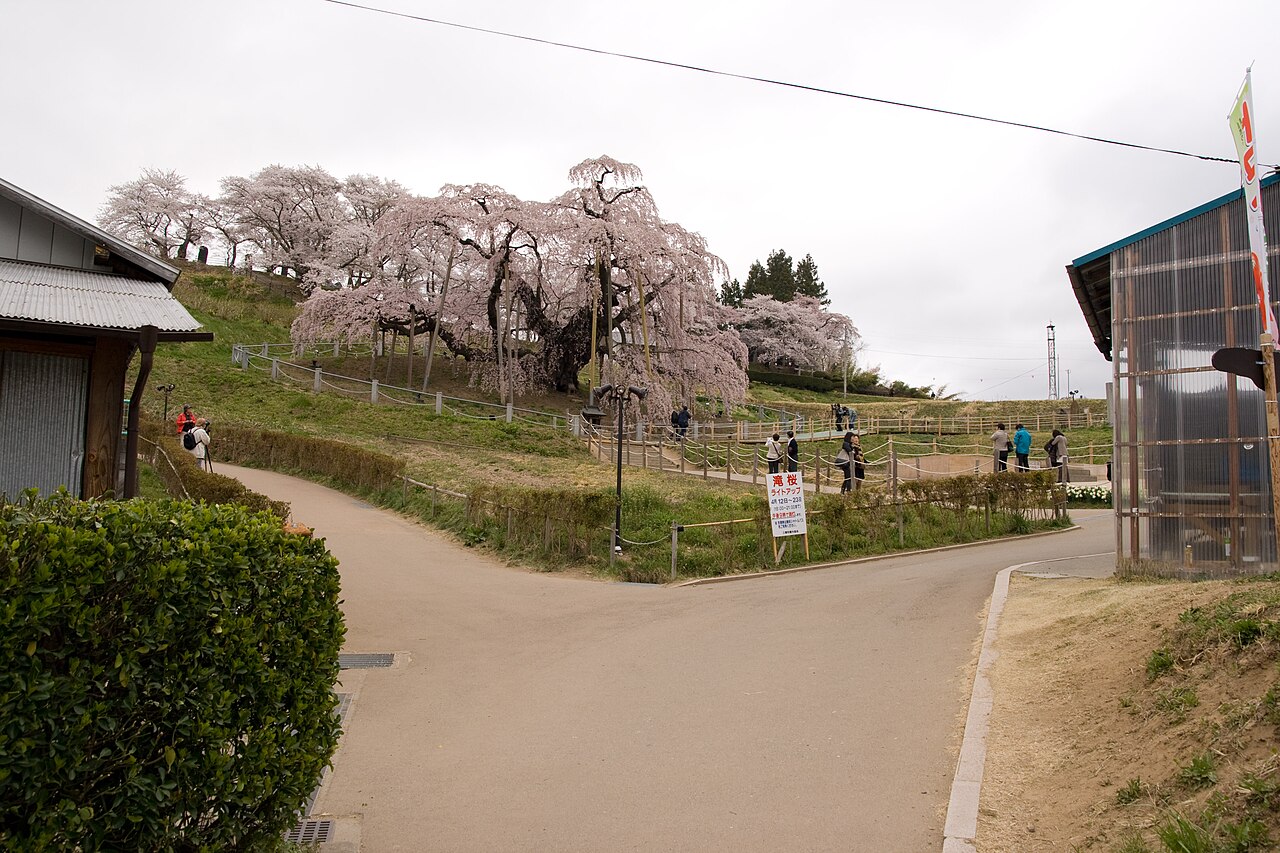
Throughout the 20th century, the tree’s fame grew as travel became more accessible. By the 1970s, the tree’s massive, drooping limbs became too heavy for its own structural integrity, necessitating the installation of permanent support poles. These structures, while utilitarian, have become part of the tree’s modern silhouette, allowing it to continue its annual display of vibrant pink blooms despite its advanced age.
Supporting Data: The Science of the Bloom
Understanding the "timing problem" is essential for any visitor. The Takizakura is a late-blooming cultivar. While Tokyo cherries might reach full bloom (mankai) in late March or early April, the Takizakura typically peaks between April 15 and April 22.
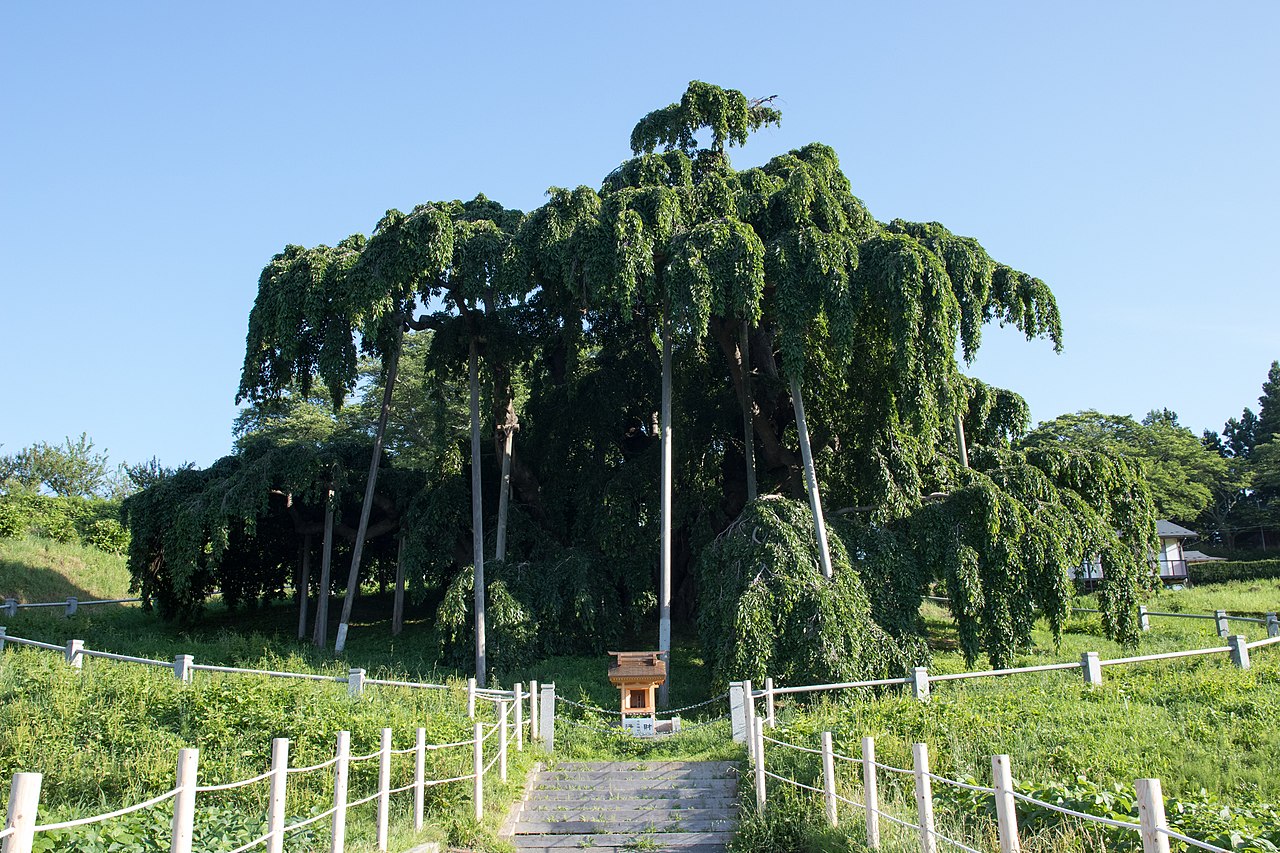
The bloom cycle follows a strict progression:
- Tsubomi: The bud stage.
- Saki-hajime: The initial opening of flowers.
- Mankai: Peak full bloom.
- Chiri-hajime: The beginning of the blossom fall.
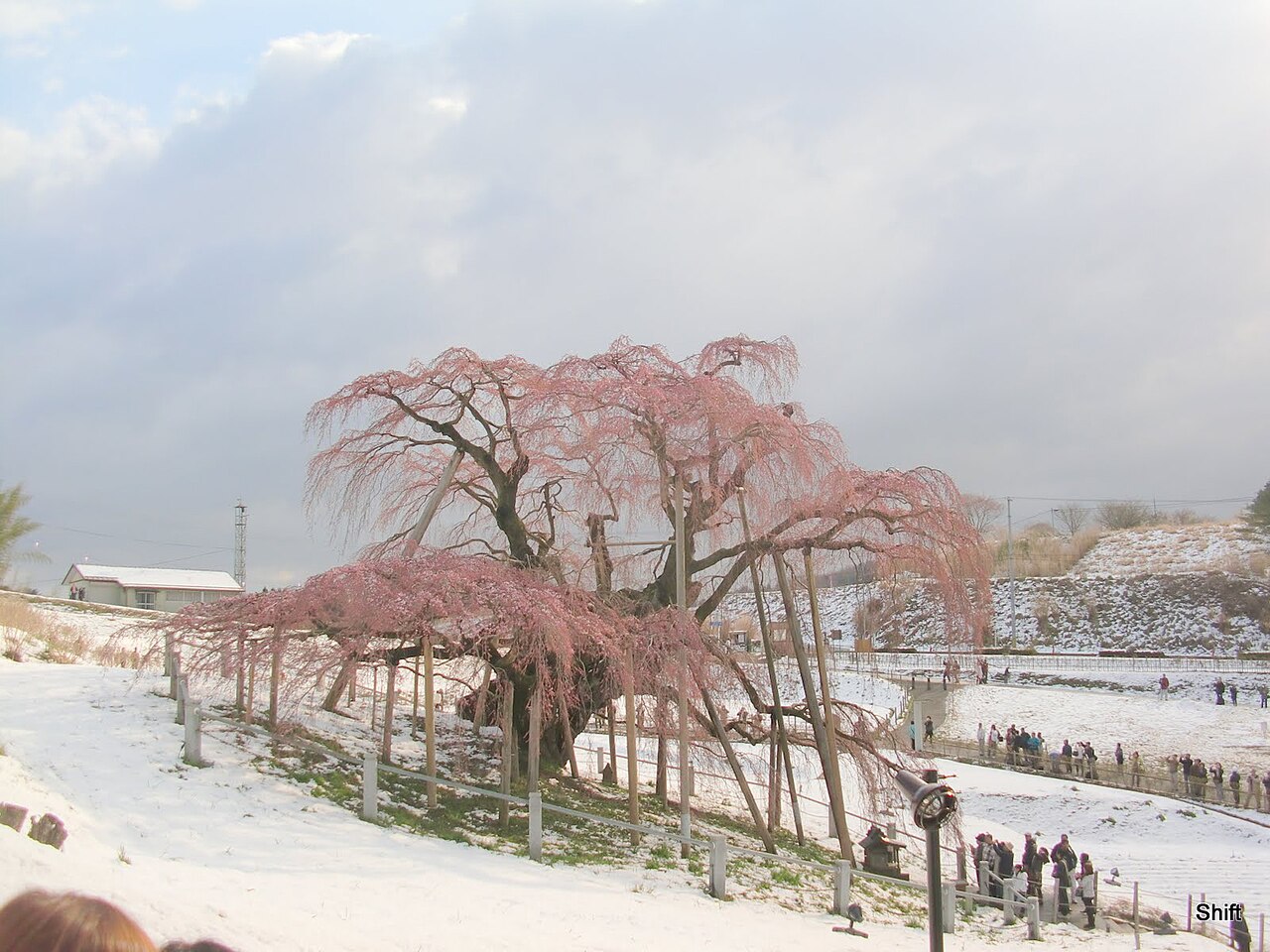
Because weather dictates the exact window, visitors must monitor the Miharu Tourism Association’s daily status updates. In colder years, the bloom can be delayed until late April, while unusually warm springs can pull the date forward to April 10. The tree’s resilience is legendary; even in 2010, when a surprise 30cm snowfall hit the hillside just before peak bloom, the tree remained a breathtaking sight, albeit with fewer visitors than in milder years.
Official Responses and Conservation Efforts
The Miharu Tourism Association manages the site with a focus on conservation. Admission is a modest ¥300, which funds the maintenance of the viewing paths, the installation of safety fencing, and the employment of volunteer staff.
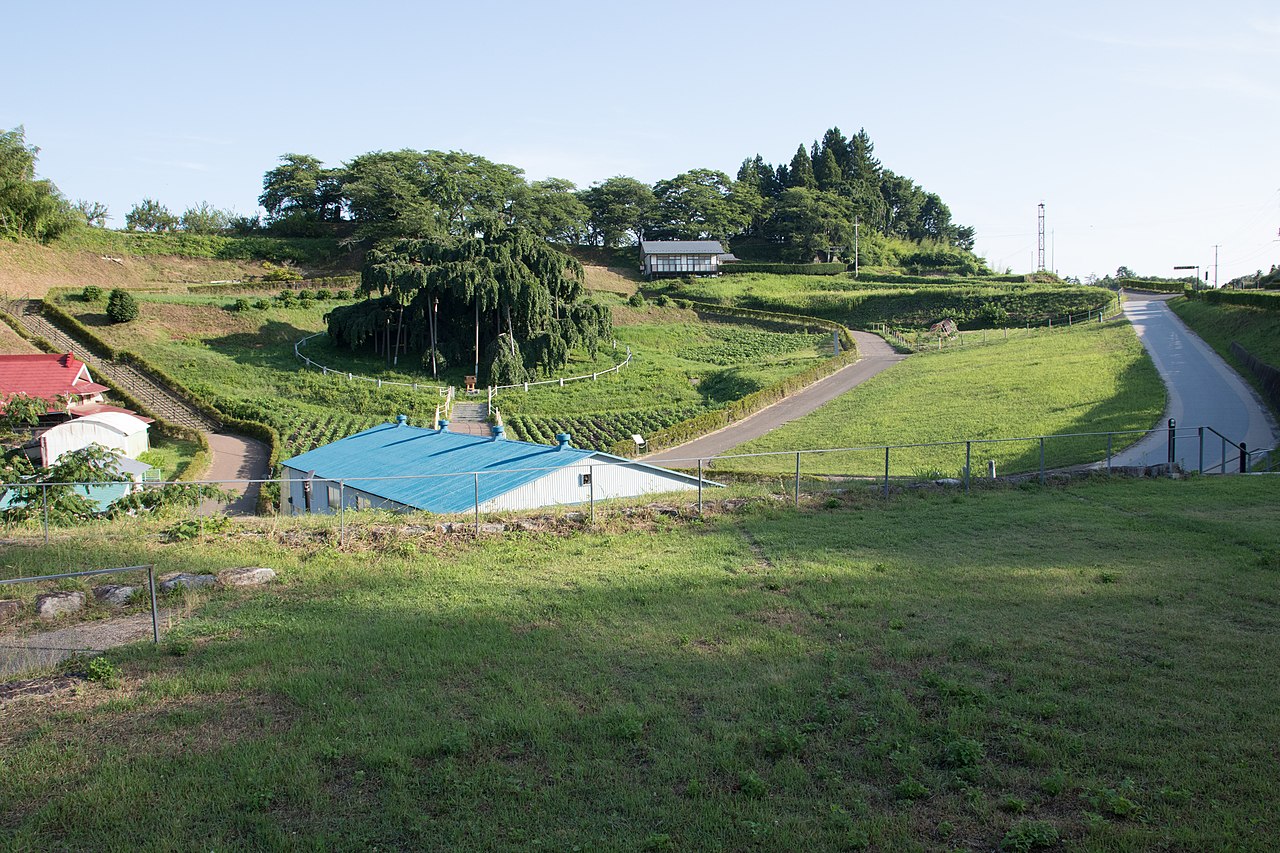
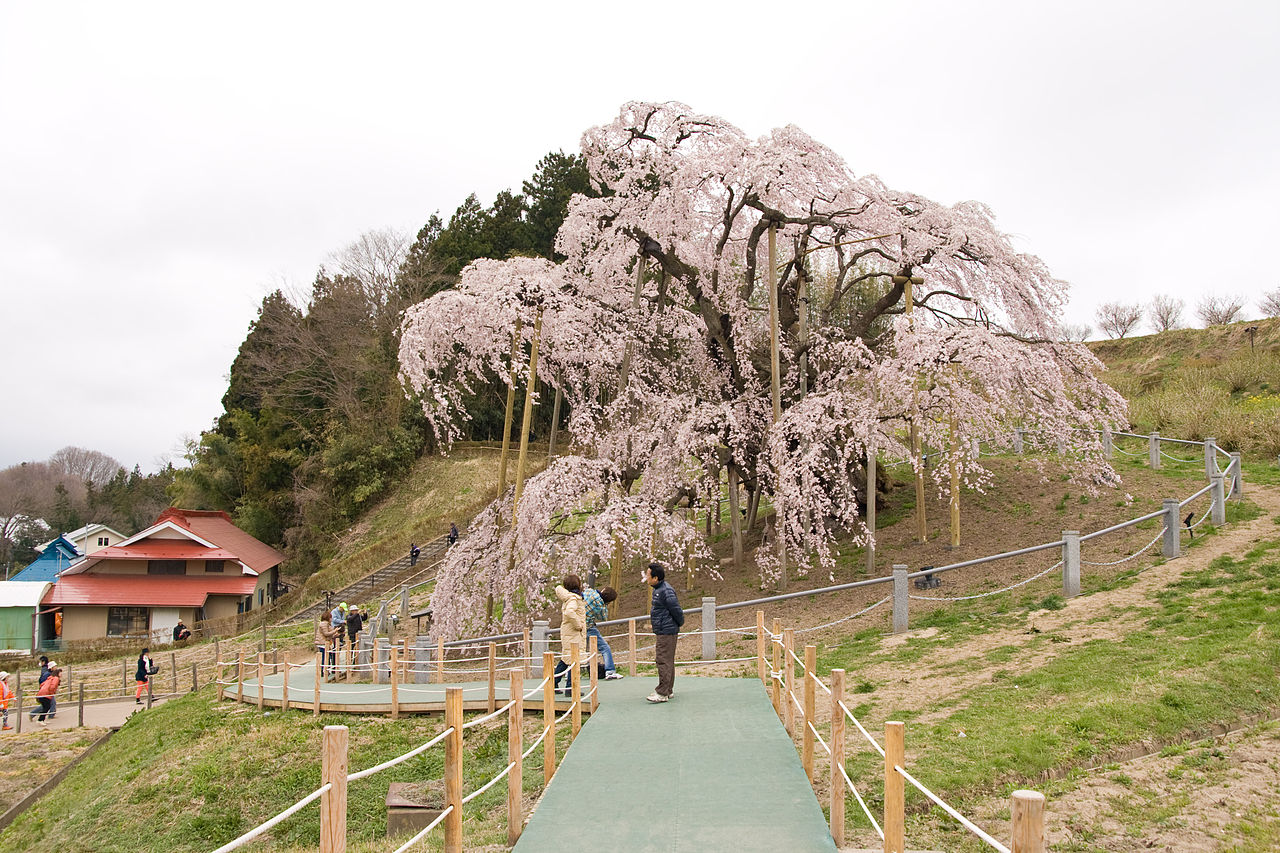
The site is strictly regulated to prevent soil compaction and damage to the root system. Visitors follow a one-way path that circles the tree, ensuring that the heavy foot traffic of up to 200,000 people over a ten-day period does not impede the tree’s health. The local government’s commitment to the tree is a model of environmental stewardship, balancing the economic benefits of mass tourism with the absolute necessity of preserving a biological treasure.
Implications for the Modern Traveler
The Night Illumination Experience
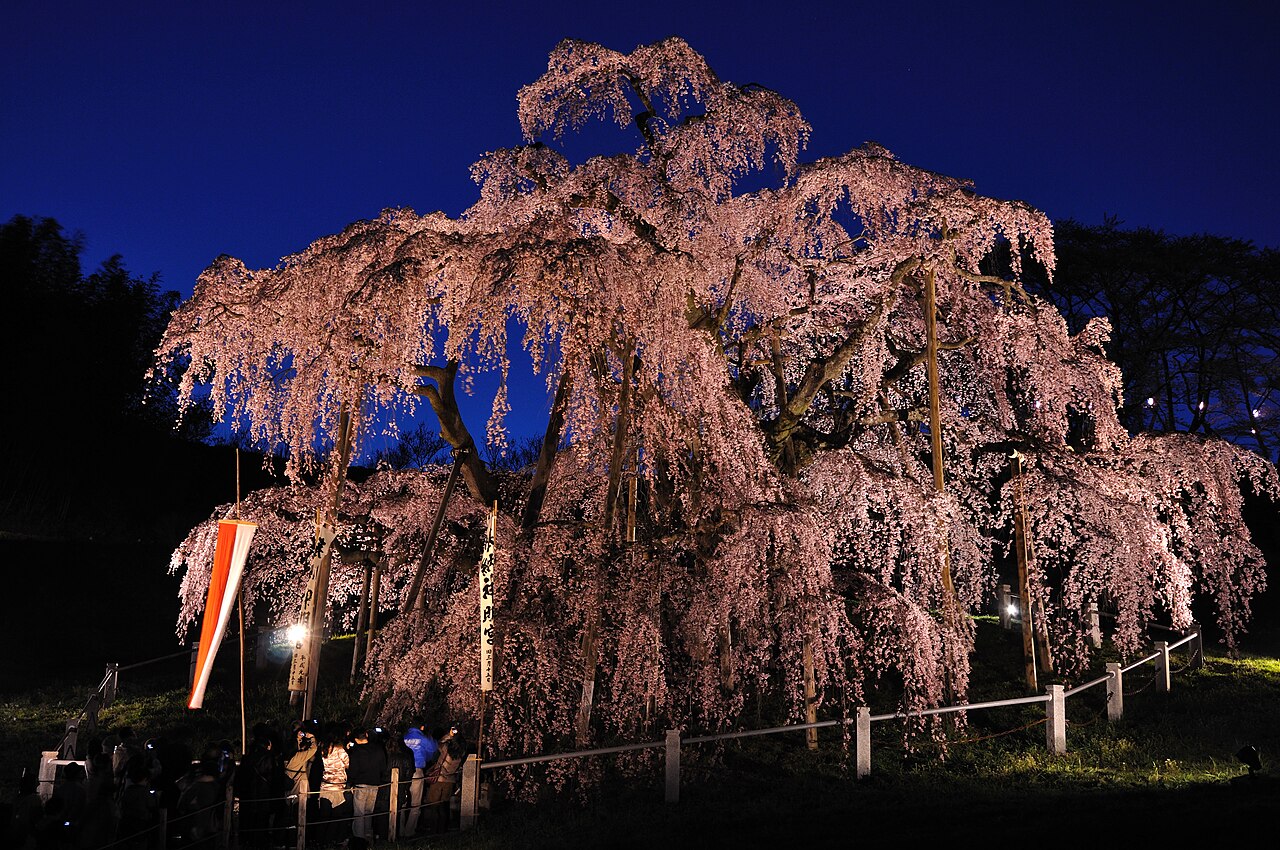
The most profound way to view the Takizakura is during the night illumination (18:00–21:00). As the sun sets, the artificial lighting—positioned strategically at ground level behind the tree—transforms the blossoms. They shift from a daytime soft pink to a radiant, molten gold, with deep pink hues intensifying toward the center. This is when the "waterfall" effect is most apparent. Because tour buses depart by 17:00, the evening atmosphere is significantly more serene, though visitors must be prepared for the chill; at 370 meters above sea level, April nights in Fukushima can drop to near-freezing temperatures.
Logistics and Accessibility
- The Shuttle Bus: The most reliable non-car method. Running from Miharu Station, the shuttle is timed to coincide with the bloom. A round-trip ticket costs approximately ¥500–¥700.
- The Taxi: While available, the queue at Miharu Station can exceed 40 minutes during peak days.
- Rental Cars: For those who wish to explore beyond the main site, a rental car from Koriyama Station is the most efficient choice. It allows visitors to combine the Takizakura with other local sites like the Abukuma Cave or the Miharu Dam.
Beyond the Tree: The "Sakura-Meguri"
Miharu is a treasure trove of "hidden" cherries. The town offers a sakura-meguri (cherry-tour) map at the station, detailing over 40 other notable trees in the region. Visitors who spend two days in the area often find that exploring these smaller, quieter sites provides a more intimate connection to the landscape than a second visit to the primary landmark.
Cultural Context: Why Miharu Matters
It is critical to address the region’s recovery. Since the 2011 Tohoku earthquake and the Fukushima Daiichi accident, there have been lingering questions about safety. It is important to note that Miharu is located in the central basin, over 60 kilometers inland from the coast. The town was never in an evacuation zone, and radiation levels have remained well below international safety thresholds for years. The Takizakura has been a symbol of resilience for the people of Fukushima, a living anchor that has helped the community maintain its cultural identity through challenging times.
Final Recommendations for the Pilgrimage
If you have only one day for a cherry-blossom trip, Miharu may be too distant for a tight schedule. However, for those willing to commit to an overnight stay in Koriyama, the Takizakura is the pinnacle of Japanese floral tourism.
To maximize your experience:
- Arrive at dawn (06:00) or dusk: Avoid the midday crush of tour buses.
- Respect the path: Do not attempt to jump fences or step off the designated trail.
- Bring a jacket: The mountain weather is unpredictable, even in mid-April.
- Embrace the full context: Visit the Takashiba Dekoyashiki craft village to see the traditional Miharu-goma horse carvings, and stop by Commutan Fukushima to gain a deeper, more nuanced understanding of the region’s environmental history.
The Miharu Takizakura is a testament to the passage of time. It has survived wars, technological revolutions, and climate shifts. Seeing it in full bloom is not just a photo opportunity; it is a chance to stand in the presence of a silent, ancient witness to history. When the wind blows and the petals fall like snow, you will understand why the locals speak of it not as a plant, but as a living waterfall of light.











