

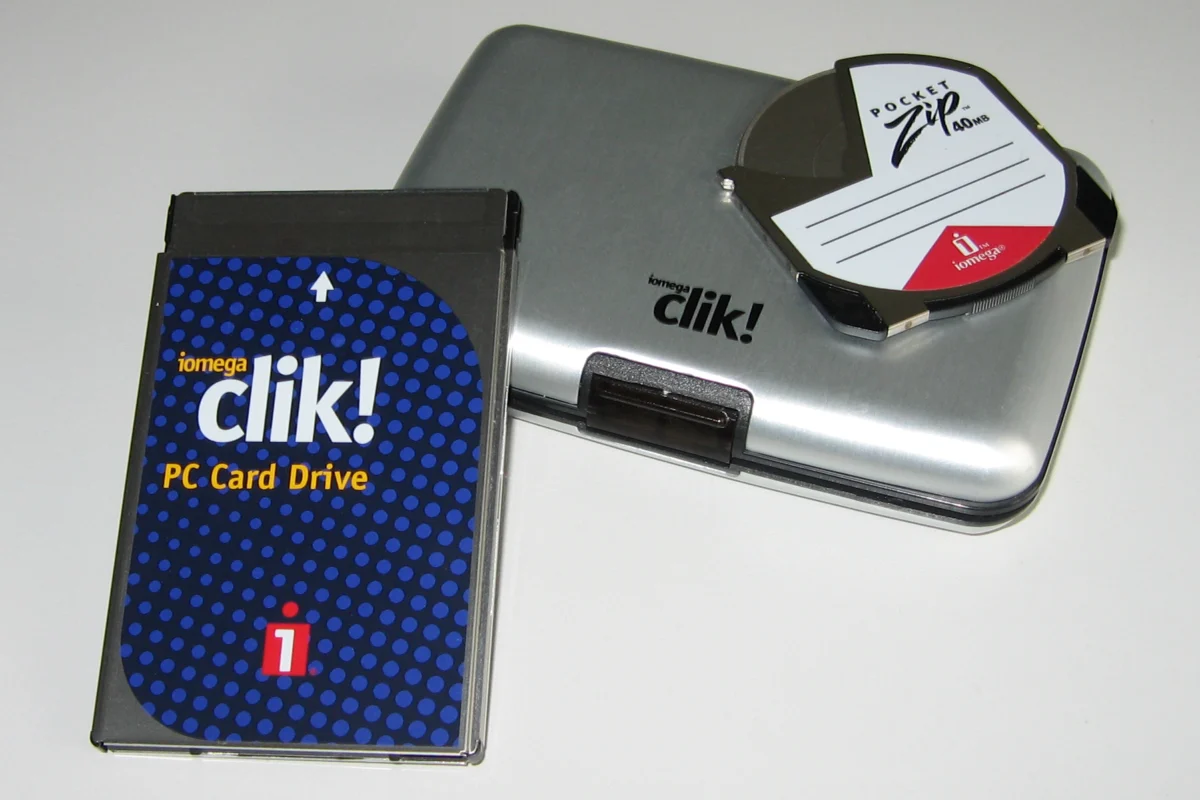
The late 1990s represented a frantic, experimental "Wild West" for consumer electronics. As the digital revolution shifted from corporate offices to living rooms, the demand for portable storage exploded. While history remembers the winners—the CD-R, the USB flash drive, and eventually the cloud—the landscape is littered with the carcasses of proprietary formats that promised to change the world. Among the most infamous, and arguably most misunderstood, of these failed experiments was the Iomega Clik! Drive.
An ambitious attempt to bring high-capacity, removable storage to the burgeoning world of digital cameras and mobile audio, the Clik! system was a marvel of miniaturization. Yet, it serves today as a cautionary tale for tech giants who believe brand loyalty can supersede the relentless march of technological evolution.
The Main Facts: Bridging the Gap in a Pre-Flash Era
In 1999, the digital storage market faced a genuine crisis of capacity. Digital cameras were becoming increasingly popular, but internal memory was expensive and limited. While CompactFlash and SmartMedia cards were the obvious future, they were prohibitively expensive for the average consumer. A 40MB flash card could cost upwards of $160—a staggering sum at the time.
Enter Iomega. Flush with the massive, industry-defining success of the Zip drive, the company sought to apply that same mechanical storage philosophy to the portable space. The Clik! drive was a 40MB removable disk system that utilized a spinning platter, much like a traditional hard drive, but shrunk down to the size of a matchbook. It was designed to fit into a PCMCIA slot, allowing laptop users to expand their storage instantly. Iomega’s pitch was simple: Why pay a fortune for flash memory when you could have 40MB of spinning magnetic storage for roughly $10 per disk?
Chronology: A Short, Sharp Decline
The rise and fall of the Clik! format was remarkably rapid, mirroring the fast-paced nature of the tech sector at the turn of the millennium.
- 1998: Iomega announces the "Clik!" storage technology, targeting mobile devices, PDAs, and the emerging digital camera market.
- 1999: The product officially launches. Despite the initial hype, it struggles to find an audience outside of early adopters.
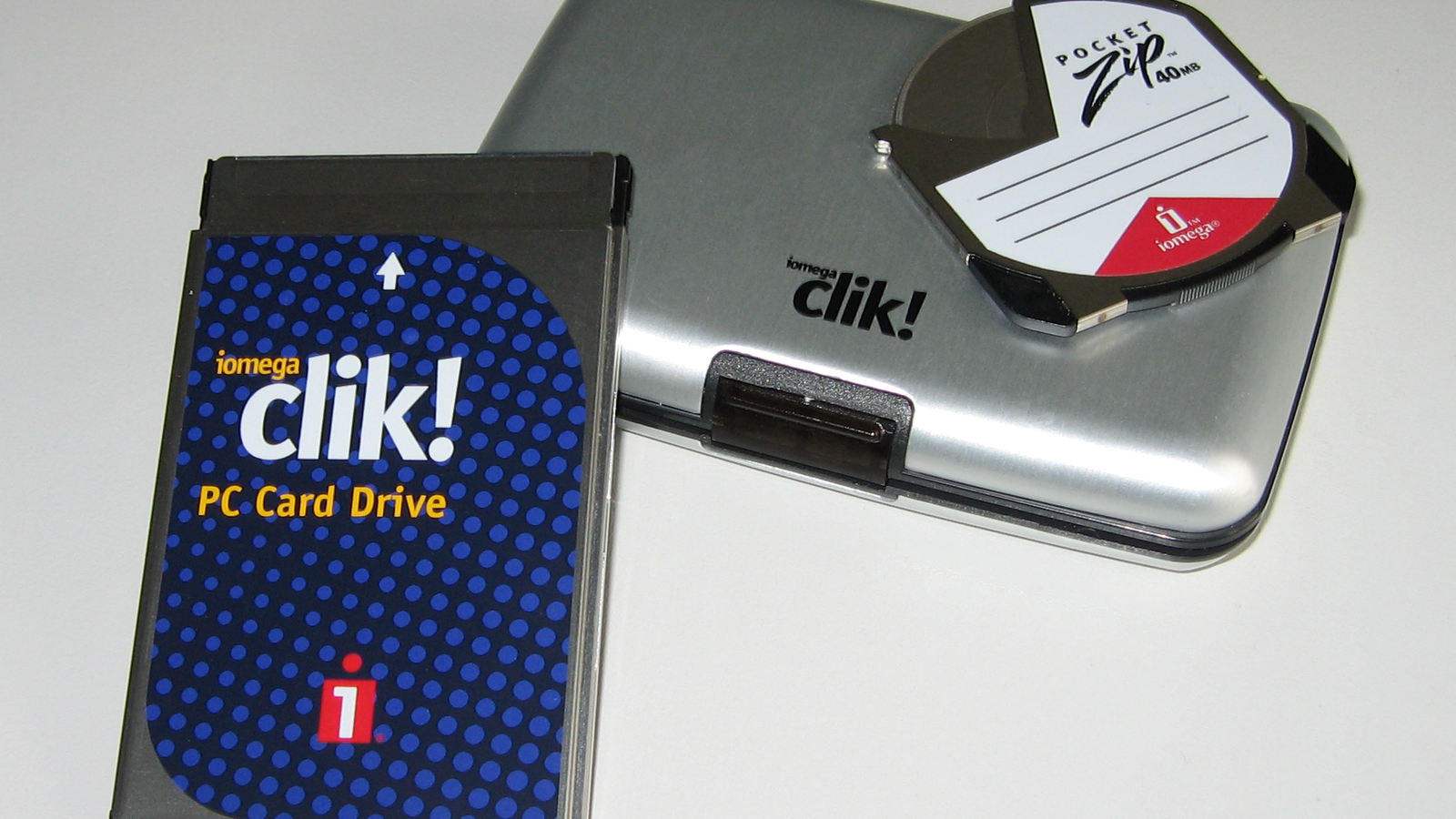
- 2000: Following a public relations disaster regarding its branding, Iomega rebrands the product line to "PocketZip."
- 2001: Widespread industry rejection occurs. Camera manufacturers, sensing the decline in price for flash memory, refuse to integrate the technology.
- 2002: Iomega officially pulls the plug on the format, marking the end of its attempt to dominate the portable storage niche.
The Branding Disaster: A Lawsuit That Haunted the Hardware
One of the most bizarre aspects of the Clik! story is the "click" itself. In the late 90s, Iomega was embroiled in a massive class-action lawsuit regarding the "Click of Death"—a catastrophic failure mode in their standard Zip drives where the read/write head would repeatedly strike the disk, producing a rhythmic clicking sound followed by total data loss.
By naming their new product "Clik!" (with an exclamation point, no less), Iomega essentially associated their new, fragile hardware with the very sound that had caused their previous customers to lose their data. It was a marketing blunder of historic proportions. Consumers, many of whom were already wary of Iomega’s build quality, viewed the product with immediate suspicion. While the company attempted to pivot by rebranding to "PocketZip" in 2000, the psychological damage was already done. The association between the word "click" and hardware failure had been permanently etched into the tech zeitgeist.
Supporting Data: The Economics of Obsolescence
To understand why Clik! failed, one must look at the cost-per-megabyte projections of the time. While Clik! offered an immediate price advantage in 1999, it was a "mechanical" solution in an "electronic" world.
| Technology | 1999 Price (Approx.) | Mechanical/Moving Parts | Future Proofing |
|---|---|---|---|
| Flash Memory | $4/MB | No | Extremely High |
| Iomega Clik! | $0.25/MB | Yes | Very Low |
The data clearly shows that while Iomega won the "upfront cost" battle, they lost the "longevity" war. Flash memory followed Moore’s Law with aggressive consistency. By 2001, the cost of flash memory had plummeted, erasing the primary selling point of the Clik! system. Because Clik! relied on a complex set of read/write heads and a motor, it was inherently more prone to failure than a solid-state chip, and it was significantly thicker. As devices became slimmer—as evidenced by the transition from bulky digital cameras to compact point-and-shoots—the physical constraints of the Clik! drive became a liability.
Official Responses and Industry Reception
Iomega’s strategy relied on a "partnership model." They needed camera manufacturers like Agfa, Canon, and Nikon to license the Clik! drive interface. However, the industry response was lukewarm at best.

Agfa was one of the few to experiment with the format, producing the ePhoto CL30, a camera that featured a built-in Clik! slot. The reviews were tepid. Critics noted that the drive was loud, drained the camera’s battery life significantly, and added unnecessary bulk to the device. Other manufacturers, seeing the writing on the wall, opted for the more reliable and silent CompactFlash format.
Iomega executives at the time consistently defended the product as a "transitional" storage medium, arguing that the industry needed a bridge between the floppy disk and the high-capacity flash future. However, in internal communications and investor reports from the early 2000s, there was an underlying admission that the company had failed to secure the "ecosystem" necessary for the product to survive. Without widespread adoption from camera manufacturers, the Clik! drive became a proprietary island with no bridge to the mainland.
Implications: A Lesson in Technological Trajectories
The failure of the Clik! drive offers several profound lessons for the modern tech industry:
- The Peril of Mechanical Solutions to Digital Problems: The Clik! drive was an attempt to keep moving parts relevant in a world that was clearly moving toward solid-state technology. When a technology solves a problem by adding physical complexity, it is almost always destined to be eclipsed by a simpler, more elegant solution.
- Brand Equity is Fragile: Iomega failed to realize that their brand was no longer synonymous with "innovation" in the eyes of the public; it was becoming synonymous with "unreliability" due to the Click of Death lawsuits. Naming a product after a known failure symptom is a lesson in why companies need to invest in PR-conscious branding.
- The "Bridge" Fallacy: Many companies attempt to create "bridge" products that exist only to fill a temporary gap. The problem is that the market rarely rewards these products unless they offer a significant leap in value. Clik! provided a lower cost, but the trade-off in reliability and power consumption was too high for the average consumer to accept.
Ultimately, the Clik! drive is a testament to the fact that in the world of technology, being "clever" is not enough. You must also be timely, reliable, and—most importantly—aligned with the direction the rest of the world is moving. By the time Iomega realized that the future was solid-state, the "click" had already sounded, and for their product line, it was the final one.










No comments yet. Be the first to join the conversation!