In the high-stakes world of competitive online gaming, titles usually follow a predictable lifecycle: launch, peak, plateau, and inevitable decline as sequels displace their predecessors. For years, Valve Corporation’s Counter-Strike series seemed to be the exception that proved the rule, with Counter-Strike: Global Offensive (CS:GO) serving as the undisputed king of the tactical shooter genre. When Counter-Strike 2 (CS2) arrived to replace it, the gaming world assumed the mantle had been passed.
Yet, in a twist that few industry analysts could have predicted, the "dead" game has risen again. Counter-Strike: Global Offensive is not only active; it is thriving, consistently drawing tens of thousands of concurrent players and proving that in the digital age, a beloved legacy title is rarely ever truly retired.
The Chronology of a Displaced Legend
To understand the current resurgence of CS:GO, one must look back at the dramatic transition period that defined the last two years of Valve’s flagship franchise.
- The Golden Era: For over a decade, CS:GO reigned as the premier tactical shooter on Steam, setting records for concurrent player counts and defining the esports industry.
- The Transition (September 2023): Valve officially launched Counter-Strike 2, a massive engine overhaul using the Source 2 engine. In a move that effectively shuttered the original game, CS2 replaced CS:GO in the Steam library, rendering the original inaccessible for most standard players.
- The Restoration (Early 2024): Recognizing the community’s desire to access older maps, legacy features, and specific modding environments, Valve restored CS:GO as a "legacy" application. While hidden from the primary Steam storefront search, it became available for download via specific channels.
- The Current Surge: As of late 2024, the game has reached new post-re-release milestones, climbing back up the Steam charts and cementing its position as a top-30 most-played game on the entire platform.
Supporting Data: By the Numbers
The metrics provided by SteamDB paint a compelling picture of a community that refuses to let go of the past. Three days ago, CS:GO hit an all-time peak for its "legacy" era, clocking in at over 68,000 simultaneous players. While this figure is dwarfed by the millions currently populating Counter-Strike 2, it is a remarkable achievement for a game that is technically "hidden" from the store.
To put this into perspective, 68,000 concurrent players place CS:GO in the upper echelon of Steam’s most popular games. It currently commands a larger active player base than industry heavyweights such as Baldur’s Gate 3, Rainbow Six Siege, and Battlefield 6.
Furthermore, the game’s growth is not merely a flash-in-the-pan moment of nostalgia. It is tracking similarly to Deadlock, Valve’s highly anticipated, invite-only hero shooter. The fact that an unadvertised, 14-year-old application can compete with a brand-new, hype-driven title demonstrates the unique, ironclad loyalty of the Counter-Strike player base.
The Ecosystem of "Counter-Strike"
The resurgence of CS:GO has forced analysts to reconsider the "winner-takes-all" mentality that dominates the gaming industry. For a long time, the prevailing wisdom was that a sequel must cannibalize its predecessor to be successful. However, the current state of Steam suggests that the platform is large enough to sustain multiple iterations of the same franchise.
Consider the following landscape:
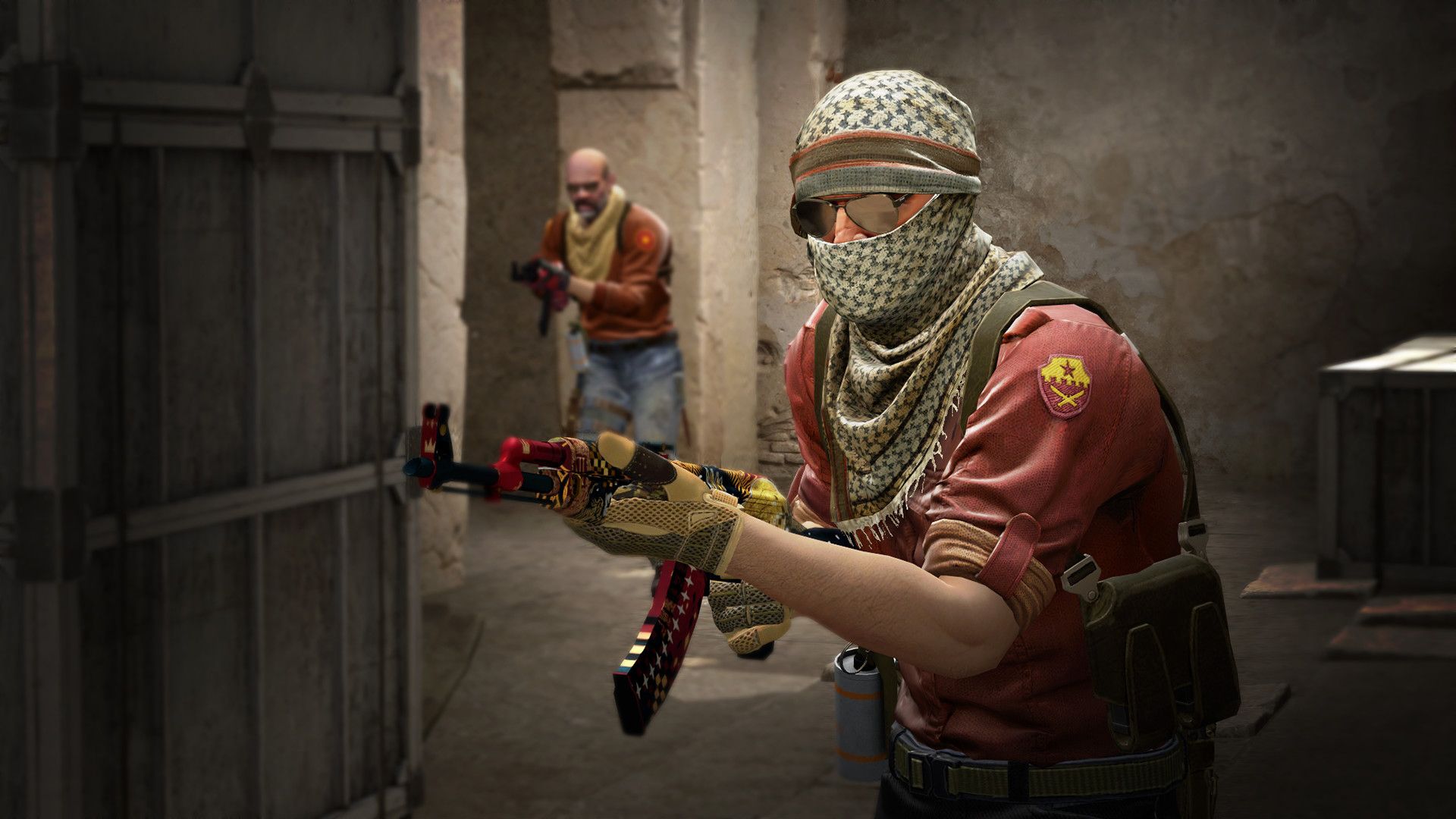
- Counter-Strike (1.6): The original classic still maintains a dedicated, albeit niche, player base that appreciates the purity of the early 2000s gameplay.
- Counter-Strike: Source: A middle-ground title that continues to host thousands of players who prefer the specific "feel" of its physics engine.
- CS:GO: Now the go-to for players who dislike the changes in CS2 or require access to specific legacy assets.
- Counter-Strike 2: The massive, modern juggernaut that defines the future of the series.
This diversity of choice is a testament to the longevity of Valve’s design. Unlike games that rely on live-service cycles to stay relevant, Counter-Strike has evolved into a foundational pillar of PC gaming, much like chess or poker—games where the rules are so well-established that players will seek them out regardless of the medium or the version.
Implications for the Industry
The survival of CS:GO poses significant questions for other developers and publishers. Many companies, such as Ubisoft with Overwatch 2 or Blizzard with World of Warcraft (via Classic), have grappled with the problem of how to evolve a game without alienating fans of the original. Valve’s decision to allow the legacy version of CS:GO to exist—even in a reduced, "hidden" capacity—has yielded dividends in terms of community goodwill and player retention.
Diversification in the Tactical FPS Space
The tactical shooter market is currently more competitive than ever. Beyond the Counter-Strike ecosystem, games like Valorant have successfully carved out a massive market share by offering a distinct, ability-focused take on the genre. The fact that the Counter-Strike franchise remains dominant despite this competition suggests that the "tactical shooter" genre is not a monolith, but a vast, varied landscape.
The Power of "Legacy"
We are entering an era where games are increasingly treated as permanent digital services. The success of CS:GO highlights a demand for "digital preservation." Players often form deep, emotional attachments to specific versions of games—the way a weapon handles, the specific lighting on a map, or the quirks of an old physics engine. By keeping these versions available, developers can prevent the "alienation effect" that occurs when a forced update changes the fundamental identity of a beloved game.
The Future Outlook
While it is unlikely that CS:GO will ever overtake Counter-Strike 2 in raw numbers, its current trajectory suggests that it will remain a significant presence on Steam for years to come. For Valve, the overhead required to keep the legacy version running is minimal compared to the value it provides: a safety net for players who aren’t ready to move on, a playground for modders, and a historical archive of one of the most important games in the history of the medium.
As we look toward the future of competitive gaming, the lesson of the "two Counter-Strikes" is clear: the most successful games are those that don’t just innovate, but also respect the legacy they are built upon. The town, as it turns out, is indeed big enough for everyone. Whether you are a newcomer hopping into the high-fidelity matches of Counter-Strike 2 or a veteran returning to the familiar, gritty arenas of Global Offensive, the game remains the same at its core—a test of aim, strategy, and teamwork that has defined a generation of gamers.
For now, the servers are humming, the lobby queues are moving, and the bomb is still being planted. In a world where everything is subject to change, the enduring presence of Counter-Strike: Global Offensive is a comforting, if unexpected, constant.