Ali Ikhwan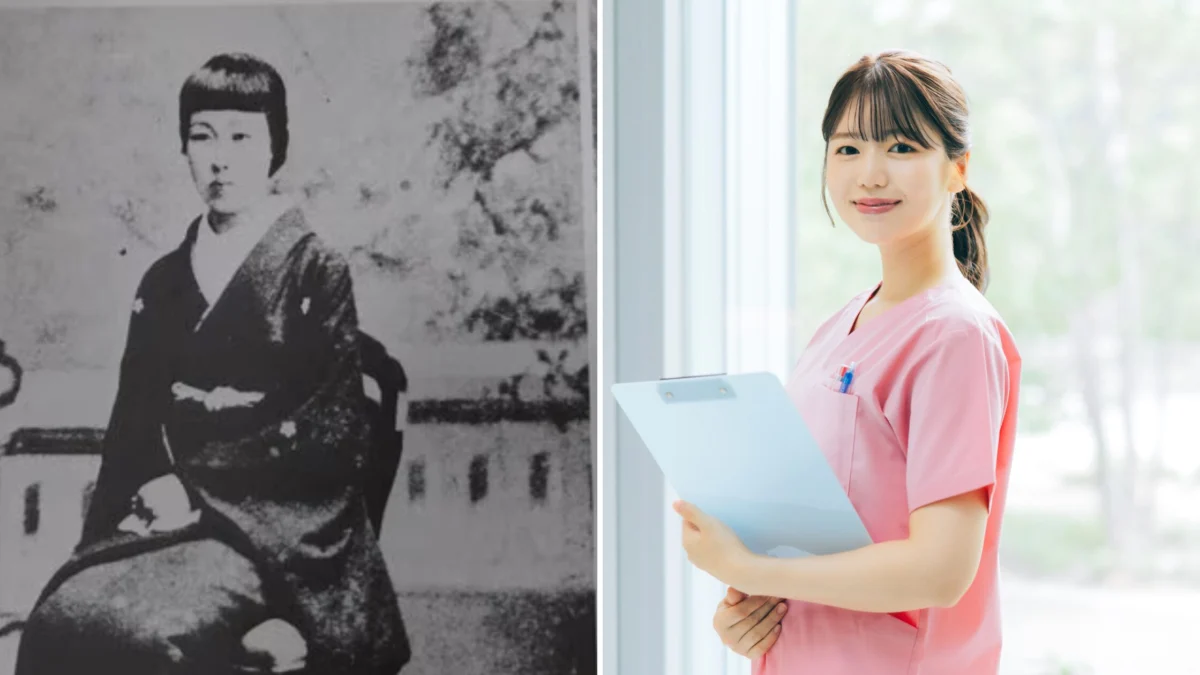
The broadcast of NHK’s 2026 morning drama, Kaze, Kaoru, has triggered a nationwide resurgence of interest in the formative years of modern medicine in Japan. While the series celebrates the pioneering spirit of the Meiji era, it has particularly drawn eyes toward a dual narrative: the celebrated life of Ozeki Chika—often hailed as the "Nightingale of the Meiji Era"—and the historically shadowed, yet arguably more pragmatic, contributions of Suzuki Masa.
While the fictional character Oya Naomi serves as a dramatized proxy for Suzuki, the true history of the woman who inspired the role is a testament to the quiet, structural revolution required to build a modern nation. Suzuki Masa was not merely a nurse; she was a pioneer who transformed nursing from an act of charitable devotion into a recognized, protected, and dignified profession.
The Historical Context: A Life Forged in Transition
To understand Suzuki Masa, one must understand the crucible of the late 19th century. Born in 1858 into a samurai family, she entered the world as Katō Masa just as the Tokugawa Shogunate began its final, desperate struggle for survival. Her childhood was defined by the Boshin War (1868–1869), a cataclysmic conflict that signaled the end of the feudal order and the beginning of the Meiji Restoration.
As the fires of the old world burned, the young Masa was uniquely positioned to witness the birth of the new. A critical inflection point occurred in her late teens when she attended the Ferris Seminary in Yokohama (1876–1877). In an era where education for women was largely restricted to domestic arts, Masa gained fluency in English. This linguistic mastery would later become the conduit through which Western medical science flowed into the Japanese healthcare system.
Following her marriage to Suzuki Yoshimitsu in 1878, her life took a tragic turn. Widowed just five years later with two children to raise, Masa found herself in the precarious position of a single mother during a period of intense social flux. However, this hardship served as the catalyst for her entry into the medical field—a move that would define her legacy.
The Chronology of a Medical Pioneer
- 1858: Born as Katō Masa into a samurai household.
- 1876–1877: Studies at Ferris Seminary, gaining essential English fluency.
- 1878: Marries Suzuki Yoshimitsu.
- 1883: Becomes a widow; begins the search for professional independence.
- 1885: Enrolls in the inaugural class of the nurse-training annex of Sakurai Girls’ School.
- 1887–1890: Works under the guidance of Agnes Vetch, serving as a primary interpreter for Nightingale-style nursing theory.
- 1891: Founds the Charity Nursing Association in Hongo, one of Japan’s first private "dispatch" nursing services.
- 1890s–1900s: Establishes the Tokyo Nurse Training Institute and co-founds the Greater Japan Women’s Hygiene Association.
- Post-Retirement: Transfers her organization to Ozeki Chika, cementing a partnership of mutual respect.
The "Meiji Nightingale" and the Birth of Modern Nursing
In 1885, Suzuki Masa joined the first cohort of the nurse-training program at Sakurai Girls’ School. The institution, founded by missionary Maria True and educator Sakurai Chika, was a landmark in Japanese public health. It was here that Suzuki and Ozeki Chika became classmates, both adopting the "Nightingale Theory"—a radical, scientific approach to nursing that emphasized sanitation, patient environment, and observation.
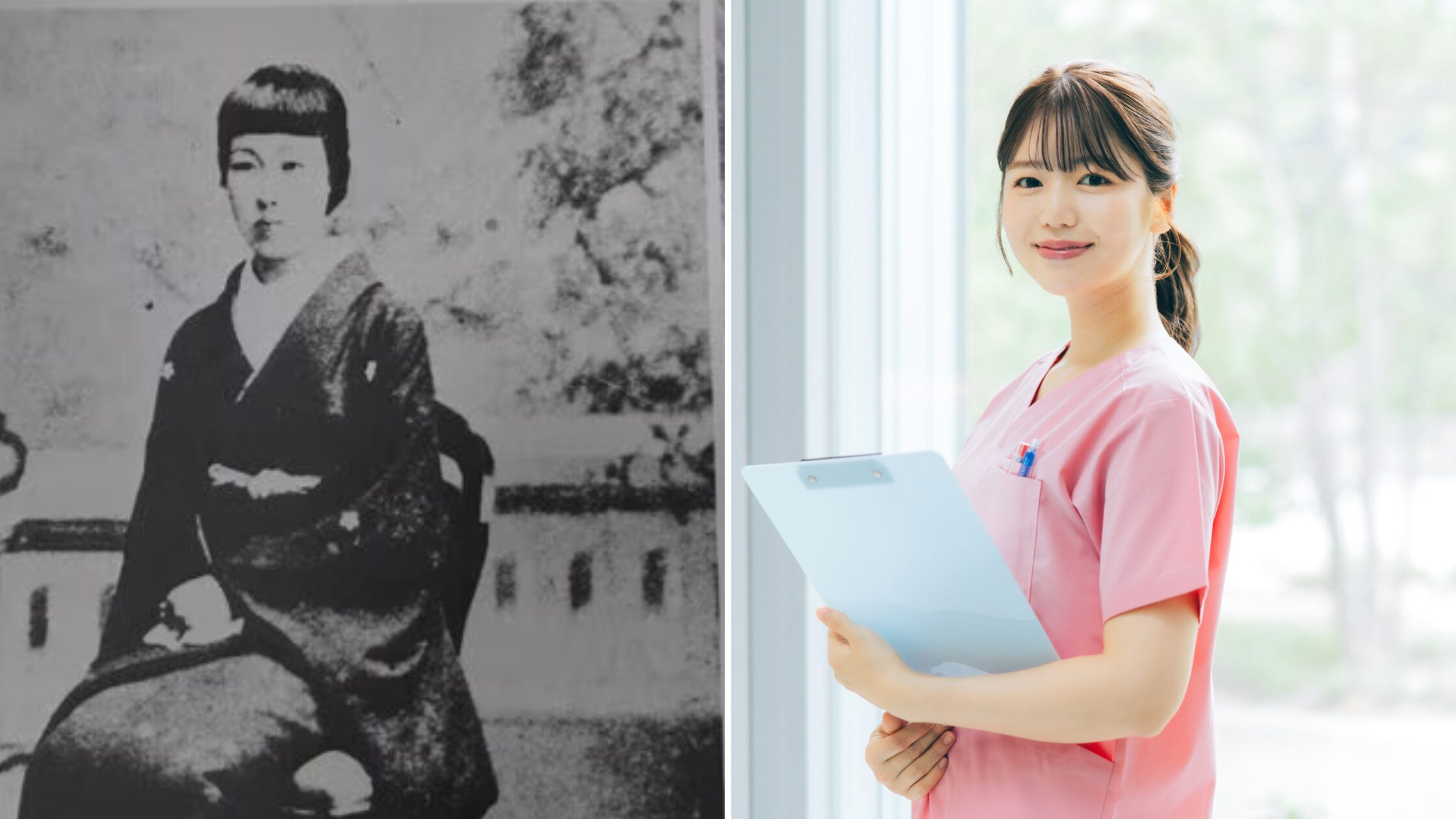
While Ozeki Chika is frequently compared to the iconic Florence Nightingale, scholars like Tanaka Hikaru have noted that the success of the program was heavily reliant on the synergy between these two women. Because the curriculum was taught by British nurse Agnes Vetch, the students faced a significant language barrier. Suzuki Masa’s role as the primary interpreter was not merely administrative; it was an intellectual translation of complex medical theory into Japanese, allowing the Nightingale method to take root in local soil.
Philosophical Divergence: Vocation vs. Profession
The most compelling aspect of the relationship between Ozeki and Suzuki lies in their differing philosophies. Ozeki Chika largely viewed nursing through the lens of Christian altruism and self-sacrifice. Her work was a spiritual calling, and she became a public symbol of the "angelic" nurse, a persona that resonated with the moral sensibilities of the Meiji government.
Suzuki Masa, however, brought a sharper, more clinical perspective to the profession. Her descendants describe her as "cool, sharp, and charismatic"—attributes that served her well as an administrator. She recognized that for nursing to be sustainable, it had to be more than a moral duty.
Suzuki championed the concept of nursing as a professional labor force. She argued that nurses were not "saints" and that, consequently, they deserved professional compensation, autonomy, and standardized labor rights. Her advocacy for the abolition of "non-nursing chores"—the practice of forcing nurses to perform housekeeping or menial labor for doctors—was decades ahead of its time. She was effectively the first labor organizer for the Japanese nursing profession.
Implications: The Legacy of "Dispatch Nursing"
The establishment of the Charity Nursing Association in 1891 marked a significant shift in healthcare delivery. By creating a private "dispatch" system, Suzuki allowed patients to receive professional medical care in their own homes. This move was revolutionary in a society where medical care was strictly confined to hospital walls.
The implications of her work extend to the modern era. Her writings on public health, published through the Greater Japan Women’s Hygiene Association, helped frame nursing as a cornerstone of national vitality. By emphasizing the role of women in health, she challenged the gendered constraints of the late Meiji era, arguing that women were essential agents in the modernization of Japan’s social infrastructure.
Official and Academic Perspectives
Academic historians, including those at the Fujinkoron and Nikkei Book Plus, have recently revisited the archives to contrast the "public face" of Ozeki with the "structural foundation" of Suzuki. The consensus in contemporary medical history is that while Ozeki Chika provided the public face and the moral mandate, Suzuki Masa provided the operational machinery.
The NHK drama Kaze, Kaoru has been praised by historians for bringing these behind-the-scenes figures to the forefront. By highlighting the collaborative, yet distinct, roles of these women, the show corrects a common historical oversight: the tendency to elevate a single, "saintly" figure while ignoring the complex reality of institutional building.
As noted by current nursing associations, the challenges Suzuki faced—the struggle for professional respect, the resistance against being treated as mere support staff, and the push for better working conditions—remain strikingly relevant. In an era where Japan is grappling with a shortage of nursing staff and a need for better working conditions, the story of Suzuki Masa serves as a poignant reminder that the foundation of a healthcare system rests on the professional empowerment of its workers.
Conclusion: A Legacy Worth Knowing
Not every pioneer is destined for the pages of a textbook or the statue in a park. Many, like Suzuki Masa, exist in the "middle space" of history—the architects of systems, the translators of knowledge, and the defenders of labor rights. She did not aim to be a symbol; she aimed to be a professional.
Through the lens of Kaze, Kaoru, audiences are finally seeing that the progress of modern medicine in Japan was not a solitary achievement, but a collaborative effort between those who inspired the heart and those who organized the hands. Suzuki Masa remains a figure of immense relevance—a woman who saw that to heal the nation, one must first ensure that the healers are treated with the dignity they deserve.


 Neng Nana
 Asro
Asro